Home › Products › Flow Meters › Ultrasonic Flow Meters
Ultrasonic Flow Meters
Ultrasonic flow meters measure flow by timing sound pulses across the pipe, with no obstruction in the bore and no moving parts. They suit clean to lightly loaded liquids and read on pipes from small lines up to large mains. The transducers either clamp to the outside of the pipe or insert a short way through the wall, and the same transit-time converter drives both.
Ultrasonic flow meters
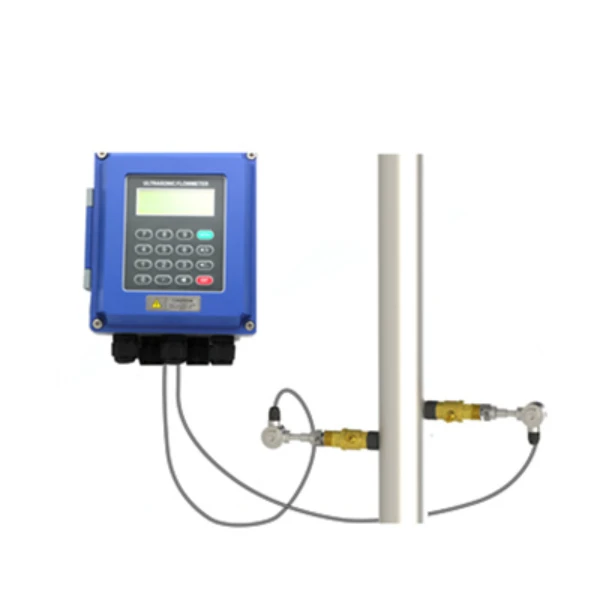 Insertion Ultrasonic Flow Meter
Transit-time TUF-2000 with insertion transducers for large, thick or lined pipes, DN50 to DN6000.
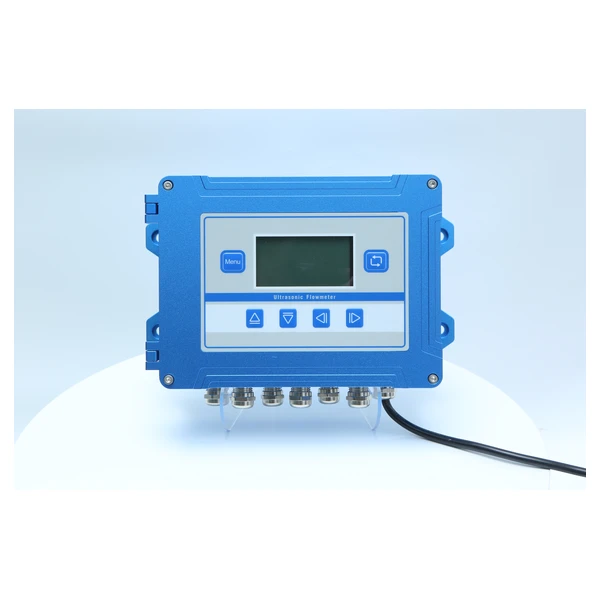 Multi-Channel Ultrasonic Flow Meter
Dual and quad-path insertion for high-accuracy large pipes.
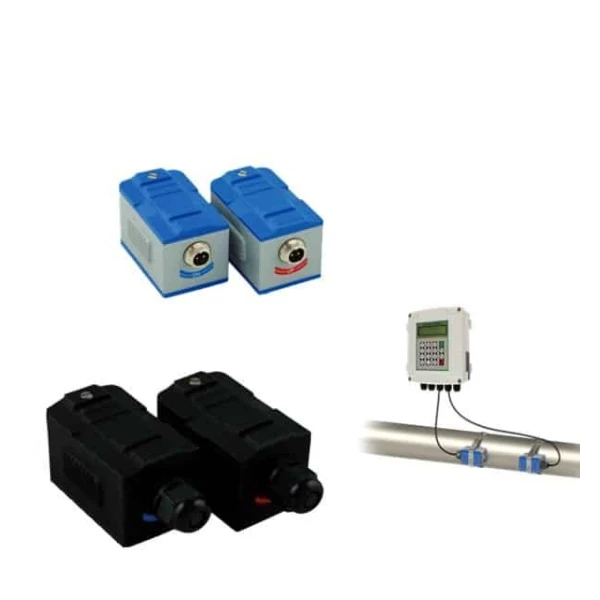 Clamp-On Ultrasonic Flow Meter
Fully non-invasive transit-time meter; transducers strap outside the pipe, DN25 to DN1200.
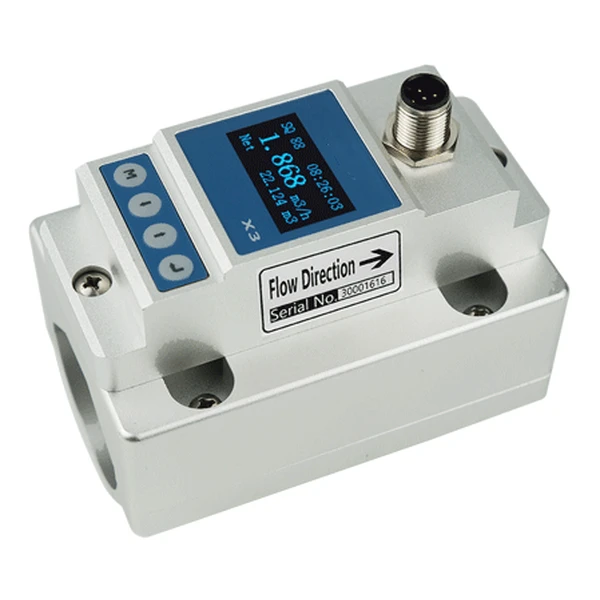 Strap-On Ultrasonic Flow Meter
Compact all-in-one clamp-on for small machine pipes.
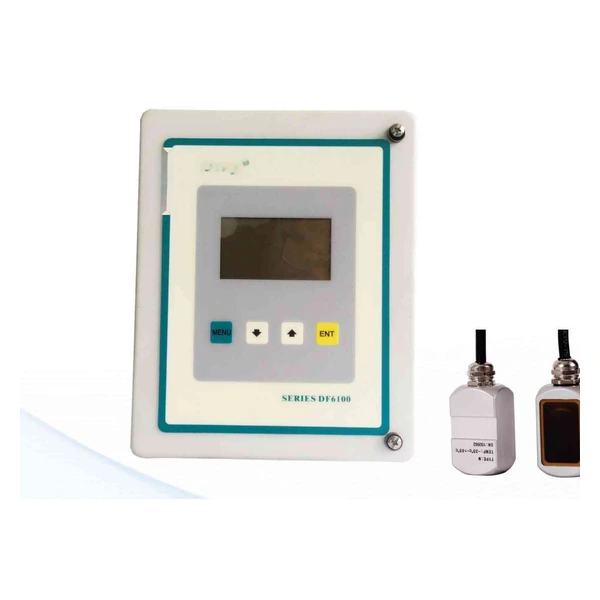 Doppler Ultrasonic Flow Meter
Clamp-on meter for sewage, sludge and slurry in full pipes.
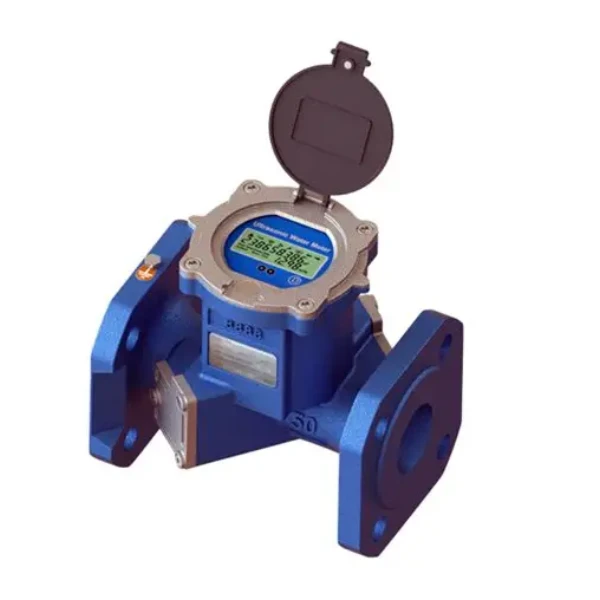 Ultrasonic Water Meter
Static ISO 4064 billing meter, no moving parts, remote-read ready.
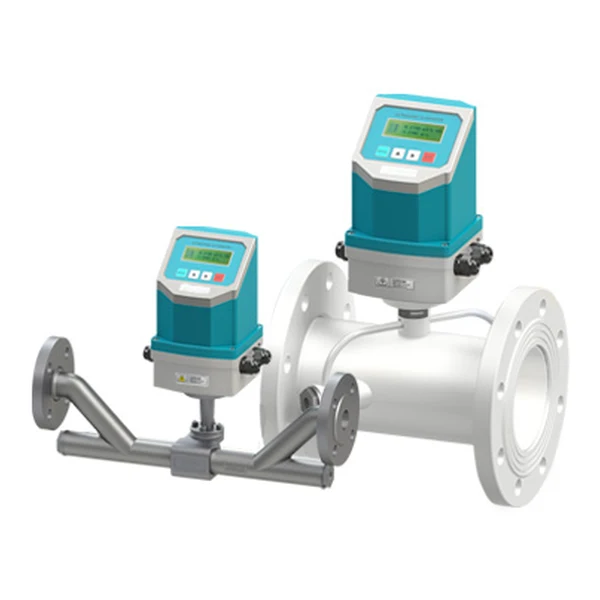 Inline Ultrasonic Flow Meter
Factory-aligned spool for clean liquids, better than 1% accuracy.
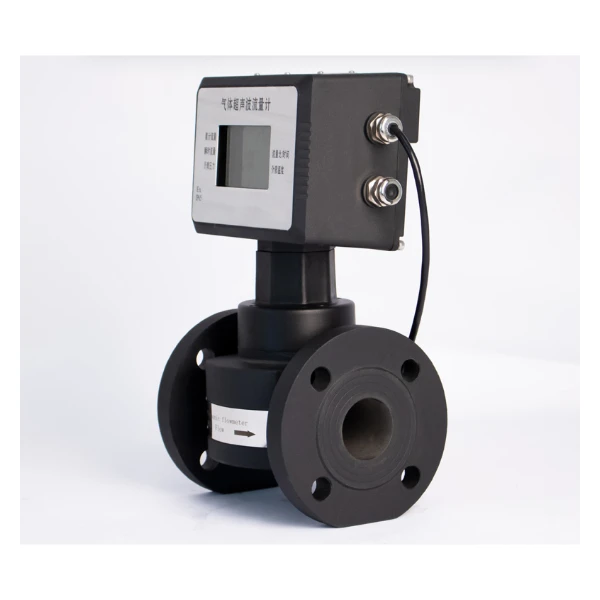 Ultrasonic Gas Flow Meter
Transit-time metering for natural gas, flare, biogas and compressed air.
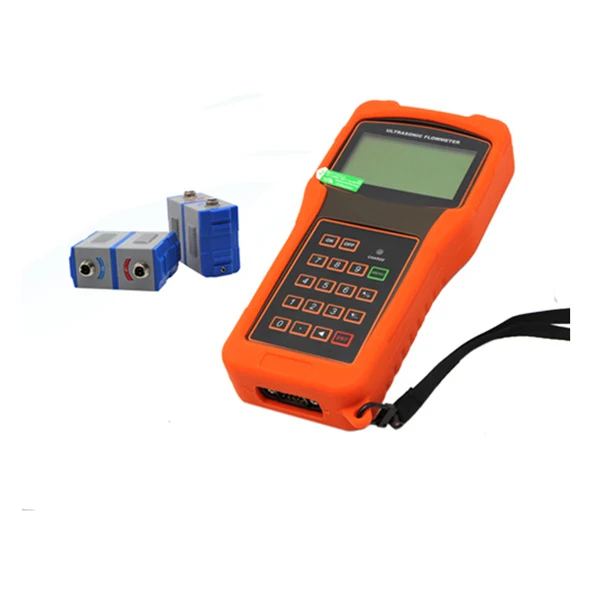 Portable Ultrasonic Flow Meter
Handheld battery clamp-on for surveys, balancing and spot checks.
Choosing an ultrasonic flow meter
| Transducer | Best for | Note |
|---|---|---|
| Insertion | Large, thick-walled or lined pipes; weak clamp-on signal | Hot-tap into a live pipe, DN50 to DN6000 |
| Clamp-on | Small to medium pipes, nothing touching the liquid | Strap to the outside, fully non-invasive |
| Portable / handheld | Surveys, checks and temporary measurement | Battery clamp-on for spot readings |
Clamp-on and portable ultrasonic flow meters join this range as they go live. For conductive water and slurry with no straight-run limit, a magnetic flow meter is often the better choice.
Ultrasonic converters in this range accept a paired Pt100 input for thermal energy totals; our BTU meter guide for chilled water explains how the energy calculation and sensor pairing work.
FAQ
How does an ultrasonic flow meter work?
It sends an ultrasonic pulse across the pipe with the flow and against it. The pulse going with the flow arrives sooner, and the difference in the two travel times gives the velocity, which times the pipe area gives the flow.
What is the difference between insertion and clamp-on?
Both are transit-time meters. A clamp-on straps to the outside and its signal crosses the wall twice; an insertion meter places the probes inside the wall, keeping a strong signal on large, thick or lined pipes where clamp-on can lose it.
Are ultrasonic flow meters accurate?
On a full pipe of clean liquid with enough straight run, a transit-time ultrasonic flow meter reads to about plus or minus 1%. Heavy solids or entrained air scatter the pulse and reduce accuracy.
Request a quote
Tell us the pipe size, wall and liquid, and we point you to the right ultrasonic flow meter and configure it for the line.