Flow Meters › Ultrasonic Flow Meters › Multi-Channel Ultrasonic Flow Meter
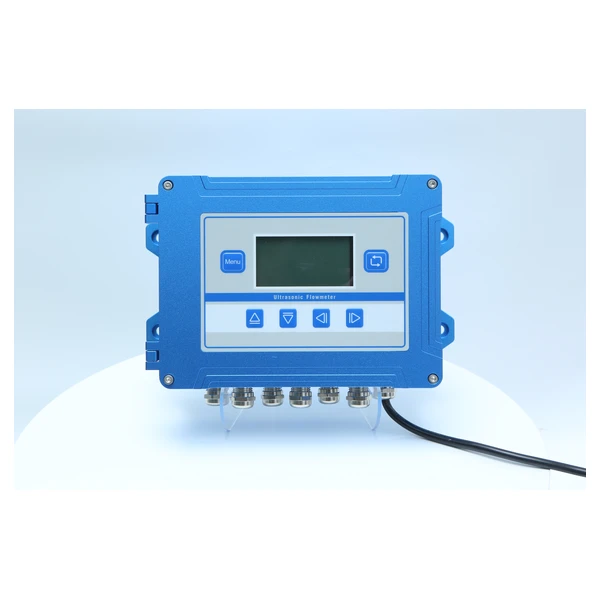
Multi-Channel Ultrasonic Flow Meter
An insertion ultrasonic flow meter that reads the flow on two or four acoustic paths instead of one. Averaging several paths across the bore cancels the velocity-profile error that limits a single-path meter, so it holds a tighter reading on a large pipe. Single, dual, and quad-path hosts, for DN80 to DN6000.
- Principle: transit-time, insertion; 1, 2, or 4 paths
- Pipe size: DN80 to DN6000
- Accuracy: higher than single-path; more paths, less profile error
- Energy: Pt100 or Pt1000 option for heat metering
- Output: 4-20 mA, RS-485; 220 V or 24 V
Overview
A single-path ultrasonic meter measures the velocity along one line across the pipe and assumes the rest of the bore behaves the same way. On a large pipe, or after a bend, that assumption is where the error comes from: the flow profile is not uniform, and one path cannot see it. A multi-channel meter fixes that by measuring on two or four separate paths at once and averaging them, so a fast streak on one chord and a slow one on another cancel instead of biasing the result. The more paths, the closer the meter gets to the true average velocity.
This is an insertion meter, so the transducers hot-tap into the pipe without a shutdown, and it spans DN80 to DN6000. The host comes as a single, dual, or quad-path unit; you add paths where the accuracy justifies them. It outputs 4-20 mA and RS-485, runs on 220 V or 24 V, and takes a Pt100 or Pt1000 pair to double as a heat meter. For a standard single-path reading on a large line, the insertion ultrasonic flow meter is the simpler choice.
Features
Everything here is about getting a true reading on a big pipe where one path is not enough.
Two or four paths
Averaging several chords across the bore cancels the profile error a single path cannot see.
Higher accuracy on large pipe
It holds a tighter reading on DN80 to DN6000 lines than a single-path insertion meter.
Insertion, no shutdown
The transducers hot-tap into a running line, so there is no cut and no stoppage to install.
Heat-meter ready
Add a Pt100 or Pt1000 temperature pair and it computes heat or cooling energy as well as flow.
Fast, robust signal
A high-speed processor responds in about 0.1 s, and the signal processing rides through iron filings and weld slag.
4-20 mA, RS-485, pressure
Analog and Modbus outputs, 220 V or 24 V supply, and an optional pressure input for a fuller picture.
Working principle
Each acoustic path is an ordinary transit-time measurement: a pulse sent diagonally across the pipe arrives sooner going with the flow than against it, and the time difference gives the average velocity along that one line. The limit of a single path is that the velocity across a real pipe is not flat. It is faster in the middle and slower at the wall, and a bend or a valve upstream skews it further, so one chord over-reads or under-reads depending on where it sits. A multi-channel meter places two or four paths at different positions in the bore and combines them, which is the same idea a custody meter uses to approach the true mean velocity. Adding paths buys accuracy; a dual-path host covers most large-pipe lines, and a quad-path host is for the tightest.
Technical specifications
| Parameter | Specification |
|---|---|
| Measurement principle | Transit-time ultrasonic, insertion; single, dual, or quad path |
| Pipe size | DN80 to DN6000 |
| Channels | 1, 2, or 4 paths (host selectable) |
| Accuracy | Higher than single-path; improves with added paths |
| Liquid | Single sound-conducting liquid; full pipe |
| Outputs | 4-20 mA, RS-485 |
| Energy and pressure | Pt100 or Pt1000 for heat metering; external pressure input |
| Response time | About 0.1 s (high-speed processor) |
| Signal handling | Digital processing tolerant of iron filings and weld slag |
| Power supply | 220 V or 24 V |
| Transducer | Insertion (hot-tap); combinations available |
Representative specifications. Values typical; confirm per datasheet for your pipe and path count.
Ordering example. Dual-path insertion ultrasonic flow meter, DN500, 4-20 mA and RS-485, 24 V, with Pt100 pair for heat metering.
How many paths
The path count is a trade between accuracy and cost. Pick it by the line and what the reading is worth.
| Paths | Best for |
|---|---|
| Single path | A standard line with good straight run: the single-path insertion meter |
| Dual path | Large pipes and disturbed profiles where one path is not enough |
| Quad path | The tightest accuracy, billing and allocation on a major line |
Applications
The multi-channel meter is worth its cost on the big, important lines:
- Large water-supply and transmission mains
- Billing and allocation points where accuracy is audited
- District heating and cooling, with the temperature pair
- Power and industrial cooling water on large bore
- Disturbed installs where a single path cannot hold accuracy
Application example
Water utility, large transmission main. A utility needed an audited flow on a large transmission main where the meter sat closer to a bend than the straight run a single-path meter wants, and a wrong reading meant a wrong bill. A dual-path insertion meter solved it: the two paths sat on either side of the skewed profile, and averaging them pulled the reading back to the true mean that one path was missing. The transducers hot-tapped into the running main, so the change went in without taking the supply down.
Related products
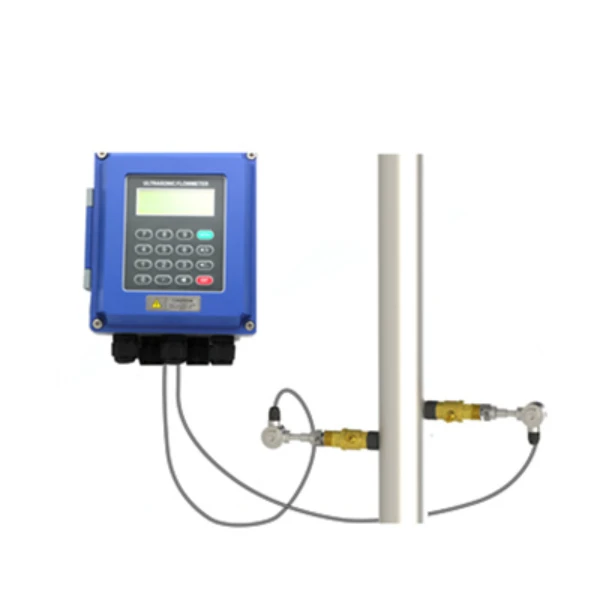 Insertion Ultrasonic Flow Meter
Single-path insertion meter for standard large-pipe lines.
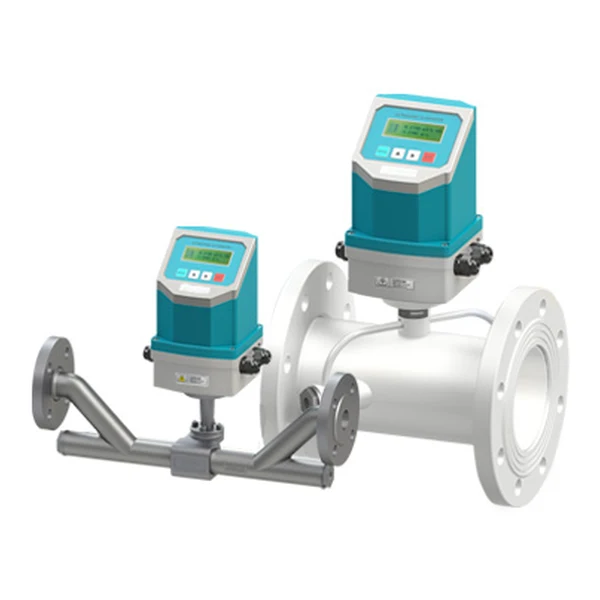 Inline Ultrasonic Flow Meter
Factory-aligned spool for the highest small and mid-pipe accuracy.
Browse all ultrasonic flow meters →
FAQ
What is a multi-channel ultrasonic flow meter?
It is a transit-time ultrasonic meter that measures on two or four acoustic paths across the pipe instead of one, then averages them. Averaging several chords cancels the velocity-profile error that a single path cannot see, so it reads a large or disturbed pipe more accurately. This one is an insertion meter for DN80 to DN6000.
Why is multi-path more accurate?
Because the velocity across a real pipe is not uniform: it is faster in the center and slower at the wall, and a bend skews it further. A single path samples one line and assumes the rest matches. Two or four paths sample different positions, so a fast chord and a slow chord average toward the true mean velocity.
How many paths do I need?
A single path is fine for a standard line with good straight run. Use a dual-path host on large pipes or where the upstream profile is disturbed, and a quad-path host where the accuracy must be tightest, such as billing or allocation on a major line.
Can it measure heat or energy?
Yes. Connect a Pt100 or Pt1000 temperature pair and the meter computes heat or cooling energy from the flow and the temperature difference, which suits large district heating and cooling mains.
Does it need to shut the pipe down to install?
No. It is an insertion meter, so the transducers hot-tap into a running line. The pipe stays in service while the meter goes in.
Request a quote
Send us the pipe size, the liquid, the accuracy you need, and whether you want heat metering. We recommend the path count and the build for your line.