Flow Meters › Variable Area Flow Meters
A variable area flow meter, or rotameter, reads flow from the height of a float in a tapered tube: as flow rises, the float rises, and the open area around it grows until lift balances weight. It is simple, self-contained, and reads flow with no power. Our variable area range is built in metal tubes with a magnetic dial, for liquid and gas, opaque and corrosive media, and higher pressure and temperature than a glass tube.
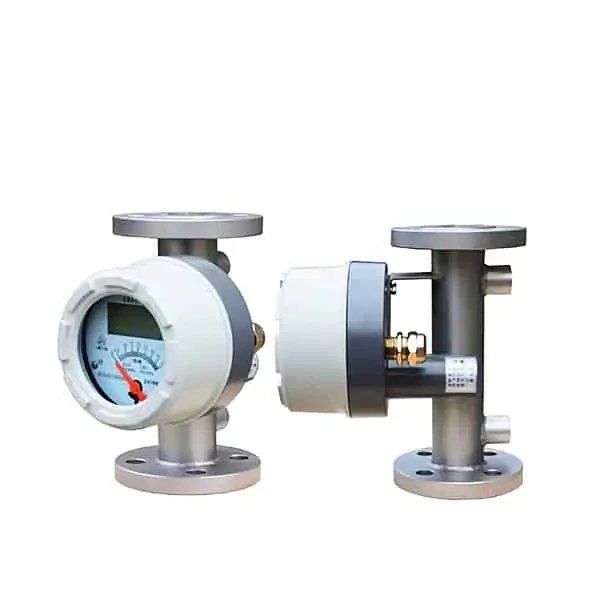 Metal Tube Rotameter
Float in a tapered stainless tube with a magnetic dial, DN15 to DN150, optional 4-20 mA.
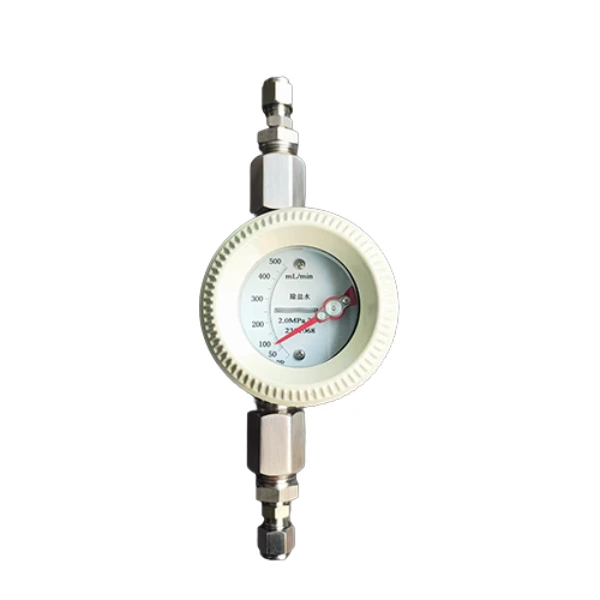 Low Flow Rotameter
Micro variable area meter from 0.1 l/h, DN6 to DN25 threaded, for small dosing and sample lines.
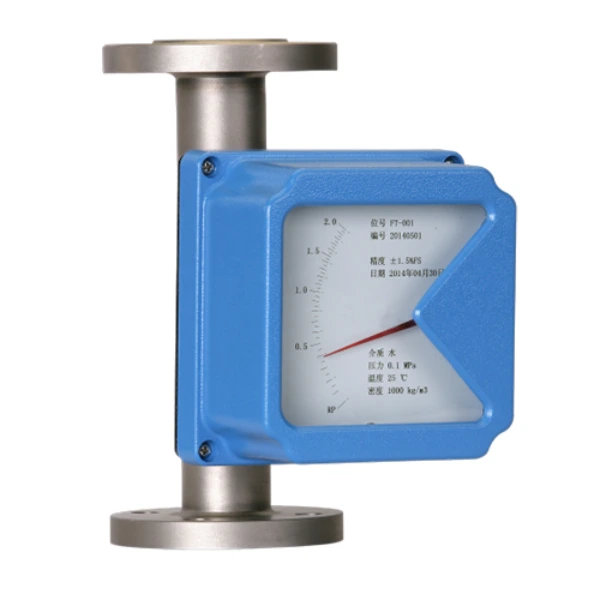 High Pressure Rotameter
Metal tube rotameter for high pressure to 25 MPa, DN15 to DN50, hydraulic and high-pressure gas.
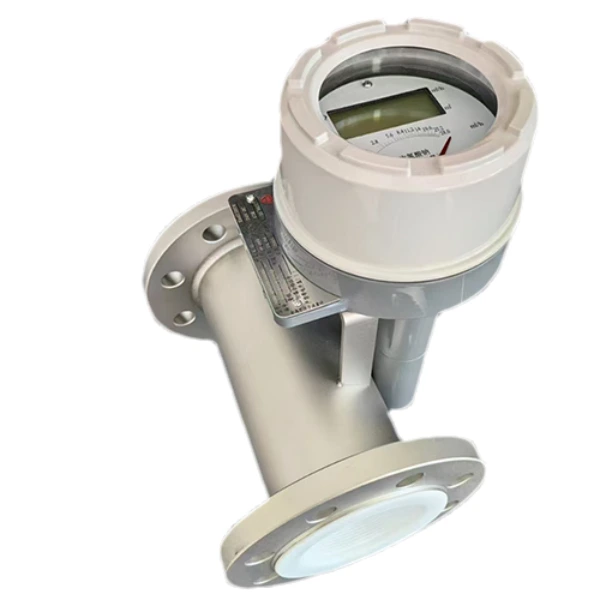 PTFE Lined Rotameter
PTFE-lined metal tube rotameter for corrosive acids and alkalis, DN15 to DN150, to 80 C.
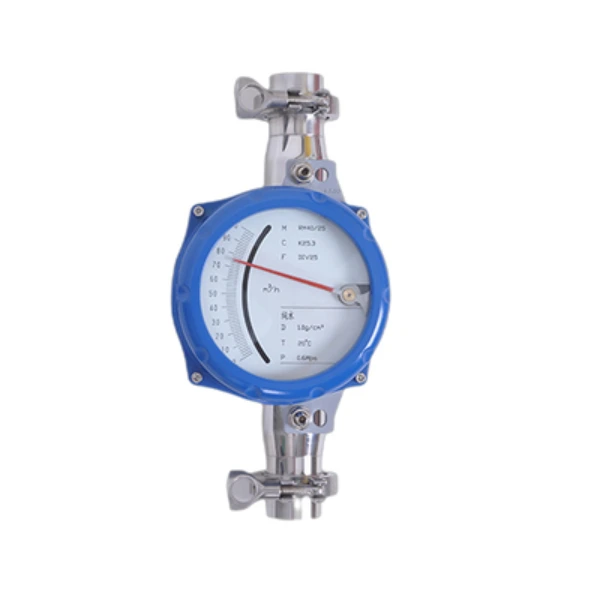 Sanitary Rotameter
All-stainless tri-clamp meter for food, dairy, and pharma lines.
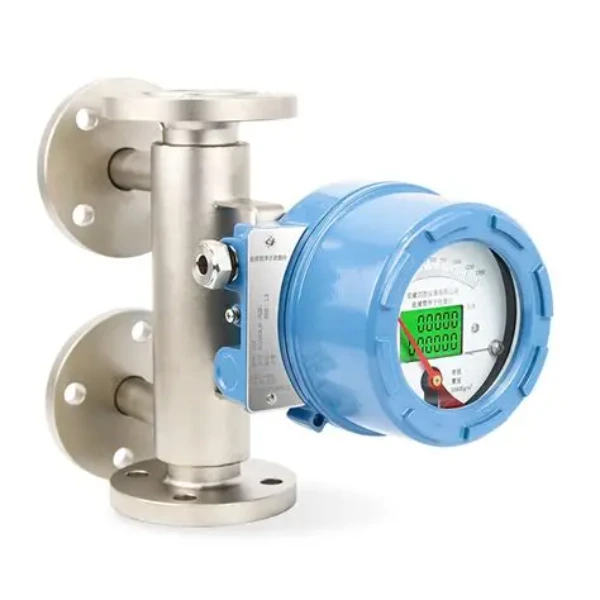 Jacketed Rotameter
Heating or cooling jacket for viscous, crystallizing, or hot media.
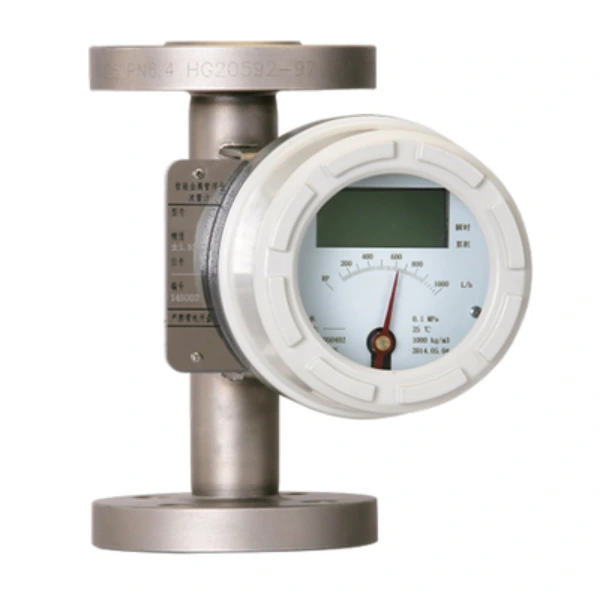 Gas Rotameter
Compensated metal tube meter for gas, reads standard volume.
Choosing a variable area flow meter
Pick the tube and the output by the medium, the line, and whether you need a signal as well as a local dial.
| If you need | Choose |
|---|---|
| Higher pressure or temperature, opaque or corrosive media | Metal tube rotameter, PTFE lining for acids |
| A signal as well as a local read | Metal tube rotameter with the 4-20 mA and alarm option |
| A low-cost visual read on clean, low-pressure fluid | A glass tube rotameter (ask us) |
| Higher accuracy, steam, or a large line | A powered meter, such as a vortex flow meter |
To weigh the 10:1 and 20:1 ranges above against other measuring technologies, see our turndown ratio guide.
FAQ
What is a variable area flow meter?
It is a flow meter, also called a rotameter, where a float sits in a tapered tube and the open area around it varies with flow. The float rises to where lift balances its weight, and that height is a direct reading of flow. Variable area meters are simple and read flow without power.
How does a rotameter work?
Flow enters the bottom of the tapered tube and lifts the float until buoyancy and drag balance its weight. As the float rises the gap around it widens, so the drag falls and the float settles at a height that tracks the flow. In a metal tube, a magnet in the float drives a dial pointer outside the tube.
Request a quote
Tell us the medium, the size, the flow range, and the pressure and temperature, and we set the float, the lining, and the output.