Flow Meters › Coriolis Flow Meters
Coriolis Flow Meters
Coriolis flow meters measure mass flow directly from the Coriolis force on a vibrating tube, and report fluid density and temperature at the same time. Because the reading is mass, not volume, it does not drift with pressure, temperature, or density, which is why Coriolis is the reference for custody transfer, mass dosing, and hard fluids such as high-viscosity oils and slurries. Below is our Coriolis range; pick by fluid, line size, and service.
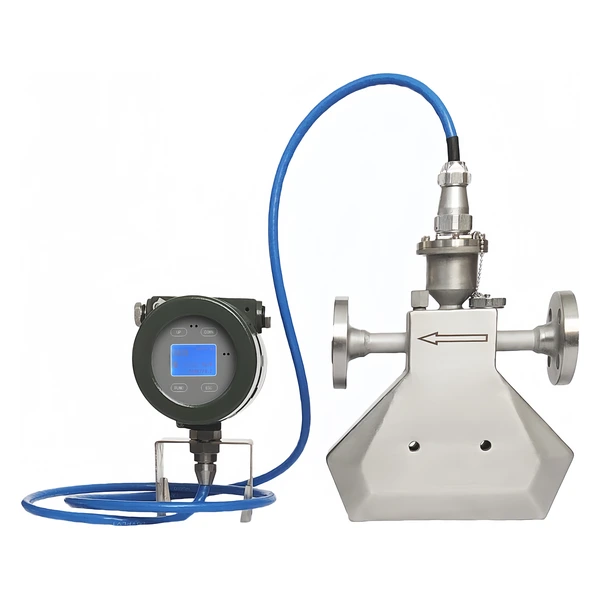 Coriolis Mass Flow Meter
Direct mass, density, and temperature. DN3 to DN200, 0.1% to 0.5%, 316L tube. For custody, dosing, slurries, and gas.
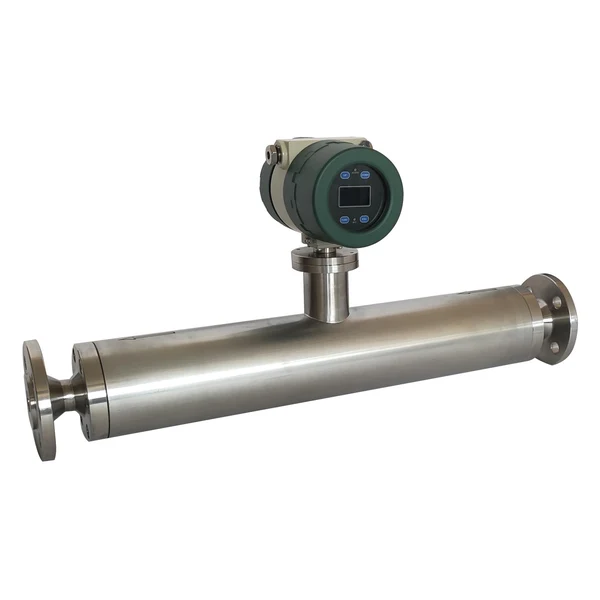 Straight Tube Coriolis Flow Meter
Single straight tube: self-draining, low pressure drop, for CIP, slurry, and sticky media.
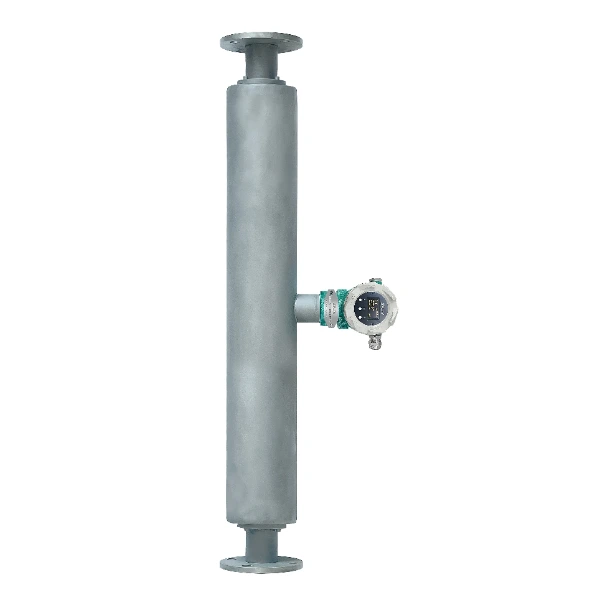 Coriolis Density Meter
The same vibrating tube, configured for density and concentration measurement.
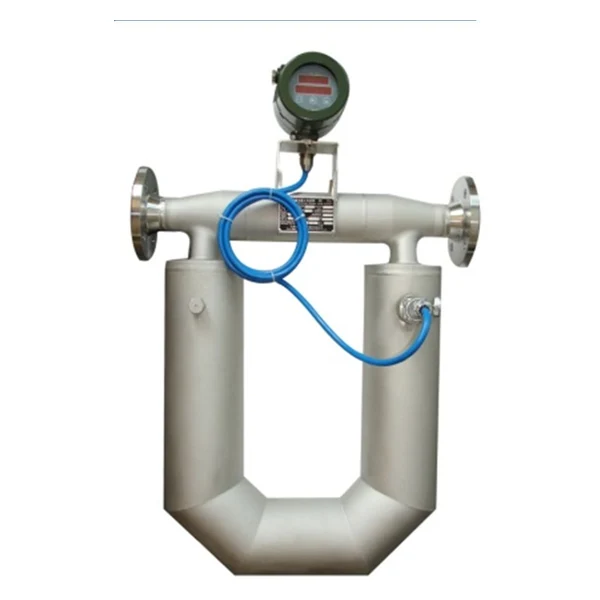 Large Diameter Coriolis Flow Meter
Big-bore U-tube, DN80 to DN200, up to about 1,200 t/h for loading and custody transfer.
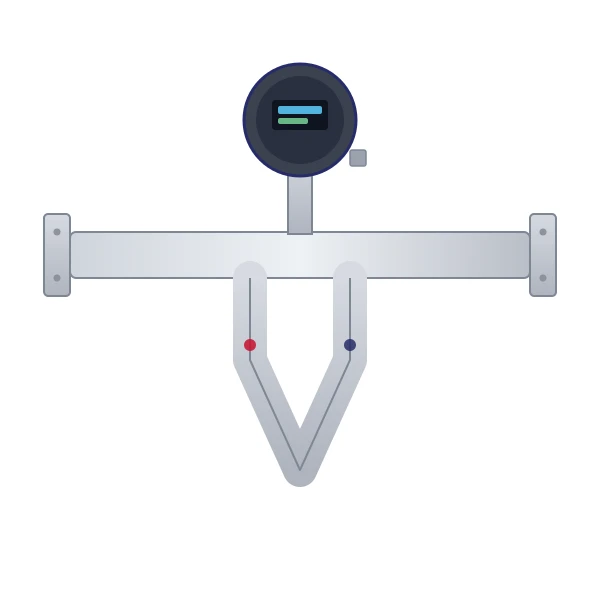 Low Flow Coriolis Flow Meter
Triangular DN3 to DN15 tube for precise dosing and very low mass flow.Flow Meters
Choosing a Coriolis flow meter
All builds share the 316L vibrating-tube sensor and the LED or LCD converter; the difference is the operating point.
| Build | Use it for |
|---|---|
| Standard | Most liquids and gases; medium -50 to 200 C, pressure to 4.0 MPa |
| High-temperature | Hot oil and other media to 350 C |
| Low-temperature | Liquid nitrogen, liquid oxygen, and other liquefied gas to -200 C |
| High-pressure | Cementing and other service to 30 MPa |
| Insulated | Asphalt and other media that solidify at room temperature |
| Small-bore (triangular) | DN3 to DN15 micro-dosing in fine chemical and pharmaceutical lines |
Not sure whether the number you need is in kilograms or cubic meters? Our mass flow vs volumetric flow guide explains the difference and when a direct mass reading is worth specifying.
FAQ
What is a Coriolis flow meter used for?
It is used where the amount of material matters more than the volume: custody transfer of oil and chemicals, mass dosing and batching, and hard fluids such as high-viscosity oil and slurry. It measures mass flow, density, and temperature in one instrument.
Is a Coriolis meter better than other flow meters?
For mass accuracy it is the most accurate common technology, and it needs no straight pipe run. The trade is cost and that it does not suit fluids carrying gas bubbles. For clean low-viscosity liquid where volume is enough, a turbine or ultrasonic meter is a simpler choice.
What size and fluids does it cover?
DN3 to DN200, for clean liquids, high-viscosity fluids, slurries, and medium-to-high-pressure gas, in standard, high-temperature, low-temperature, high-pressure, and insulated builds.
Request a quote
Tell us the fluid, the flow range, the line size, and the temperature and pressure, and we size the Coriolis sensor and set the converter outputs.