Home › Products › Pressure Switches
Instranova builds pressure switches that trip an electrical contact at a set pressure, for pump and compressor control, alarms, and safety cutoffs. The range runs from compact OEM units to rugged industrial and explosion-proof models, in mechanical and electronic builds, covering vacuum and low pressure up to about 60 MPa.
A switch gives a simple on or off at a threshold; if you need to read the actual pressure across a range, see our pressure transmitters and sensors instead. This page helps you pick the switch type, range, and build, then points to each model.
Pressure switch series
Compact OEM switches (PC series)
Small mechanical switches built into equipment, with a stainless bellows and a snap-action micro-switch rated for over 100,000 cycles. The series spans the miniature PC-100, the manual-reset PC-200, the stainless PC-300, the field-adjustable PC-400, and the waterproof PC-500.
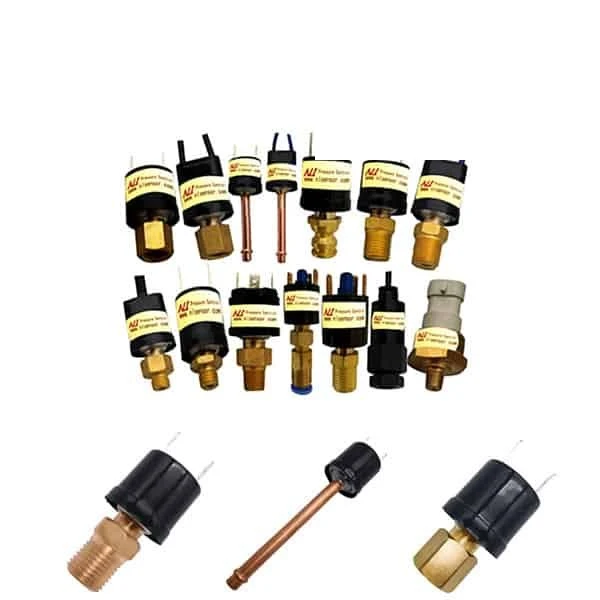 PC-100 Miniature
Compact OEM mechanical switch, -14.5 to 800 psi, over 100,000 cycles.
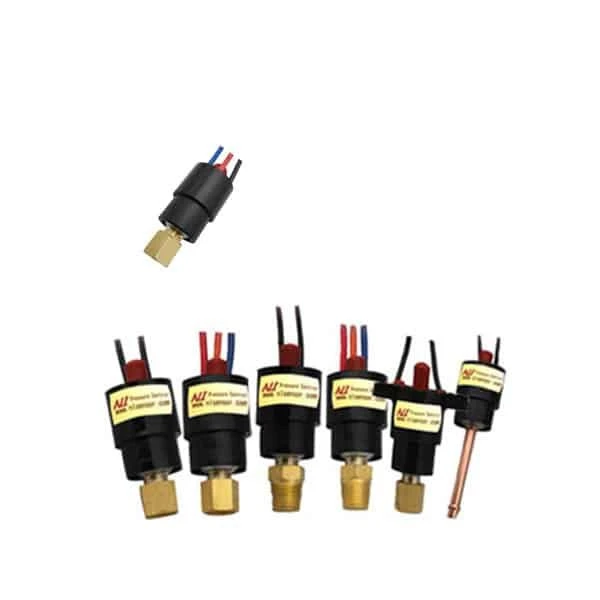 PC-200 Manual Reset
Latches after a trip for safety cutoffs, 30 to 800 psi.
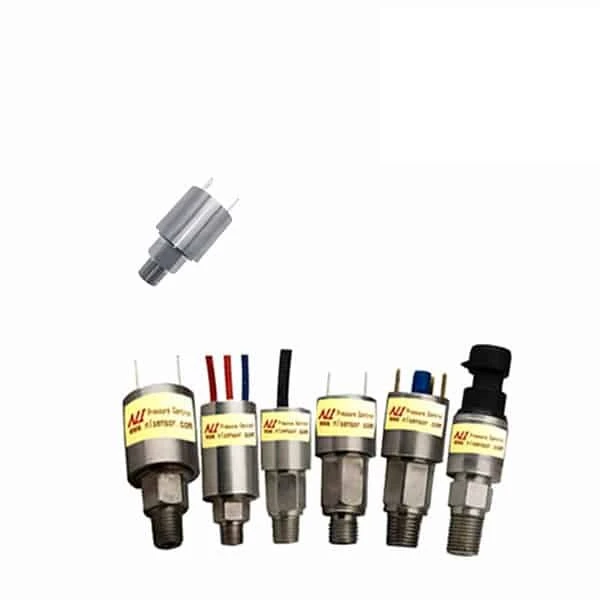 PC-300 Stainless Steel
Stainless body to 2200 psi, corrosion resistant.
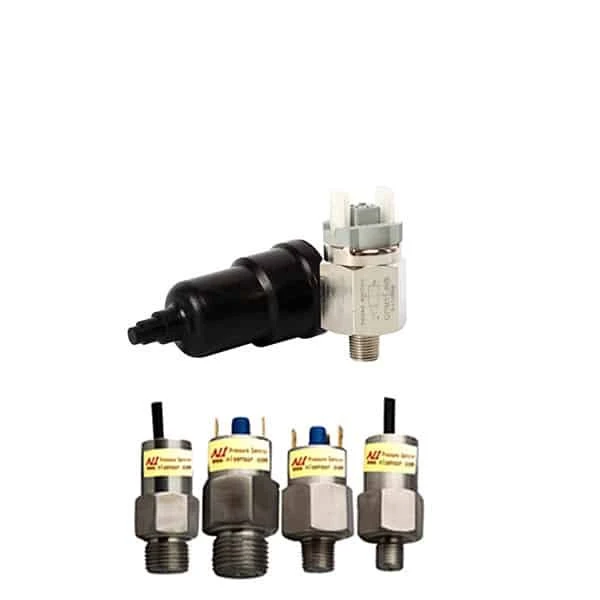 PC-400 Adjustable
Field-adjustable set point for low pressure.
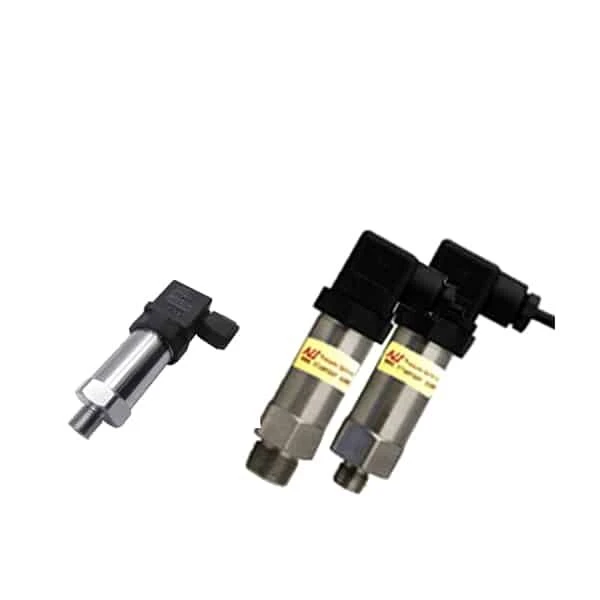 PC-500 Waterproof
Sealed for washdown and wet locations, to 3600 psi.
Industrial mechanical switches (Y series)
Heavier industrial switches with sealed micro-switches and an explosion-proof variant rated Exd II CT4 to T6. The Y-500 covers lower pressures and the Y-505 the higher end, both with a choice of housing material for the medium.
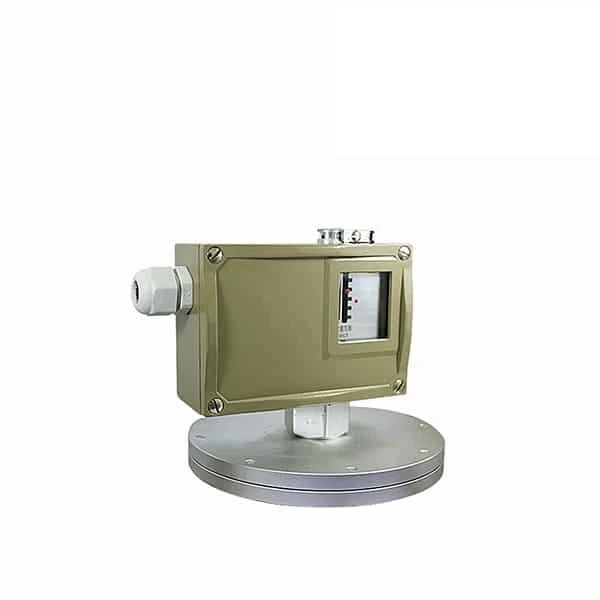 Y-500 Diaphragm
Low-pressure mechanical switch, -16 kPa to 2.5 MPa, no power.
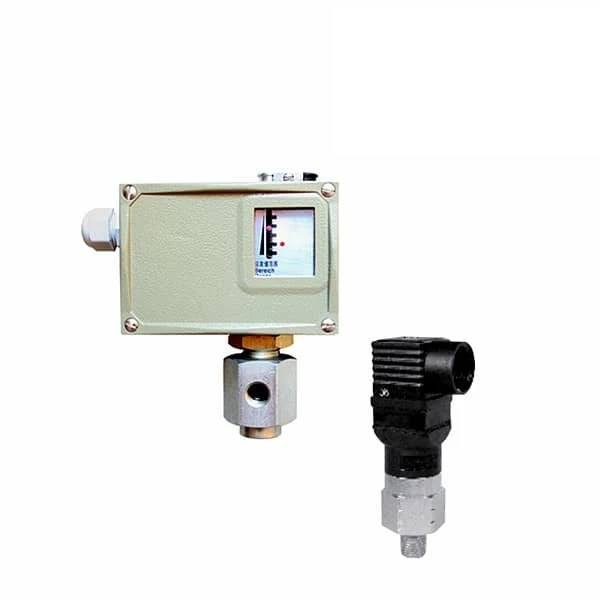 Y-505 Hydraulic
High-pressure bellows switch to 40 MPa, three housing materials.
Electronic pressure switches (YX series)
Digital switches with a display, adjustable setpoints, and an analog output alongside the switch contacts, rated IP65 on a 24 VDC supply. The YX-18 gives two switch outputs plus an analog signal; the explosion-proof YX18-F adds two more setpoints for hazardous areas.
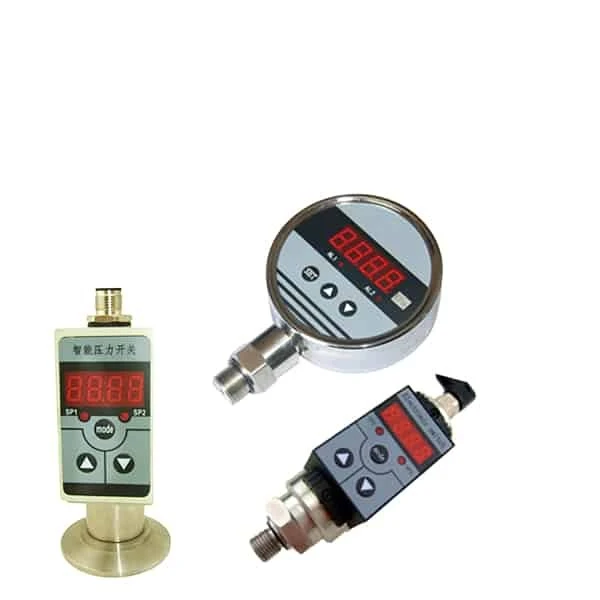 YX-18 Electronic
Digital switch with display, two setpoints, and an analog output.
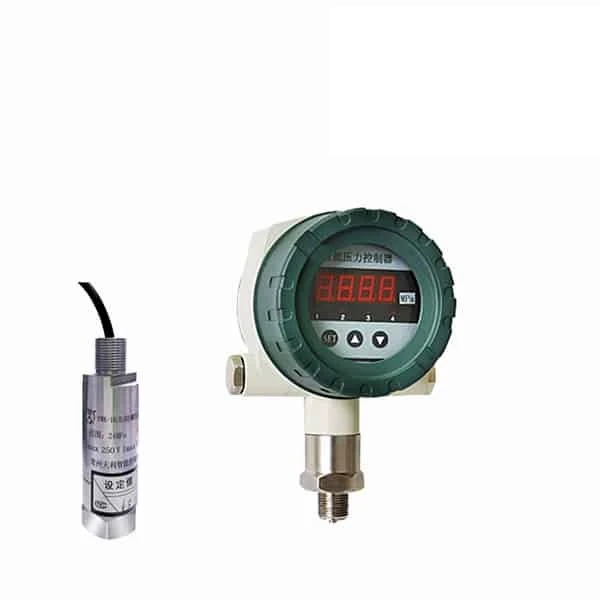 YX18-F Explosion Proof
Flameproof build with four setpoints for hazardous areas.
Specialty switches
Switches for duties outside the standard envelope: the YL-802 vacuum switch for negative pressure with a digital display, and a high-temperature switch for hot media that would damage a standard build.
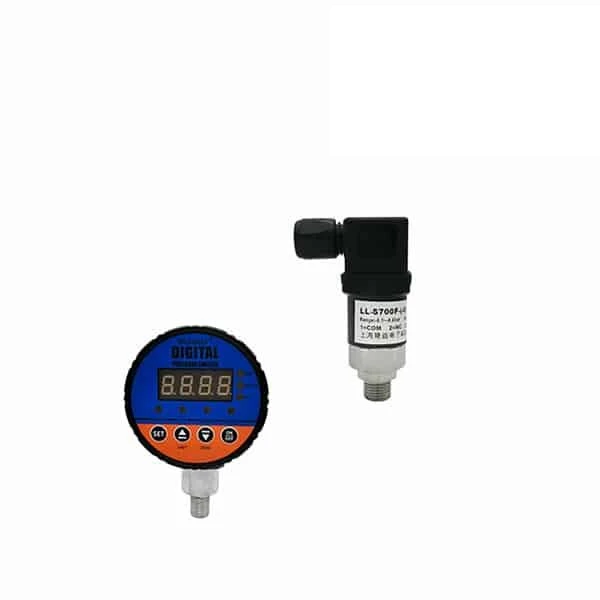 YL-802 Vacuum
Digital vacuum switch, 0 to -120 kPa, settable alarm and relay.
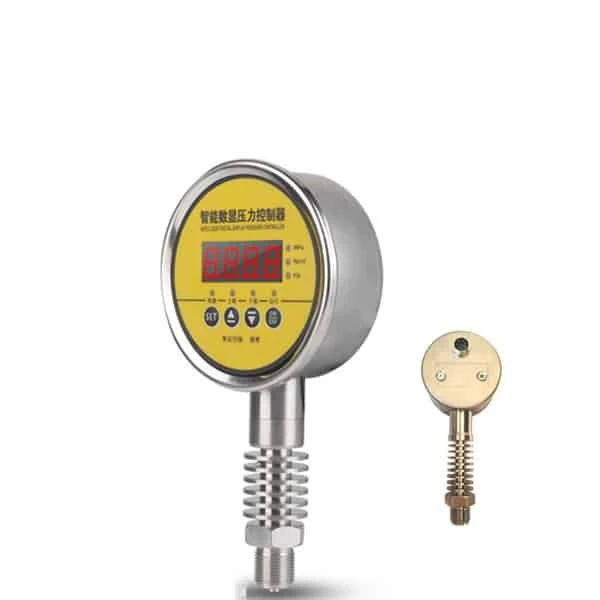 High-Temp Switch
Hot media to 300 C, four switch outputs plus analog and RS485.
Find your switch
Representative ranges and ratings; confirm the exact build per datasheet.
| Model | Type | Pressure range | Best for |
|---|---|---|---|
| PC-100 Miniature | Mechanical, bellows | -14.5 to 800 psi | Compact OEM, high and low set in one |
| PC-200 Manual Reset | Mechanical, manual reset | 30 to 800 psi | Safety lockout that holds after a trip |
| PC-300 Stainless Steel | Mechanical, stainless | -14.5 to 2200 psi | Higher pressure, corrosion resistance |
| PC-400 Adjustable | Mechanical, adjustable | -1 to 145 psi | Low pressure, field-set trip point |
| PC-500 Waterproof | Mechanical, sealed | -14.5 to 3600 psi | Washdown and wet locations |
| Y-500 Low Pressure | Mechanical (Ex option) | Low range | Industrial, explosion-proof variant |
| Y-505 High Pressure | Mechanical (Ex option) | High range | Industrial high pressure, Ex variant |
| YX-18 Electronic | Electronic, display | -0.1 to 60 MPa | Two setpoints plus an analog output |
| YX18-F Explosion Proof | Electronic, Ex | -0.1 to 60 MPa | Hazardous areas, four setpoints |
| YL-802 Vacuum | Electronic, display | 0 to -120 kPa | Vacuum and negative pressure |
| High-Temperature | High-temp build | kPa ranges up to 100 MPa | Hot media that a standard switch cannot take |
Choosing a pressure switch
Start with the switching technology. A mechanical micro-switch model is rugged, needs no power for the contact, and is the low-cost choice for a fixed or field-set trip point. An electronic model earns its place when you want a digital display, two or more adjustable setpoints, tighter repeatability, or an analog output alongside the contacts. The table sums up the trade-off.
| Criteria | Mechanical switch | Electronic switch |
|---|---|---|
| Cost | Lower | Higher |
| Setpoints | One, fixed or field-set | Two or more, adjustable on a display |
| Accuracy and repeatability | Basic | High |
| Power | None needed for the contact | Needs a supply (typically 24 VDC) |
| Output | Dry switch contact | Switch contacts plus an analog signal |
| Durability | Robust in harsh, hot, or wet sites | Prefers a protected environment |
| Best for | Simple on/off control and safety trips | Precise, multi-setpoint, or monitored control |
After the type, narrow the choice on a few points:
- Pressure range. Size it to the working pressure with margin. Low-pressure work uses a diaphragm or bellows element; high pressure uses a piston design.
- Deadband (hysteresis). This is the gap between the trip point and the reset point. Too small and the contact chatters near the set point; too large and it stays latched. Mechanical models have a set deadband; electronic models let you adjust it.
- Contact action. Normally open, normally closed, or a changeover (SPDT) that gives both. Pick the action that fails safe for your circuit.
- Medium and temperature. The wetted parts and seal must suit the fluid and its temperature; hot media call for a high-temperature build.
- Process and electrical connection. Thread or tube on the process side, and the contact rating for what the switch drives.
- Environment. Waterproof for washdown, explosion-proof for hazardous areas, and a vacuum build for negative pressure.
Contact logic, including what normally open and normally closed actually mean on these switches, is explained in our NO vs NC pressure switch guide.
FAQ
What is a pressure switch used for?
A pressure switch turns an electrical contact on or off when pressure crosses a set point, so it can start or stop a pump, raise an alarm, or interlock a machine without a separate controller. Across this range you will find diaphragm and bellows mechanical switches for direct, power-free control, and digital electronic switches that add a display, adjustable set points, and an analog output. You pick the type by the pressure range, the medium, and whether you need a reading as well as a trip.
How do you tell if a pressure switch is normally open or closed?
It comes down to the contact and how it is wired. Normally open (NO) contacts stay open until pressure reaches the set point, normally closed (NC) stay closed until then, and a changeover (SPDT) contact gives both in one, switching one circuit off as it switches another on. Mechanical switches are fixed to one form; the electronic models in this range let you choose the action and set the reset point, so one unit can serve a rising or a falling alarm.
Does a pressure switch require power?
A mechanical pressure switch needs no power: the process pressure moves the contact directly, which keeps it simple and dependable. The electronic and digital switches here do need a supply, usually 24 VDC, to run the display, the programmable set points, and any analog or RS485 output. Choose mechanical for a plain, power-free trip, and electronic when you want a reading, multiple set points, or remote signals.
Request a quote
Tell us five things and we match the right switch:
- Pressure range and the set point or points you need
- Mechanical or electronic (do you need a display or analog output)
- Contact rating and what the switch drives
- Medium and temperature, plus any vacuum requirement
- Environment (washdown, hazardous area, high temperature)
Tell us the application and we configure one unit, not a shelf part. Not sure which model fits? Reach our application engineers.