Home › Level Instruments › Capacitance Level Sensors
A capacitance level sensor reads level from the change in electrical capacitance between a probe and the vessel wall as the medium rises and falls. It handles liquids, solids and slurries, including foamy and vapor-filled tanks that defeat a beam. Instranova builds a plain capacitance transmitter and an RF admittance version that shrugs off coating. Pick by whether your medium clings to the probe; the pages below give real specifications and a quote checklist.
Our capacitance level sensors
Plain capacitance is the simple, cost-effective choice for clean media; RF admittance adds a guard circuit that ignores coating and build-up on the probe.
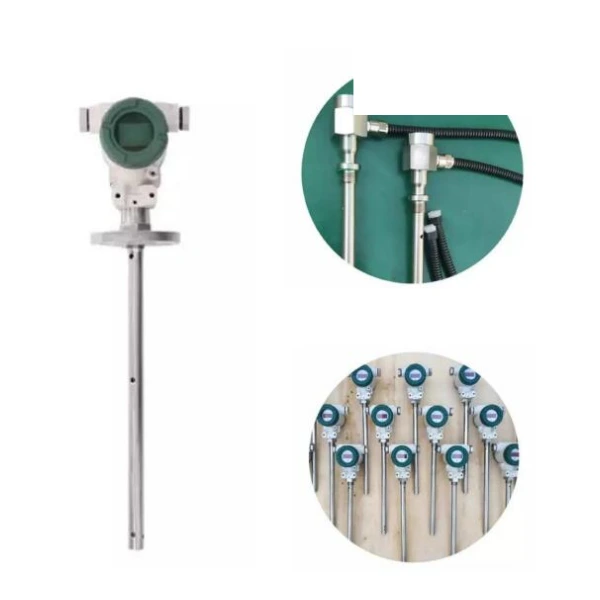 Liquid Nitrogen Level Sensor (SI-807)
Capacitance level for LN2, LOX and LNG tanks; -196 C, built to length.
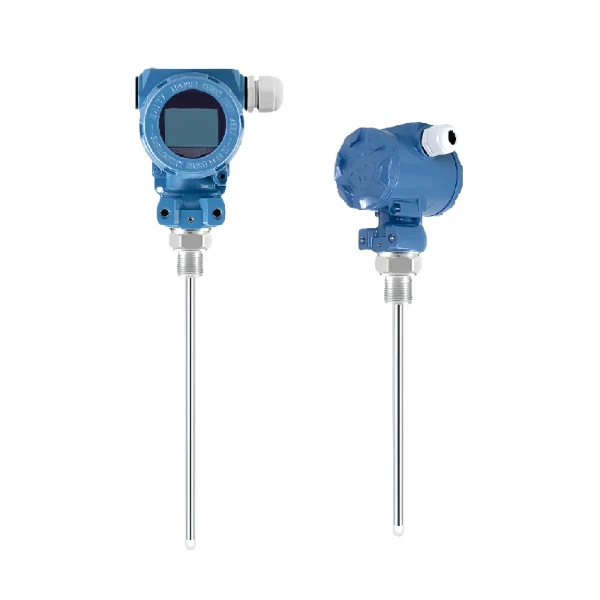 Capacitance Level Transmitter
Continuous level for clean liquids, solids and slurries.
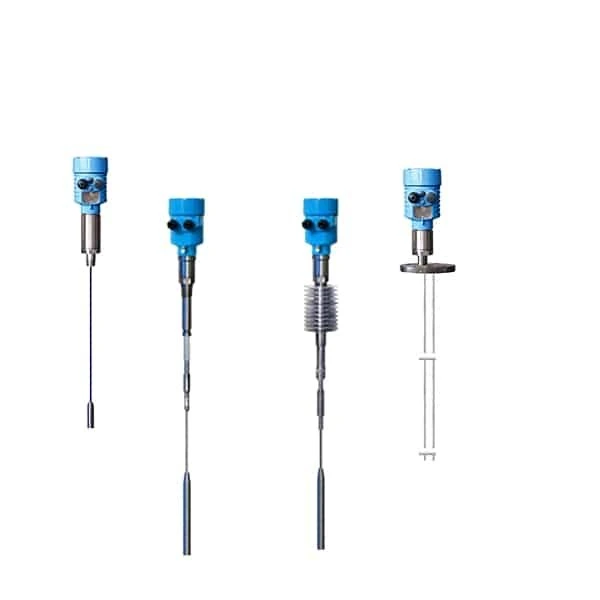 RF Admittance Level Sensor
Guarded circuit that defeats coating and clinging build-up.
Choosing a capacitance level sensor
The deciding factor is whether the medium coats the probe, and whether its dielectric constant is stable.
| Your medium | Pick | Why |
|---|---|---|
| Clean liquid or solid, stable dielectric constant | Capacitance Transmitter | Simple, proven and cost-effective |
| Sticky, conductive or coating media that cling to the probe | RF Admittance | A guard signal cancels the coating error |
| Non-contact preferred, or very low dielectric powder | Radar instead | No probe in the product, no coating to manage |
Capacitance is a contact method, so it works through foam and vapor where ultrasonic struggles, but it needs a reasonably stable dielectric constant. For a non-contact option, compare with a radar or ultrasonic sensor.
To see where capacitance sits among all nine level technologies, read our level transmitter types guide.
FAQ
What is a capacitive level sensor?
A capacitive level sensor uses a probe and the vessel wall as the two plates of a capacitor, with the medium between them as the dielectric. As the level rises, more of the gap fills with material that has a higher dielectric constant than air, so the capacitance rises. The electronics convert that change to a level reading.
What is the principle of capacitive level measurement?
Capacitance depends on the area of the plates, the distance between them and the dielectric constant of what lies between. The probe and wall are fixed, so the only variable is how much of the gap is filled by the medium. The instrument measures the capacitance, compares it to the empty and full calibration points, and reports the level in between.
What is the difference between ultrasonic and capacitive level measurement?
Ultrasonic is non-contact and times a sound echo off the surface, so it needs a clear air path and struggles in vapor or foam. Capacitance is a contact method that reads through foam and vapor, but the probe sits in the product and the medium must have a stable dielectric constant. Choose ultrasonic for clean non-contact mounting, capacitance for foamy or vapor-filled vessels.
Request a quote
Quote checklist, send these five points: the medium and whether it coats or is conductive; its approximate dielectric constant; the level range and vessel height; the probe material and mounting; and whether you need a hazardous-area rating. Tell us the application and we configure one unit, not a shelf part.
Written and technically reviewed by the Instranova engineering team, last reviewed 2026-06-21. Based on the Instranova capacitance and RF admittance datasheets plus field experience in process, chemical and bulk-solids service. Questions? Reach our application engineers.