Flow Meters › Irrigation Flow Meter
Irrigation Flow Meter
An irrigation flow meter measures the water an irrigation system takes from a well, a canal, or a supply main, in gallons per minute or cubic meters per hour, and totals it for scheduling, billing, and reporting. This page covers agricultural and municipal irrigation: wells, pivots, drip and flood mains, and district turnouts.
Lawn and sprinkler systems are a different market. Controller-matched meters under 2 inches serve turf zones and leak alerts, and they pair with the controller brand rather than with the pipeline.
For a farm or district line, the picture is different. The propeller meter has served American irrigation for a century, and magnetic, ultrasonic, and turbine meters now compete with it. The right flow meter for irrigation work turns on accuracy, power at the site, and what the water carries.
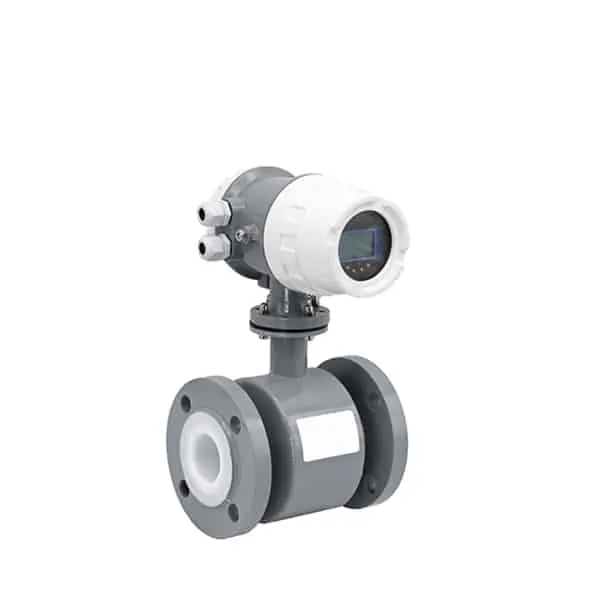 Magnetic Flow Meter
Full-bore magmeter with no moving parts; 0.5% of reading, 0.2% option, and liners rated for silt and sand.
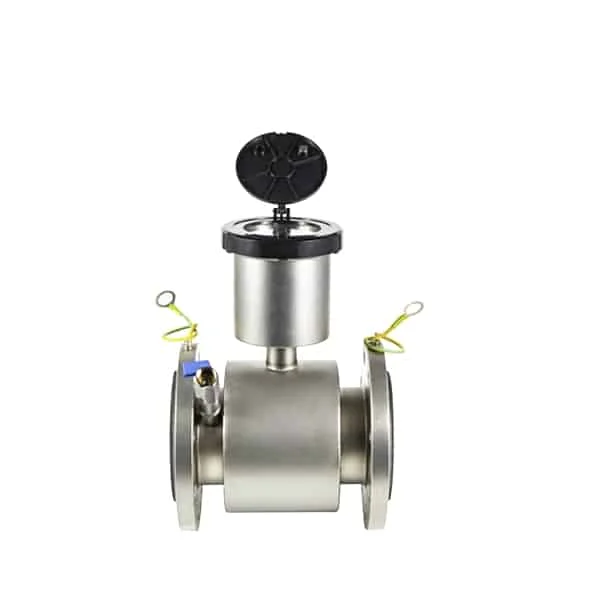 Battery Powered Magnetic Flow Meter
Lithium-powered magmeter for wells with no line power; 3 to 5 year battery and GPRS telemetry options.
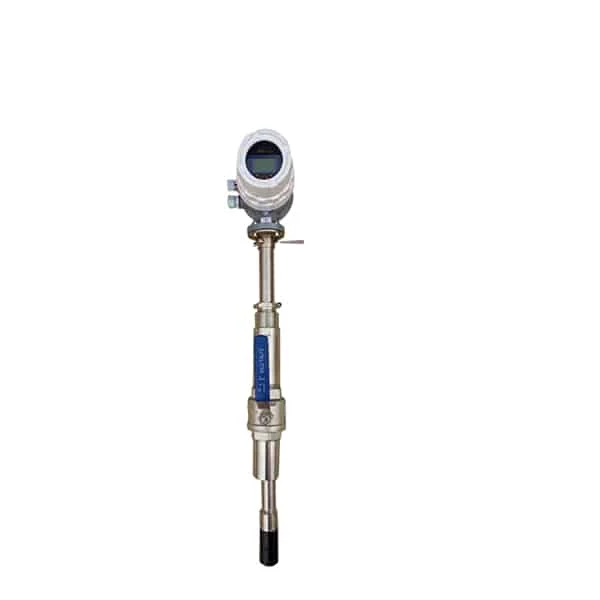 Insertion Magnetic Flow Meter
Hot-tap probe for large mains, DN300 to DN3000, installed through a ball valve without draining the line.
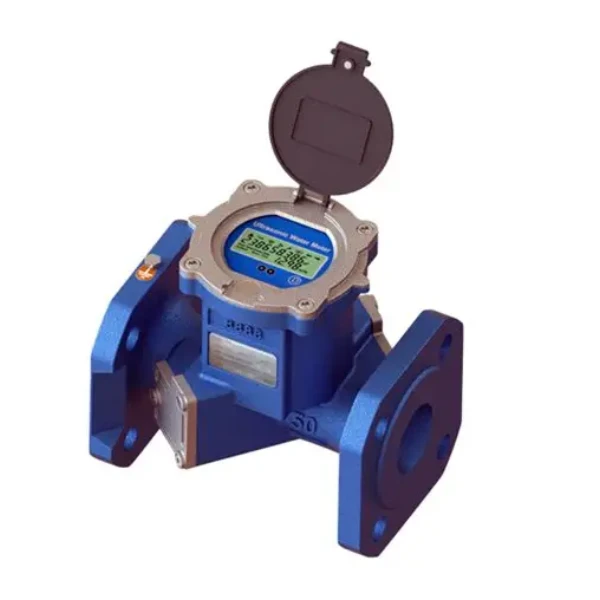 Ultrasonic Water Meter
Billing-grade static meter to ISO 4064 class 2 with an R200 turndown and a battery life around ten years.
Choosing an irrigation flow meter
Every technology below meters irrigation water. They differ in accuracy, in what powers them, and in whether anything inside them wears. The table gives the numbers; the sections after it cover sizing, power, and reporting.
| Technology | Accuracy | Power | Moving parts | Choose it for |
|---|---|---|---|---|
| Propeller | ±2% of reading | None | Propeller, bearings, drive train | The established ag-main meter where zero power and a mechanical register are the priority |
| Magnetic, full bore | ±0.5% of reading; 0.2% option | 85-265 VAC or 24 VDC | None | Best accuracy at powered sites; handles silty and dirty water |
| Magnetic, battery | ±0.5% of reading | 3.6 V lithium, 3 to 5 years | None | Remote wells and buried pits with no line power; GPRS telemetry |
| Magnetic, insertion | ±2.5% | 220 VAC, 24 VDC or lithium | None | Large mains DN300 to DN3000 at a fraction of full-bore cost, hot-tap install |
| Ultrasonic water meter | ISO 4064 class 2 | 3.6 V lithium, about 10 years | None | Billing-grade totals at turnouts; R200 turndown catches trickle flows |
| Turbine | ±0.5% of reading | 9-36 VDC or 3.6 V lithium | Rotor and bearings | Clean filtered water at low cost; needs a strainer where sand is present |
Straight pipe matters as much as the meter grade, and the requirements differ. A propeller meter is specified at five diameters upstream and one downstream. Ten upstream are preferred, and straightening vanes are the workaround on short runs. A full-bore magmeter needs about five diameters upstream and three downstream, more after a pump or a double elbow.
A turbine meter needs ten upstream and five downstream plus a strainer. Reserve that pipe length when the pump stand is designed, because adding it later costs far more than the meter.
Sizing by velocity
Sizing an irrigation flow meter starts from the flow it will carry, not from the pipe it happens to sit in. The link between them is velocity: in US units, gpm = 2.448 × d² × v, with d in inches and v in feet per second. Irrigation mains are commonly designed near 5 ft/s (1.5 m/s). At that velocity an 8 inch main carries about 783 gpm, and a DN200 line at 1.5 m/s carries about 170 m³/h.
Our pipe velocity calculator does this arithmetic in both directions.
The trap is a meter that matches the pipe but not the flow. Suppose a pivot draws 400 gpm through a 10 inch main: velocity is only 1.6 ft/s, near the bottom of most meters’ range, where registration falls off. Necking the meter run down to 6 inch raises the velocity to about 4.5 ft/s, in the middle of the range, and the reducers cost less than the error. Check the meter’s minimum flow against the smallest zone you irrigate, not against the season peak.
Power at the well
A well flow meter usually goes in where line power is absent or unreliable, and that has shaped this market more than accuracy has. The propeller meter runs with zero electronics: the register is driven by the flow itself. The battery magmeter carries a 3.6 V lithium pack that runs 3 to 5 years on pulsed excitation. The static ultrasonic water meter stretches a battery to about ten years because it has no coil to drive.
Decide the output before ordering. A mechanical register is read at the wellhead once a week. A pulse output feeds a datalogger or a telemetry unit. GPRS and NB-IoT builds report totals daily without a site visit, which is what district reporting increasingly assumes.
A 4-20 mA signal only makes sense where a panel is present and powered, so it belongs on booster stations rather than field wells. Solar panels with a small battery cover the gap where a powered transmitter is wanted far from the grid.
Accuracy and reporting
Groundwater districts and irrigation agencies write accuracy into their rules, and the numbers vary more than most buyers expect. A requirement of ±5% of reading is common in published US district standards.
Idaho’s measurement standards accept ±10% from mechanical meters but hold magnetic and ultrasonic meters to ±5%. Some Nebraska districts require ±2% at installation, and some California agencies add a calibration check every three years. Read the rule for your district before choosing, because it can decide the technology by itself.
Against those bands, a propeller flow meter at ±2% of reading passes most rules when new but sits at the edge of the strictest ones. Its accuracy also drifts as bearings wear. A magmeter at ±0.5% clears every published band with margin and holds it, because nothing in the bore wears.
Where the water meter for irrigation feeds a bill rather than a report, the ISO 4064 class framework of the ultrasonic meter is the cleaner fit. Billing disputes are settled by meter class, not by a datasheet figure. For periodic verification without cutting pipe, a portable clamp-on meter checks the installed meter in place; our flow meter calibration guide covers how to run that comparison.
Wells and open channels
Every pipe meter on this page assumes a full pipe. A well pump starting against an empty column pushes a slug of air through the meter. A line that drains downhill after shutdown leaves the meter part empty. Both misregister.
Keep the meter in a section that stays flooded, on a rising run or behind a goose-neck, and let the pump purge air before totals count. An irrigation water flow meter on the discharge covers the compliance side; on the well itself, drawdown is the other number worth logging, and our guide to measuring well water level explains how.
Canals, laterals and drain returns do not run full, and a full-pipe meter cannot read them. A partially filled pipe magnetic flow meter measures level and velocity together in gravity lines from DN300 to DN6000. Dirty return water with solids suits a Doppler meter, which uses the suspended particles as its signal. Flumes and weirs remain the classic open-channel answer where a structure already exists.
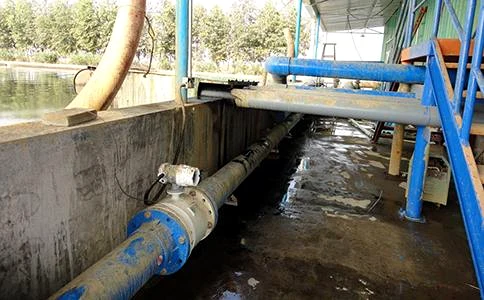
Fertigation compatibility
Fertigation changes the water chemistry the meter is exposed to. UAN itself is handled by stainless steel, but the phosphoric and sulfuric acid blends injected to control scale and pH attack rubber liners and can pit the 316 stainless electrodes that are standard for plain water.
A magmeter on a line that carries acid injection should therefore be specified with a PTFE liner and, for aggressive blends, Hastelloy electrodes. The simpler layout avoids the question: put the injection quill downstream of the meter, so the meter sees only source water and the wetted parts stay standard.
Metering the chemical itself is a separate task at a much smaller scale. Injection skids run liters per hour, which is gear meter range, not magmeter range. Pairing a main-line meter with a small chemical meter closes the loop on parts per million dosing.
Application note
Groundwater well metering. A typical district installation puts a battery magmeter on each well discharge, sized so that the pump’s design flow sits mid-range, with five diameters of straight pipe reserved upstream when the pump stand is built. The meter logs totals internally and reports them over GPRS, replacing the power-bill estimate in which water use is inferred from kilowatt hours and pumping head. The estimate errs high; the meter settles the allocation.
FAQ
What is an irrigation flow meter?
An irrigation flow meter measures and totals the water an irrigation system takes from a well, canal or main, usually in gallons per minute or cubic meters per hour with an acre-feet or cubic-meter total. Districts use the totals for allocation and compliance, growers use them for scheduling and pump health, and utilities use them for billing. Propeller, magnetic, ultrasonic and turbine meters all serve, chosen by accuracy, site power and water quality.
How to measure irrigation flow rate?
Install a meter in a section of pipe that always runs full, with the straight run the technology needs: five diameters upstream for a propeller or magmeter, ten for a turbine. Read rate in gpm or m³/h and let the totalizer accumulate volume. For a spot check without cutting pipe, a portable clamp-on ultrasonic meter strapped to the outside of the pipe reads the same line in minutes.
Is an irrigation meter worth it?
Where a district or permit requires reporting, the question is settled. Elsewhere the meter pays for itself through scheduling and pump monitoring: metered flow against pump curve exposes a worn pump or a plugged screen long before yield visibly drops, and metered totals replace estimates from electricity bills, which err high. A meter also catches the slow losses, such as a leaking check valve draining a main overnight.
How many GPM do I need for irrigation?
That is set by the crop demand and system design, not by the meter: application rate times area, divided by the hours you can run. The meter follows the answer. Once design flow is known, pick a meter size that puts it near mid-range at a pipe velocity around 5 ft/s; a 6 inch meter run at that velocity carries roughly 440 gpm, an 8 inch about 780 gpm. Size from the flow, then adapt the meter run to the pipe with reducers.
Request a quote
Tell us the line size, the design flow, whether the site has line power, the water source, and any district accuracy rule the meter must satisfy. We size the meter, set the outputs and telemetry, and confirm the wetted materials for fertigation service.