Flow Meters › Fuel Flow Meter
Fuel Flow Meter
A fuel flow meter measures gasoline, kerosene, diesel, or fuel oil moving through a pipe: into a burner, a generator, a loading arm, or a day tank. This page covers industrial metering. Recreational boat fuel monitors, car dashboard gauges, and aircraft panel instruments are different products and are not covered here.
The same selection logic serves an oil flow meter on a fuel oil transfer line. It runs on four questions: how thin the fuel is, what accuracy basis the job needs, how much the temperature at the meter moves, and whether the total is for process control or for money.
Three related services have their own pages. For dedicated diesel transfer and generator lines, see the diesel flow meter page. For circulating hydraulic and lube oil, see the hydraulic flow meter page. For LPG and propane, which flash to vapor at line conditions, see the LPG flow meter guide.
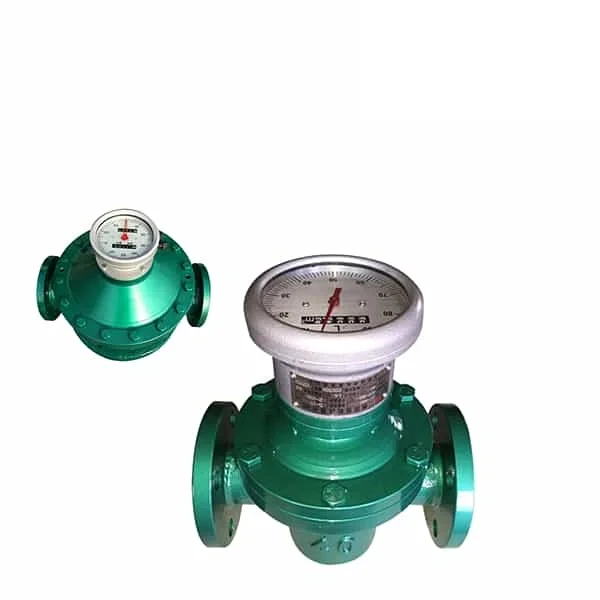 Oval Gear Flow Meter
Positive displacement for diesel and fuel oil transfer; accuracy improves as the fuel thickens, and no straight run is needed.
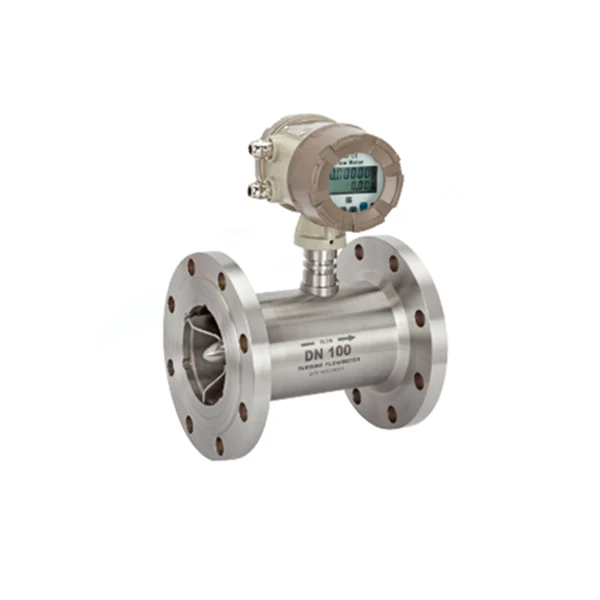 Turbine Flow Meter
For clean, thin fuels such as kerosene and diesel at higher flow; low cost with pulse output for totalizing.
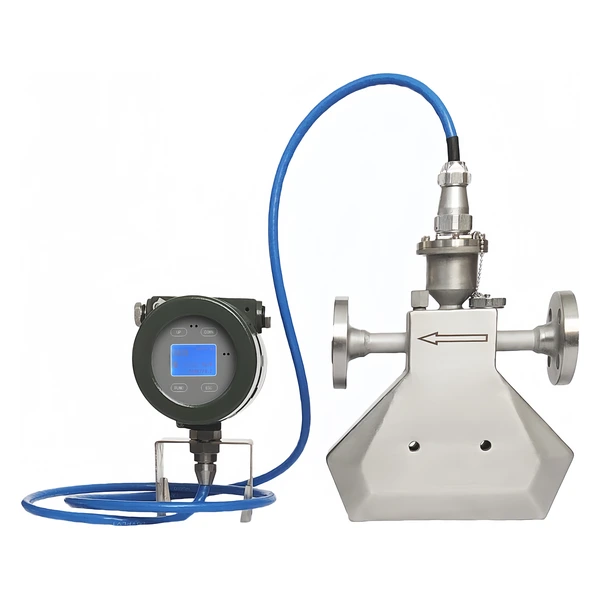 Coriolis Mass Flow Meter
Reads kilograms directly plus density; removes the temperature correction question for custody and bunker work.
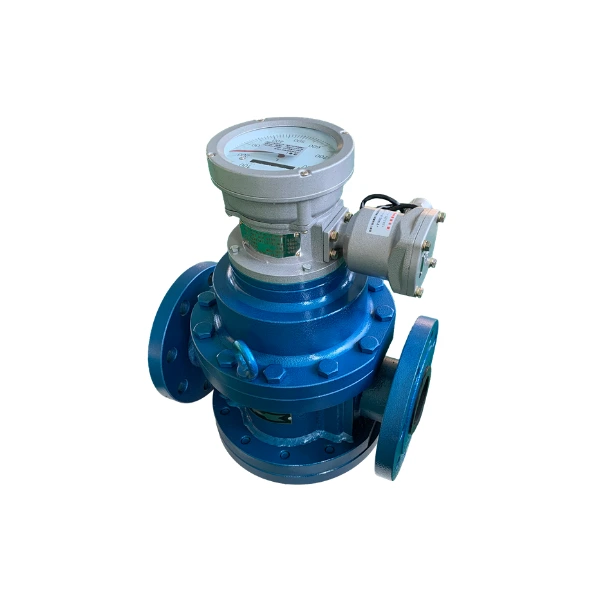 Spiral Rotor Flow Meter
Positive displacement for heavy and preheated fuel oil at high flow; smooth, low-pulsation metering on transfer lines.
Choosing a fuel flow meter
All the technologies below meter refined fuels. They differ in the viscosity window they read accurately, in the accuracy basis, and in what the reading costs. The table below puts numbers on each choice, and the rest of the page explains the physics.
| Technology | Best fuels | Viscosity | Accuracy | Choose it for |
|---|---|---|---|---|
| Oval gear PD | Diesel, heating oil, fuel oil | Standard to 200 mPa·s; high-viscosity builds to 2,000 | 0.5% of reading; 0.2% option | Transfer totals and burner feed without straight-run space; needs a strainer |
| Spiral rotor PD | Heavy and preheated fuel oil | High viscosity; high-temperature builds to 250 C | 0.5 class; 0.2 option | High flow on hot residual oil with low pulsation and low noise |
| Turbine | Kerosene, diesel, gasoline with care | Thin, clean fuel near the calibration viscosity | 0.5% of rate; 0.2% option | Larger flows of clean product at low cost; DN2 to DN300 |
| Coriolis | Every fuel, gasoline to bunker | Any; reads mass and density together | 0.1 to 0.5 class | Custody transfer, bunkering, and anywhere the total stands in kilograms |
| Clamp-on ultrasonic | Light and medium oils in larger lines | Single-phase, acoustically clean product | 1% of reading | Checking an installed meter or auditing a line without cutting pipe |
The oval gear and spiral rotor meters are both positive displacement designs: every rotation traps and passes a known volume, so a thicker fuel seals the clearances better and the reading holds. For residual oils and blends far beyond fuel grades, the high viscosity flow meter page carries the selection further.
Fuel properties
Fuels are not interchangeable at the meter. Density decides what a liter weighs, viscosity decides which technology reads it accurately, and flash point decides the electrical rules around it.
| Fuel | Density at 15 C | Viscosity | Flash point | At the meter |
|---|---|---|---|---|
| Gasoline (petrol) | 0.72 to 0.78 kg/L | About 0.5 to 0.75 cSt at 20 C | About −43 C | Thin and dry: PD slippage rises, and the line is a flammable-vapor area at any ambient |
| Kerosene and Jet A | 0.78 to 0.81 kg/L | 1 to 2 cSt at 20 C | 38 C minimum | Clean and stable; well suited to turbine and PD meters; aviation custody adds its own rules |
| Diesel and heating oil | 0.82 to 0.845 kg/L (EN 590) | 2 to 4.5 cSt at 40 C | Above 55 C | The easiest fuel to meter; covered in depth on the diesel flow meter page |
| Heavy fuel oil (bunker) | 0.92 to 0.99 kg/L | Grades named by viscosity at 50 C: 180 or 380 cSt (ISO 8217) | 60 C minimum | Preheated, viscous lines: PD or Coriolis only; heated meter bodies by build |
A gasoline flow meter runs on a fluid several times thinner than diesel, with almost no lubricity. In a PD meter that thin film lets more product slip past the gears, and in a turbine the rotor bearings get no lubrication help from the fluid. State gasoline explicitly in the inquiry so the clearances, bearings, and seals are specified for it, rather than assuming a diesel meter transfers over.
Volume, mass and temperature
Fuel is priced by volume but burned by mass, and the volume moves with temperature. Gasoline expands by roughly 0.00095 of its volume per degree C, four to five times the figure for water, and diesel by about 0.00083. Take a 20,000 L gasoline receipt metered at 25 C: at the 15 C reference it is about 19,810 L. The 10 C swing moved the number by 0.95 percent, which is larger than the stated accuracy of every meter in the table above.
Volume correction tables in ASTM D1250 and API MPMS Chapter 11.1 exist for exactly this, restating a metered volume at 15 C or 60 F. In practice there are three ways to handle it: correct the volumetric total from a separate temperature reading, order the meter with built-in temperature compensation, or step around the whole question with a fuel mass flow meter.
A Coriolis meter totals in kilograms directly and reports live density, which also flags a product change or water in the line. The mass versus volumetric flow guide works through the conversion math.
Custody transfer rules
Many low-cost transfer meters are stamped “not for fluid resale,” and the stamp is rarely explained. Selling fuel across a meter puts that meter under legal metrology: in the United States that means NIST Handbook 44 rules and NTEP type approval, and in most other markets approval under OIML R117, the international recommendation for fuel measuring systems. A meter without the approval can be accurate; it just cannot legally set the invoice.
Approved systems carry an accuracy class, and class 0.5, an error budget of half a percent on the delivered quantity, is the common assignment for road fuel deliveries. Fiscal meters are also proved: the as-found error is checked against a reference on a schedule, and the K-factor is adjusted from that record. The flow meter calibration guide covers proving intervals and K-factor correction. For plain consumption monitoring, none of this applies, which is why the same size of meter can differ several-fold in price.
Conductivity rules out magnetic
A magnetic flow meter needs a liquid conductivity of at least 5 µS/cm, and no refined fuel comes close. Jet fuel dosed with static dissipator additive is specified at just 50 to 600 pS/m under ASTM D1655, which still leaves it several hundred thousand times short of the magnetic threshold. Untreated gasoline and diesel sit lower still. If a selection chart offers a magnetic meter for “conductive fuels” or biodiesel, check the conductivity line on the fuel certificate first: it will not reach the threshold.
The workable non-contact option on fuels is ultrasonic. A clamp-on ultrasonic flow meter strapped to the outside of the pipe reads a light or medium oil to about 1 percent, which makes it the standard way to audit a fuel line or cross-check an installed meter without breaking containment.
Flammable liquid safety
Flash point sets the electrical rules. Gasoline flashes at about −43 C, so a gasoline metering point produces ignitable vapor at any ambient temperature and the area around it is normally classified. The meter electronics and the pulse transmitter then must carry the matching protection, intrinsically safe or flameproof, and the Class I Division 1 versus Division 2 guide explains how those classes map to the installation.
Diesel and heavy fuel oil flash above 55 C and 60 C, so an unheated line usually sits below flash point and the rules relax. The second hazard is static. The same low conductivity that rules out magnetic meters lets charge build as fuel flows, which is why loading racks bond and ground the equipment, and why jet fuel carries that dissipator additive at all. Fast filling through fine strainers is the worst generator, so bonding comes before the first metered liter.
Water and air
A PD or turbine meter counts whatever passes through it. At a tank changeover or after a strainer clean-out, a slug of air spins the meter and registers as product, which is why truck unloading meters are ordered with an air eliminator ahead of the measuring chamber. The strainer itself is not optional on PD meters: one weld bead in the gear mesh stops the meter and the transfer with it.
Free water settles to the tank bottom under every fuel, and a low suction pulls it through the meter, where it reads as fuel and then reaches the burner or the customer. Watch the water layer at the source tank; the diesel tank gauging guide covers water-bottom detection. For the totals themselves, a pulse output into a totalizer keeps batch and running counts; the totalizer guide explains the pairing.
Application example
Marine bunkering, Philippines. An inquiry covered metering on a marine fuel and diesel line running 0 to 3,000 kg/h at up to 1 MPa. Proposed: a DN15 Coriolis mass flow meter at 0.2 percent accuracy with 4-20 mA, pulse, and RS485 outputs, so one instrument feeds the local display and the record system. Metering bunker fuel by mass sidesteps the density and temperature corrections a volumetric total would need at handover.
FAQ
How is fuel flow measured?
Three working principles cover almost all industrial fuel metering. A positive displacement meter traps fixed volumes between rotating gears and counts them, which suits viscous and variable fuels; a turbine meter spins with the flow velocity and suits clean, thin fuels; and a Coriolis meter weighs the flow directly in mass units. Each sends a pulse or 4-20 mA signal to a totalizer or control system. The right choice follows viscosity, accuracy, and whether the total is used for billing.
What are the different types of fuel flow meters?
Positive displacement meters (oval gear, spiral rotor) dominate transfer and consumption metering, turbine meters serve clean kerosene, diesel, and gasoline at higher flows, and Coriolis meters read mass and density for custody and bunker work. Ultrasonic meters, clamp-on or inline, check lines without cutting pipe. Magnetic flow meters are not on the list: refined fuels are non-conductive, so the magnetic principle has nothing to read.
What is the best flow meter for crude oil applications?
Crude oil custody metering, as on LACT units and pipelines, is dominated by positive displacement and Coriolis meters, proved regularly against a reference. Crude adds problems refined fuel does not have: entrained water and gas, wax, and wide viscosity swings, so the meter runs behind separation and strainers, and the water cut is measured separately. For refined product lines, the same PD and Coriolis choices apply with fewer corrections.
How to calculate oil flow?
Convert between volume and mass with density: mass flow equals volume flow times density. A burner drawing 500 kg/h of fuel oil at 0.86 kg/L takes about 581 L/h. Go the other way to size a meter from a volumetric spec. For billing-grade numbers, also correct the volume to the 15 C reference with the fuel’s expansion coefficient, or meter in mass directly and skip the correction.
Request a quote
Tell us the fuel and its temperature at the meter, the flow range, the line size, and whether the total is for control or for billing. We size the meter, configure the outputs, and confirm the pressure rating along with any hazardous-area requirement.