Home › Level Instruments › Radar Level Sensors
A radar level sensor measures level without touching the product, by timing a microwave echo off the surface. It reads through vapor, dust, foam and temperature swings that defeat other methods. Instranova builds a full radar range: 26, 80 and 6 GHz non-contact units, a guided-wave version for tough surfaces, and antennas for solids and corrosive media. Pick the frequency and antenna by the job; the pages below give real specifications and a quote checklist for each.
Our radar level sensors
Frequency and antenna decide the job. Lower frequencies are rugged and forgiving; 80 GHz gives a tight beam for fine powders and small fittings; a guided-wave probe ignores foam and turbulence altogether.
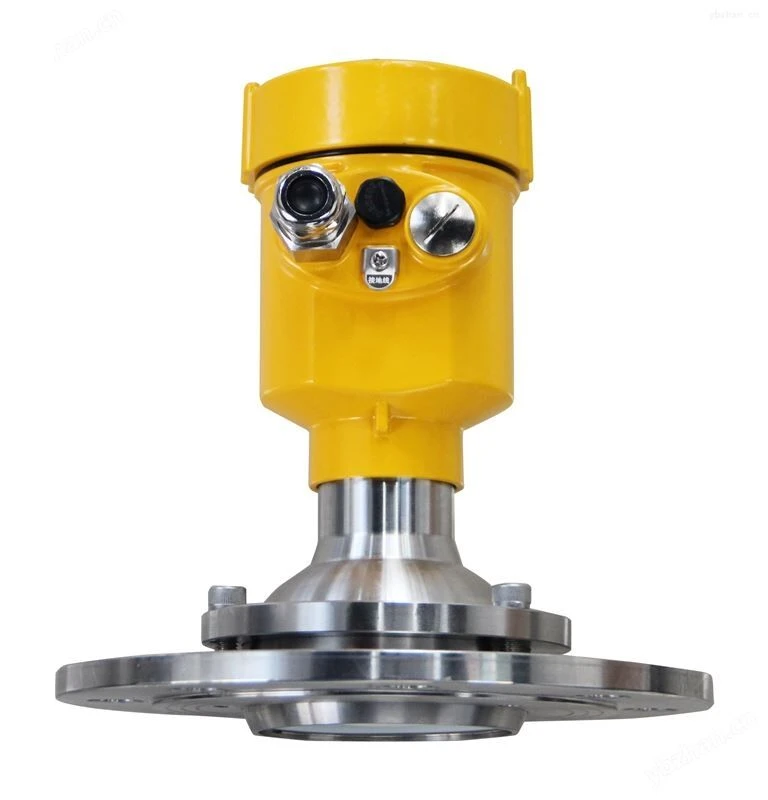 Radar Level Transmitter (26 GHz)
All-round non-contact radar for liquids and slurries.
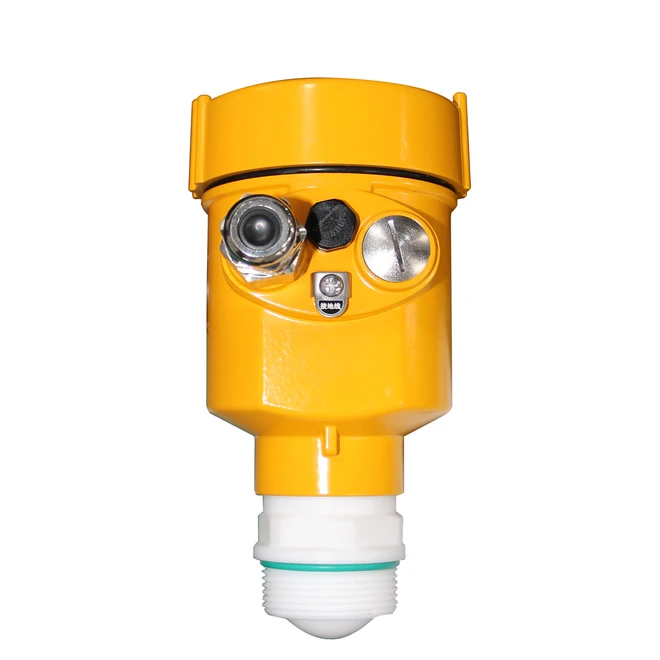 80 GHz Radar Level Transmitter
FMCW radar with a tight beam for fine powders and long ranges.
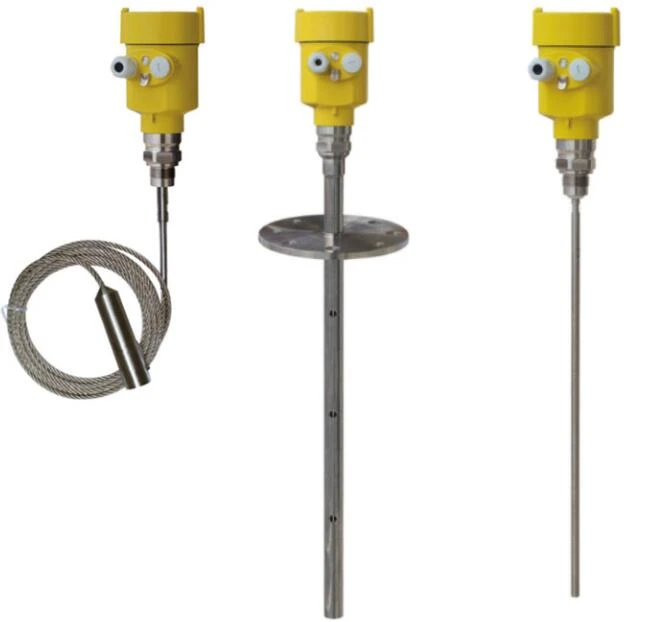 Guided Wave Radar
Contact TDR probe for foam, turbulence and low-dielectric media.
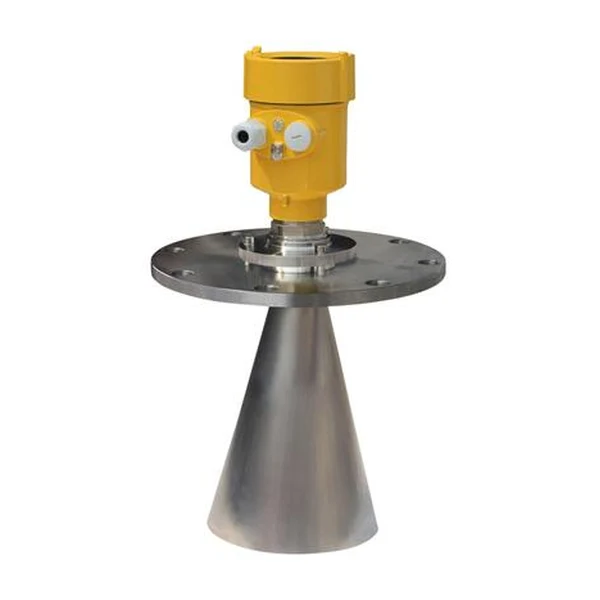 Radar Level Sensor for Solids
6 GHz horn antenna for coal, lime, aggregate and granules.
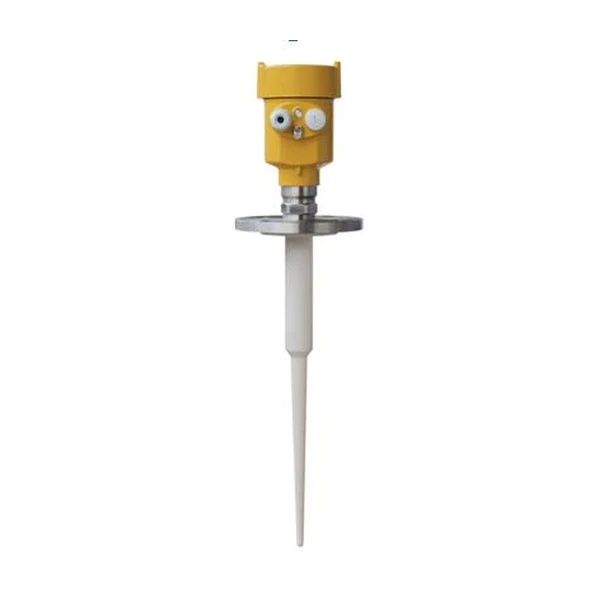 Radar Level Sensor for Corrosive Liquids
PTFE rod antenna for strong acids, bases and solvents.
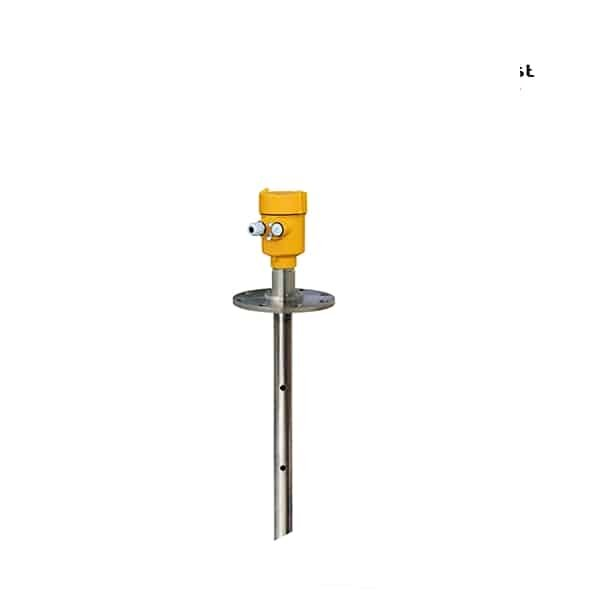 Radar for Slurry
6 GHz horn radar (SIRD-805) for slurry, viscous and low-dielectric liquids.
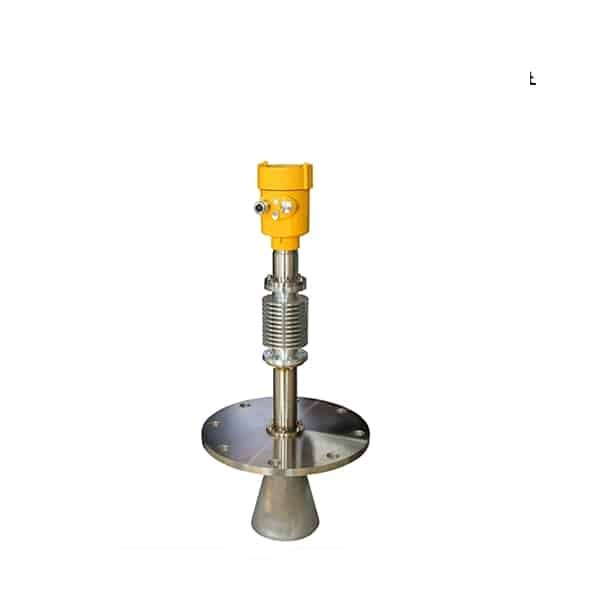 High-Temperature Radar
6 GHz horn radar (SIRD-806) to 400 C for blast furnaces, kilns and hot tanks.
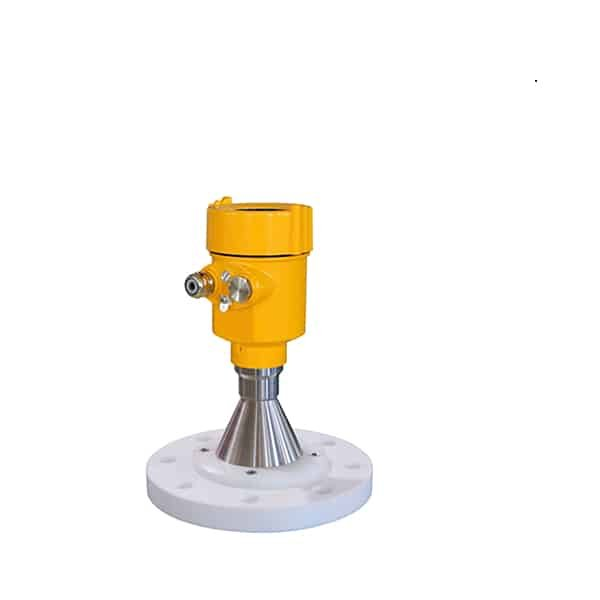 Sanitary Radar
26 GHz sanitary radar (SIRD-906) with SS/PTFE antenna for food, dairy and pharma tanks.
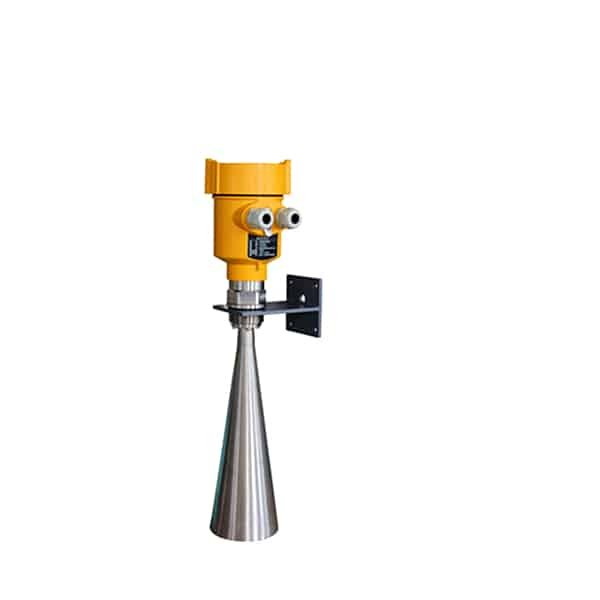 Radar Water Level Sensor
26 GHz radar (SIRD-908) for rivers, reservoirs and canals; bracket mount, IP67.
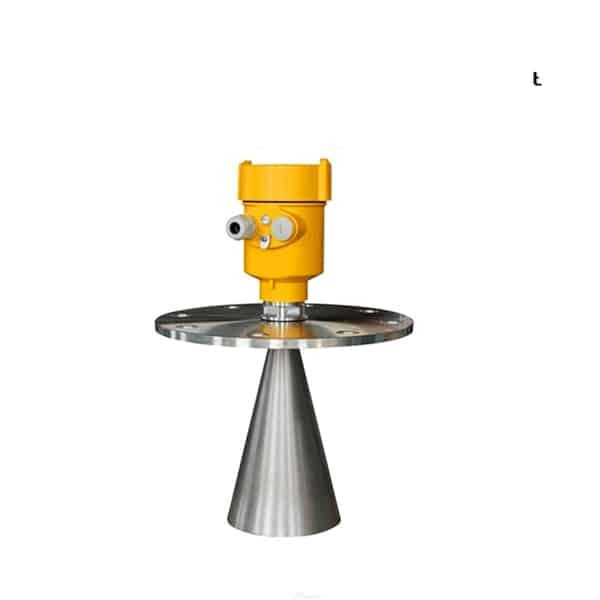 Radar for Oil Tanks
Explosion-proof 6 GHz radar (SIRD-803) for crude, light oil and volatile liquids to 35 m.
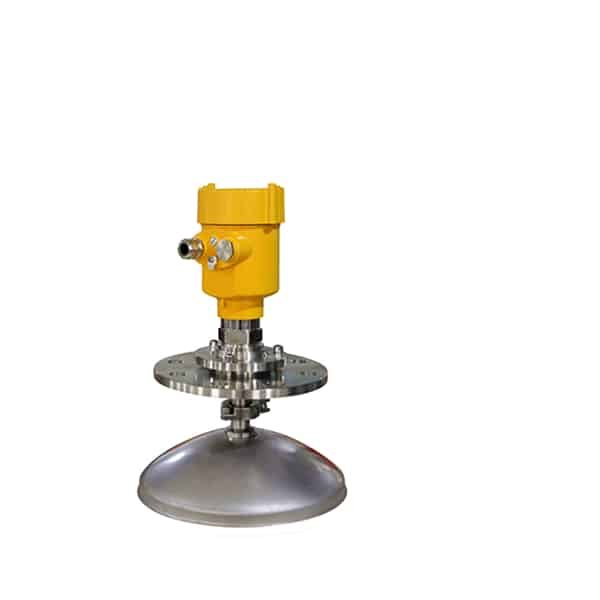 Long-Range Radar
26 GHz parabolic radar (SIRD-904) to 80 m for bulk solids in tall, dusty silos.
Choosing a radar level sensor
Start with the medium and the surface, then the range and the fitting. This table maps the common jobs to the right unit.
| Your job | Pick | Why |
|---|---|---|
| General liquid level in tanks and open vessels | 26 GHz non-contact | Rugged, forgiving, cost-effective all-rounder |
| Fine powders, long range, small nozzles | 80 GHz FMCW | Tight beam and high resolution catch a weak echo |
| Solid particles and blocks: coal, lime, aggregate | 6 GHz solids horn | Tuned for low-reflectivity bulk solids in dust |
| Strong acids, bases and corrosive vapor | PTFE rod antenna | Fluoropolymer is the only wetted part |
| Heavy foam, turbulence, low dielectric, interface | Guided wave | A contact probe ignores surface conditions a beam cannot |
Not sure between non-contact and ultrasonic at all? Radar holds its reading through vapor, dust and pressure that slow an ultrasonic pulse, but costs more; for clean, low-dust vessels an ultrasonic level sensor may be enough. For a contact alternative on conductive liquids, see the full level range.
If foam, agitation or a low-dielectric liquid is degrading the radar echo, a perforated pipe around the antenna often fixes it: see our guide to stilling well sizing and installation.
To weigh radar against the other eight level measurement technologies, see our level transmitter types guide.
If the product has a low dielectric constant, read our guide to dielectric constant and radar level measurement before choosing the frequency and antenna.
For storage tanks where the reading feeds an inventory or transfer figure, it helps to read the accuracy limits and the volume chain first. Those are explained in our tank gauging guide.
FAQ
How accurate is a radar level sensor?
Typical accuracy runs from about ±20 mm on a 6 GHz solids unit to a few millimeters on an 80 GHz liquid unit. The figure holds across vapor, dust, temperature and pressure in the headspace, because microwave travel time does not change with them. A steep solid surface or heavy foam widens it, which is where antenna and frequency choice pays off.
What are the disadvantages of a radar level sensor?
Radar costs more than ultrasonic or a float, and low-dielectric media such as fine dry powder or clean LPG return a weak echo that a low-frequency unit can under-read; those want 80 GHz or a guided-wave probe. Foam, heavy turbulence and internal structure also cut the signal and may need echo mapping during setup.
Request a quote
Quote checklist, send these five points: the medium (liquid, slurry or solid) and whether it foams or coats; the measured range and vessel height; the process temperature and pressure; the nozzle or fitting size; and whether you need a hazardous-area rating. Tell us the application and we configure one unit, not a shelf part.
Written and technically reviewed by the Instranova engineering team, last reviewed 2026-06-21. Based on the Instranova radar level series datasheets plus field experience across liquid, solid and corrosive service. Questions? Reach our application engineers.