Home › Level Instruments › Radar Level Sensor for Corrosive Liquids
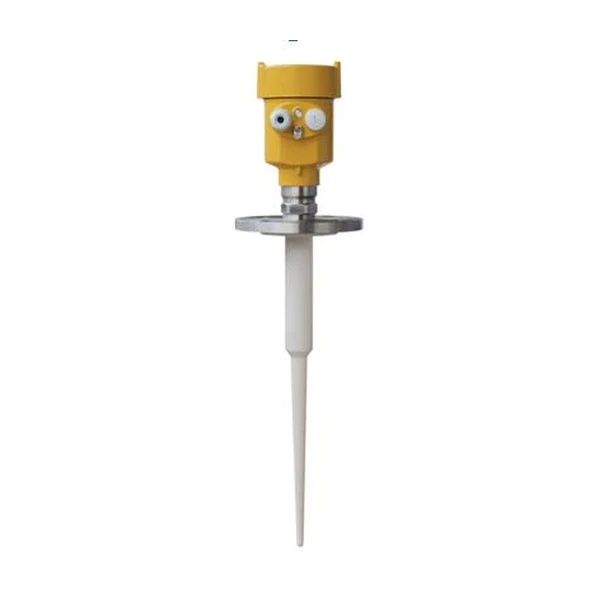
SIRD-802 Radar Level Sensor for Corrosive Liquids
A 6 GHz non-contact radar with a PTFE rod antenna, built for strong acids, bases and other aggressive liquids. The only wetted part is fluoropolymer, so it reads through fumes and condensation that corrode a steel horn, and the slim rod fits small chemical tanks.
- Antenna: PTFE rod, fully fluoropolymer-wetted
- Frequency: 6 GHz, non-contact
- Range: up to 20 m
- Accuracy: ±10 mm, repeatability ±1 mm
- Process: -0.1 to 1.6 MPa; -40 to 130 C (180 C high-temp)
- Hazardous area: Exia IIC T6 Ga / Exd IIC T6 Gb optional
Overview
Aggressive chemicals punish a level sensor in two ways. They eat the wetted parts, and their fumes coat and corrode anything in the headspace. A steel horn antenna pits; a float or a capacitance probe sitting in 50 percent caustic does not last. The SIRD-802 answers both problems with a PTFE rod antenna: the only part the process sees is fluoropolymer, which shrugs off most acids, bases and solvents. Measurement stays non-contact, so nothing dissolves and there is no probe to clean.
It is a 6 GHz pulse radar reading up to 20 m, with the rod antenna sized to drop into small and narrow tanks where a wide horn will not fit. Process pressure runs to 1.6 MPa and temperature to 180 C on the high-temperature build, which covers most chemical storage, dosing and reactor-feed tanks. For media that coat and cling rather than simply corrode, we point you to a contact RF method below instead of overselling one antenna.
Features
The only wetted part is fluoropolymer, so strong acids and bases do not attack it.
The microwave never touches the liquid, so nothing dissolves and there is no probe to replace.
The slim rod drops through a small nozzle into narrow chemical and dosing tanks.
Radar ignores acid vapor and condensation that blind ultrasonic and fog optical sensors.
Rated to 1.6 MPa and 180 C, covering sealed and warm chemical vessels.
Exia IIC T6 Ga / Exd IIC T6 Gb for volatile acid, solvent and base service.
Working principle
The SIRD-802 is a pulse time-of-flight radar. The PTFE rod antenna sends short 6 GHz microwave bursts down at the liquid. Part of each burst reflects off the surface and returns; the electronics measure the round-trip time, halve it, and multiply by the speed of light to get the distance to the liquid. Subtract that from the known tank height and you have the level. The microwave passes cleanly through the fluoropolymer rod, so the corrosive process only ever touches PTFE, never metal.
Technical specifications
Representative specifications; confirm the exact build per datasheet.
| Parameter | Specification |
|---|---|
| Applicable medium | Liquid, especially strong corrosive liquid |
| Typical application | Pressurized vessels, sewage, volatile acid and base storage |
| Antenna | Rod antenna (PTFE) |
| Frequency | 6 GHz, pulse radar |
| Measuring range | Up to 20 m |
| Accuracy | ±10 mm |
| Repeatability | ±1 mm |
| Process temperature | -40 to 130 C (standard); -40 to 180 C (high-temperature) |
| Process pressure | -0.1 to 1.6 MPa |
| Signal output | 4-20 mA / HART |
| On-site display | Four-digit programmable LCD |
| Power supply | Two-wire (DC24V); four-wire (DC24V / AC220V) |
| Explosion-proof | Exia IIC T6 Ga / Exd IIC T6 Gb (optional) |
| Housing | Aluminum single-cavity / aluminum double-cavity / plastic / stainless single-cavity |
| Process connection | Flange |
Wetted materials and corrosive media
The wetted part decides whether a level sensor survives. On the SIRD-802 that part is a PTFE rod, and PTFE resists almost the entire acid and base table: sulfuric, hydrochloric, nitric and hydrofluoric acids, sodium and potassium hydroxide, hypochlorite and most solvents. Because measurement is non-contact, the rod is not immersed and stressed the way a probe is. Match the technology to the chemistry, then size the range to the tank.
| Your service | Recommended | Why |
|---|---|---|
| Strong acid or base, clean surface, small or sealed tank | SIRD-802 (PTFE rod) | Fluoropolymer wetted part, non-contact, slim profile |
| Corrosive that coats, crystallizes or clings to the antenna | RF / capacitance | A contact method tolerates build-up that defeats a beam |
| Direct immersion in a corrosive sump or open pit | PTFE submersible | A sealed hydrostatic probe reads from the bottom up |
Installation
The PTFE rod is built for small and crowded tanks, but a few rules keep the echo clean. Mount the antenna clear of the fill pipe and agitator so the splash does not scatter the pulse. Keep the rod out of contact with the tank wall and any internal pipework, which would create a fixed false echo. Where strong fumes condense on the antenna, the fluoropolymer surface sheds droplets better than metal, but in heavy-coating service a wash nozzle or a switch to a contact method is the more honest fix. Standard process connection is a flange sized to the nozzle.
Output and wiring
The standard build is a two-wire 4-20 mA loop with HART on DC24V, which drops straight onto a PLC or DCS input. A four-wire version on DC24V or AC220V is available where you need mains power or extra drive for a local display. HART carries the level, the echo curve and diagnostics over the same pair, so a handheld can map false echoes and set the empty and full points without opening a tank full of acid.
Applications
The SIRD-802 suits level on aggressive liquids where a metal antenna or an immersed probe would not survive:
- Sulfuric, hydrochloric and nitric acid storage and day tanks
- Sodium hydroxide and other caustic storage
- Sodium hypochlorite and chemical dosing tanks in water treatment
- Volatile acid and solvent vessels in hazardous areas
- Sewage and effluent sumps with corrosive content
Application example
Chemical plant, concentrated sulfuric acid. A plant needed continuous level on a 93 percent sulfuric acid storage tank. A steel-horn radar would corrode in the acid fumes above the liquid, and an immersed probe was out of the question. We supplied a non-contact radar with a fully fluoropolymer-wetted antenna, so the only part exposed to the acid and its vapor is PTFE. The level reads through the headspace fumes, and there is no wetted metal to pit or replace.
Related products
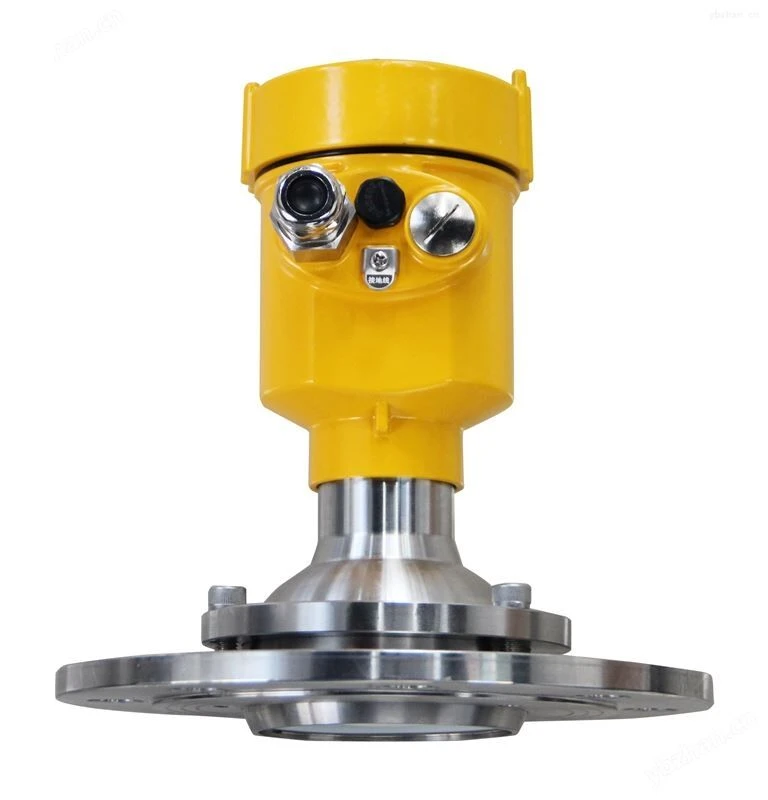 Radar Level Transmitter
26 GHz non-contact radar for general liquids and slurries.
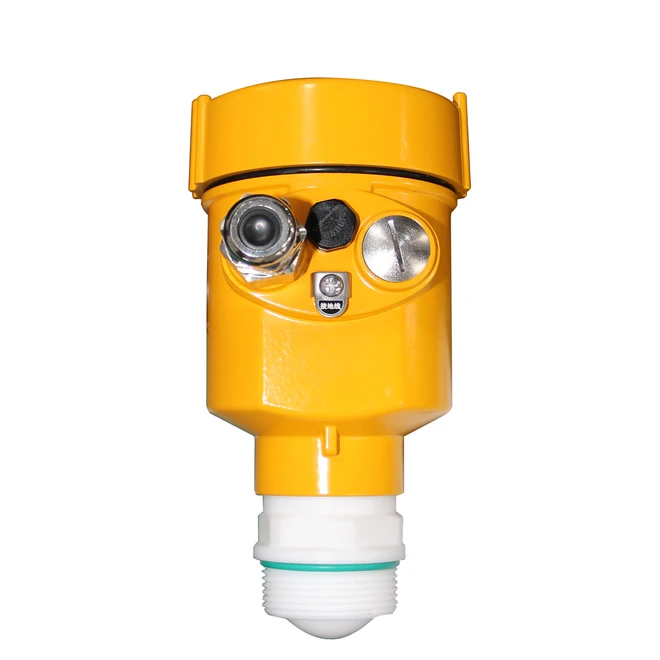 80 GHz Radar Level Transmitter
FMCW radar with a tight beam for long ranges and small fittings.
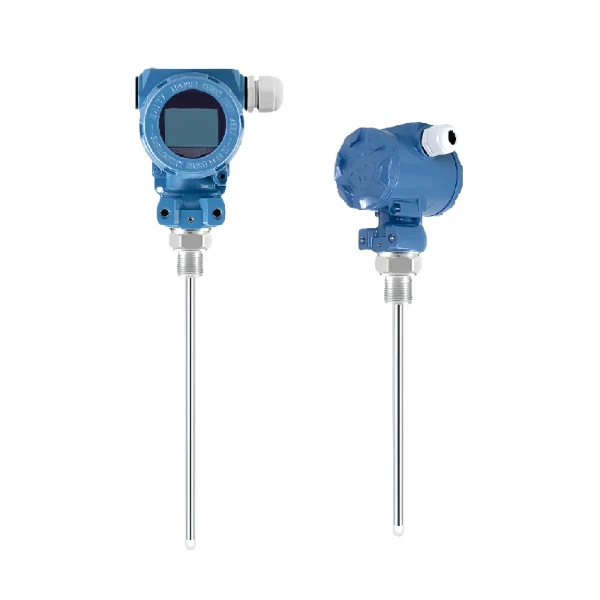 Capacitance Level Transmitter
Contact level for coating and clinging corrosive media.
Browse all level instruments →
For the tank-side view, our sulfuric acid tank level guide walks through concentration, antenna materials and overfill layers.
FAQ
What are the disadvantages of a radar level transmitter for corrosive service?
Radar costs more than a float or a simple gauge, and a media that coats or crystallizes on the antenna can weaken the echo over time; for those a contact RF method is steadier. Strong foam and heavy turbulence also reduce the return. For a clean, aggressive liquid in a sealed or small tank, though, the PTFE rod antenna is hard to beat.
Request a quote
Quote checklist, send these five points: the chemical and its concentration; tank height and the nozzle size or fitting; process temperature and pressure; the maximum measured range; and whether you need a hazardous-area rating. Tell us the application and we configure one unit, not a shelf part.
Ordering example: SIRD-802, 6 GHz PTFE rod antenna, 0-6 m range, two-wire 4-20 mA / HART, -40 to 130 C standard housing, Exia IIC T6 Ga, DN80 flange.
Written and technically reviewed by the Instranova engineering team, last reviewed 2026-06-21. Based on the SIRD-802 datasheet plus field experience with corrosive-liquid level in chemical plants. Questions? Reach our application engineers.