Home › Products › Level Instruments › Radar Level Sensors › High-Temperature Radar Level Sensor
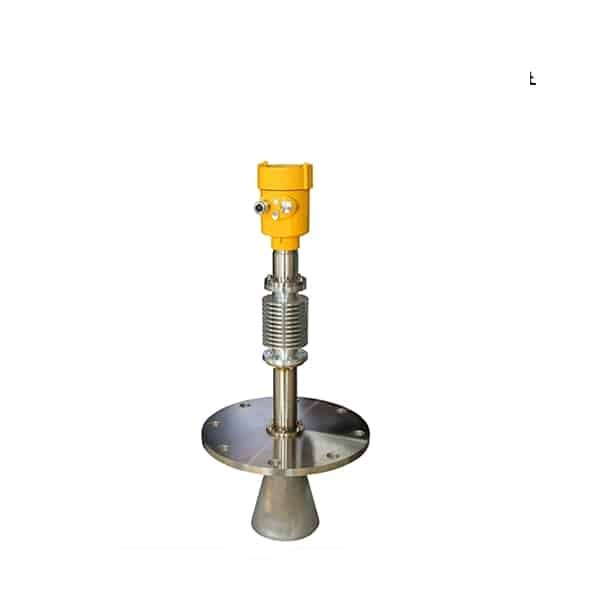
High-Temperature Radar Level Sensor (SIRD-806)
A 6 GHz horn-antenna radar rated to a 400 °C process temperature, built for blast furnaces, kilns and hot tanks where a standard radar or a contact probe cannot survive. Non-contact measurement means the heat reaches only the antenna, which is mounted on a flange and shielded from the radiant load.
- Process temperature: −40 to 400 °C
- Range / frequency: to 15 m; 6 GHz; horn antenna
- Medium: hot solids and liquids; blast-furnace and kiln service
- Accuracy: plus or minus 20 mm; repeatability 1 mm
- Output: 4-20 mA / HART; Ex option
Overview
Hot process vessels are one of the hardest places to measure level. A blast furnace, a clinker kiln or a hot storage tank can sit at several hundred degrees, which destroys a contact probe and pushes most radar past its rating. A high-temperature radar level sensor solves this by keeping the electronics away from the heat and rating the antenna and seal for the process: the SIRD-806 works to a 400 °C process temperature.
It uses a 6 GHz pulse and a horn antenna, which carries well through the dust, fume and gas of a hot vessel and returns an echo from hot solids and liquids. The sensor reaches 15 m, holds plus or minus 20 mm and outputs 4-20 mA or HART, with an explosion-proof build for furnace and process areas.
Features
Why a 6 GHz high-temperature radar suits hot vessels:
Rated to 400 °C
The antenna and seal carry a 400 °C process temperature, well past a standard radar.
Non-contact
Only the antenna sees the process, so there is no probe to burn out or warp in the heat.
Sees through dust and fume
6 GHz carries through the dust, gas and fume of a furnace or kiln to reach the surface.
Hot solids and liquids
Reads burden, charge and hot liquid levels where the medium itself is at high temperature.
Explosion-proof option
Exia IIC T6 and Exd IIC T6 builds for furnace, process and hazardous areas.
Two-wire 4-20 mA / HART
A loop-powered transmitter with HART and a four-wire option, plus a local LCD for setup.
Working principle
The sensor emits a 6 GHz pulse from the horn and times the echo from the surface; level is the vessel height minus the measured distance. Because the measurement is non-contact, the process heat reaches only the antenna and the flange, not the electronics, which sit at the housing temperature. The 400 °C rating comes from the antenna material, a heat-isolating extension and the process seal, which keep the radiating element working and the electronics cool.
A 6 GHz signal carries through dust, fume and gas better than a higher frequency, which matters in a furnace or kiln where the headspace is far from clear. Echo software maps fixed structures so they are ignored and tracks the hot surface through the noise. A heat shield or a longer standpipe is used where radiant load on the antenna is severe.
Technical specifications
| Parameter | Specification |
|---|---|
| Model | SIRD-806 high-temperature pulse radar |
| Process temperature | −40 to 400 °C |
| Applicable medium | Hot solids and liquids; blast-furnace and kiln service |
| Measuring range | 15 m |
| Frequency / antenna | 6 GHz; horn antenna |
| Accuracy / repeatability | Plus or minus 20 mm; repeatability 1 mm |
| Process pressure | −0.1 to 0.3 MPa |
| Output / display | 4-20 mA / HART; four-digit programmable LCD |
| Power supply | Two-wire DC 24 V; four-wire DC 24 V or AC 220 V |
| Explosion-proof | Exia IIC T6 Ga / Exd IIC T6 Gb |
| Housing / connection | Aluminum single or double cavity, plastic or stainless single cavity; flange |
Selecting a high-temperature radar
Choose by the process temperature first. A standard radar covers most tanks to about 130 °C; above that, up to 250 °C, a high-temperature build of a general radar is used; for the hottest service, to 400 °C, the SIRD-806 with its heat-isolated antenna is the right tool. For very high pressure as well as heat, tell us both so the seal is rated for the pair. Where a furnace runs hotter than 400 °C at the flange, a purge or a longer standoff is added to bring the antenna into range.
Installation
Mount the sensor on a flange or a short standpipe and aim the beam straight down at the surface, away from the charge stream and the vessel wall. Shield the antenna from direct radiant heat where the vessel is open or very hot, and use the heat-isolating extension so the housing stays within its own temperature limit. Map fixed reflectors such as burners, lances or structures with the echo software, and keep the blanking distance below the antenna clear.
Applications
- Blast-furnace burden and charge level
- Cement, lime and clinker kilns and coolers
- Hot metal, slag and foundry vessels
- Hot bitumen, asphalt and pitch tanks
- Any hot solid or liquid where a contact probe cannot survive
In blast-furnace and kiln service the medium can sit at several hundred degrees, where a contact probe burns out and a standard radar exceeds its rating. Rated to a 400 °C process temperature, the SIRD-806 is mounted on a flange with the antenna shielded from radiant heat, and its 6 GHz signal returns a burden or charge level from hot solids through the dust and gas of the headspace.
Related products
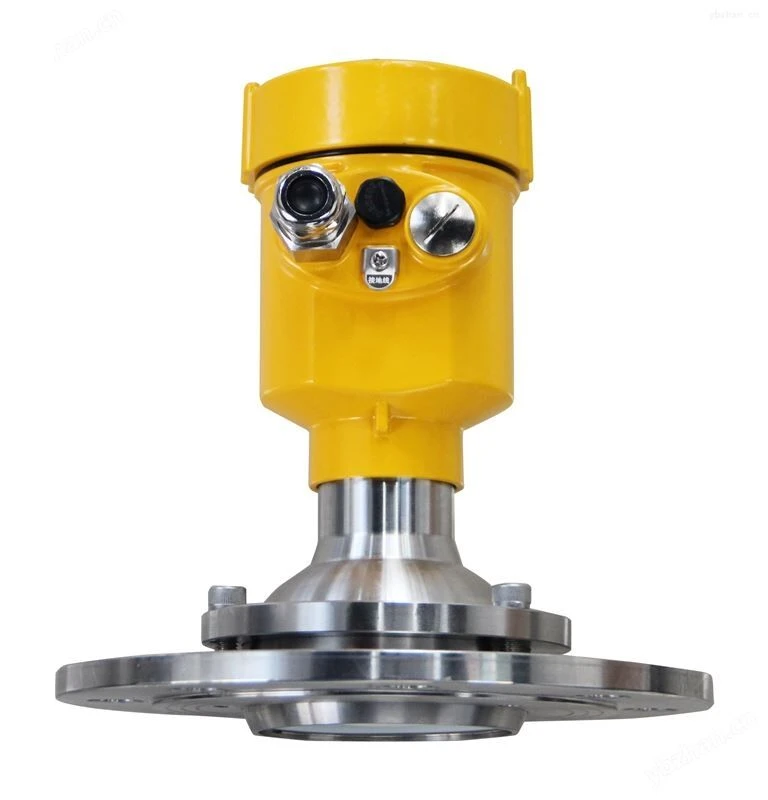 Radar Level Transmitter
26 GHz non-contact radar for general liquids, water and storage tanks.
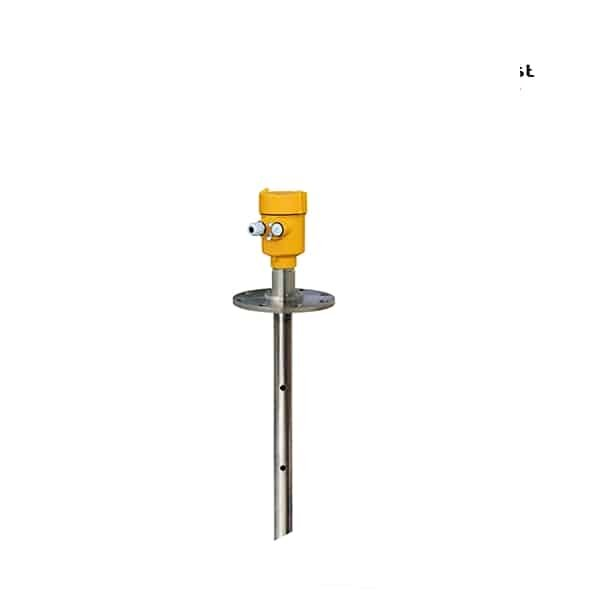 Radar for Slurry
6 GHz horn radar (SIRD-805) for slurry, viscous and low-dielectric liquids.
Browse all radar level sensors →
For application-level guidance on the two hardest services this transmitter serves, see our blast furnace level measurement guide and the molten salt level measurement guide.
FAQ
What temperature can a high-temperature radar handle?
The SIRD-806 is rated to a 400 °C process temperature at the flange, with a heat-isolating extension keeping the electronics cool. A standard radar covers about 130 °C and a general high-temperature build about 250 °C; above 400 °C a purge or longer standoff is added.
How accurate is a high-temperature radar level sensor?
The SIRD-806 holds plus or minus 20 mm with 1 mm repeatability over its 15 m range. In a hot, dusty vessel the steadiness of the echo matters as much as the rated figure, so siting and echo mapping are part of the result.
Request a quote
Tell us the process temperature and pressure, the vessel height and the medium, and whether it is solid or liquid, and we configure one radar for the application, not a shelf part.