Home › Products › Level Instruments › Radar Level Sensors › Radar Level Sensor for Oil Tank
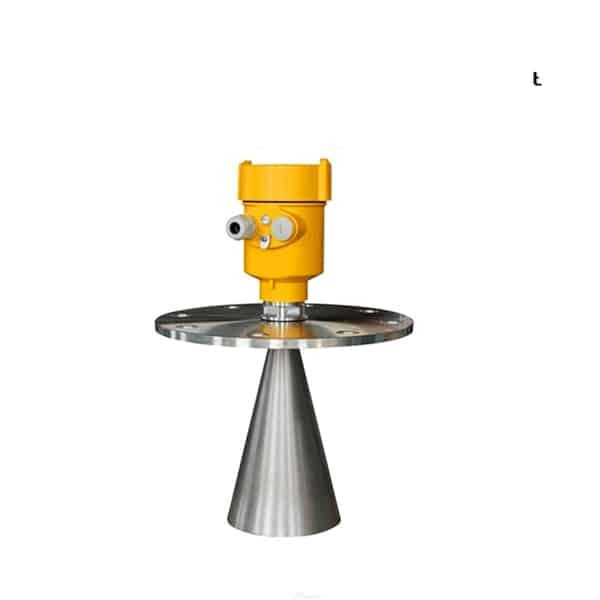
Radar Level Sensor for Oil Tank (SIRD-803)
A 6 GHz horn-antenna radar for crude oil, light oil and other volatile liquids. It reads the oil surface without contact from a flange on the tank roof, with an explosion-proof build for the flammable vapor of a petroleum tank, across a range to 35 m.
- Medium: crude oil, light oil, volatile and pressurized liquids
- Range / frequency: to 35 m; 6 GHz; horn antenna
- Process temperature: −40 to 130 °C (250 °C high-temp build)
- Explosion-proof: Exia IIC T6 / Exd IIC T6
- Output: 4-20 mA / HART; accuracy plus or minus 10 mm
Overview
A radar level sensor for an oil tank measures the level of crude oil, light oil and other volatile liquids without touching them. From a flange on the tank roof a 6 GHz horn antenna times a pulse to the oil surface and back, so the reading is unaffected by the vapor space, the color of the oil or coating on the wall, and there is no float or probe in the product to wear or to need cleaning.
Petroleum tanks carry flammable vapor, so the sensor is built explosion-proof to Exia IIC T6 or Exd IIC T6. It reaches 35 m, holds plus or minus 10 mm and outputs 4-20 mA or HART, with a high-temperature build to 250 °C for hot product. The same radar also reads aluminum hydroxide liquor and bulk solids such as raw coal and limestone.
Features
Why a 6 GHz radar suits oil and volatile liquids:
Explosion-proof
Exia IIC T6 and Exd IIC T6 builds for the flammable vapor of crude and fuel tanks.
Non-contact
No float or probe in the oil, so there is nothing to wear, coat or need cleaning.
Range to 35 m
Covers tall storage and bulk tanks in one instrument, with plus or minus 10 mm accuracy.
Carries through vapor
6 GHz reads through the vapor space and tolerates a low-dielectric or dark oil surface.
High-temperature build
Standard to 130 °C, with a 250 °C version for hot oil and a pressure to 4 MPa.
Two-wire 4-20 mA / HART
A loop-powered transmitter with HART and a four-wire option, plus a local LCD.
Working principle
The sensor emits a 6 GHz pulse from the horn and times the echo from the oil surface; level is the tank height minus the measured distance. The 6 GHz frequency carries well through a vapor space and returns a usable echo from oils, whose dielectric is lower than water, which is why it is preferred over a higher frequency for crude and light oil. Because the measurement is non-contact, the flammable headspace meets only the sealed antenna.
The explosion-proof housing and antenna seal contain any spark and keep the surface temperature within the T6 class, so the sensor is safe in the hazardous area over the oil. Echo software maps fixed reflectors such as a heating coil or a still-pipe and tracks the surface as the tank fills and empties.
Technical specifications
| Parameter | Specification |
|---|---|
| Model | SIRD-803 pulse radar level sensor |
| Applicable medium | Crude oil, light oil, volatile and pressurized liquids; aluminum hydroxide; raw coal and limestone |
| Measuring range | 35 m |
| Frequency / antenna | 6 GHz; horn antenna |
| Accuracy / repeatability | Plus or minus 10 mm; repeatability 1 mm |
| Process temperature | −40 to 130 °C standard; −40 to 250 °C high-temperature |
| Process pressure | −0.1 to 4 MPa |
| Output / display | 4-20 mA / HART; four-digit programmable LCD |
| Power supply | Two-wire DC 24 V; four-wire DC 24 V or AC 220 V |
| Explosion-proof | Exia IIC T6 Ga / Exd IIC T6 Gb |
| Housing / connection | Aluminum single or double cavity, plastic or stainless single cavity; flange or thread |
Selecting a radar for oil tanks
For crude and light oil the explosion-proof rating and the frequency decide it. A 6 GHz radar reads the lower-dielectric oil surface through the vapor better than a higher frequency, and an Exd or Exia build makes it safe in the flammable headspace. For hot product such as heavy crude or residue, choose the 250 °C high-temperature build. Where the tank has a floating roof or a heavy emulsion layer the install needs care, and a guided wave radar in a still-pipe may read more steadily, which we will say.
Installation
Mount the sensor on a roof flange or a still-pipe, aimed straight down at the oil and clear of the fill line, the heating coil and the wall. Use the explosion-proof entry and seal the gland to the hazardous-area rules. Set the tank height and map fixed reflectors with the echo software, and keep the blanking distance below the antenna clear. On a floating-roof tank a still-pipe guides the beam past the roof structure.
Applications
- Crude oil and light-oil storage and process tanks
- Fuel, diesel and refined-product tanks in hazardous areas
- Refinery and tank-farm inventory level
- Aluminum hydroxide and process liquor tanks
- Bulk solids such as raw coal and limestone
In crude and light-oil storage the headspace carries flammable vapor, so the sensor must be explosion-proof and is best non-contact. A 6 GHz radar with an Exd or Exia build reads through the vapor to the oil surface from a roof flange, with nothing in the product, across a tank up to 35 m, and outputs 4-20 mA to the inventory and control system.
Related products
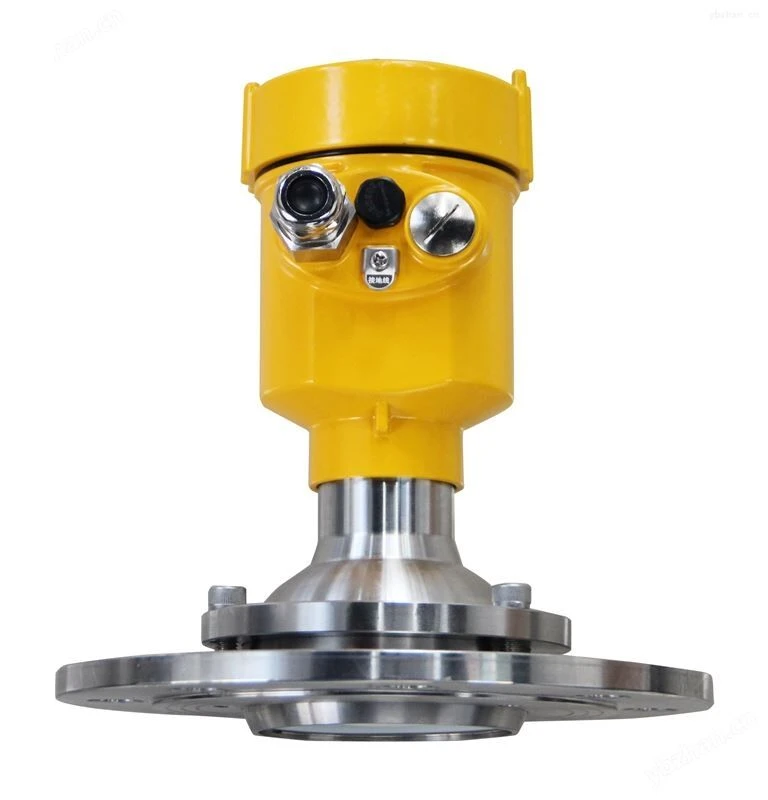 Radar Level Transmitter
26 GHz non-contact radar for general liquids, water and storage tanks.
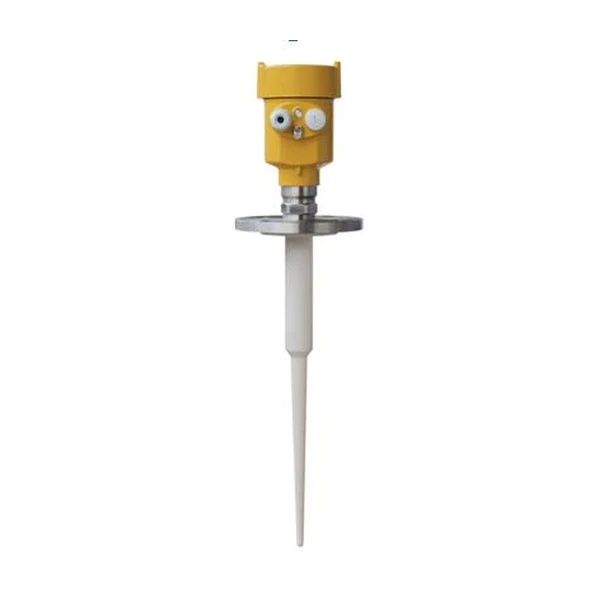 Radar for Corrosive Liquids
6 GHz PTFE rod-antenna radar (SIRD-802) for acids and aggressive media.
Browse all radar level sensors →
For a walk through the wider selection question on fuel storage, including when radar is the wrong answer, see our guide to diesel tank level gauges and sensors.
FAQ
Is radar safe for crude and fuel tanks?
Yes, with the right rating. The SIRD-803 is built explosion-proof to Exia IIC T6 or Exd IIC T6, so it is safe in the flammable vapor over crude and fuel, and because it is non-contact the headspace meets only the sealed antenna.
How accurate is a radar level sensor for oil tanks?
The SIRD-803 holds plus or minus 10 mm with 1 mm repeatability over its 35 m range. A clear line of sight to the oil and echo mapping of fixed reflectors keep the reading steady as the tank fills and empties.
Request a quote
Tell us the oil, the tank height, the temperature and pressure and the area classification, and we configure one radar for the tank, not a shelf part.