Flow Meters › Variable Area Flow Meters › Jacketed Rotameter
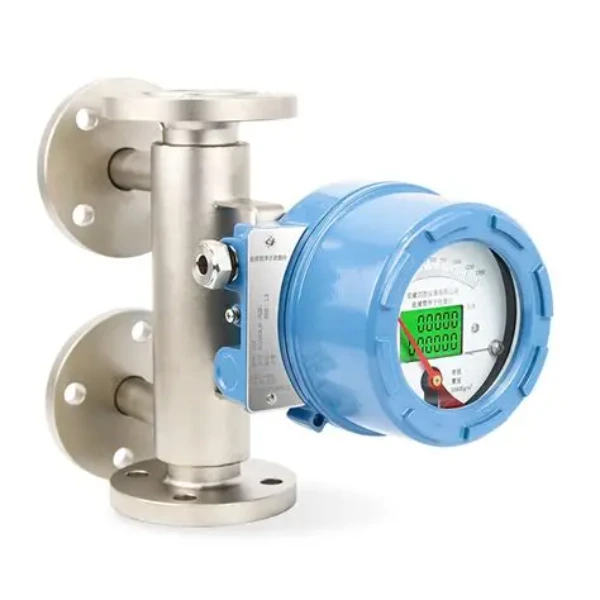
Jacketed Rotameter
A metal tube variable area flow meter with a heating or cooling jacket around the measuring tube. Steam, hot oil, or coolant flows through the jacket to hold the medium at temperature, so a fluid that would crystallize, solidify, or freeze keeps flowing and reads true.
- Principle: Variable area, float in a tapered tube
- Jacket: steam, hot oil, hot water, or coolant
- Size: DN15 to DN200
- Medium: viscous, crystallizing, low or high temperature
- Output: local dial; optional 4-20 mA and HART; IP65
Overview
A jacketed rotameter is a metal tube variable area flow meter built with a jacket around the measuring tube. A float rides in a tapered tube the same as any rotameter, but a second chamber, the jacket, wraps the tube and carries a heating or cooling medium. Steam, hot oil, or hot water in the jacket keeps a viscous or crystallizing fluid warm and flowing; a coolant or a vacuum jacket holds a low-temperature medium cold. The float reads the flow on a dial, with no power needed for the reading.
Standard rotameters cannot tolerate a fluid that coats or solidifies, because that stalls the float. The jacket solves it by holding the medium at temperature right at the meter, so resin, sulfur, asphalt, wax, and other media that set up at ambient stay liquid as they pass. For a normal fluid that needs no temperature control, the metal tube rotameter is the base meter; for a corrosive fluid, see the PTFE lined rotameter.
Features
Everything here follows from one idea: wrap the measuring tube in a jacket and hold the medium at temperature.
Heating or cooling jacket
A jacket wraps the measuring tube and carries steam, hot oil, hot water, or a coolant.
Keeps the medium flowing
It holds resin, sulfur, asphalt, or wax warm, so a fluid that would set up stays liquid through the meter.
Low or high temperature
A vacuum or coolant jacket suits a low-temperature medium; a heated jacket suits a hot or waxy one.
Magnetic dial, no power
A magnet in the float drives a pointer, so the flow reads locally with no power and no glass.
Dial or 4-20 mA, alarms
A local dial, with an optional two-wire 4-20 mA output, HART, Ex protection, and limit alarms.
All-metal, rugged
An all-metal tube with no glass, to 10 MPa, with Ex ia or Ex d for hazardous areas.
Working principle
Flow enters the bottom of a tapered tube and pushes up on a float. As the float rises in the tapering bore, the open area grows and the drag falls, until lift balances weight and the float settles at a height that tracks the flow. A magnet couples the float to a dial outside the tube. A jacket surrounds the measuring tube, with its own inlet and outlet, and a heating or cooling medium passes through it. That medium holds the tube and the fluid in it at a set temperature, so the fluid does not thicken or set as it passes the float. A transmitter can read the same float position and send 4-20 mA.
Technical specifications
| Parameter | Specification |
|---|---|
| Measurement principle | Variable area; float in a tapered tube, magnetic dial |
| Jacket | Heating or cooling jacket; steam, hot oil, hot water, or coolant; vacuum jacket option |
| Medium | Viscous, crystallizing, low-temperature, or high-temperature liquid and gas |
| Accuracy | 1.5, 2.5, or 4.0 grade (percent of full scale) |
| Flow range | Water 10 to 200000 L/h; air 0.5 to 1800 m3/h (at 20 C) |
| Size | DN15 to DN200 |
| Turndown | 10:1, or 20:1 |
| Tube material | 304 or 316L stainless |
| Medium temperature | -80 to +450 C (by build) |
| Nominal pressure | To 10 MPa (special by agreement) |
| Output | Local dial; optional two-wire 4-20 mA with HART; pulse, batch, OC or relay alarm |
| Communication | HART, Modbus, FF, or Profibus-PA (optional) |
| Power | 24 V DC, 220 V AC, or 3.6 V lithium battery for local display |
| Protection | IP65 or IP67 |
| Explosion protection | Flameproof Ex d IIC T1-T6 Gb; intrinsically safe Ex ia IIC T1-T6 Gb |
Representative specifications; confirm per datasheet for the medium, size, and jacket service you need.
Ordering example. Jacketed rotameter, DN40, molten resin at 160 C, steam jacket, 0 to 5 m3/h, dial plus 4-20 mA, flange connection.
Jacket and temperature control
The jacket is what sets this meter apart, and what to specify with it:
- Heated jacket. Steam, hot oil, or hot water runs through the jacket to keep a viscous or crystallizing fluid warm, so resin, sulfur, asphalt, and wax stay liquid through the meter instead of setting up and stalling the float.
- Cooling or vacuum jacket. For a low-temperature medium, a coolant jacket or a vacuum jacket holds the fluid cold and limits heat gain, so the meter reads a chilled or cryogenic-adjacent line without warming it.
- Match the jacket to the service. The jacket medium, its temperature, and its pressure set the build; give us the process fluid, the temperature to hold, and the heating or cooling medium, and we size the jacket and the ports.
Applications
Jacketed rotameters suit media that must stay at temperature:
- Molten sulfur, resin, asphalt, and bitumen
- Wax, paraffin, and hot-melt adhesives
- High-viscosity oils and polymers that thicken when cool
- Crystallizing solutions and syrups
- Low-temperature and chilled process fluids
Application example
Molten resin line. A plant metering a resin that sets up below about 150 C found a plain rotameter would clog as the resin cooled at the meter and stalled the float. A jacketed rotameter with a steam jacket held the tube above the set point, so the resin stayed liquid through the float and read on the dial. Matching the jacket steam pressure to the temperature it had to hold was the detail to confirm at sizing.
Related products
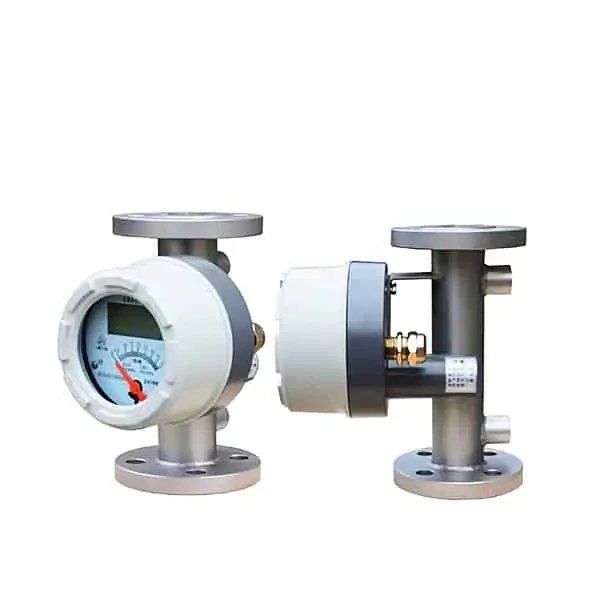 Metal Tube Rotameter
The standard stainless variable area meter for normal-temperature lines.
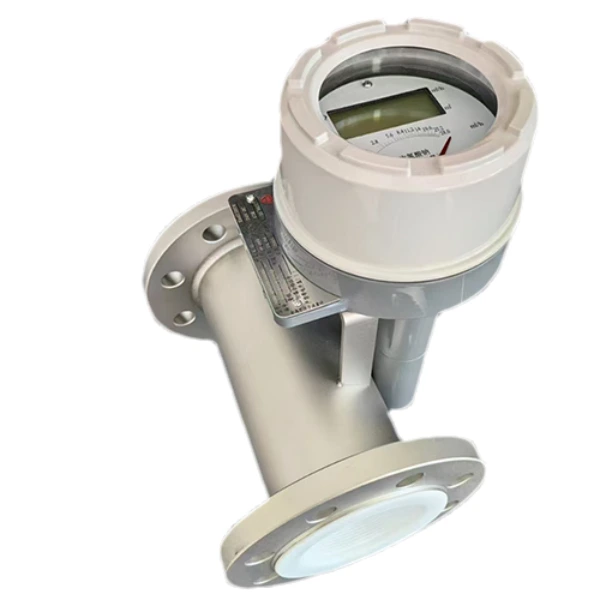 PTFE Lined Rotameter
For a corrosive fluid, with a fluoropolymer lining.
Browse all variable area flow meters →
FAQ
What is a jacketed rotameter?
It is a metal tube variable area flow meter with a jacket around the measuring tube. A heating or cooling medium, such as steam, hot oil, or coolant, runs through the jacket to hold the process fluid at temperature, so a fluid that would crystallize, solidify, or freeze keeps flowing and reads true on the dial.
Why use a jacket on a rotameter?
A standard rotameter cannot tolerate a fluid that coats or solidifies, because that stalls the float. A jacket holds the medium warm, or cold, right at the meter, so viscous and crystallizing fluids such as resin, sulfur, asphalt, and wax stay liquid as they pass.
What goes in the jacket?
For heating, steam, hot oil, or hot water; for low-temperature service, a coolant or a vacuum jacket. Give us the temperature to hold and the heating or cooling medium and we size the jacket and its ports.
What temperature range does it cover?
Builds cover roughly -80 to 450 C depending on the tube, the jacket, and the medium. Tell us the process fluid and the temperature it must hold and we confirm the build.
Request a quote
Send us the process fluid, the temperature to hold, the heating or cooling medium, the size, and the flow range, and we set the jacket, the float, and the output.