Flow Meters › Variable Area Flow Meters › PTFE Lined Rotameter
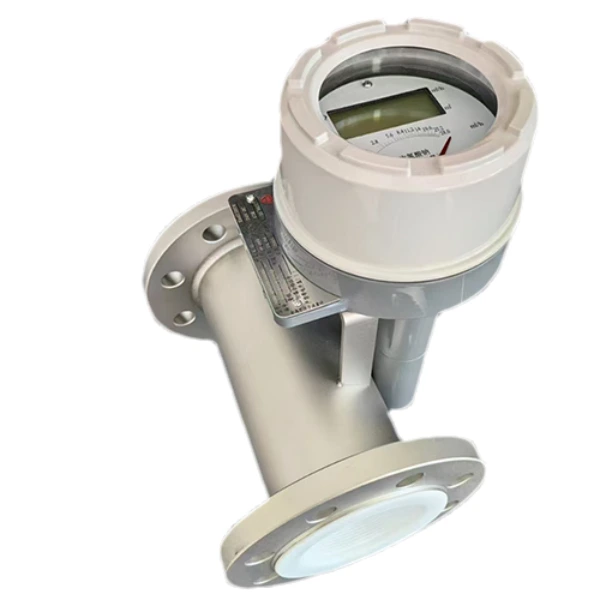
PTFE Lined Rotameter
A metal tube rotameter lined with PTFE for corrosive flow. The tube and float are covered in fluoropolymer, so acids and alkalis touch only PTFE, not steel. It reads corrosive liquid and gas on a dial with no power, where a bare stainless meter would corrode.
- Principle: Variable area, float in a tapered tube
- Lining: PTFE (F46) on tube and float
- Size: DN15 to DN150
- Medium: corrosive liquid and gas, 0 to 80 C
- Output: local dial; optional 4-20 mA; IP65
Overview
A PTFE lined rotameter is a metal tube variable area meter built for corrosive flow. The tapered tube and the float are lined with PTFE, the F46 fluoropolymer, so the only thing the fluid touches is PTFE, which resists almost every acid, alkali, and oxidizer. A float rides in the tube and a magnet drives a dial, the same as a standard rotameter, so it reads corrosive liquid and gas on the dial with no power and no glass.
It is the choice where a bare stainless meter would corrode: strong acid or alkali dosing, pickling and plating chemistry, and aggressive process fluid. The PTFE lining sets the temperature limit at about 80 C. For a non-corrosive line, the metal tube rotameter in stainless is the base meter; for a high-pressure corrosive line, see the high pressure rotameter with a PTFE lining option.
Features
Everything here follows from one idea: line the wetted parts in PTFE.
PTFE (F46) lining
The tube and float are lined in fluoropolymer, so the fluid touches only PTFE, not steel.
Acids and alkalis
PTFE resists strong acid, alkali, and oxidizer that would attack a stainless tube.
Reads through the wall
A magnet in the float turns the dial pointer from outside the tube: no glass, no seal into the acid, and no power.
Liquid and gas
One meter reads corrosive liquid or gas, on a DN15 to DN150 line.
Dial or 4-20 mA, alarms
Read it at the dial, or add a two-wire 4-20 mA output, limit alarms and Ex protection for a remote signal.
Fits tight chemical lines
Like any variable area meter it needs almost no straight pipe, which suits crowded chemical pipework.
Working principle
Corrosive flow enters the bottom of a tapered tube and lifts a float. The weight of the float acts down, while buoyancy and flow drag act up. As the float rises, the gap around it widens and the drag eases, until the forces balance and the float settles at a height that tracks the flow.
The measuring tube and the float are both lined in PTFE (F46), so the acid or alkali touches PTFE rather than steel. A magnet in the float turns a follower outside the tube, so the dial reads through the wall with no seal into the fluid. A transmitter can read the same position and send 4-20 mA.
Technical specifications
| Parameter | Specification |
|---|---|
| Measurement principle | Variable area; float in a tapered tube, magnetic dial |
| Medium | Corrosive liquid and gas (acids, alkalis, oxidizers) |
| Lining | PTFE (F46) on the measuring tube and the float |
| Size | DN15 to DN150 |
| Accuracy | 1.5 or 2.5 grade |
| Turndown | 10:1 |
| Nominal pressure | DN15 to DN50 to 4.0 MPa; DN80 to DN150 to 1.6 MPa |
| Medium temperature | 0 to 80 C (set by the PTFE lining) |
| Body and flange | 304 or 316 stainless, PTFE-lined wetted surfaces |
| Output | Local dial; optional two-wire 4-20 mA; pulse; limit alarms |
| Power | 24 V DC (12 to 36 V) or 220 V AC; battery for local display |
| Connection | Flange, GB/T 9119; cable entry M20 x 1.5 or 1/2 NPT |
| Protection | IP65 |
| Explosion protection | Intrinsically safe Ex ia IIC T6; flameproof Ex d IIC T6 |
Representative specifications; confirm per datasheet for the medium, size, and temperature you need.
Ordering example. PTFE lined rotameter, DN25, 30% hydrochloric acid at ambient, 0 to 2 m3/h, dial plus 4-20 mA, flange connection.
Lining and corrosion
The lining is what sets this meter apart, and what sets its limits:
- What it resists. PTFE stands up to strong acids such as hydrochloric, sulfuric, nitric, and hydrofluoric, to alkalis such as sodium hydroxide, and to most oxidizers and solvents, which would corrode a bare stainless tube.
- Temperature limit. The PTFE lining holds the medium temperature to about 80 C; above that, a different material or a metal tube in a resistant alloy is needed.
- When to use stainless instead. For a non-corrosive fluid, a stainless metal tube rotameter runs hotter and costs less; reach for the PTFE lining only where the chemistry demands it.
Applications
PTFE lined rotameters suit aggressive chemical lines:
- Acid and alkali dosing and metering
- Pickling, plating, and surface-treatment chemistry
- Chlor-alkali and fluorochemical process
- Reagent and additive feed for corrosive process
- Scrubber and effluent treatment chemicals
Application example
Acid dosing line. A plant dosing hydrochloric acid into a process found a stainless rotameter pitted and failing within weeks. A PTFE lined rotameter, with the tube and float in fluoropolymer, read the acid flow on its dial and sent 4-20 mA to the control room, and the lining took the acid where the steel could not. Keeping the temperature inside the PTFE limit was the one thing to confirm at sizing.
Related products
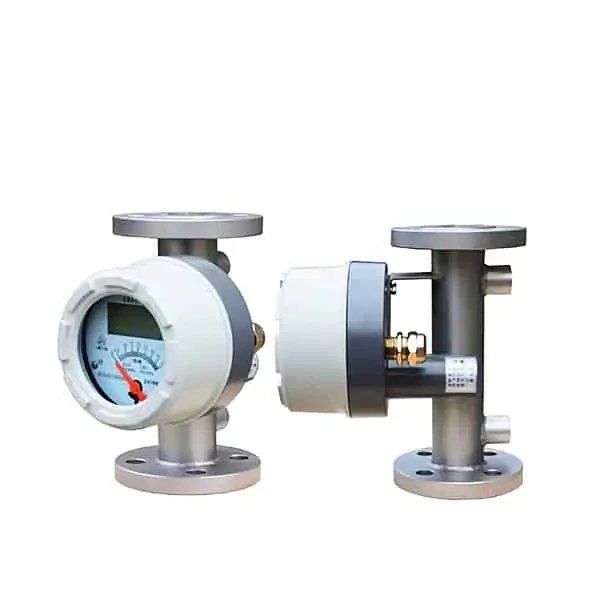 Metal Tube Rotameter
The standard stainless variable area meter for non-corrosive lines.
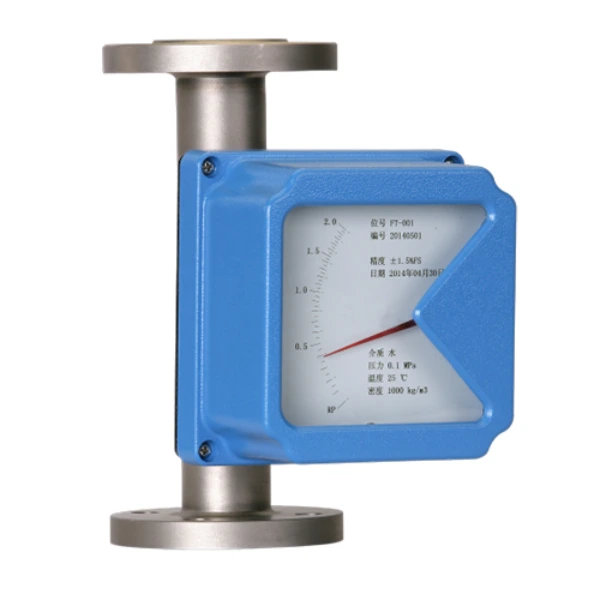 High Pressure Rotameter
For a high-pressure line, with a PTFE lining option.
Browse all variable area flow meters →
Related applications: Chemical.
FAQ
What is a PTFE lined rotameter?
It is a metal tube variable area flow meter whose tube and float are lined with PTFE, the F46 fluoropolymer. The corrosive fluid touches only PTFE, so the meter reads acids, alkalis, and oxidizers that would corrode a bare stainless tube, on a dial with no power.
What corrosive fluids can it handle?
PTFE resists most strong acids, such as hydrochloric, sulfuric, nitric, and hydrofluoric, alkalis such as sodium hydroxide, and most oxidizers and solvents. Confirm the specific fluid and concentration at sizing, and keep the temperature within the PTFE limit.
What is the temperature limit?
About 80 C, set by the PTFE lining. For a hotter corrosive fluid, a metal tube in a resistant alloy such as Hastelloy or titanium is the alternative; tell us the temperature and fluid and we confirm the build.
How does it work, and does it need power?
A float rides in a tapered tube and the float height tracks the flow; a magnet in the float drives a dial outside the lined tube, so it reads with no power and no sight glass. An optional transmitter adds a 4-20 mA output.
Request a quote
Send us the corrosive medium and concentration, the size, the flow range, and the temperature, and we set the lining, the float, and the output.