Flow Meters › Variable Area Flow Meters › Low Flow Rotameter
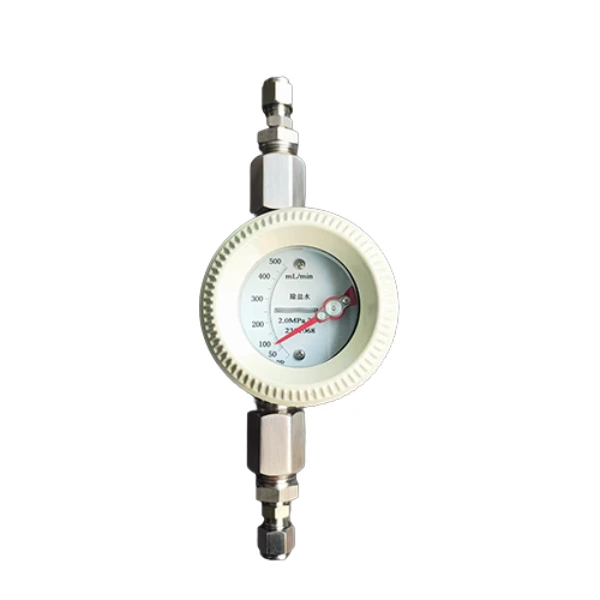
Low Flow Rotameter
A micro metal tube rotameter for very low flow. A float rides in a small tapered tube and a magnet drives a dial, so it reads flow down to 0.1 l/h of water with no power. A threaded body and a needle valve option suit small dosing and sample lines.
- Principle: Variable area, float in a tapered tube
- Size: DN6 to DN25, threaded NPT
- Low flow: water from 0.1 l/h
- Accuracy: 2.5 or 4.0 grade; PN 1.6 MPa
- Output: local dial; optional 4-20 mA; IP65
Overview
A low flow rotameter is a micro variable area meter for the small flows an ordinary meter cannot read. Flow enters the bottom of a small tapered tube and lifts a float to the height where lift balances its weight; that height is the flow. Because the tube is metal, a magnet in the float drives a dial pointer, so the meter reads down to 0.1 l/h of water with no power and no glass, on a compact threaded body. It handles clean, opaque, and mildly corrosive liquid and gas.
It is the simple, self-contained choice for a small dosing, sample, or purge line where a full-size meter is too coarse. For a standard process line, the metal tube rotameter covers DN15 to DN150. Where you need tight accuracy on a tiny dosed flow rather than a dial reading, a small Coriolis or thermal mass meter is the better fit; this meter is for a clear, low-cost local read of low flow.
Features
Everything here follows from one idea: a small float in a small metal tube, read on a dial.
Reads from 0.1 l/h
A small tapered tube and float resolve very low flow, down to 0.1 l/h of water.
Compact threaded body
A small DN6 to DN25 body with NPT threads drops into a sample or dosing line.
Magnetic dial, no power
A magnet in the float drives a pointer, so the flow reads locally with no power and no glass.
Vertical or side, needle valve
A bottom-in or side-in body, with an inlet or outlet needle valve to set the small flow.
316L, Hastelloy, titanium
Wetted parts in 316L, Hastelloy C-276, or titanium handle corrosive sample fluids.
Dial or 4-20 mA, alarms
A local dial, with an optional two-wire 4-20 mA output, Ex ia, and limit alarms.
Working principle
Flow enters the bottom of a small tapered tube and pushes up on a float. The float has weight down, and buoyancy and flow drag up. As it rises in the tapering bore, the open area around it grows, so the drag falls, until the up forces balance the weight and the float holds at a height that tracks the flow. Because the tube is metal, a magnet in the float couples to a follower outside the tube, which turns a pointer on the dial; a transmitter can read the same position and send 4-20 mA. The small bore and light float are what let it resolve a very low flow.
Technical specifications
| Parameter | Specification |
|---|---|
| Measurement principle | Variable area; float in a tapered metal tube, magnetic dial |
| Medium | Low-flow liquid and gas, including opaque and corrosive media |
| Size | DN6, DN10, DN15, DN25 (threaded NPT 1/4 to 1 inch) |
| Flow range | Water 0.1 to 3000 l/h; air 3.5 l/h and up (by size) |
| Turndown | 10:1 |
| Accuracy | 2.5 or 4.0 grade; temperature effect below 0.1% per 10 C |
| Nominal pressure | PN 1.6 MPa |
| Medium temperature | -40 to +120 C |
| Ambient temperature | -40 to +80 C |
| Wetted material | 316L, 304, Hastelloy C-276, or titanium; seals PTFE or PVDF |
| Form | Bottom-in top-out (vertical) or side-in side-out, with needle valve |
| Output | Local dial; optional two-wire 4-20 mA (24 V DC); limit alarms |
| Connection | Threaded NPT 1/4 to 1 inch; cable entry M8 x 1 |
| Explosion protection | Intrinsically safe Ex ia IIC T3-T6 (remote output) |
| Protection | IP65 |
Representative specifications; confirm per datasheet for the medium, size, and low-flow range you need.
Ordering example. Low flow rotameter, DN6, water 0.1 to 1 l/h, side-in side-out with inlet needle valve, 316L, local dial.
Flow ranges by size
A low flow rotameter is sized by the flow band for each bore. The table gives the water range for each size, from the smallest band to the largest; air ranges run higher by roughly the same factor.
| Size | Water range (l/h) | Connection |
|---|---|---|
| DN6 | 0.1 to 1, up to 10 to 100 | NPT 1/4 inch |
| DN10 | 10 to 100, up to 30 to 300 | NPT 3/8 inch |
| DN15 | 40 to 400, up to 80 to 800 | NPT 1/2 inch |
| DN25 | 80 to 800, up to 300 to 3000 | NPT 3/4 or 1 inch |
Mounting and needle valve
A low flow line is often set as well as measured, so the meter comes in two forms with an optional valve:
- Bottom-in top-out (vertical). The standard form, flow up through a vertical body, for a clean read on a vertical run.
- Side-in side-out (horizontal). A compact form for a horizontal line, with a minimum install length of about 90 mm.
- Needle valve. An inlet or outlet needle valve lets you set the small flow at the meter, so the dial both reads and trims the dose.
Applications
Low flow rotameters suit small dosing, sample, and purge lines:
- Chemical and additive dosing at a few liters per hour
- Analyzer and instrument sample gas and liquid
- Seal, purge, and flush gas on small lines
- Catalyst, reagent, and lab process feed
- Cooling and lubrication trickle flows
Application example
Analyzer sample gas. A lab needed to see the small purge and sample gas flow feeding an analyzer, a few hundred milliliters a minute, where a standard rotameter would not register. A DN6 low flow rotameter with an inlet needle valve read the flow on its dial and let the technician set it by hand, with no power at the bench. The compact threaded body fitted the sample panel without rework.
Related products
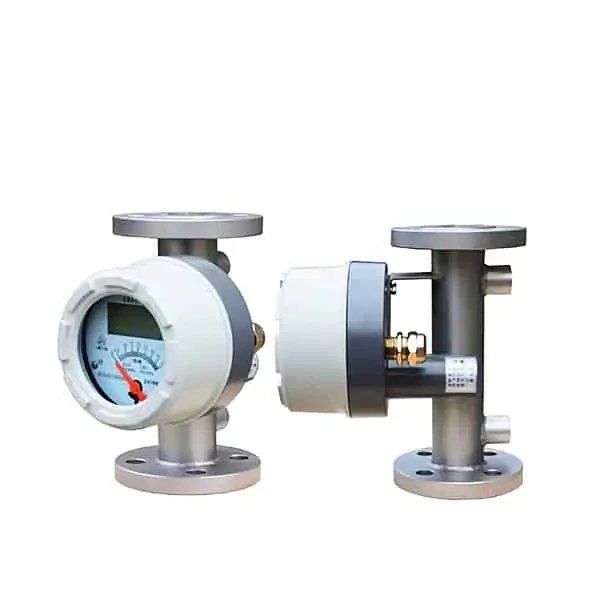 Metal Tube Rotameter
The standard variable area meter for DN15 to DN150 process lines.
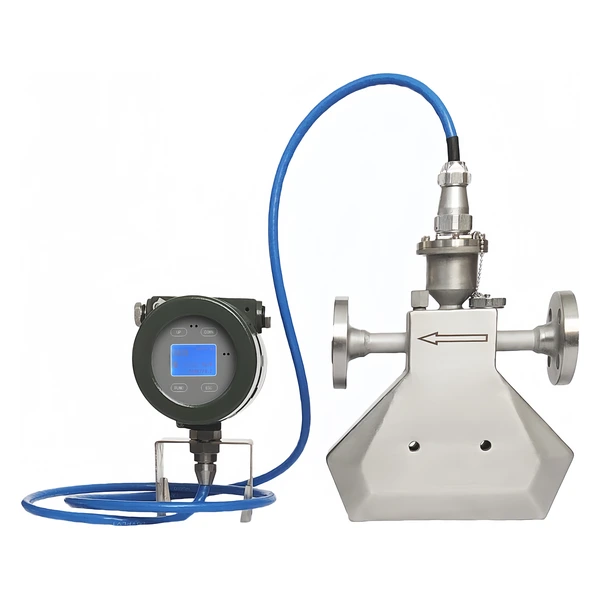 Coriolis Mass Flow Meter
For tight accuracy on a small dosed flow rather than a dial read.
Browse all variable area flow meters →
Pump seal flush lines are the most common home for a meter this size. The seal water flow meter page sets out the published flush rate rules and how to choose a scale that shows them.
FAQ
What is the lowest flow a rotameter can measure?
A micro metal tube rotameter reads down to about 0.1 l/h of water on the smallest DN6 bore, and gas from a few liters per hour. Below that, a small Coriolis or thermal mass meter is needed; for a clear local read of a low flow, the rotameter is the simple, low-cost choice.
What is a low flow or micro flow meter?
It is a meter built for very small flows that a standard meter cannot resolve. A low flow rotameter does it by the variable area principle: a small float in a small tapered tube, where the float height gives the flow, read on a dial with no power.
How does a low flow rotameter work?
Flow lifts a float in a small tapered tube to the height where buoyancy and drag balance its weight; that height tracks the flow. A magnet in the float drives a dial pointer outside the metal tube, and a needle valve can set the small flow at the meter.
Can it read corrosive or opaque fluids?
Yes. The metal tube and a choice of 316L, Hastelloy C-276, or titanium wetted parts handle corrosive sample fluids, and because the read is by magnetic dial there is no sight glass to foul on an opaque liquid.
Request a quote
Send us the medium, the low-flow range, the connection, and the pressure and temperature, and we set the bore, the float, the form, and the output.