Home › Pressure Switches › Stainless Steel Pressure Switch PC-300
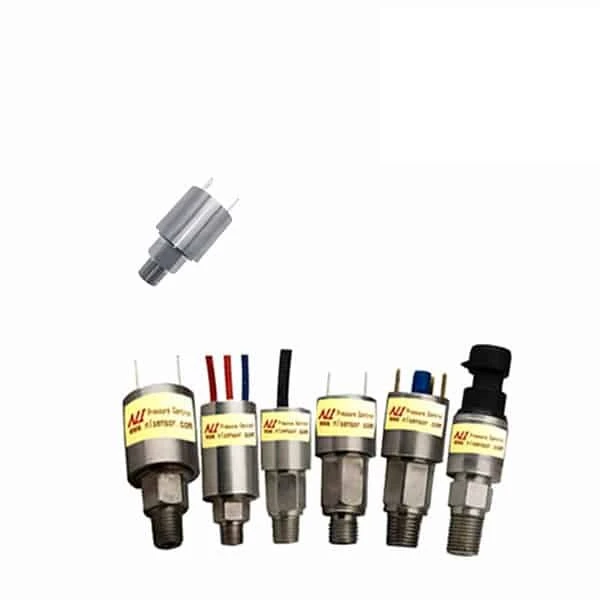
Stainless Steel Pressure Switch PC-300
A compact mechanical pressure switch with a stainless steel body, rated higher than the standard PC series. The stainless construction handles pressures to 2200 psi and resists corrosion, so it suits harsher media and wash-down lines.
- Working range: -14.5 to 2200 psi
- Reset range: -12 to 2180 psi
- Deadband: ± 3 to 30 psi
- Body: stainless steel
- Contact: micro-switch, 220 VAC 3 A
- Life: over 100,000 cycles
Two things push a job past the standard compact switch: pressure and the medium. The PC-300 answers both. A stainless steel body lets it work to 2200 psi where a brass-bodied switch would be near its limit, and the corrosion resistance lets it sit on lines and media that would attack a plated body.
Overview
The PC-300 is the stainless member of the compact PC switch series. It keeps the snap-action micro-switch and over-100,000-cycle life of the family, but the stainless body raises the pressure ceiling to 2200 psi and adds corrosion resistance for harsher media, hydraulic lines, and wash-down environments. It controls or alarms on liquid and gas pressure the same way the rest of the series does, with the high and low set points integrated in one body.
For lower-pressure OEM work the miniature PC-100 is the lighter, lower-cost choice; for a sealed, washable build at high pressure see the waterproof PC-500.
Working principle
Pressure acts on a stainless element. When it rises past the set point, the element trips a snap-action micro-switch, which changes the contact; when pressure falls back below the reset point, the switch returns. The gap between trip and reset is the deadband, set between about 3 and 30 psi to stop the contact chattering near the set point. The switch needs no power for its own action; the contact simply makes or breaks the load circuit.
Technical specifications
Representative specifications; confirm the exact build per datasheet.
| Parameter | Specification |
|---|---|
| Output | Switch signal (dry contact) |
| Working pressure range | -14.5 to 2200 psi (about -1 to 152 bar) |
| Reset pressure range | -12 to 2180 psi |
| Deadband | ± 3 to 30 psi |
| Contact rating | 220 VAC, 50/60 Hz, 3 A |
| Ambient temperature | -40 to +85 °C |
| Medium temperature | -40 to +125 °C |
| Working life | Over 100,000 cycles |
| Body material | Stainless steel |
Output and contacts
The PC-300 gives a dry switch contact rated 220 VAC at 3 A, enough to drive a contactor coil, solenoid, or alarm directly. Order it normally open (A), normally closed (B), or as a changeover (C) that gives both. Pick the action that fails safe for your circuit: for a high-pressure cutoff, a normally closed contact in the run circuit opens on a trip and stops the equipment.
Applications
The stainless body and higher ceiling suit tougher pressure control:
- Hydraulic power packs and high-pressure pumps
- Compressors and air systems above the standard switch range
- Corrosive or wash-down media that attack a plated body
- Food, chemical, and marine equipment needing stainless
FAQ
What is a pressure switch used for?
A pressure switch opens or closes a contact when pressure reaches a set point, to start or stop equipment, raise an alarm, or interlock a process. The stainless-steel PC-300 is the choice where the medium or the surroundings would corrode a standard body: it puts a 304 or 316 stainless wetted part and housing between the process and the electronics, so it survives aggressive fluids, washdown, and damp or coastal air while doing the same switching job.
How do I know if my pressure switch is bad?
Watch for a contact that no longer trips at the set point, switching that drifts or chatters, or visible corrosion, staining, or weeping at the process connection. First confirm the set point and wiring, then check the connection and seal. A stainless body resists the corrosion that kills a plated switch, but any switch can wear: if it will not trip cleanly at the set value with a test gauge applied, the element or contact has worn and the unit should be replaced.
Does a pressure switch require power?
A purely mechanical switch needs none, but the PC-300 is electronic and needs a DC supply to drive its display and switching output. Power runs through the switched contact to your control circuit as usual. The benefit of the powered design is the digital readout and programmable set points, all housed in a sealed stainless enclosure suited to wet and corrosive areas.
Request a quote
Tell us five things and we configure one unit, not a shelf part:
- Set point (or high and low) and the deadband
- Pressure range and the medium (liquid or gas)
- Contact action (A, B, or C) and what it switches
- Connection (thread or air tube)
- Medium and any corrosion concern
Ordering example: PC-300, stainless body, normally open (A), trip at 1500 psi, 220 VAC 3 A contact.
Tell us the application and we configure one unit, not a shelf part. Working a high-pressure line we have not listed? Reach our application engineers.