Home › Products › Pressure Instruments › Differential Pressure Transmitters
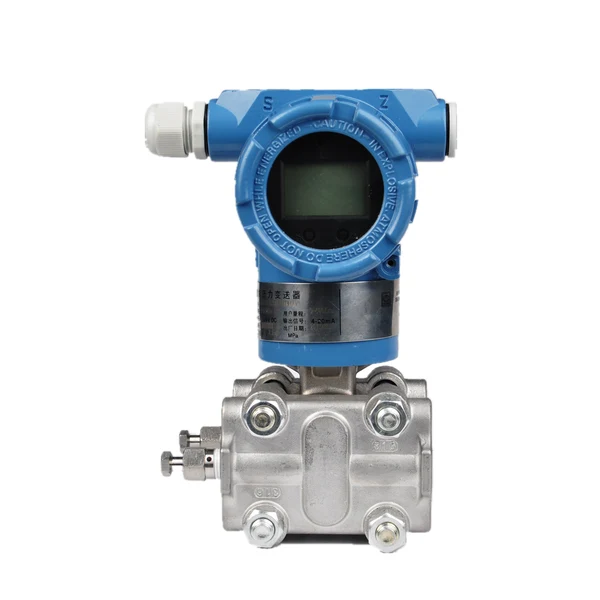
SMT3151DP Smart Differential Pressure Transmitter
A gauge transmitter reads one pressure; a differential pressure transmitter reads the difference between two points – and that difference is your flow rate, your tank level or your filter health. The SMT3151DP measures it with a single-crystal silicon cell to ±0.075% FS, holds it against static line pressure up to 40 MPa, and hands it to the control system as 4–20 mA with HART or RS-485 Modbus.
- Span: 1 kPa to 41 MPa, seven range codes
- Accuracy: ±0.075 / ±0.1 / ±0.5% FS
- Static pressure: 16 / 25 / 40 MPa builds
- Output: 4–20 mA + HART; RS-485 Modbus
- Stability: ≤0.03% FS per year
- Protection: IP67; Ex d / Ex ia IIC T6 options
Overview
Subtract two gauge readings and your error is the sum of two instruments fighting each other; one DP cell reads the difference directly. That matters because the differences worth measuring are small numbers riding on big ones: a few kPa of catalyst-bed drop on megapascals of reformer line pressure, or centimeters of level on a pressurized tank. The SMT3151DP is the differential class of our pressure transmitter series; the rest of the temperature axis sits on the pressure instruments page.
The cell is a single-crystal silicon sensor on a dual-beam suspension. Accuracy and one-side overload resistance come from that geometry, not from electronic trim: the beam carries the diaphragm so a slam on one port does not bend the calibration. A built-in processor compensates static pressure and temperature continuously, which is what keeps a 10 kPa span honest on a 16 MPa line.
Technical specifications
| Parameter | SMT3151DP |
|---|---|
| Model | SMT3151DP smart differential pressure transmitter |
| Span | 1, 4, 40, 100, 400 kPa; 4, 40 MPa (seven range codes; zero shift −20% to +20% of max span) |
| Turndown | 10:1 within each range code (code 4 spans 4 to 40 kPa) |
| Accuracy | ±0.075%, ±0.1% or ±0.5% FS, including linearity, hysteresis and repeatability from zero |
| Static (line) pressure | 16 / 25 / 40 MPa builds; single-side overpressure 16 MPa |
| Static pressure effect | <0.05% FS per 10 MPa; overpressure effect <0.05% FS per 10 MPa |
| Output | 4–20 mA DC with HART, or RS-485 Modbus RTU; linear or square-root, set locally or remotely |
| Power supply | 10.5–45 VDC general; 10.5–26 VDC intrinsically safe |
| Signal limits | Saturation 3.8 / 20.8 mA; alarm 3.6 / 22.8 mA, mode adjustable |
| Response time | 10 ms |
| Long-term stability | ≤0.03% FS per year |
| Power supply effect | <0.005% FS per volt |
| Position effect | About 200 Pa between horizontal and vertical; trim at zero after mounting |
| Ambient / media temperature | −40 to 85 °C ambient; media −40 to 120 °C at the cell (hotter media via remote seals or custom build) |
| Isolation diaphragm | 316L standard; Hastelloy C, Monel, tantalum or gold-plated options |
| Local interface | LCD display; three-button zero, span and damping adjustment |
| Hazardous area | Ex d IIC T6 Gb flameproof; Ex ia IIC T6 Ga intrinsically safe |
| Protection | IP67 |
| Certification | Flameproof cert CE16.1163; intrinsically safe cert CE15.2354X |
Representative specifications, at room temperature and rated supply unless stated; exact range, accuracy class and certification are fixed at selection and quote.
Features
- Single-crystal silicon cell on a dual-beam suspension: ±0.075% FS class accuracy and strong one-side overload resistance, by geometry rather than correction.
- Intelligent static-pressure and temperature compensation: static effect under 0.05% FS per 10 MPa, so the reading you trend is differential, not line-pressure leakage.
- Three-button local setup with LCD: zero, span, damping and linear or square-root output at the transmitter, no handheld needed; self-diagnosis with adjustable alarm currents (3.6 / 22.8 mA).
- Millisecond response (10 ms) for pump protection and fast filter-clog alarms.
Working principle
Process pressure on each port presses on an isolation diaphragm; fill fluid carries both pressures to the two sides of the silicon cell, and the cell resistance changes in proportion to the difference. The microprocessor linearizes, compensates temperature and static pressure, and drives the output loop.
Both ports ride the full line pressure, so the cell must survive megapascals while resolving kilopascals. A cryogenic research application in the UK makes the point: roughly 10 kPa of differential span on liquid-hydrogen service with 200 bar of static line pressure. 200 bar is 20 MPa; at under 0.05% FS per 10 MPa the static shift stays under 0.1% FS before compensation – which is why that customer asked about the static spec before the accuracy spec. If your line runs above 16 MPa, say so and we quote the 25 or 40 MPa static build. For the cold end itself, see the cryogenic pressure transducers.
Models and ordering
| Code position | Choices |
|---|---|
| Transmitter type | DP differential; HP absolute |
| Range code | 2: 0.1–3.5 kPa 3: 0.8–8 kPa 4: 4–40 kPa 5: 20–200 kPa 6: 70–700 kPa 7: 0.21–2.1 MPa 8: 0.7–7 MPa 9: 2.1–21 MPa 0: 4.1–41 MPa |
| Output code | E: linear 4–20 mA SF: 4–20 mA + HART, linear / square root, full local buttons F: RS-485 Modbus |
| Wetted set | 22: all 316 SS 23: Hastelloy C diaphragm 24: Monel 25: tantalum 33 / 35: Hastelloy C body 44: all Monel (silicone oil fill) |
| Housing / conduit | A / B: aluminum alloy, M20×1.5 or 1/2 NPT C / D: stainless steel, M20×1.5 or 1/2 NPT |
| Process connection | L1: 1/4 NPT female L2: 1/2 NPT female L3: M20×1.5 male |
| Options | M4 LCD head; B1–B3 mounting brackets; thread adapters; D1 / D2 side vent positions; X1 oil-free; Da flameproof; Fa intrinsically safe |
Codes per the SMT3151DP order guide; flameproof and intrinsically safe builds carry certificates CE16.1163 and CE15.2354X respectively.
Applications
Flow and energy
- Flow against an orifice plate, venturi or other primary element, with square-root output.
- Steam and natural gas measurement on the same cell.
- Hydronic HVAC balancing and monitoring.
Level and protection
- Open and pressurized-tank level from hydrostatic difference; for the flange-mounted version see the DP level transmitters.
- Filter and pump differential with fast clog alarms.
- Reformer catalyst-bed DP: an ammonia plant in the Middle East monitors its primary and secondary reformer beds with the ±0.075% class, where a few kPa of extra drop is money.
Keep the media at the cell between −40 and 120 °C and non-crystallizing; for hotter or nastier media use remote diaphragm seals, or move up the temperature axis to the high-temperature pressure transmitters.
Related products
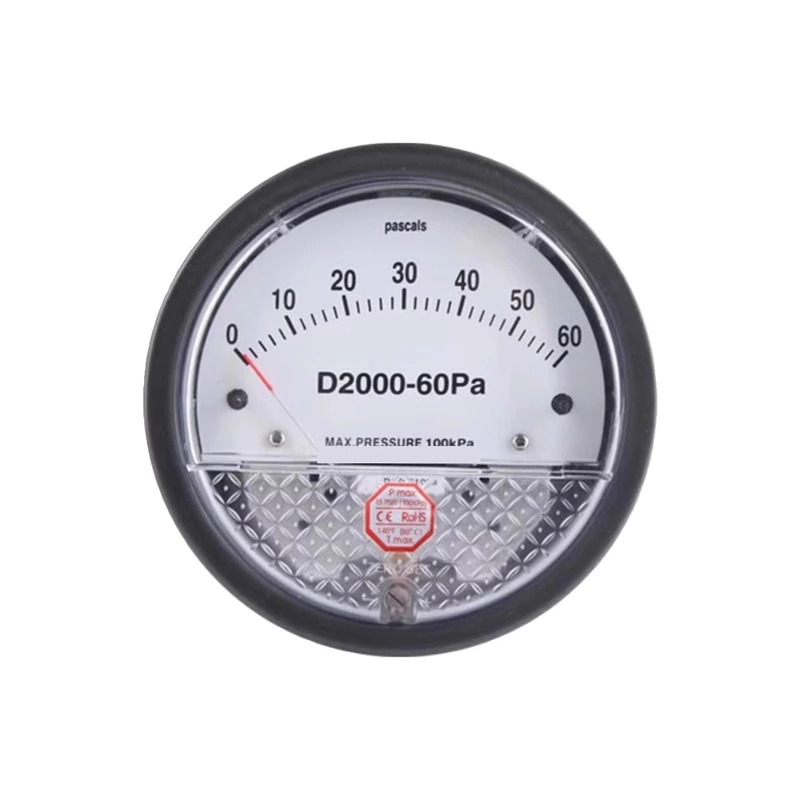 Differential Pressure GaugeMagnehelic-type gauge for air and gas.
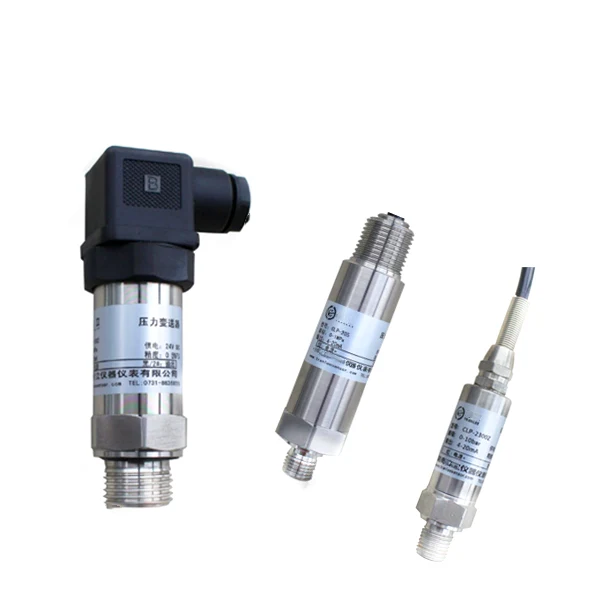 Pressure Transmitters
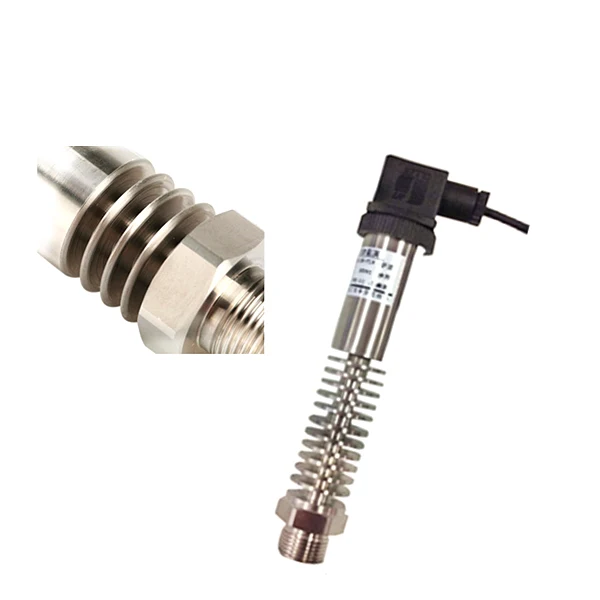 High-Temperature Pressure Transmitters
Browse all pressure instruments →
When this transmitter is paired with an orifice or other primary element, span and turndown follow the square-root law; the flow rate and pressure relationship guide shows the arithmetic with a worked example.
A DP transmitter reads the same taps a liquid column once did; our U-tube manometer guide covers that method and its limits.
When a DP transmitter meters gas or steam flow, live pressure and temperature inputs turn the DP signal into true mass flow. See how the correction works in our pressure and temperature compensation guide.
The 0.075 percent reference accuracy above is stated as a percentage of the calibrated span. What that basis means for the error at your operating point is worked through in percent of full scale vs percent of reading.
For flow service, the linear to square root extraction calculator gives the conversion table and the check points this transmitter should hit in square root mode.
FAQ
How does a differential pressure level transmitter work?
It measures the pressure difference between two points. For level, the high side connects to the bottom of the tank and the low side to the top or atmosphere; the difference equals the head of liquid, which gives the level even in a closed or pressurised vessel. The SMT3151DP outputs 4–20 mA proportional to that difference.
What is the output of a differential pressure transmitter?
A standard 4–20 mA signal with HART, or a digital protocol, proportional to the pressure difference between the high and low ports. The SMT3151DP gives 4–20 mA with HART.
What is the principle of differential pressure?
It is the measurement of the difference between two pressures, high minus low, rather than against atmosphere or vacuum. A sensing diaphragm deflects with that difference and the electronics convert the deflection to a signal. Flow across an orifice, level in closed tanks, and filter pressure drop all use this principle.
What is the difference between a pressure transmitter and a differential pressure transmitter?
A gauge or absolute pressure transmitter measures one pressure against a fixed reference; a differential pressure transmitter has two process connections and measures the difference between them. Use DP for flow, closed-tank level, and filter monitoring.
Request a quote
Tell us the five points above. Our engineers reply with a configured differential pressure transmitter, datasheet and price.