Products › Pressure instruments › SI-D2000 Differential Pressure Gauge
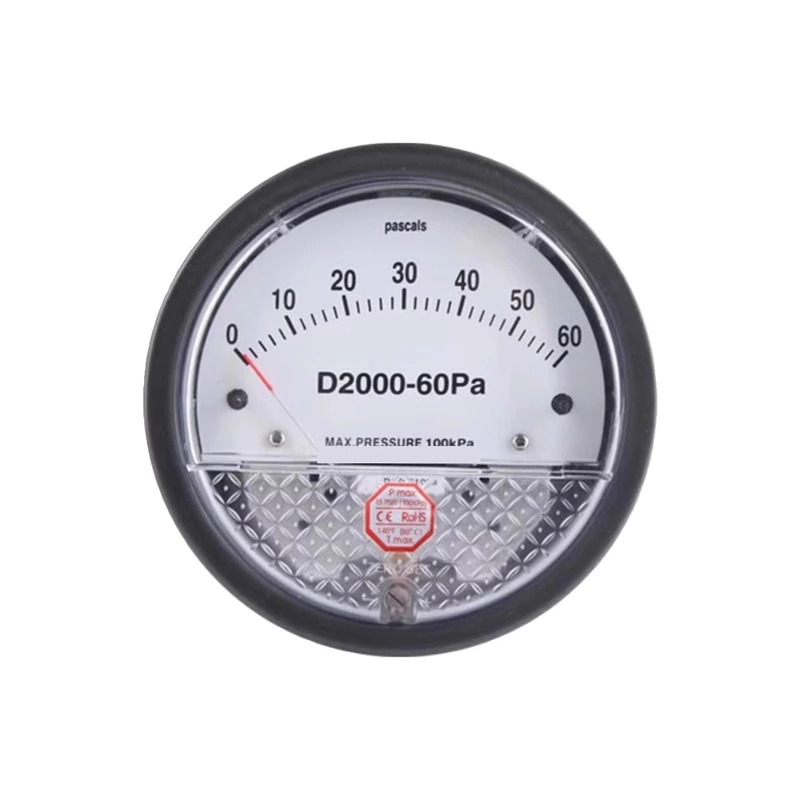
SI-D2000 Differential Pressure Gauge
A Magnehelic-type differential pressure gauge for air and non-corrosive gas. A frictionless magnetic movement reads the difference between two points with no liquid fill, so it will not evaporate, freeze or leak like a U-tube manometer.
- Ranges: from 0-30 Pa up to ~2.5 kPa (81 ranges)
- Units: Pa, kPa, inches w.c., mm w.c.; bidirectional
- Accuracy: 2% FS (1% FS calibrated)
- Body: aluminum, brass or stainless steel
- No power, no liquid fill
Overview
The SI-D2000 is a differential pressure gauge of the Magnehelic type (the Dwyer 2000 pattern), built for the low pressures found in air and gas systems. It shows the difference between a high and a low connection on a 4-inch dial, and it does the job with a dry magnetic movement instead of a liquid column. That removes the manometer headaches: nothing to evaporate, freeze, spill or refill, and the reading stays put under vibration and overrange.
Use it for local indication of filter and fan resistance, duct static and draft. When you need the same reading as an electrical signal for a controller or recorder, pair it with a differential pressure transmitter; for a mechanical gauge on a corrosive or higher-pressure line, see the diaphragm pressure gauge.
Working principle
The high and low pressures act on opposite sides of a diaphragm. The diaphragm carries a small magnet, and as it deflects with the pressure difference it turns a frictionless helix linked to the pointer. There is no fill fluid and almost no friction, so the gauge responds quickly and reads the same in any mounting position once zeroed. The diaphragm also lets it shrug off overpressure and pulsation that would throw a liquid manometer.
Technical specifications
| Parameter | Specification |
|---|---|
| Type | Magnehelic-type (Dwyer 2000 pattern); dry magnetic movement |
| Measurement | Positive, negative (vacuum) or differential pressure |
| Ranges | From 0-30 Pa up to about 2.5 kPa; 81 range options; bidirectional and dual-scale available |
| Units | Pa, kPa, inches w.c., mm w.c. |
| Accuracy | 2% FS standard; up to 1% FS with high-precision calibration; mirror dial optional |
| Media | Air and non-corrosive, non-flammable gas |
| Body | Aluminum, brass or stainless steel; wetted parts incl. PTFE, ceramic, O-rings |
| Temperature | -6.67 to 60 C (20 to 140 F) |
| Dial / mounting | 4-inch dial; panel cutout 114 mm; high and low pressure connections |
| Protection | Shock, vibration and overpressure protected; no fill fluid |
Representative specifications. Values typical; confirm the exact build per datasheet.
Ranges and units
Pick the range by the working differential, not the maximum the system could ever reach, so the needle sits in the middle of the scale. Clean-filter pressure drop on an HVAC unit might sit near 60 to 125 Pa and rise as the filter loads, so a 0-250 Pa or 0-500 Pa span shows both the clean and the change-out point clearly. For draft and room-pressure work that swings either way, a bidirectional range such as -60 to 0 to 60 Pa keeps zero in the center. Scales are available in Pa, kPa, inches of water column and mm of water, with dual-scale dials on request.
Models and ordering
Quote checklist: send these five points and we configure one unit, not a shelf part.
- Working differential and whether it is positive, vacuum or bidirectional
- Range and units: Pa, kPa, inches w.c. or mm w.c. (single or dual scale)
- Accuracy: 2% FS standard, or 1% FS calibrated; mirror dial if needed
- Body material: aluminum, brass or stainless steel
- Mounting: panel, surface or pipe, and any accessory kit
Ordering example: SI-D2000, 0 to 500 Pa, aluminum body, 2% FS, panel mount for an HVAC filter-monitoring station.
Applications
- HVAC filter loading and fan or blower resistance
- Furnace and boiler draft
- Cleanroom, isolation room and containment differential pressure
- Duct static pressure and air-handling units
- Any low-pressure air or gas reading where a manometer is impractical
Application example
Pharmaceutical cleanroom. A pharmaceutical site monitoring cleanroom and corridor differential pressure needed simple local gauges in the low-pascal band, around 0-60 Pa and 0-500 Pa, that would hold zero without a liquid fill. Magnehelic-type gauges gave the operators a clear at-a-glance reading at each door, with no power run to the panel.
Related products
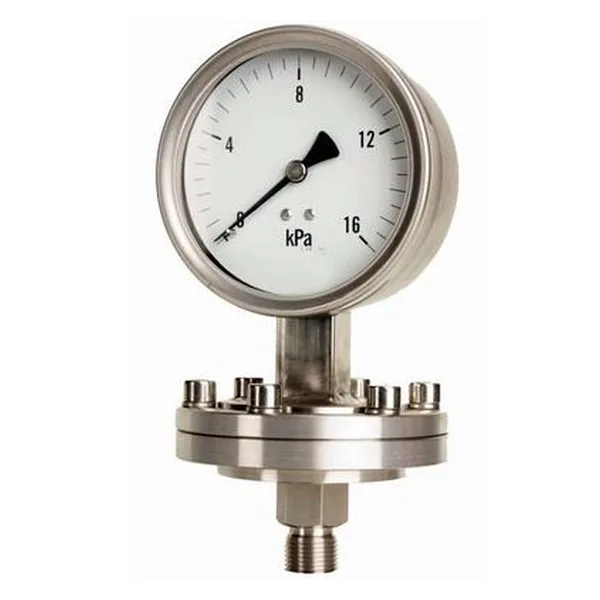 Diaphragm Pressure Gauge
EN 837-3 mechanical gauge for low and corrosive pressures.
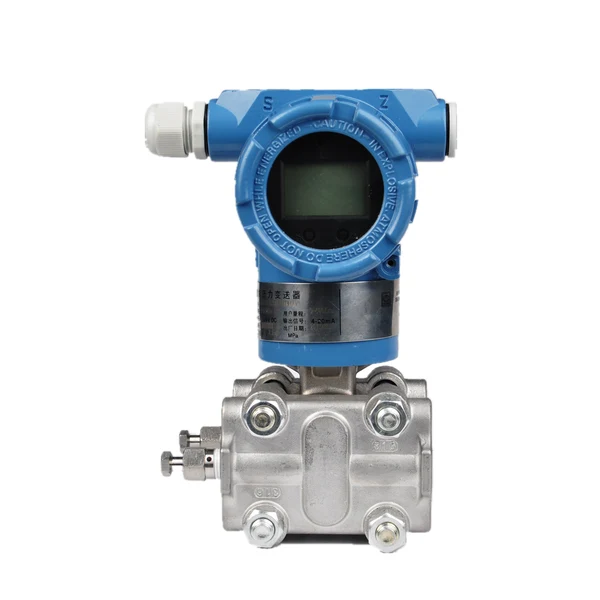 Differential Pressure Transmitters
SMT3151DP transmitter with a 4-20 mA and HART output.
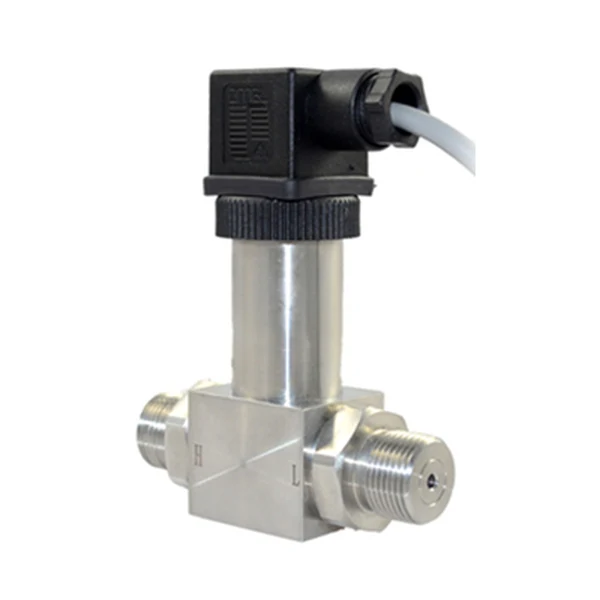 Differential Pressure Sensors
SI-801 wet-wet DP sensor for liquids.
Browse all pressure instruments →
New to mechanical gauges? Our guide to the bourdon tube pressure gauge covers the elastic element, EN 837-1 classes and how to size a range.
FAQ
What is a differential pressure gauge?
A differential pressure gauge measures the difference between two pressures rather than one pressure against atmosphere. It has two process connections, a high side and a low side, and the pointer shows the gap between them. That is what you want for reading the pressure drop across a filter, a pump, or a heat exchanger, or the level in a sealed tank.
How to check differential pressure?
Connect the high-pressure tap to the high port and the low-pressure tap to the low port, then read the difference directly on the dial. To verify the gauge, equalise both ports (open the equalising valve on the manifold or vent both lines to atmosphere): with no difference applied the pointer should rest at zero. If it does not, the gauge needs zeroing or service. Always isolate and equalise before disconnecting, so you do not overrange the element.
What is the principle of a differential pressure level gauge?
In a sealed or pressurised tank the liquid level creates a hydrostatic head at the bottom that adds to the tank pressure. A differential gauge with its high side at the bottom and its low side at the top cancels the tank pressure and reads only the head from the liquid column, which is proportional to level. Convert that differential reading to height with the liquid density (P = density x g x height).
Request a quote
Send the five points in the checklist above and our application engineers will configure an SI-D2000 for your range, units and mounting. Reach our application engineers.