Flow Meters › Turbine Flow Meters › Liquid Nitrogen Flow Meter
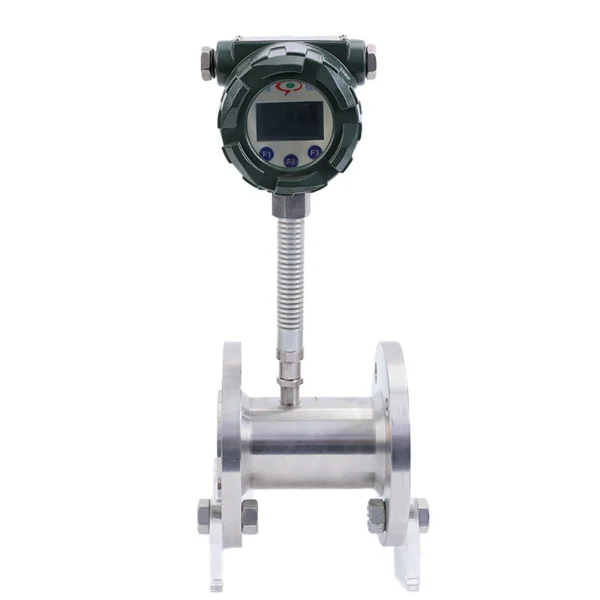
Liquid Nitrogen Flow Meter
A cryogenic turbine flow meter for liquid nitrogen and other liquefied gases. It reads volume on a pulse signal at temperatures down to −196°C, with a mass option when density matters.
- Media: LN2, LOX, LNG, liquid argon
- Principle: turbine, pulse output
- Temperature: cryogenic, to −196°C
- Readout: volume, with mass option
- Output: pulse and 4-20 mA
Overview
LN₂ is a saturated liquid: it is always near its boiling point, so a small pressure drop across a meter can flash part of it to gas. That two-phase mix distorts a turbine rotor and makes a volume meter read high. Boil-off adds vapor to the line for the same reason. The fixes are mechanical and procedural: keep the liquid subcooled and the line full, size the meter to the real flow, and choose a technology that tolerates what your line actually does.
Cold also attacks the meter itself. Bearings and seals that work at ambient seize or drift at −196 °C, which is why a cryogenic flow meter uses cold-rated bearings, the right clearances and 316L wetted parts.
Features
What the cryogenic turbine meter gives you on liquefied gas:
Cryogenic-ratedBuilt for subcooled liquid down to −196°C; bearings and body sized for the cold.
Volume, with mass optionPulse volume flow, with density and mass output available.
High turndownWide flow range on clean, subcooled liquid.
Pulse and 4-20 mATotalize on pulse and transmit on 4-20 mA.
Stainless buildStainless body and trim for cryogenic and clean service.
Hazardous-area optionIntrinsically safe or flameproof for LNG and flammable gas service.
Working principle
A turbine rotor sits in the flow path; the cryogenic liquid spins it, and a pickup turns each blade pass into a pulse. Pulse frequency is proportional to volume flow, so the meter totalizes cleanly on subcooled liquid. The challenge with liquefied gas is keeping the liquid subcooled at the rotor: any flashing to vapor throws the reading off, which is why inlet conditioning and a cold, full line matter more than on an ambient install.
Selecting the meter: volume or mass
Decide this before the technology. If you transfer, fill or totalize, a volume meter (gear/PD or turbine) with a totalizer is simple and cheap. If you bill, batch or dose by mass, a Coriolis meter (a liquid nitrogen mass flow meter) reads mass and density directly and stays valid when density shifts, which volume meters cannot do.
| Technology | Reads | Best LN₂ use | Watch out for |
|---|---|---|---|
| Gear / positive-displacement | Volume + totalize | Small-bore transfer, dispensing, fill records | Bearings in cold; size to low flow |
| Cryogenic turbine | Volume (pulse) | Clean subcooled liquid, high turndown | Single phase only; straight run; flashing reads high |
| Coriolis | Mass (+ density) | Billed or dosed-by-mass service | Cost; needs full pipe; size for low flow |
| Orifice + DP transmitter | Inferred volume | Rugged fixed lines where inline meters do not fit | Needs density comp.; small DP at high line pressure |
Models and ordering
| Model class | Type | Typical LN₂ range | Output / fit |
|---|---|---|---|
| GF06 | Cryogenic gear / PD | 10–500 L/h | 4–20 mA, split display, G1/2, 24 VDC |
| GF15 | Cryogenic gear / PD | Small-bore (~1/2″ line) | Pulse / totalize |
| DN6 turbine | Cryogenic turbine | 100–600 L/h (2 bar) | 4–20 mA, G3/8 |
| DN50 Coriolis | Coriolis mass | to 21,600 kg/h, ±0.2% | Flow + total + density + temp |
| Orifice + DP | DP inferred | Fixed large-bore lines (e.g. 150 psig) | 4–20 mA, needs density comp. |
For the cryogenic turbine option in full detail, with real flow ranges by size, wiring and ordering, see our Cryogenic Turbine Flow Meter page.
Applications
Typical uses:
- LN₂ dispensing and cylinder / dewar filling with totalized records
- Transfer from bulk storage to non-pressurized vessels
- Custody transfer and billing by mass (Coriolis)
- Aerospace and research test stands
- Food freezing, biobank and laboratory LN₂ supply
- Vaporised nitrogen / gas-phase metering (vortex or thermal mass)
For tank contents and pressure on the same system, see our cryogenic level sensors and cryogenic pressure transducers. The full selection logic is in the cryogenic measurement guide; the range sits under flow meters and gas & cryogenic.
Related products
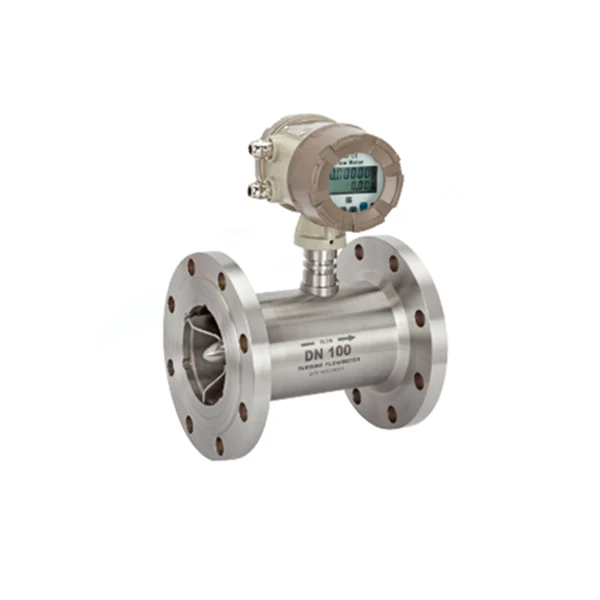 Turbine Flow Meter
Standard inline turbine metering for clean liquids and gas.
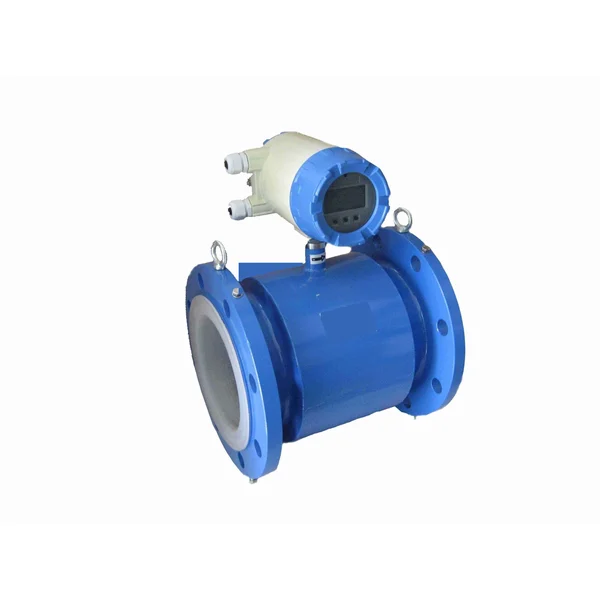 Magnetic Flow Meter
Conductive liquids, no moving parts, no pressure loss.
FAQ
What does a flow meter do?
A flow meter measures how much fluid passes through a pipe, either the flow rate at an instant or the total over time, and sends it as a pulse, 4-20 mA, or digital signal. On a liquid nitrogen line that lets you batch a fill, bill by quantity, and watch for two-phase flow. The challenge with LN2 is the temperature near -196 C, so the meter and its bearings must be built for cryogenic service.
What is the most accurate flow meter?
It depends on what you are metering. For clean liquids a Coriolis meter is usually the most accurate, because it measures mass directly and is not fooled by changes in density or temperature, which matters when a cryogenic liquid sits near its boiling point. A well-built turbine meter is accurate and lower cost for steady single-phase flow. For liquid nitrogen, where some vapour can form, a mass-based Coriolis meter gives the most trustworthy total.
What are the two types of flow meters?
Broadly two: volumetric meters, which measure the volume passing (turbine, positive displacement, vortex), and mass meters, which measure mass directly (Coriolis, thermal). The difference matters for cryogenics: a volumetric meter reads a volume that shifts with temperature and any flashing to gas, while a mass meter reports the actual quantity delivered. That is why mass metering is preferred where the nitrogen is sold or dosed by weight.
Request a quote
Tell us the liquid, the flow range, the line size, and whether you need volume or mass. Our application engineers will size a cryogenic turbine meter and confirm the bearing, output, and hazardous-area rating. Browse the full flow meter range, or talk to our application engineers.