Flow Meters › Industrial Oxygen Flow Meter
Industrial Oxygen Flow Meter
An industrial oxygen flow meter measures oxygen gas on plant lines: furnace and burner feeds, steelmaking lances, oxygenation and aeration systems, and site distribution headers. It is a different instrument from the bedside flowmeter that sets liters per minute to a patient. That is a regulated medical device sold through healthcare suppliers, and it is not what this page covers.
The flows are on another scale too: a basic-oxygen steelmaking lance takes 6 to 8 cubic meters of oxygen per minute per ton of steel, delivered at 150 to 220 psi. Metering oxygen at plant scale is a normal gas-metering problem with one extra layer. Oxygen makes everything around it easier to ignite, so the meter is chosen, cleaned, and sized under rules that do not apply to air.
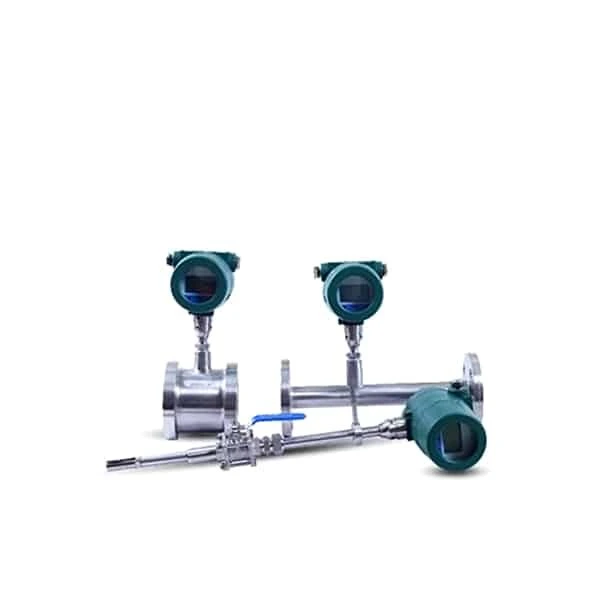 Thermal Mass Flow Meter
Reads gas mass flow directly in standard volume, with no separate temperature or pressure compensation; the usual pick for consumption metering.
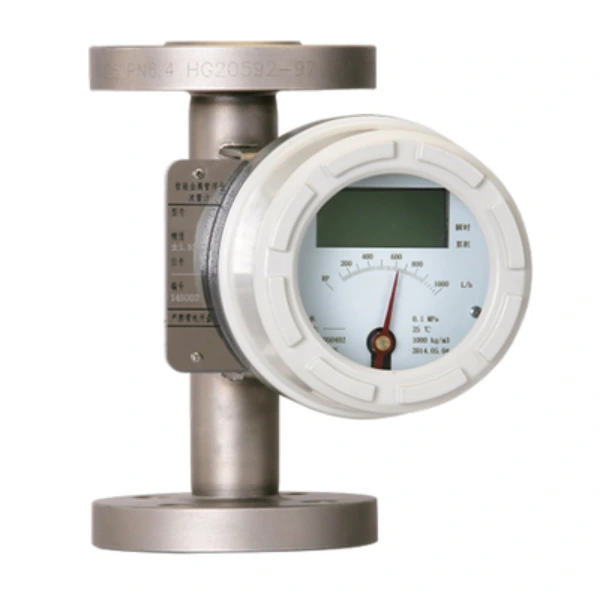 Gas Rotameter
Metal-tube variable area with built-in temperature and pressure compensation; oxygen and inert gas feeds with a local dial.
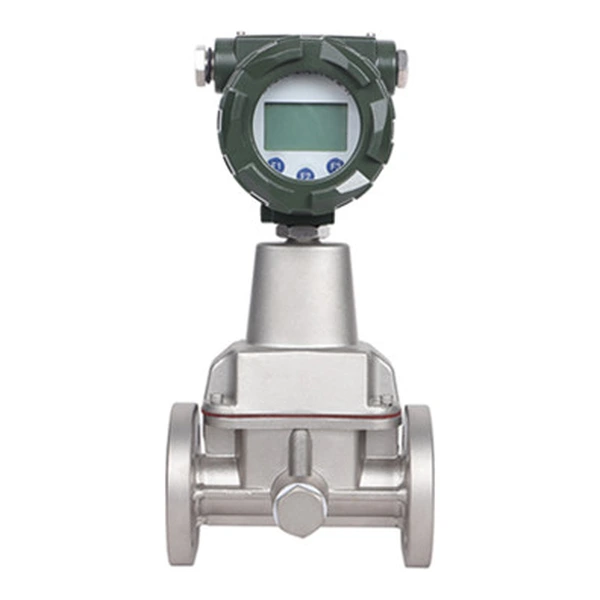 Precession Vortex Gas Flow Meter
No moving parts and built-in compensation to standard volume; oxygen, nitrogen, and plant gases from DN15 to DN200.
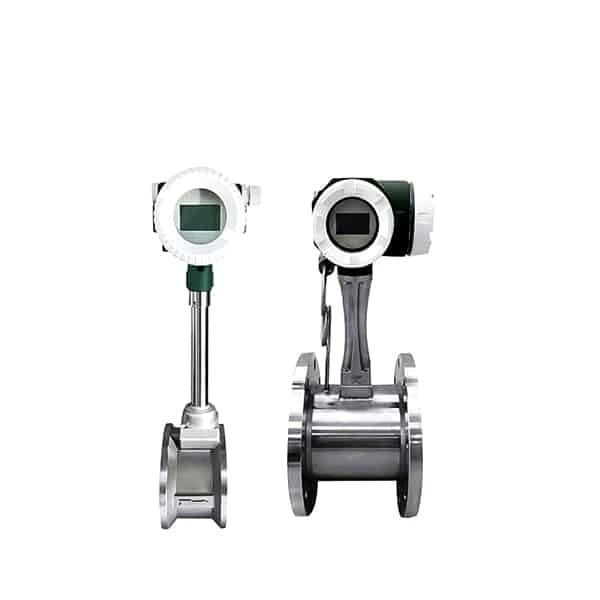 Vortex Flow Meter
For large gas headers at higher velocity; check the oxygen velocity and material rules below before sizing.
Choosing an oxygen flow meter
Every technology below meters oxygen gas. What separates them on this one medium is the oxygen-service column: whether anything moves in the stream, what faces the flow, and where the standard-volume conversion happens.
| Technology | Best for | Accuracy | Oxygen service notes |
|---|---|---|---|
| Thermal mass | Consumption metering and usage tracking, DN10 inline to DN4000 insertion | 1.5% inline; 2.5% insertion | No moving parts; sensor probe sits in the stream, so order it cleaned for oxygen service |
| Variable area, compensated | Feeds and mid-size lines that need a local reading | 1.5 to 4.0 grade | Float is the only moving part; cleaned build on request |
| Precession vortex | Standard volume without a separate corrector, DN15 to DN200 | 1.0 or 1.5 class | No moving parts; the swirler faces the flow, so hold the velocity limits |
| Vortex | Large headers, DN15 to DN1000 | 1.0 or 1.5% of reading | Bluff body is an impingement site; check velocity and material rules |
| Ultrasonic gas | Larger lines where pressure loss matters | 1.0% dual path; 1.5% single | Nothing moves and nothing blocks the bore; low pressure loss |
The thermal line is covered in depth on the thermal mass flow meters page, and the rotameter builds on the variable area flow meters page.
Oxygen cleaning
Any instrument whose wetted surfaces meet gas above 23.5 percent oxygen falls under oxygen-service cleaning practice. In North America that is CGA G-4.1, with ASTM G93 grading cleanliness from Level A down to Level D.
The point of the cleaning is to remove oil, grease, and particles that can ignite in an oxygen atmosphere. A common acceptance baseline is a non-volatile residue of no more than 220 mg per square meter, verified by UV light or wipe inspection. The instrument is degreased, cleaned, inspected, and sealed in packaging before it ships.
Two buying rules follow. First, say oxygen in the inquiry. A meter calibrated and packed for compressed air service is not an oxygen meter, even when the sizing matches, because ordinary assembly and calibration leave hydrocarbon films behind. A cleaned-for-oxygen build can be supplied when the order calls for it.
Second, keep the cleaned meter sealed until it is installed, and never rework it with shop tools and ordinary grease.
Velocity and materials
Oxygen piping practice (EIGA Doc 13, CGA G-4.4) limits gas velocity wherever the stream strikes a surface head-on, an impingement site. In carbon steel the cap is 30 m/s between 0.3 and 1.5 MPa absolute. From 1.5 to 10 MPa the product of pressure and velocity is held under 45 MPa m/s, which at 3 MPa means only 15 m/s. Above 10 MPa the limit drops to single digits.
Non-impingement runs are allowed roughly double. Below about 0.21 MPa the industry relaxes the limits, which is why low-pressure aeration and burner feeds are simpler to meter than high-pressure headers.
A flow meter is part of the piping. A vortex bluff body, a swirler, or an insertion probe faces the flow head-on, so it counts as an impingement site. At higher pressures that means burn-resistant alloys such as copper and nickel alloys, or velocities held inside the limits.
The same practice prefers static meters over moving-element meters on oxygen. Where a moving-element meter is used anyway, it gets an upstream filter and an oxygen-compatible build.
Standard volume and compensation
Oxygen is bought, balanced, and reported in standard volume, Nm³/h at 0 C and 101.325 kPa, but a meter in the pipe sees actual volume at line conditions. The difference is large: 500 Nm³/h at 0.8 MPa absolute and 20 C is only 68 m³/h of actual gas. Make sure every figure in the inquiry states its reference conditions, because a mismatch of bases is the most common sizing error on gas lines.
The same conversion is the velocity check. Put that 68 m³/h through a DN80 line and the gas moves at 3.8 m/s, comfortably inside the 30 m/s rule. Force it through DN50 and it moves at 9.6 m/s: still inside, but with far less margin for a future rate increase.
Technology then decides where the conversion happens. A thermal mass meter reads standard volume directly, and the precession vortex and the compensated gas rotameter carry built-in temperature and pressure compensation. A plain vortex reads actual volume and needs a flow computer, so quote the compensation, not just the meter.
Liquid oxygen
Liquid oxygen is a separate measurement: cryogenic at minus 183 C, and still an oxidizer. A Coriolis mass flow meter is the usual choice for LOX transfer and loading, since it reads mass directly and has no bearings in the stream. A cryogenic turbine flow meter also serves, with the moving-element precautions above: an upstream filter and an oxygen-compatible build stated at order.
Application example
Industrial gas distribution, Spain. A distributor asked for one DN40 meter type to cover both natural gas and oxygen lines, and a precession vortex flow meter was proposed. The type fits that need: nothing moves in the gas stream, and the built-in temperature and pressure compensation reports both gases in standard volume without a separate corrector.
FAQ
What does an oxygen flow meter do?
It measures the flow of oxygen gas through a line. In industry that means metering oxygen to furnaces, steelmaking vessels, aeration systems, and plant headers, usually reported in Nm³/h so consumption can be balanced and billed. The bedside medical flowmeter that sets liters per minute to a patient is a different, regulated device and is not covered here.
What are the different types of oxygen flow meters?
For industrial oxygen gas: thermal mass meters for consumption metering, compensated variable-area rotameters for local reading, precession vortex and vortex meters for standard-volume metering on process lines, and ultrasonic meters on larger headers. Liquid oxygen is usually metered with a Coriolis mass flow meter. Medical Thorpe-tube flowmeters are a separate category for patient delivery.
Can you breathe industrial grade oxygen?
No, it should not be used for breathing. The headline purity is close: industrial oxygen is typically about 99.5 percent, and medical oxygen at least 99 percent. The difference is that medical oxygen is produced and handled under pharmaceutical control, with contaminants monitored against set limits, cylinders evacuated before refilling, and each batch certified. Industrial oxygen has none of that chain of custody, so medical use requires oxygen supplied as a medical gas.
How accurate are oxygen flow meters?
Industrial oxygen meters typically hold 1.0 to 2.5 percent. Thermal mass meters read about 1.5 percent inline and 2.5 percent insertion, precession vortex and vortex meters are 1.0 or 1.5 class, and compensated gas rotameters run 1.5 to 4.0 grade. A Coriolis meter on liquid oxygen reaches 0.1 to 0.5 percent. State the accuracy at the working flow, not just full scale, when comparing.
Request a quote
Tell us the line size, the flow range with its reference conditions (Nm³/h or m³/h), the pressure and temperature, and that the line is oxygen. We size the meter, check the velocity against oxygen practice, and a cleaned-for-oxygen build can be supplied when the order calls for it.