Home › Products › Pressure Instruments › Diaphragm Seal Pressure Transmitters
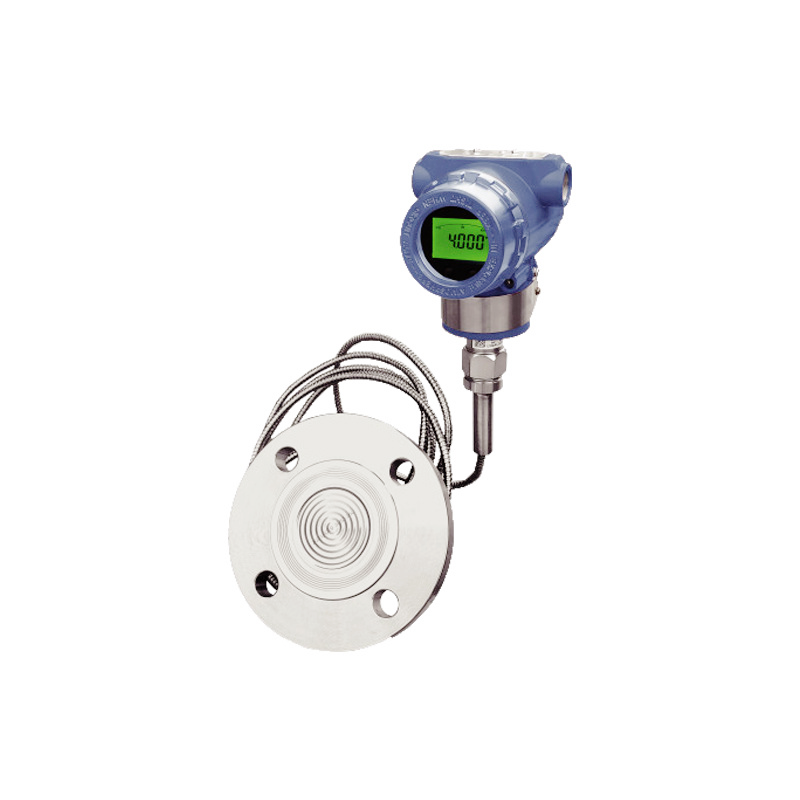
Remote Seal Differential Pressure Transmitter
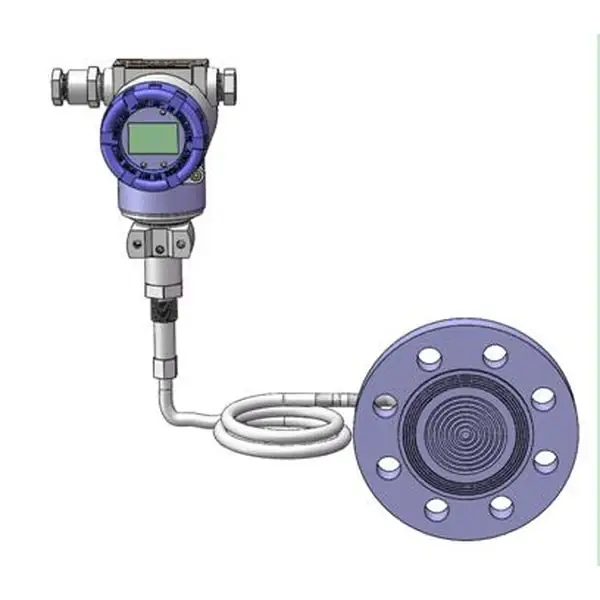
Some media should never touch your transmitter. Hot starch bakes onto impulse lines, slurry plugs them, acid eats them, and a sanitary process cannot tolerate them at all. A diaphragm seal moves the contact point: the process pushes on a corrugated diaphragm at the vessel, fill fluid in an armored capillary carries the pressure to the transmitter, and the cell never meets the medium.
- Accuracy: ±0.1% / ±0.2% of adjusted span
- Turndown: 10:1 or 100:1
- Output: 4–20 mA + HART; linear or square root
- Capillary: 1.5 m typical, 3 m max per side
- Seal types: flat, threaded, extended, flanged, sanitary
- Protection: IP65; Ex d / Ex ia options
When to use a diaphragm seal
Reach for a seal when the medium is hot and viscous, crystallizes as it cools, carries solids that would pack an impulse line, attacks the wetted parts, or must stay inside a sanitary boundary. The seal also solves interface and density measurement on tanks, because the same hydrostatic difference that gives level gives density once the geometry is fixed.
The transmitter behind the seals is the same smart DP cell as our SMT3151DP differential pressure transmitter; this page covers the sealed system around it. For clean media that can touch the cell, skip the seals and the cost: the SI-801 DP sensor or the bare SMT3151DP does the job. The full lineup sits on the pressure instruments page.
Technical specifications
| Parameter | Remote seal DP system |
|---|---|
| System | Smart DP transmitter + remote diaphragm seal(s) + fluid-filled capillary |
| Accuracy | ±0.1% of adjusted span; ±0.2% standard |
| Turndown | 10:1 or 100:1 |
| Output | 4–20 mA two-wire with superimposed digital (HART); linear or square root |
| Power supply | 12–45 VDC; supply effect <0.005% of span per volt; no load effect with stable supply |
| Damping | Adjustable 0.1–16 s (inert fill or remote seals increase the time constant) |
| Startup | <2 s, no warm-up |
| Static pressure effect | Zero error ±0.5% of max span at 32 MPa line pressure, removable by re-zeroing |
| Ambient temperature | −29 to 93 °C (analog amplifier); −29 to 75 °C (smart); −29 to 65 °C (with display); humidity to 95% |
| Process temperature | Set by the fill fluid; high-temperature and high-vacuum builds available |
| Working pressure | Set by the seal flange rating |
| Capillary | Armored; 1.5 m typical per side, 3 m maximum; unequal lengths to order |
| Position effect | <0.24 kPa zero error if the diaphragm is off vertical; removable by re-zeroing |
| EMC | 0.05% of span at 27–500 MHz, 3 V/m |
| Hazardous area | Ex d IIB T4–T6 flameproof; Ex ia IIC T5 intrinsically safe |
| Protection / weight | IP65; 3.9 kg without accessories |
Representative specifications, at room temperature and rated supply unless stated; working pressure and temperature follow the flange rating and fill fluid chosen at selection.
Remote seal types
| Seal type | Where it earns its keep |
|---|---|
| PFW flat | Flat diaphragm against a flush process face; general service |
| RTW threaded | Screws into a threaded boss; small connections |
| EFW extended insert | Barrel extends through the nozzle so the diaphragm sits flush with the vessel wall; no dead pocket to plug |
| RFW flange-mounted | Bolts to a standard flange; the workhorse for tank level |
| SCW sanitary | Tri-clamp style, crevice-free; food, beverage and pharma |
Diaphragm materials
Match the diaphragm to the medium first and the price second. A cheap diaphragm that pits is the most expensive part on the line.
| Material | Pick it for |
|---|---|
| 316L stainless steel | The standard diaphragm; water, steam, oils, most process chemistry |
| Hastelloy C | Chlorides and oxidizing acids that pit 316L |
| Monel | Hydrofluoric acid service and seawater |
| Tantalum | The last resort for hot concentrated acids |
| ECTFE / PFA / gold coating | Coatings over stainless when permeation or amalgamation is the failure mode |
Working principle
The process presses on the seal diaphragm; the fill fluid is incompressible, so the pressure travels down the capillary to the DP cell intact. What the capillary adds is physics, not error: more length means slower response, and the fill fluid expands with temperature, so the system is zeroed after installation and the diaphragm is sized so that thermal effects stay small. That is why capillaries stop at 3 m per side, and why the standard build is 1.5 m. Keep the bend radius above about 150 mm so the fill can move freely, and route the capillary away from temperature swings.
A starch-and-glucose processor in the Gulf runs the textbook application: media at 85 to 140 °C that would bake solid inside an impulse line, measured over a −1 to 2 bar span through a flush flanged diaphragm, with 4–20 mA and HART back to the control room. The line stays clean because the line never sees the product.
Features
- Dynamic-profile remote diaphragm: survives overload without taking a set, so accuracy holds after the upset, not just before it.
- All-welded, rigidly sealed fill system: no elastomer joints to weep fill fluid over the years.
- Armored capillary with protected couplings; the armor takes the abuse on site, the capillary keeps measuring.
- High-temperature, high-vacuum, fast-response and unequal-length capillary builds to order.
Installation
- Liquid taps from the side of the pipe, never the bottom; sediment settles where you drilled.
- Gas taps from the top, and mount the transmitter above the line so condensate drains back.
- Steam and hot media: put a condenser or buffer coil ahead of the instrument and stay inside its temperature rating.
- Outdoors in winter, protect the wet parts from freezing; ice expansion kills more cells than overpressure does.
Applications
Hot, viscous and aggressive
- Hot viscous media and products that crystallize in dead legs.
- Slurries with solids or suspended matter.
- Strongly corrosive or toxic media, with the matching diaphragm alloy.
Clean and exacting
- Food, beverage and pharma lines on sanitary seals, rinse-clean between batches; for a dedicated clamp-fitted unit see the SI-350 sanitary pressure transmitter.
- Tank level on closed vessels without impulse-line headaches; the integral-flange version is the SMT3151LT DP level transmitter.
- Continuous interface and density measurement.
Related products
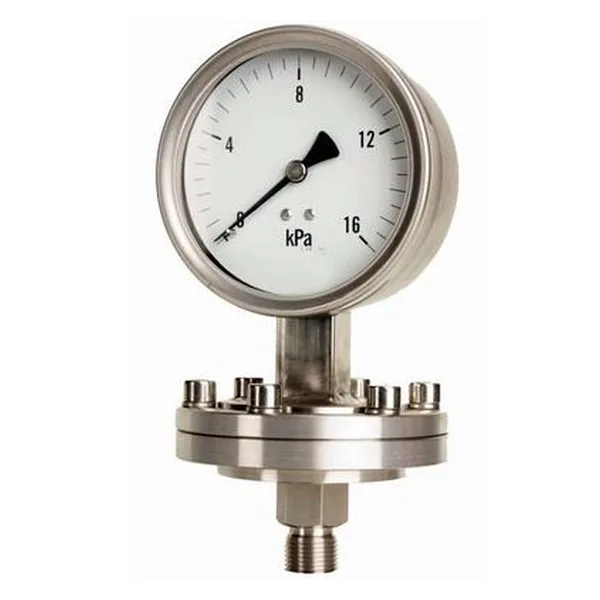 Diaphragm Pressure GaugeEN 837-3 gauge for low and corrosive pressures.
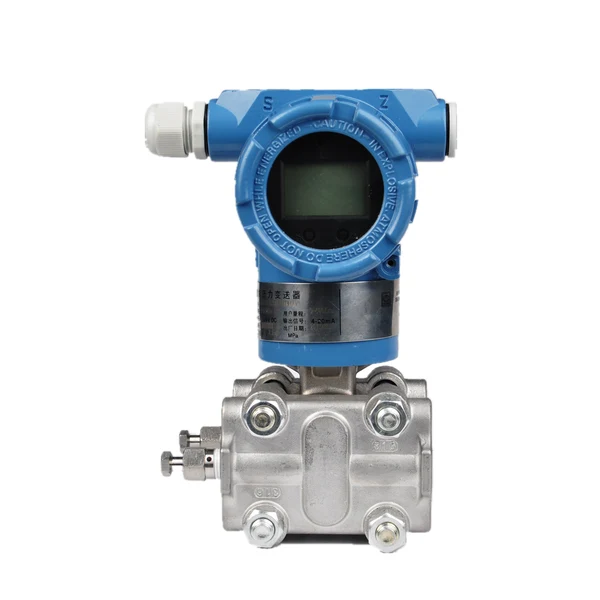 Differential Pressure Transmitters
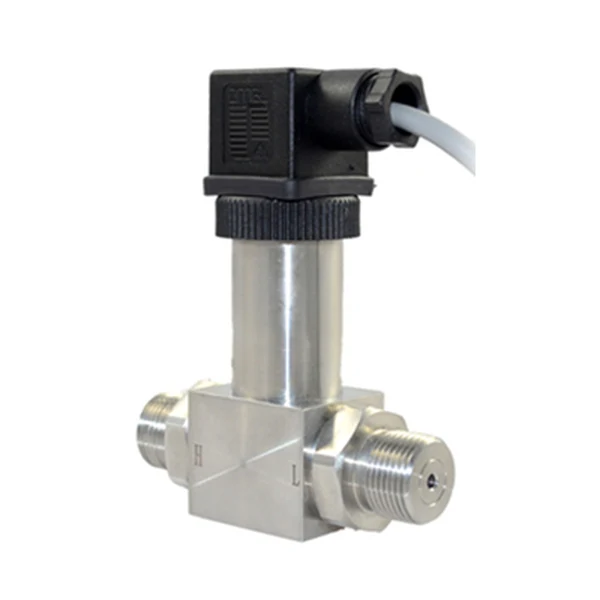 Differential Pressure Sensors
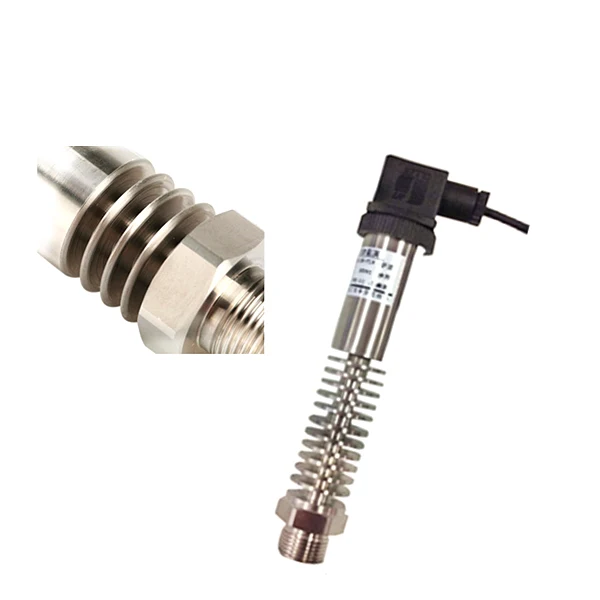 High-Temperature Pressure Transmitters
Once the seal system is chosen, mounting height and zero suppression still have to be set correctly; the procedure is in our pressure transmitter installation guide.
Choosing the seal alloy and fill starts with the media itself; the wetted parts selection guide carries the media-to-material matrix.
Remote seals also serve level measurement on extreme-temperature media; the fill fluid limits are discussed in the molten salt level measurement guide.
FAQ
What is a diaphragm seal on a pressure transmitter?
A diaphragm seal is an isolating diaphragm with a fill fluid that separates the process medium from the transmitter sensor. It lets the unit measure hot, viscous, corrosive, or solids-bearing media without them reaching the sensor. This model uses a remote seal connected by an armoured capillary.
What is a pressure transmitter with a diaphragm seal?
It is a transmitter whose sensing diaphragm sits remotely at the process and connects to the electronics through a fill-filled capillary, so the transmitter can be mounted away from heat or an awkward tapping while the seal handles the medium and still indicates and transmits the pressure as 4–20 mA.
What is typically filled in the diaphragm seal system to transmit pressure?
A fill fluid, usually silicone oil, with other fills such as fluorinated or food-grade oil for high-temperature, vacuum, or hygienic service. The fluid is incompressible, so it transmits the process pressure faithfully from the seal to the sensor.
What is the working principle of a diaphragm seal pressure transmitter?
Process pressure pushes on the isolating diaphragm; the fill fluid behind it carries that pressure through the capillary to the sensor, which converts it to 4–20 mA. The seal keeps the medium off the sensor while passing the pressure unchanged.
Request a quote
Tell us the five points above. Our engineers reply with a configured diaphragm seal pressure transmitter, datasheet and price.