Products › Pressure instruments › SI-D100 Diaphragm Pressure Gauge
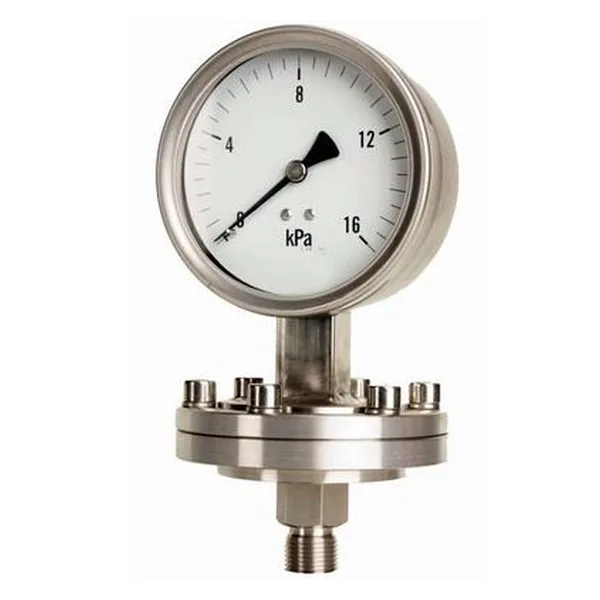
SI-D100 Diaphragm Pressure Gauge
An EN 837-3 diaphragm pressure gauge for low and aggressive pressures. A stainless diaphragm isolates the mechanism from the medium, so it reads corrosive, viscous and clogging media that would foul a Bourdon tube, with no power needed.
- Ranges: 0-10 mbar to 0-60 bar
- Accuracy: Class 1.6 / 2.5 (EN 837-3)
- Dial size: 100 mm or 160 mm
- Wetted parts: stainless steel; PTFE-lined option
- Case: stainless steel, bayonet ring
Overview
The SI-D100 is a diaphragm pressure gauge for jobs a Bourdon-tube gauge handles badly: very low ranges, and media that corrode, crystallize or clog. A circular diaphragm sits between flanges and takes the pressure, so the only part touching the process is the diaphragm face, not a thin coiled tube. It is a mechanical local indicator, built to EN 837-3, that needs no power or signal wiring.
Specify it where you need a reading at the equipment on a difficult medium. For an electrical signal on the same kind of corrosive or remote service, pair it with a diaphragm seal pressure transmitter; for clean low-pressure air and gas with a 4-20 mA output, see the low pressure transducer.
Working principle
A thin circular diaphragm is clamped between a pair of flanges. Process pressure acts on its face and deflects it; the deflection is proportional to the pressure and is transferred through a linkage to the pointer. Because the diaphragm has a large area and a wide, open pressure channel, it tolerates viscous and particle-laden media far better than a Bourdon tube, and it resists overpressure well. The whole movement is mechanical, so the gauge reads on site with no supply.
Technical specifications
| Parameter | Specification |
|---|---|
| Standard | EN 837-3 diaphragm pressure gauges |
| Display ranges | 0-10 mbar to 0-40 bar (unfilled); 0-60 mbar to 0-60 bar (liquid-filled) |
| Nominal size | 100 mm or 160 mm dial |
| Accuracy | Class 1.6; Class 2.5 with protective foil (EN 837-3) |
| Case | Stainless steel with bayonet ring |
| Wetted parts | Stainless steel; PTFE lining or open flange optional |
| Process connection | Lower mount; thread or open flange |
| Overload | Static 100% FS; dynamic 90% FS; overload up to 5x (max 40 bar) |
| Filling | Dry, or liquid-filled for vibration and pulsation |
Representative specifications per EN 837-3. Values typical; confirm the exact build per datasheet.
Diaphragm and materials
Match the diaphragm to the range and the medium. A stainless steel diaphragm covers the lower spans (about 40 to 250 mbar); a Duratherm diaphragm covers the higher spans (about 0.4 to 40 bar). For aggressive chemicals, the wetted face can be PTFE-lined, and an open-flange connection with an enlarged channel keeps thick or crystallizing media from blocking the port. The case and standard wetted parts are stainless steel, with special materials available for hard duties.
Models and ordering
Quote checklist: send these five points and we configure one unit, not a shelf part.
- Pressure range and whether it is positive, vacuum or compound
- Dial size: 100 mm or 160 mm
- Accuracy class: 1.6 or 2.5
- Wetted material and lining: stainless, Duratherm, or PTFE-lined; thread or open flange
- Dry or liquid-filled, and the mounting (lower or panel)
Ordering example: SI-D100, 0 to 1 bar, 100 mm dial, Class 1.6, stainless diaphragm with lower thread, liquid-filled for a pulsating pump line.
Applications
- Low-pressure measurement in mbar ranges where a Bourdon gauge is too coarse
- Corrosive media, with a PTFE-lined wetted face
- Viscous, crystallizing or particle-laden media that clog a narrow port
- Local indication where no power or signal loop is available
- Chemical, water treatment, food and process plants
Application example
Food and process slurries. A food processor reading a starch slurry at low pressure, around -1 to 2 bar, needed the wetted element kept off the medium, which would pack the narrow port of a Bourdon gauge. A diaphragm element with a flush face and an enlarged pressure channel keeps the slurry clear of the mechanism and stays readable at the line without power.
Related products
 Differential Pressure Gauge
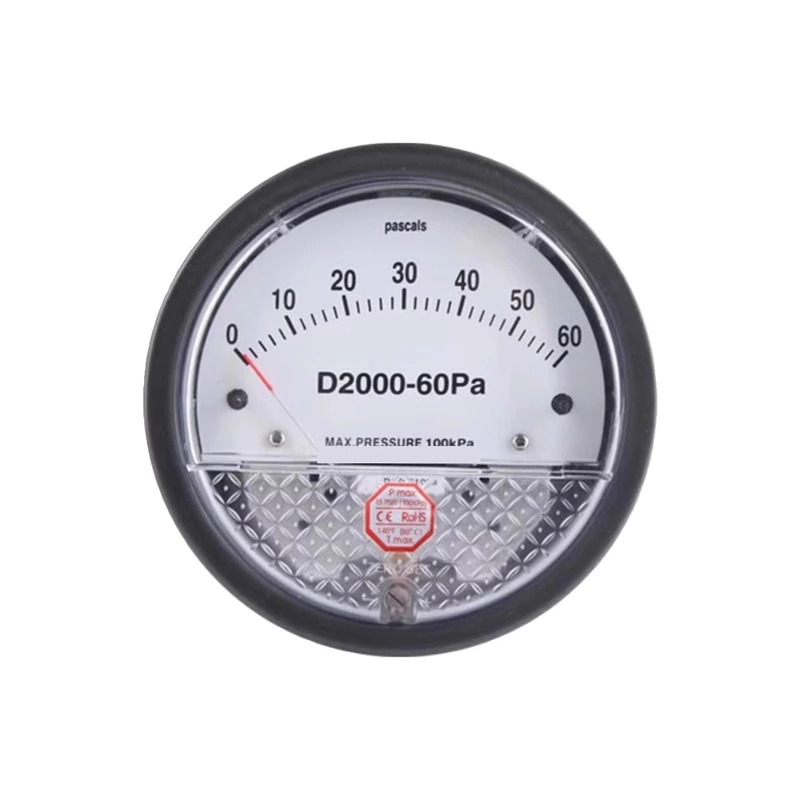
Magnehelic-type gauge for air and gas, no liquid fill.
 Diaphragm Seal Pressure Transmitters
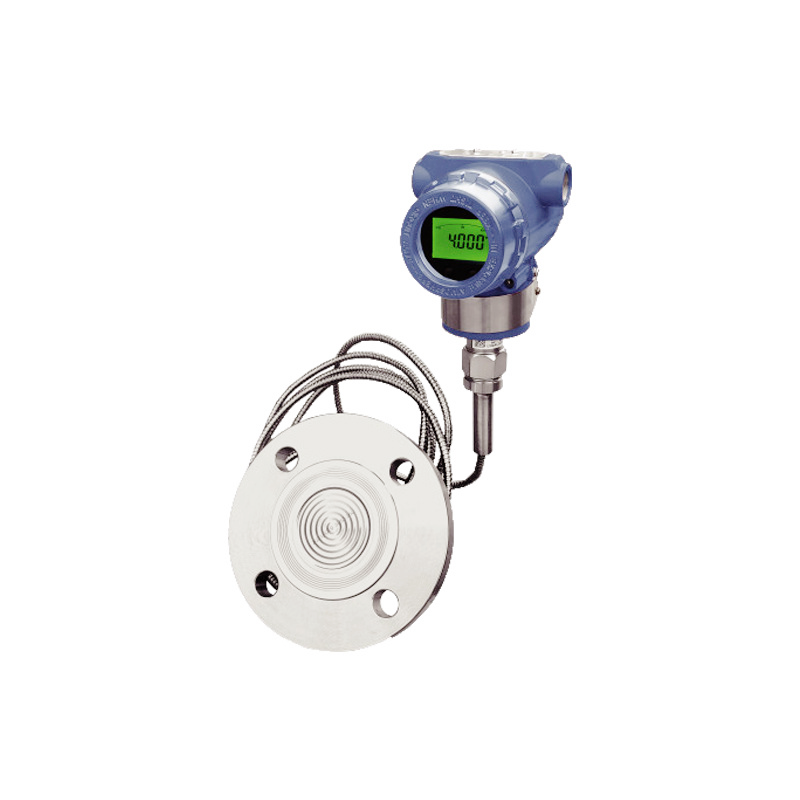
Remote-seal transmitter for corrosive and high-temperature media.
 Low Pressure Transducers
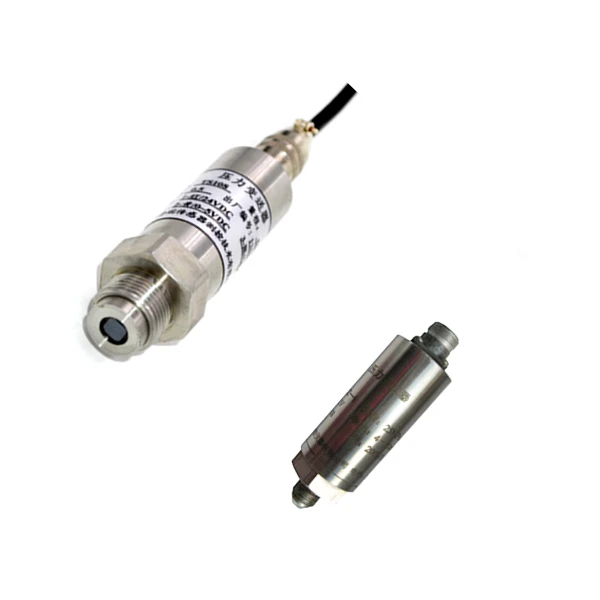
kPa-range electronic transmitter for clean air and gas.
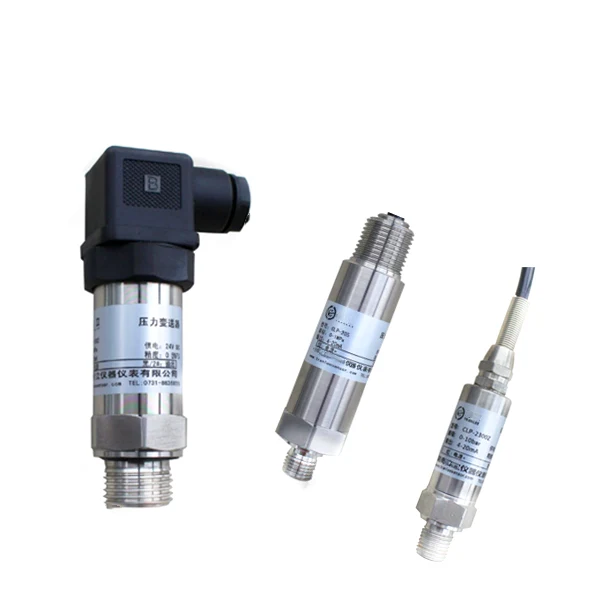 Pressure Transmitters
General-purpose gauge, absolute and differential transmitters.
Browse all pressure instruments →
For the working principle behind dial gauges in general, including accuracy classes and range selection rules, see our bourdon tube pressure gauge guide.
Where the medium is clean and the problem is vibration rather than clogging, a conventional dial with a case fill is the simpler route; see our liquid filled pressure gauge guide for the fluids and their limits.
On steam and hot water boilers, dial range and siphon protection are set by the boiler code, collected in our boiler pressure gauge guide.
FAQ
What is a diaphragm pressure gauge?
A diaphragm pressure gauge measures pressure with a flexible metal membrane instead of a coiled tube. The process pushes on one side of the diaphragm, the diaphragm deflects, and a linkage moves the pointer across the dial. Because the membrane has a large area and a short stroke, it reads low pressures accurately and copes well with viscous or dirty media that would clog a thin Bourdon tube.
What is the difference between diaphragm and Bourdon tube pressure gauge?
Both are mechanical, but the sensing element differs. A Bourdon gauge uses a curved tube that straightens under pressure; it is simple and ideal for medium and high ranges. A diaphragm gauge uses a flat or corrugated membrane and excels at low ranges (down to a few kPa or mbar) and with aggressive or sticky media, because the single large wetted diaphragm is easy to coat or make from special alloys. As a rule: high pressure and clean media favour Bourdon; low pressure or difficult media favour the diaphragm.
How is pressure measured by a diaphragm?
The pressure acts on the area of the diaphragm and produces a force that deflects it. That small movement is transferred mechanically through a linkage and gear to the pointer in a gauge, or to a strain or capacitance element in a transmitter. The deflection is proportional to the applied pressure, so the dial can be calibrated directly in pressure units.
What are the advantages and disadvantages of diaphragm gauges?
Advantages: excellent at low pressures, good overload resistance, a large wetted diaphragm that is easy to protect against corrosion, and a design that resists clogging from viscous or particle-laden media. Disadvantages: they are bulkier than a Bourdon gauge for the same range, generally less suited to very high pressures, and the diaphragm can be damaged by severe overpressure or pulsation unless specified with the right material and protection.
Request a quote
Send the five points in the checklist above and our application engineers will configure an SI-D100 for your range, medium and connection. Reach our application engineers.