Home › Products › Pressure Instruments › Differential Pressure Sensors
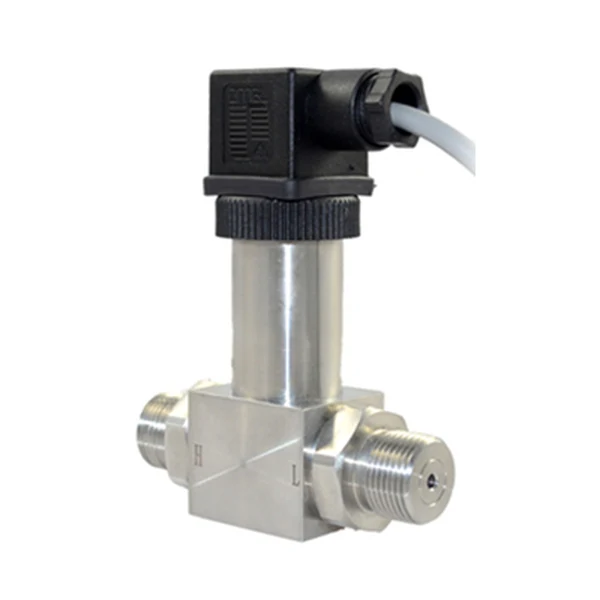
SI-801 Wet-Wet Differential Pressure Sensor
Most differential pressure sensors are built for clean air; process lines are not that polite. The SI-801 is the other kind: a wet-wet cell in an all-welded stainless body, with a 316L isolation diaphragm on each port. It reads the difference across liquids and gases, oil and water alike, on spans from 10 kPa to 35 MPa, and shrugs off three times its range when a valve slams shut.
- Span: 0–10 kPa to 0–35 MPa
- Accuracy: ±0.2% / ±0.5% FS
- Overpressure: 3× rated range
- Output: 4–20 mA; 0–5 / 1–5 / 0–10 V
- Body: all-welded stainless, 316L diaphragms, IP65
- Media: liquids and gases, −20 to 65 °C
Overview
Wet-wet is the spec that separates this sensor from the duct-pressure class: both ports accept liquid, not just dry air. That is what filter banks, pump skids and water infrastructure actually need. The medium sits on both sides of the cell, and the cell is welded shut against it.
Two products carry differential pressure in our pressure series. When the control room wants HART, square-root flow extraction and a display, specify the SMT3151DP smart differential pressure transmitter. When the job is a clean 4–20 mA difference in a compact welded body, with no buttons and nothing to configure, the SI-801 does it for less. The rest of the lineup sits on the pressure instruments page.
Technical specifications
| Parameter | SI-801 |
|---|---|
| Model | SI-801 piezoresistive differential pressure sensor (wet-wet) |
| Span | 0–10 kPa up to 0–35 MPa |
| Accuracy | ±0.2% or ±0.5% FS composite |
| Overpressure | 3× rated range |
| Output | 4–20 mA (2-wire); 0–5 / 1–5 / 0–10 VDC (3-wire) |
| Power supply | 24 VDC (10–30 VDC) |
| Media / ambient temperature | −20 to 65 °C |
| Load resistance | ≤800 Ω (current output); >50 kΩ (voltage output) |
| Insulation | >2,000 MΩ at 100 VDC |
| Long-term stability | 0.1% FS per year |
| Vibration effect | <0.1% FS over 20–1,000 Hz |
| Sensing element | Diffused-silicon piezoresistive die; Wheatstone bridge |
| Isolation diaphragms | 316L stainless steel, one per port; silicone oil fill |
| Body | All-welded stainless steel, fully sealed; IP65 |
| Adjustment | External zero and span on connector versions |
| Electrical / process connection | Hessmann connector (custom options); M20×1.5 or G1/2 threads |
Representative specifications, at room temperature and rated supply unless stated; exact span, accuracy and connections are set at selection and quote.
Features
- All-welded, fully sealed stainless construction: no gaskets in the pressure path, so nothing to weep on oil or chemical service.
- Diffused-silicon die behind 316L diaphragms: the Wheatstone bridge output is linear with differential pressure, and the piezoresistive effect gives roughly one hundred times the sensitivity of a foil strain gauge.
- Temperature compensation plus aging screening before shipment: stability is screened in, not promised.
- Connector versions adjust zero and span externally; no need to open the housing in the field.
Working principle
Each port presses on a corrugated 316L diaphragm. Silicone oil carries both pressures to the two faces of a silicon die, and the die flexes by the difference alone. Stress shifts the resistivity of the silicon (the piezoresistive effect), and the Wheatstone bridge etched into the die turns that shift into a millivolt signal, which the amplifier conditions to 4–20 mA or a voltage output. One die, two pressures, one honest difference.
A fuel-handling site in southern Africa runs the textbook version of this application: an averaging-pitot element in a diesel line, a wet-wet DP sensor across it, and a 4–20 mA difference back to the panel. Diesel on both ports, no display, no configuration: exactly the job this class of sensor exists for.
Applications
Water and buildings
- Water-level difference at hydropower stations; flood-control and waterlogging monitoring.
- Groundwater monitoring and underwater engineering.
- Central air-conditioning terminal control; water-saving irrigation.
Process and utilities
- Flow against orifice plates and averaging-pitot elements.
- Wastewater treatment trains.
- Draft and wind differential on air handling.
Keep the media between −20 and 65 °C at the cell. For hotter lines, move to the high-temperature pressure transmitters; for HART and flow totalizing, the SMT3151DP.
Related products
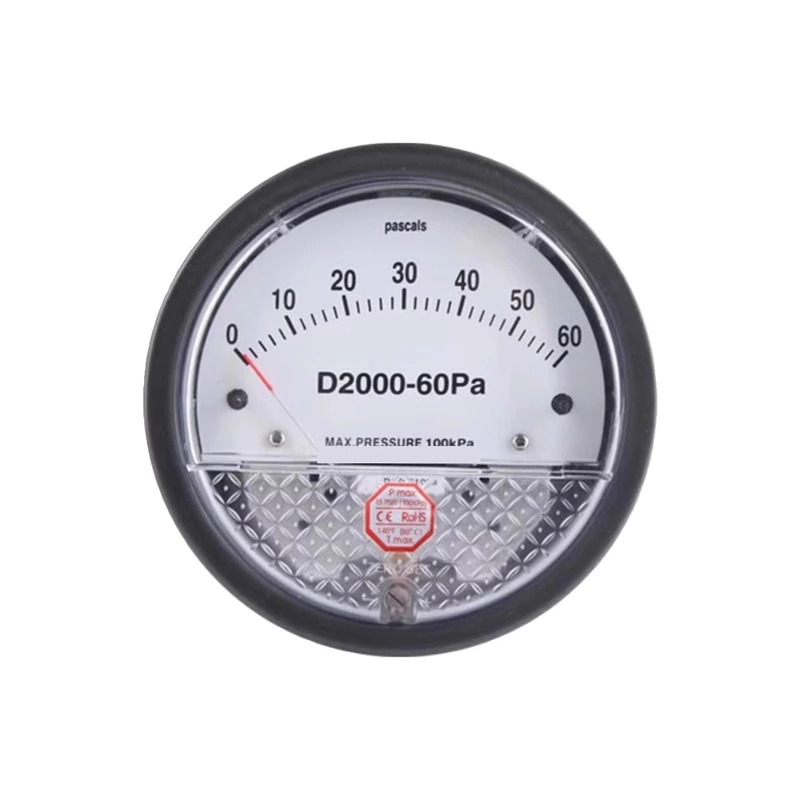 Differential Pressure GaugeMagnehelic-type gauge for air and gas.
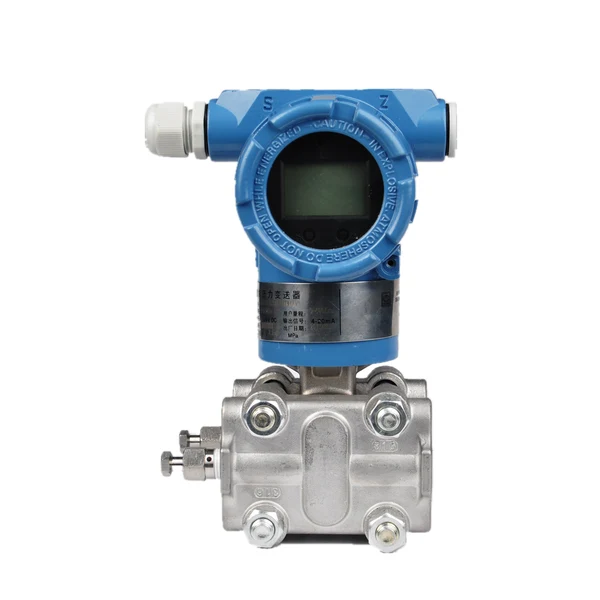 Differential Pressure Transmitters
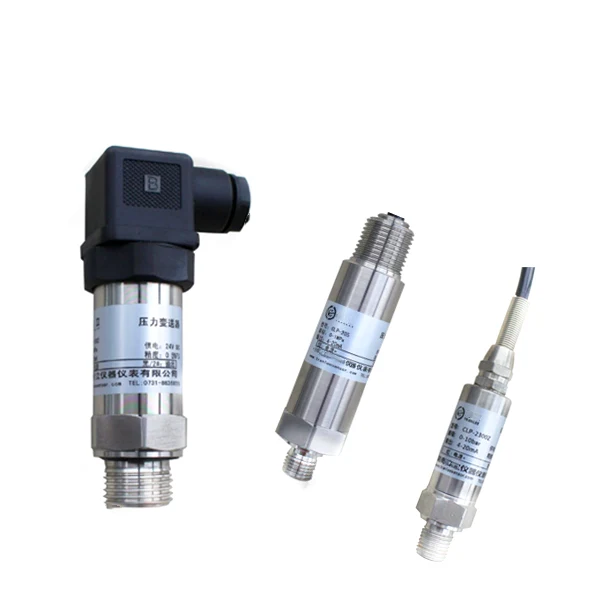 Pressure Transmitters
Browse all pressure instruments →
FAQ
What does a differential pressure sensor do?
A differential pressure sensor measures the difference between two pressures rather than one pressure against atmosphere. It has a high port and a low port and reports only the gap between them. That makes it the tool for reading pressure drop across a filter or heat exchanger, flow through an orifice, or level in a sealed tank. The SI-801 is a wet-wet type, so both ports can take liquid or gas directly, not only clean dry air.
How do you know if your differential pressure sensor is bad?
Watch for a reading that no longer tracks the real pressure drop, an output stuck at zero or full scale, or a value that drifts when the true difference has not changed. First confirm the high and low lines are connected the right way round and are not blocked or air-locked, since a plugged impulse line mimics a dead sensor. If the lines are clear and it still will not zero with both ports equalised, the cell has likely been overranged or damaged and should be replaced.
What is a differential pressure sensor for air?
A differential pressure sensor for air has ports rated for gas and is used for filter monitoring, room and cleanroom pressurisation, and airflow across an orifice or venturi. Many low-cost DP sensors are dry-dry, meaning air only. The SI-801 is wet-wet, so it handles air as well as liquids on both sides, letting one sensor cover hydraulic and process applications that an air-only sensor cannot.
Request a quote
Tell us the five points above. Our engineers reply with a configured differential pressure sensor, datasheet and price.