Home › Products › Pressure Instruments › Sanitary Pressure Transmitters
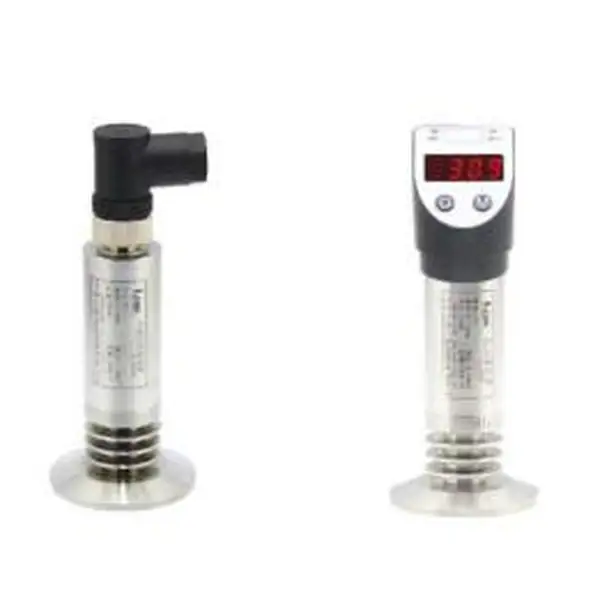
SI-350 Sanitary Pressure Transmitter
A dairy or brewing line gets cleaned in place with hot caustic every day, and a standard pressure port would trap product in its recessed bore where no rinse can reach it. The SI-350 ends in a flush 316L stainless steel diaphragm instead: nothing for product to lodge in, nothing for cleaning fluid to miss. It clamps into the line on a tri-clamp ferrule, takes CIP chemistry and temperature, and unclamps in seconds when the fitting itself needs inspection.
- Ranges: nine standard spans, 0–10 kPa to 0–10 MPa; vacuum from −100 kPa
- Accuracy: 0.5% FS; hysteresis and repeatability 0.1% FS
- Connections: 1-1/2″ and 2″ sanitary clamp, M27 × 2, flange
- Media temperature: to 250 °C with heat-sink standoffs
- Protection: IP65; intrinsically safe Ex ia IIC T6
Inside, a diffused-silicon sensing core reads the diaphragm through a silicone transmission fluid, and the measuring end is welded 316L throughout. The body handles gauge, absolute and sealed-reference measurements, so one fitting style covers tank head pressure, vessel vacuum during cooldown, and line pressure on the pump discharge. For non-hygienic viscous and corrosive duties the same flush-membrane idea appears in our diaphragm seal pressure transmitters; the SI-350 is the food-contact version of the concept, and the threaded-port version is the SI-703 flush diaphragm pressure sensor.
Range options
Pick the span so your working pressure sits at 60 to 80% of full scale. Note how the overpressure rating falls as the range climbs: the 10 kPa cell shrugs off 300% of span, the 10 MPa cell is rated 150%. That is the nature of low-range silicon cells, and it is why a low span with generous headroom beats an oversized span that never uses its resolution.
| Model | Range | Overpressure | Connection |
|---|---|---|---|
| SI-350-02 | 0–10 kPa | 300% FS | 2″ sanitary clamp |
| SI-350-101 | 0–20 kPa | 300% FS | 1-1/2″ sanitary clamp |
| SI-350-12 | 0–400 kPa | 200% FS | 2″ sanitary clamp |
| SI-350-22 | 0–600 kPa | 200% FS | 2″ sanitary clamp |
| SI-350-32 | 0–1 MPa | 200% FS | 2″ sanitary clamp |
| SI-350-42 | 0–1.6 MPa | 200% FS | 2″ sanitary clamp |
| SI-350-52 | 0–2.5 MPa | 200% FS | 2″ sanitary clamp |
| SI-350-62 | 0–6 MPa | 150% FS | 2″ sanitary clamp |
| SI-350-72 | 0–10 MPa | 150% FS | 2″ sanitary clamp |
Technical specifications
| Parameter | Specification |
|---|---|
| Measuring range | −100 kPa to 0; 0–10 kPa up to 0–10 MPa |
| Pressure types | Gauge, absolute, sealed reference |
| Accuracy | 0.5% FS; hysteresis and repeatability 0.1% FS |
| Temperature drift | 1.5% FS over −20 to 85 °C |
| Response time | ≤1 ms to 90% FS |
| Service life | ≥10 million pressure cycles |
| Output signal | 4–20 mA (12–30 VDC); 0–5, 1–5, 0.5–4.5, 0–10 V (12–24 VDC) |
| Working / storage temperature | −20 to 85 °C / −40 to 85 °C |
| Media temperature | −40 to 85 °C direct; to 150 °C with three heat sinks; to 250 °C with five heat sinks |
| Wetted parts | 316L stainless steel flush diaphragm, welded measuring end; media compatibility per 316L |
| Process connection | 1-1/2″ and 2″ sanitary clamp, M27 × 2, flange |
| Insulation resistance | ≥100 MΩ at 250 VDC |
| Vibration | Sinusoidal 20 g, 25 Hz–2 kHz (IEC 60068-2-6); random 7.5 g rms, 5 Hz–1 kHz (IEC 60068-2-64) |
| Protection / hazardous area | IP65; intrinsically safe Ex ia IIC T6 |
Specifications apply at room temperature and rated supply unless stated. Confirm the exact figure for your model and range on the order sheet.
CIP, SIP and heat sinks
The diaphragm takes the cleaning chemistry; the electronics behind it have to survive the temperature. Direct-mounted, the SI-350 handles media to 85 °C, which covers most product flows and typical caustic CIP circuits. Steam-in-place runs hotter, so the transmitter takes heat-sink standoffs between the diaphragm and the electronics: three sinks carry the media rating to 150 °C, five to 250 °C. Order the sink count for the hottest thing the port will ever see, which is usually the sanitization cycle, not the product.
From the case file: a pharmaceutical plant in South Asia outfitting cleanrooms and a water-for-injection loop specified sanitary-type pressure instruments alongside its cleanroom differential-pressure gauges; hygienic points like WFI distribution are exactly where a clamp-fitted flush diaphragm belongs. And the paperwork side matters too: for a food-industry customer in Southern Europe we shipped sanitary-line pressure sensors complete with the certificates their customs broker needed for clearance.
Ordering information
Every SI-350 is built against its order sheet. The span and the clamp size are the two decisions that matter; everything after that is output codes and sink count.
Quote checklist: five things to put in your inquiry
- Working pressure and the span you want (we size for 60–80% FS; overpressure headroom is in the model table above)
- Pressure type: gauge, absolute, or sealed reference
- Process connection: 1-1/2″ or 2″ sanitary clamp, M27 × 2, or flange
- Hottest media temperature at the port, including CIP/SIP cycles, so we set the heat-sink count
- Output signal (4–20 mA or a voltage option) and whether the area needs the Ex ia IIC T6 version
Ordering example: SI-350-12, 0–400 kPa gauge, 2″ sanitary clamp, 4–20 mA, three heat sinks for steam sanitization. A CIP supply loop working at 250 kPa sits at 63% of full scale, with 200% overpressure above it for pump transients.
Applications
Hygienic process service
- Dairy and food processing lines
- Brewing, beverage and water processing
- Pharmaceutical and biotechnology plants
- Viscous products that clog a recessed port
Beyond food and pharma
- Environmentally friendly chemical coatings
- Polyurethane equipment
- Paint inspection systems
- Any clean-service point that needs fast fitting changes
Related products
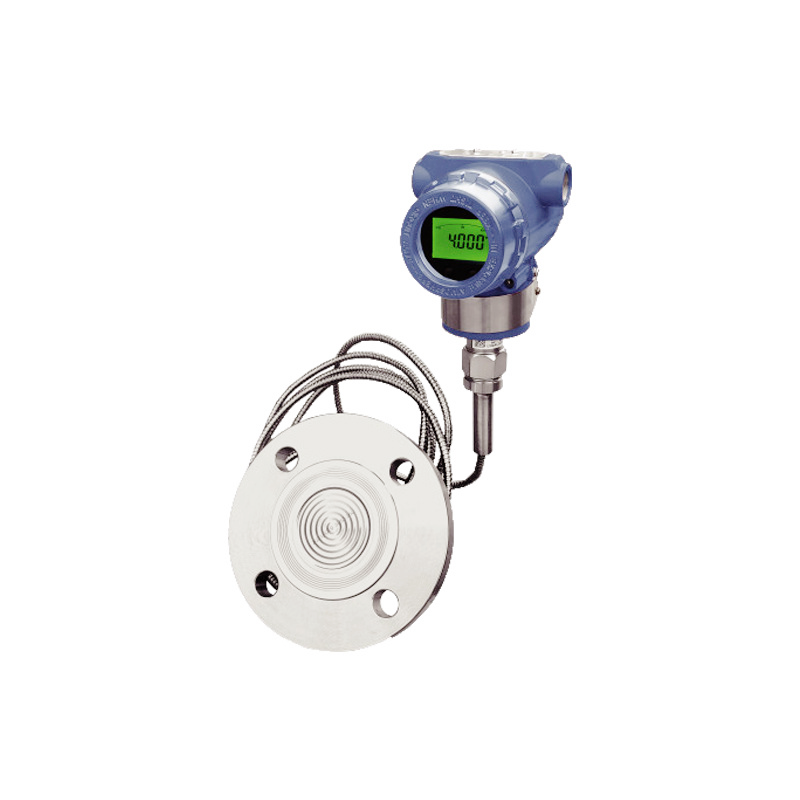 Diaphragm Seal Pressure Transmitters
The non-hygienic flush-membrane line for hot, corrosive and clogging media.
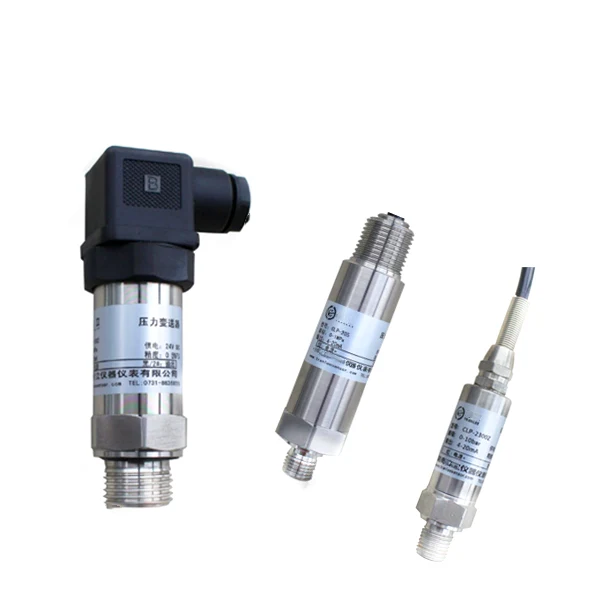 Pressure Transmitters
Gauge and absolute duties from -100 kPa to 100 MPa. The general-purpose line.
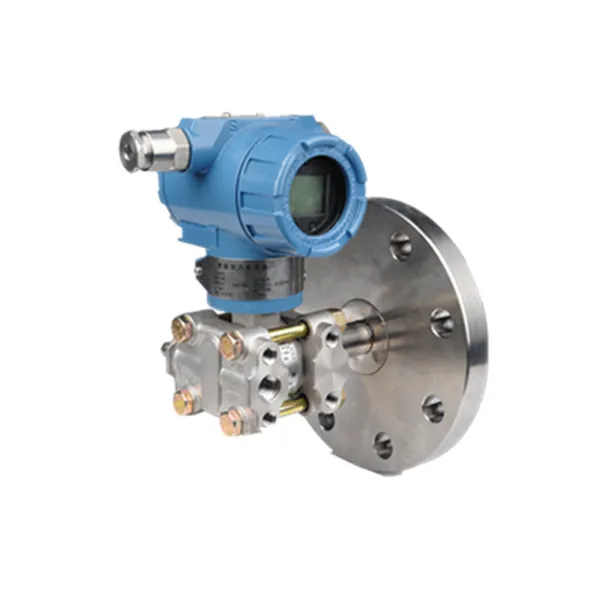 DP Level Transmitters
Flange-mounted level measurement for closed tanks and vessels.
FAQ
What does a sanitary pressure transmitter do?
It measures process pressure and outputs 4–20 mA (with HART) for a control system. The SI-350 is the sanitary version, with a flush, crevice-free hygienic diaphragm and connection so it can be cleaned in place on food, beverage, and pharmaceutical lines.
What is the difference between a pressure sensor and a pressure transmitter?
A sensor gives a raw signal proportional to pressure; a transmitter adds the electronics that condition and scale it to a standard 4–20 mA output. The SI-350 transmitter also carries the hygienic flush-diaphragm wetted design for clean process service.
What is the difference between a pressure regulator and a pressure transmitter?
A regulator is a valve that controls and holds pressure; a transmitter only measures and reports it. Use a transmitter to monitor a hygienic line and a regulator to control it.
What is the purpose of a transmitter?
To turn a measurement into a standard, transmittable signal a control system can read over distance. On a sanitary line the flush diaphragm and CIP-compatible fitting let the transmitter do that without trapping product.
Request a quote
Tell us the working pressure, the clamp size, the hottest temperature at the port and the output signal. We respond with a configured model, lead time and price, usually within one working day.