Home › Products › Flow Meters › Magnetic Flow Meters › Battery-Powered Magnetic Flow Meter
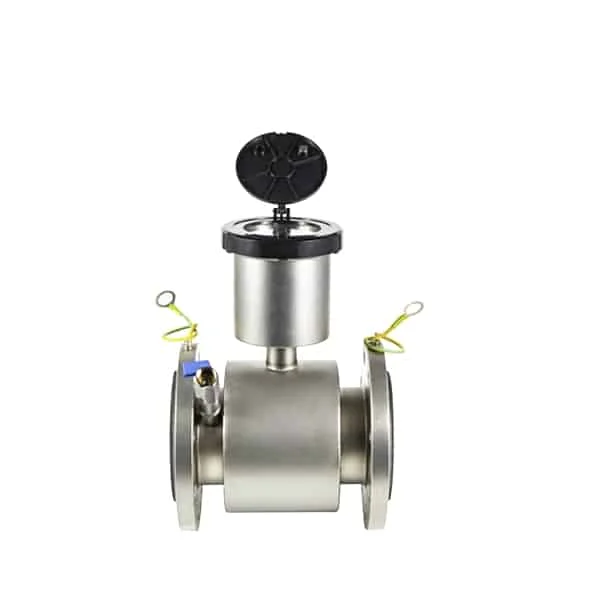
Battery-Powered Magnetic Flow Meter (SI-3135)
A magnetic flow meter that runs for years on an internal lithium battery, so it meters a water main where there is no power. Sealed to IP68 for a buried chamber and accurate to plus or minus 0.5%, it is built for district metering, irrigation and remote networks.
- Power: 3.6 V lithium battery, 3 to 5 years
- Accuracy: plus or minus 0.5%; 0 to 15 m/s
- Size: DN6 to DN3000
- Protection: IP68, for a buried chamber
- Media: conductive water and wastewater (>20 uS/cm)
Overview
A battery-powered magnetic flow meter measures the flow of a conductive liquid with no mains supply. An internal 3.6 V lithium battery runs the coil and the electronics for three to five years, so the meter goes onto a water main in a field, a buried chamber or a remote network where running power is not practical. It keeps the full accuracy of a mains mag meter, plus or minus 0.5%, on sizes from DN6 to DN3000.
Sealed to IP68, it survives a flooded pit, and its LCD shows instantaneous flow, forward and reverse totals, battery state and alarms. It comes as an integrated or a split unit with a flange, plug-in or clamp connection, and pairs with GPRS for district metering and remote billing.
Features
Why a battery mag meter suits a remote main:
3 to 5 year battery
An internal 3.6 V lithium battery runs the meter for years, so no mains supply is needed.
IP68 for a pit
A fully sealed body survives a flooded chamber, so it suits a buried district meter.
Full 0.5% accuracy
It keeps the accuracy of a mains mag meter, plus or minus 0.5%, not a reduced spec.
Forward and reverse
Bidirectional, with instantaneous flow, forward and reverse totals, clock and alarms.
DN6 to DN3000
From a small irrigation line to a large district main, integrated or split.
GPRS-ready
Pairs with GPRS for remote district metering and billing, with no field power.
Working principle
A magnetic flow meter works by Faraday’s law: a conductive liquid moving through a magnetic field generates a voltage proportional to its velocity, which the transmitter scales to flow. In a battery version the coil is pulsed in short bursts rather than driven continuously, so the same measurement runs on a tiny fraction of the power, and the electronics sleep between readings. That is how a lithium battery lasts three to five years.
The liquid must conduct, above about 20 microsiemens per centimetre, so it suits water, wastewater and aqueous chemicals, not oils or pure water. Because the coil is pulsed, the meter reads at intervals rather than truly continuously, which is right for totalising a water main but is the trade-off against a mains meter.
Technical specifications
| Parameter | Specification |
|---|---|
| Model | SI-3135 battery-powered magnetic flow meter |
| Nominal diameter | DN6 to DN3000 |
| Accuracy / range | Plus or minus 0.5%; 0 to 15 m/s |
| Medium / conductivity | Conductive water and wastewater, above 20 uS/cm |
| Temperature / pressure | Medium −10 to 160 °C; 0.6 to 4.0 MPa |
| Power supply | 3.6 V internal lithium battery; 3 to 5 years continuous |
| Connection / structure | Flange, plug-in or clamp; integrated or split |
| Display | Backlit LCD; flow, forward/reverse totals, battery, clock, alarms |
| Protection | Integrated IP68; split sensor IP68, converter IP65 |
| Communication | GPRS option for remote reading |
Battery life and siting
The three-to-five-year life depends on how hard the meter works: a larger coil, a fast logging interval or frequent GPRS calls draw more, so a district meter that reports once a day lasts longer than one that streams. Site the meter on a full pipe so the coil is not pulsing into a half-empty line, and keep a spare battery in the maintenance plan. The IP68 body means a flooded chamber will not stop it, but the GPRS antenna should still reach a signal from the pit.
Installation
Fit the meter on a straight run of at least five diameters upstream and three downstream, on a pipe that stays full, with the electrodes on the horizontal axis so air and sediment do not sit on them. Set the pipe size and units, and confirm the empty-pipe alarm so the totaliser does not count a drained line. For a buried chamber, seal the cable entries and check the GPRS signal before backfilling.
Applications
- District metering areas (DMA) with no field power
- Irrigation and agricultural water lines
- Remote water-network and borehole metering
- Rural and off-grid water supply
- Temporary or relocatable metering points
A water utility needed to meter district mains in buried chambers with no mains power for billing and leak detection. Battery-powered magnetic flow meters were fitted in the pits, sealed to IP68, and read once a day over GPRS, totalising each district to plus or minus 0.5% on a battery that lasts the maintenance cycle, with no cable to trench in.
Related products
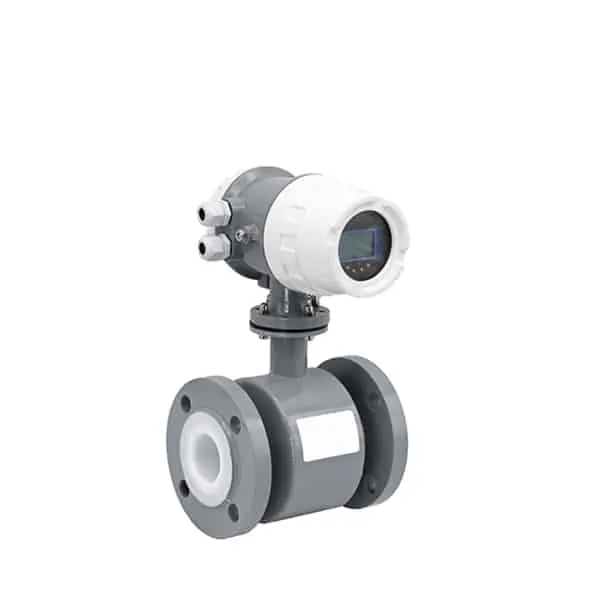 Magnetic Flow Meter
Mains full-bore mag meter for conductive water, slurry and chemicals to plus or minus 0.5%.
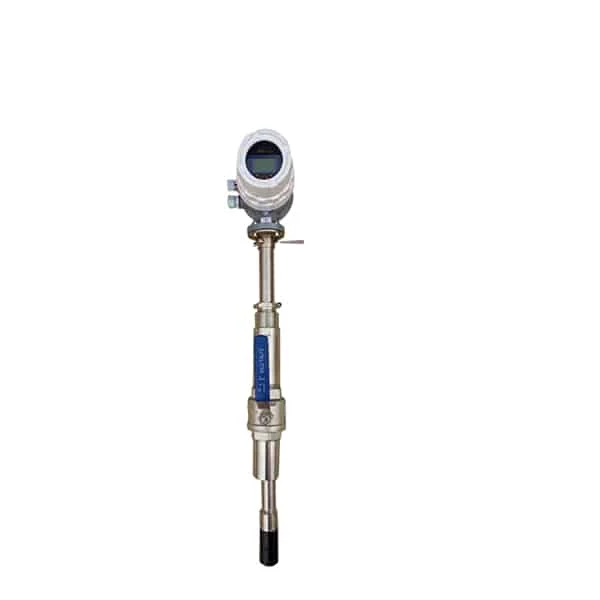 Insertion Magnetic Flow Meter
Low-cost probe for large mains DN300 to DN3000, fitted through a ball valve.
Browse all magnetic flow meters →
Sizing by velocity and the accuracy rules that US water districts publish are covered on our irrigation flow meter page, where this battery build is the remote-well option.
FAQ
How long does a battery-powered magnetic flow meter last?
The internal 3.6 V lithium battery runs the meter for three to five years. The exact life depends on the size, the logging interval and how often it reports over GPRS, since each of those draws more power.
Can a magnetic flow meter run on a battery?
Yes. The coil is pulsed in short bursts rather than driven continuously, so the same Faraday measurement runs on a fraction of the power, and the electronics sleep between readings. That lets a lithium battery last years on a water main.
How accurate is a battery magnetic flow meter?
It keeps the full accuracy of a mains mag meter, plus or minus 0.5%, over 0 to 15 m/s. The battery saves power by pulsing the coil and reading at intervals, not by reducing the measurement accuracy.
What liquids can it measure?
Conductive liquids above about 20 microsiemens per centimetre, such as water, wastewater and aqueous chemicals. It cannot measure oils, fuels or pure water, which do not conduct.
Request a quote
Tell us the pipe size, the reporting interval and whether you need GPRS, and we configure one meter and battery for the site, not a shelf part.