By Wu Peng, Senior Process Instrumentation Engineer · Last reviewed October 16, 2026
A wireless level transmitter measures tank level and sends it by radio instead of over a 4‑20 mA cable, usually running for years on a battery. It has three parts: a sensor (pressure, radar or ultrasonic), a radio, and a power source. The radio sets where the data can go, and the reporting interval sets how long the battery lasts.
A remote tank level monitoring project comes down to three choices: the network, the battery budget and, for pressure sensors, the reference pressure. The numbers below come from our SI2088‑W datasheet and published sources.
Contents
- How it works
- Three network types
- Choosing the network
- Battery life budget
- Sealed gauge errors
- Antennas and tanks
- Matching our transmitters
- FAQ
How it works
A loop-powered level transmitter takes its power from the 4‑20 mA loop and sends a continuous signal (see the 4‑20 mA current loop). A battery cannot supply that current continuously for years. It sleeps, wakes on a timer, takes a reading, sends a short message and goes back to sleep. Between reports the host shows the last value.
There are two ways to build the system. One is a transmitter with the radio built in, as in our SI2088‑W. The other keeps a wired transmitter with 4‑20 mA or RS485 output and adds a radio node or remote terminal unit (RTU), often solar powered. That route suits sensors that draw too much power for a battery; our river water level guide works through a solar power budget.
Pressure, radar and ultrasonic sensors all come in battery versions. A pressure sensor touches the liquid and, on open tanks, brings the reference-pressure issue covered below. Non-contact radar and ultrasonic sensors avoid both; Endress+Hauser’s Micropilot FWR30, for example, is a battery-powered 80 GHz radar that sends its readings to the cloud. Our level transmitter types guide compares the sensing methods.
Three network types
WirelessHART, LoRaWAN and NB‑IoT are three networks used for industrial level monitoring. The practical difference is who owns the infrastructure between the tank and your screen.
| Network | Path and typical fit |
|---|---|
| WirelessHART | 2.4 GHz mesh to your own gateway; plants with a distributed control system (DCS) |
| LoRaWAN | 902‑928 MHz in the US, to your gateway or an operator’s; many tanks on one site |
| NB‑IoT | Carrier towers, licensed spectrum, one SIM per device; scattered tanks with coverage |
WirelessHART is the wireless form of HART, codified as IEC 62591 (see HART communication protocol). Devices relay each other’s messages to a gateway, which usually also runs the network manager and passes data to the host, often over Modbus. Emerson’s Rosemount 3308 guided wave radar and 3408 non-contacting radar are WirelessHART level transmitters.
LoRaWAN uses license-free ISM (industrial, scientific and medical) bands; in the US that is 902 to 928 MHz under FCC Part 15. You install a gateway or use a network operator’s, and the data path stays under your control. NB‑IoT and LTE‑M were added to the cellular standard in 3GPP Release 13 and run on the carrier’s licensed spectrum. There is no gateway to buy, but each device needs a SIM and a data plan.
Bluetooth Low Energy also appears on level instruments; Endress+Hauser lists it on 32 of its level products. It is a short-range link for setting up or reading an instrument from a phone nearby, not a path to a control room.
Choosing the network
Choose the network by where the tanks are and who will run the infrastructure. Inside a plant that already runs a DCS, WirelessHART puts the reading in the same system as the wired instruments. On a site with many tanks within reach of one gateway and patchy cellular service, LoRaWAN serves them all. For scattered single tanks, such as wireless fuel tank level monitoring at remote generators, NB‑IoT avoids building any network, provided the carrier covers the site.
Check the cellular generation before ordering. GPRS is a 2G service, and AT&T discontinued its US 2G network in 2017; T‑Mobile began shutting down its 2G network in 2025. The major US 3G networks closed during 2022. On US sites, specify NB‑IoT or LoRaWAN, and confirm with the carrier that NB‑IoT itself covers the location, because NB‑IoT and LTE‑M are different radio technologies.
Application example
Water treatment, sludge level. A customer we had quoted an ultrasonic sludge level meter with 4‑20 mA and RS485 outputs came back to ask for a wireless version. Because the meter already has RS485, the radio does not have to be built in: a separate node on that Modbus link also works. The project is still open.
Battery life budget
Battery life depends mainly on how often the transmitter wakes up. Our SI2088‑W runs on a 38,000 mAh pack of two 3.6 V lithium thionyl chloride (Li‑SOCl2) cells. It draws 50 µA or less in standby and averages up to 100 mA while transmitting. Its datasheet gives up to 4 to 6 years, set by the upload interval.
Average current = capacity / life
38,000 mAh / (6 × 8,760 h) = 0.72 mA
38,000 mAh / (4 × 8,760 h) = 1.08 mA
Standby is 0.05 mA of that 0.72 to 1.08 mA, or 5 to 7%. The rest is spent on waking up, measuring and transmitting, so the reporting interval is the setting to get right. Set the fixed interval only as fast as the process needs and let alarms wake the unit. The SI2088‑W reports at once when the reading changes by more than 10% of full scale (default, adjustable).
Li‑SOCl2 cells hold their charge well in storage; Saft quotes less than 1% self-discharge after one year at 20 °C for its LS 14500. Plan the shipment as well, since lithium metal batteries ship by air as Class 9 dangerous goods under IATA rules. One of our battery-powered flow meter orders needed a dedicated air freight line.
Sealed gauge errors
A battery pressure transmitter on an open tank has a problem that a wired one avoids: no vent tube. A vented gauge sensor compares the liquid head with the air above the tank, as our guide to the pressure transmitter for level measurement explains. A sealed gauge cell compares it with a reference sealed inside the sensor, which cannot follow the local atmosphere.
Suppose that reference is near sea-level pressure, 101 kPa, and the tank sits at 5,000 ft, where Engineering ToolBox lists 84.3 kPa. The offset is 16.7 kPa, or 1.70 m (5.6 ft) of water, until the zero is set on site. After zeroing, every 1 kPa change in the weather still moves the reading by 102 mm (4.0 in).
There are three fixes:
- A differential version with the low side open to atmosphere and protected from rain (on pressurized tanks a differential transmitter is needed anyway)
- A barometric sensor whose reading is subtracted from the level sensor’s
- A non-contact radar or ultrasonic sensor
Antennas and tanks
Radio does not pass through a steel tank wall or a closed steel lid, so the antenna has to sit outside the metal. A transmitter on a roof nozzle with an external antenna works; one inside a steel enclosure or a buried steel vault usually does not. Concrete pits and below-grade tanks weaken the signal as well.
Check coverage at the exact mounting point before ordering. For NB‑IoT that means the carrier’s coverage data and a field test; for LoRaWAN, a temporary gateway placed where the permanent one will go.
Matching our transmitters
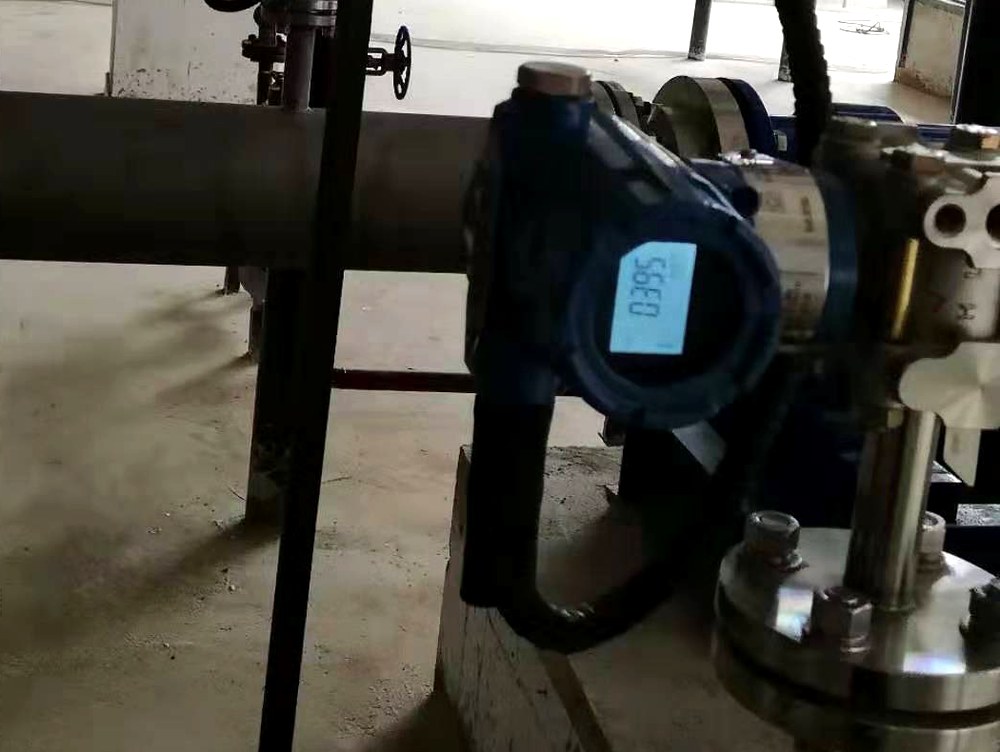
The SI2088‑W wireless pressure transmitter is our battery-powered unit. For tank level, the relevant specifications are:
| Parameter | Specification |
|---|---|
| Network | NB‑IoT, LoRaWAN or GPRS, built to order |
| Pressure type | Sealed gauge, absolute or differential |
| Accuracy | ±0.2 to ±0.5% of full scale |
| Battery | 38,000 mAh, up to 4 to 6 years |
| Reporting | Fastest 1 min; instant report on a change over 10% of full scale |
| Data | Modbus RTU; Modbus‑TCP or open API at the platform |
| Housing | IP67, −20 to 70 °C |
For an open tank, we confirm the reference type with you before quoting. Where mains or solar power is available, a wired hydrostatic level transmitter with a radio node or RTU is the other route. For river and reservoir stations, our radar water level sensor feeds a telemetry unit over RS485.
FAQ
What is the difference between NB-IoT and LoRaWAN?
NB‑IoT is a cellular standard: the device talks to a carrier’s tower over licensed spectrum and needs a SIM and data plan. LoRaWAN runs in license-free bands (902 to 928 MHz in the US) through a gateway you own or share. NB‑IoT needs no gateway; LoRaWAN needs no carrier coverage.
Is NB-IoT better than LTE-M?
Neither is better in every case. LTE‑M carries more data, supports handover between cells and can carry voice, while an NB‑IoT device that moves to another cell has to disconnect and re-register. A tank level transmitter does not move, so the deciding factor is usually which of the two the carrier covers at the site.
Request a quote
Send the tank type (open or closed), the level range and liquid, and the site location and altitude. Add the cellular coverage or gateway you have and how often you need a reading. Tell us the application and we configure one unit, not a shelf part. Reach our application engineers or use the form below.
Written and technically reviewed by Wu Peng and the Instranova engineering team.