Home › Level Instruments › Hydrostatic Pressure Transmitter
A hydrostatic pressure transmitter measures liquid level from the pressure that the liquid column exerts at the bottom of a tank or well. Because that pressure rises in step with the height of liquid above the sensor, a single pressure reading gives you the level. It is the workhorse method for storage tanks, process vessels, sumps, and wells, and it comes in two install styles: a submersible probe that hangs in the liquid, and a flush or flanged transmitter mounted on the vessel wall.
This page explains how the method works, how the two install types differ, and which Instranova model fits your tank. You may hear it called a hydrostatic level transmitter, a static pressure transmitter, or a pressure level transmitter; they describe the same hydrostatic principle.
Working principle
Level is read from hydrostatic pressure. At the bottom of a column of liquid, the pressure equals density times gravity times height, pressure = density x g x height. The transmitter sits at a fixed depth, senses that pressure on a diaphragm, and its electronics output a 4–20 mA or digital signal proportional to the head of liquid above it. Since the reading is derived from pressure, the transmitter shows true height only when it is scaled for the liquid’s density: a denser brine reads higher than water for the same level, so the span is set for your medium.
Submersible vs flush-mount types
Two install styles cover almost every tank. A submersible probe hangs from its cable so the sensor sits near the bottom; it is quick to fit, needs no tank penetration low down, and suits open tanks, wells, and sumps. A flush or flanged transmitter threads or bolts into the vessel wall near the bottom, with the diaphragm flush to the inside; it suits closed or pressurized vessels and sticky media that would coat a hanging probe.
| Point | Submersible probe | Flush / flanged |
|---|---|---|
| Mounting | Hangs on cable from the top | Threaded or flanged on the wall |
| Best for | Open tanks, wells, sumps | Closed or pressurized vessels, sticky media |
| Closed vessel | Needs a reference or DP setup | Pairs with a DP transmitter for sealed tanks |
For a sealed or pressurized vessel, the head pressure is referenced against the gas space with a differential pressure level transmitter or a diaphragm seal transmitter, so the gas pressure cancels out of the reading.
Selecting the range
Four points settle the choice:
- Range and density. Set the span from the maximum head in the liquid you actually run, and give us the specific gravity so the unit reads true height.
- Medium. Clean water takes a standard stainless probe; acids, alkalis, and slurries need a fluoropolymer wetted path; hot media call for a build that keeps the cell off the heat.
- Tank type. Open tank or well favors a submersible probe; a closed or pressurized vessel uses a flush or DP arrangement.
- Depth and cable. The cable length is set by how far the probe hangs, not by the range, so tell us both.
Hydrostatic transmitters in our range
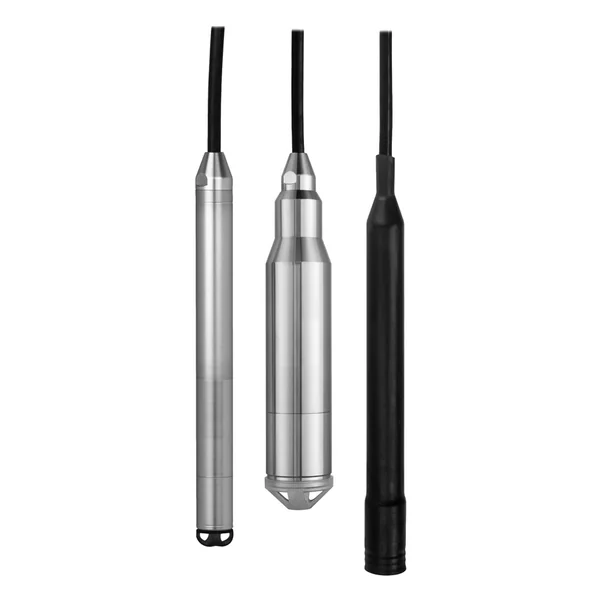 SI-151 Hydrostatic Level Transmitter
The standard submersible probe for clean water tanks, reservoirs, and wells.
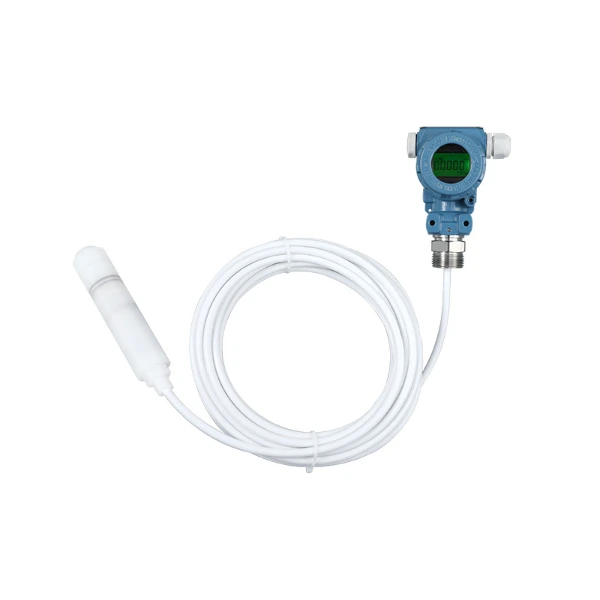 SI-302 Anti-corrosive Submersible
PTFE wetted path for acid, alkali, sludge, and slurry.
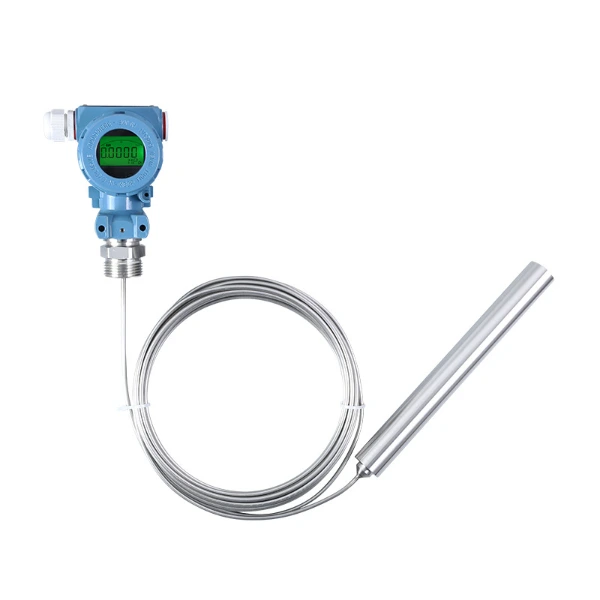 Stainless Steel Submersible
Gas-conducted build that keeps the sensor out of hot or corrosive liquid.
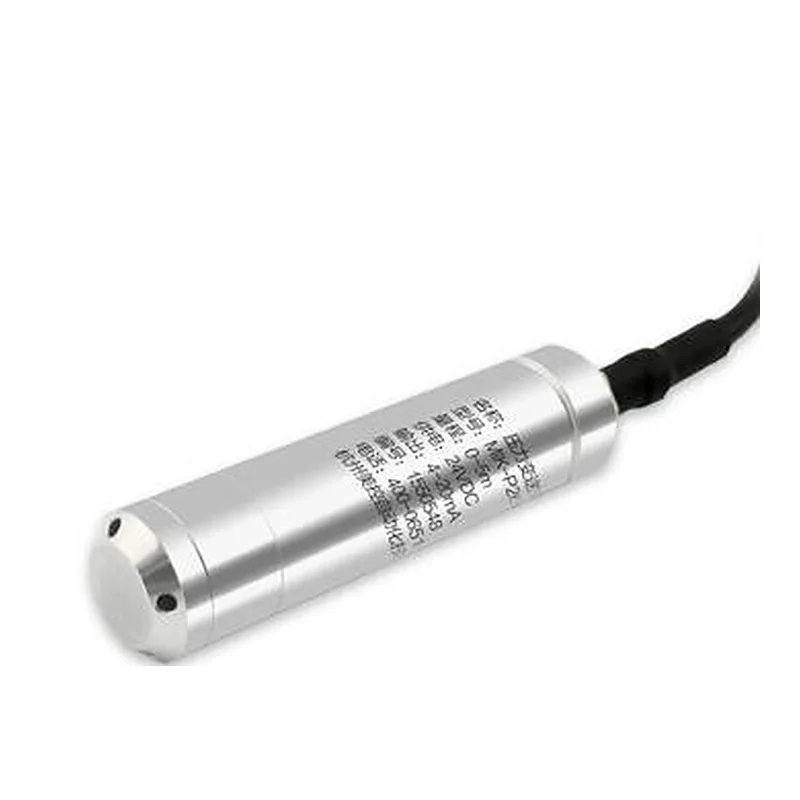 SI-PCM261 Submersible Probe
Narrow probe for boreholes and pump wells, on a vented cable.
Browse all level instruments →
FAQ
What is a hydrostatic pressure transmitter?
A hydrostatic pressure transmitter measures the pressure created by a column of liquid and uses it to read level. Installed at the bottom of a tank, or lowered in as a probe, it senses the head of liquid above it and outputs a 4-20 mA or digital signal. Because the pressure rises in step with depth, that signal maps directly to how full the vessel is.
How do hydrostatic level transmitters work?
They rely on the rule that pressure at a given depth equals the liquid density times gravity times height (P = density x g x height). The transmitter reads the pressure at its diaphragm, and with the density known you convert it to level. An open tank needs a single measurement vented to atmosphere; a sealed or pressurised tank needs a second reference, or a differential type, so the gas pressure above the liquid cancels out.
What is the purpose of hydrostatic pressure?
In measurement terms, hydrostatic pressure is the useful signal. It is the pressure a still liquid exerts because of its own weight, and it grows with depth, which makes it a direct and reliable stand-in for level. From an instrument point of view the purpose is simple: by reading this pressure at one fixed point you know the height of liquid above it, with no float, beam, or moving part to wear.
Request a quote
Tell us the tank and we point you to the right model:
- Maximum level and the liquid density or specific gravity
- Medium (clean water, corrosive, slurry, hot)
- Tank type (open, closed, pressurized) and mounting
- Output (4–20 mA or digital) and cable length
Tell us the application and we configure one unit, not a shelf part. Not sure which type fits? Reach our application engineers.