Flow Meters › Differential Pressure Flow Meters › Flow Nozzle Flow Meter
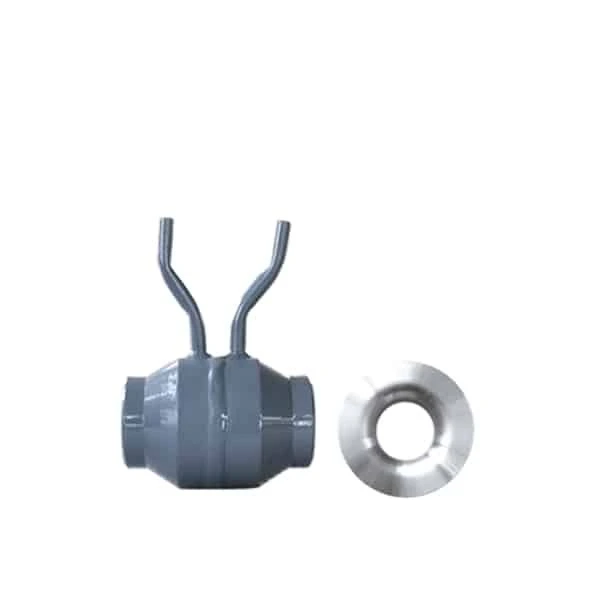
Flow Nozzle Flow Meter
A flow nozzle measures flow from the pressure drop across a smooth, rounded nozzle set in the pipe. The rounded convergence is far more rugged than a sharp orifice edge and loses less pressure, which makes the flow nozzle the differential pressure element of choice for high-temperature, high-pressure, high-velocity service, above all steam.
- Principle: Differential pressure, standard nozzle (ISA 1932)
- Best for: Steam and high-temperature, high-pressure fluids
- Temperature: -50 C to 650 C
- Pressure: Up to 42 MPa
- Accuracy: 1.0%, to ISO 5167-3
- Output: Pairs with a 4-20 mA DP transmitter, HART
Overview
A flow nozzle, also called a standard nozzle or ISA 1932 nozzle, is a differential pressure flow element. It is a smooth, rounded convergent nozzle held in the pipe; fluid accelerates through the throat, its pressure falls, and a differential pressure transmitter reads the drop. Flow follows the square root of that difference, the same law as an orifice plate or a venturi. The nozzle is one of the standard throttling devices in ISO 5167, so its discharge coefficient is known and it needs no real-flow calibration.
The flow nozzle sits between the orifice and the venturi. Its rounded inlet recovers more pressure than a sharp orifice, so head loss is lower, and the solid, smooth profile is far tougher than a thin plate. That is why the nozzle is the standard element for steam and for high-temperature, high-pressure, high-velocity flows, where an orifice plate would erode, deform, or buckle. It is widely used for steam metering in power and chemical plants.
Features
Everything here follows from one idea: read flow from a smooth, rugged nozzle instead of a sharp-edged plate.
Built for steam and high temperature
Rated to 650 C and 42 MPa, the nozzle is the standard DP element for saturated and superheated steam.
Rugged and erosion resistant
The smooth, solid nozzle has no sharp edge to wear or deform, so it survives high velocity and impact that ruin an orifice.
Lower loss than an orifice
The rounded inlet recovers more pressure than a sharp plate, so permanent head loss and pumping energy are lower.
Standard, no flow rig
As an ISO 5167-3 element with a stable discharge coefficient, it reaches about 1% accuracy with no real-flow calibration.
Welded or flanged build
Built DN50 to DN500, welded between pipe sections or held in a flange, with corner or D and D/2 pressure taps.
Works with any DP transmitter
The nozzle is the primary element; pair it with a 4-20 mA DP transmitter with HART, plus temperature and pressure compensation for steam.
Working principle
The flow nozzle follows the same square-root law as every differential pressure meter. The smooth convergent nozzle narrows the bore, the fluid accelerates through the throat, and its static pressure falls. The transmitter reads the pressure upstream of the nozzle and at or just after the throat; the volumetric flow is proportional to the square root of that difference, scaled by the discharge coefficient and the diameter ratio. Because the inlet is a defined circular arc rather than a sharp edge, the coefficient is stable and well documented in the standard.
The rounded throat is the difference from an orifice. It guides the flow instead of shearing it at a sharp edge, so it recovers more pressure, resists erosion at high velocity, and keeps its shape at high temperature. That combination is why the nozzle is the standard primary element for steam.
Technical specifications
| Parameter | Specification |
|---|---|
| Measurement principle | Differential pressure across a standard flow nozzle; flow follows the square root of the drop |
| Element type | Standard flow nozzle, smooth circular-arc convergent profile (ISA 1932 / long-radius) |
| Accuracy | 1.0%, to ISO 5167-3; no real-flow calibration within the standard range |
| Discharge coefficient | Stable and well documented; reliable standard data |
| Pressure-taking | Corner taps (single ring chamber) or D and D/2 taps |
| Nominal diameter | DN50 to DN500 (larger by design) |
| Operating pressure | Up to 42 MPa |
| Process temperature | -50 C to 650 C |
| Permanent pressure loss | Lower than an orifice, higher than a venturi |
| Mounting | Welded between pipe sections, or held in a flange or gripper |
| Materials | Nozzle in stainless steel; flange or holder in carbon, alloy, or stainless steel per temperature |
| Secondary instrument | DP transmitter, 4-20 mA with HART; the transmitter sets the output and the working accuracy |
| Media | Steam, high-temperature and high-pressure gas and liquid, and high-velocity service |
| Standards | ISO 5167-3; GB/T 2624; verification per JJG 640 |
Throat size, materials, taps, and pressure rating are set per line and service. Send the line size, fluid, flow range, pressure, and temperature and we size the nozzle to ISO 5167-3.
Nozzle vs orifice
The flow nozzle and the orifice plate are both standard ISO 5167 elements and both follow the square-root law, so the choice is about service. An orifice is a thin, sharp-edged plate that is cheap and easy to swap, and it is the right call on clean, moderate service. A flow nozzle is a smooth, solid element that costs more but handles high temperature, high pressure, and high velocity with lower head loss, which is why steam lines use it. Against a venturi, the nozzle is shorter and cheaper but recovers less pressure.
| Point | Flow nozzle vs orifice |
|---|---|
| High temperature and velocity | Nozzle holds its shape; an orifice edge erodes and deforms. Choose the nozzle for steam. |
| Pressure loss | Nozzle lower than an orifice, higher than a venturi. |
| Cost and service | Orifice is cheaper and easy to replace; the nozzle costs more and is usually welded in. |
| Standard | Both are ISO 5167 elements with stable, documented coefficients. |
Applications
The flow nozzle fits best where the fluid is hot, fast, or under high pressure and an orifice plate would not last:
- Saturated and superheated steam in power and chemical plants
- High-pressure boiler feedwater and condensate
- High-temperature and high-pressure gas and process fluids
- High-velocity flows that would erode an orifice edge
- Energy and utility metering on steam headers
Challenge: A plant in South Asia needed saturated steam flow on a DN100 line at about 7 bar, where the reading had to stay accurate as steam temperature and pressure moved.
Solution: A flow nozzle sized to ISO 5167-3 for the steam line, paired with a DP transmitter and temperature and pressure compensation so the meter reports true mass flow.
Result: The rugged nozzle gave the plant a steam element that holds its shape and calibration on the hot line, with compensated flow that tracks the changing steam conditions.
Related products
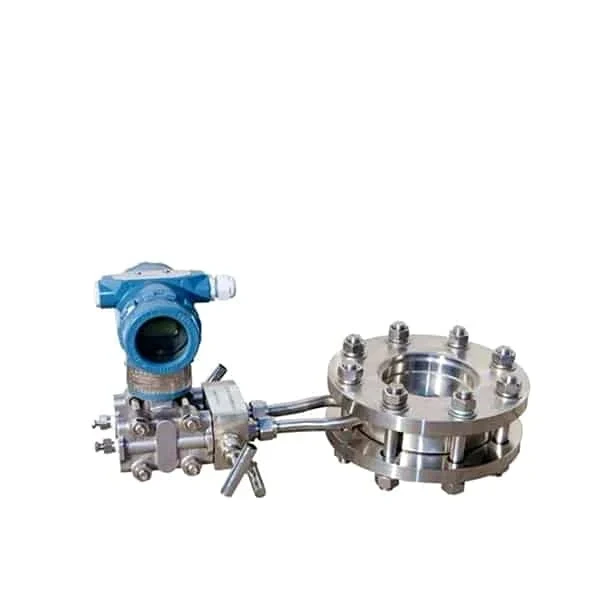 Orifice Plate Flow Meter
The standard, low-cost DP element for clean, moderate liquid, gas, and steam.
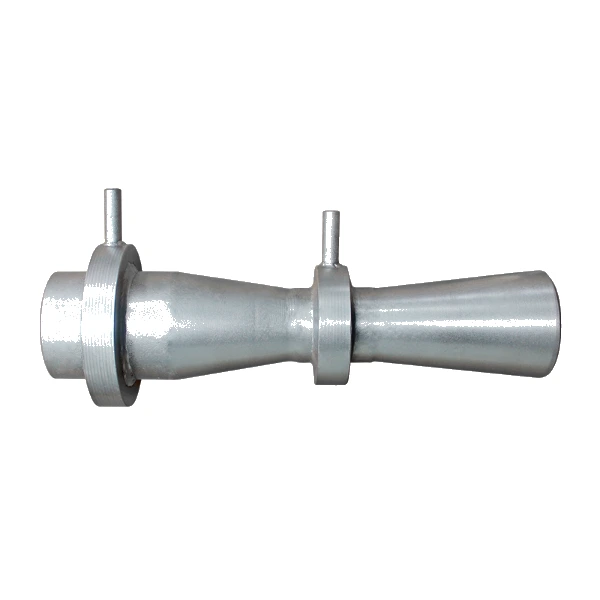 Venturi Flow Meter
A classical venturi tube with the lowest head loss of the in-line DP elements.
Browse all differential pressure flow meters →
Related applications: Steam.
FAQ
What is a flow nozzle?
A flow nozzle is a differential pressure flow element with a smooth, rounded convergent nozzle in the pipe. Fluid accelerates through the throat, the pressure drops, and a DP transmitter reads the difference to compute flow. It is a standard ISO 5167-3 element, also called a standard nozzle or ISA 1932 nozzle.
How does a flow nozzle work?
It uses the square-root law. The rounded nozzle narrows the bore, the fluid speeds up, and its static pressure falls. The meter reads the upstream and throat pressure and flow follows the square root of that difference, scaled by the discharge coefficient and the diameter ratio.
What is the difference between a flow nozzle and an orifice plate?
Both are standard DP elements, but a flow nozzle has a smooth rounded inlet instead of a sharp edge. It loses less pressure and is far more rugged at high temperature, high pressure, and high velocity, so it lasts on steam where an orifice plate would erode or deform. The orifice is cheaper and easier to replace.
What is the difference between a flow nozzle and a venturi?
Both round the flow rather than shear it. A venturi has a long diverging cone that recovers most of the pressure, so its head loss is the lowest, but it is large and costly. A flow nozzle is shorter and cheaper but recovers less pressure, a good middle ground for high-temperature service.
Why are flow nozzles used for steam?
Steam is hot, fast, and often at high pressure, which erodes and deforms a sharp orifice edge. The flow nozzle is a smooth, solid element rated to 650 C and 42 MPa, so it holds its shape and its calibration on steam, which is why it is the standard primary element for steam metering in power and chemical plants.
Request a quote
Send us the line size, the fluid, the flow range, and the pressure and temperature, and we size the flow nozzle to ISO 5167-3 and set the transmitter.