Home › Level Instruments › RF Admittance Level Sensor
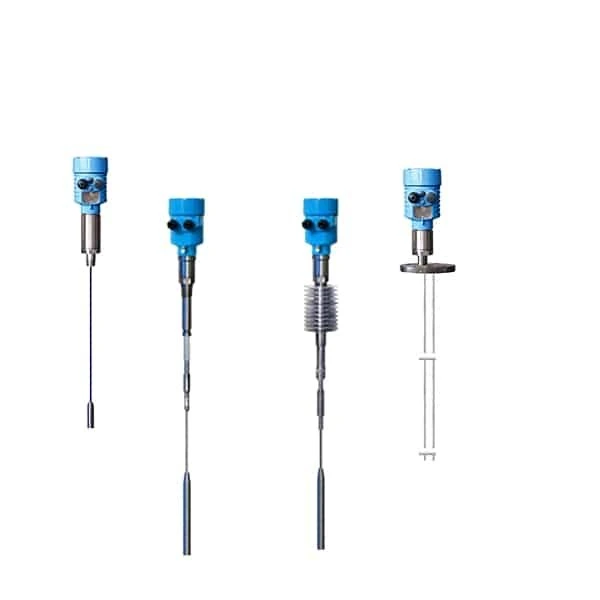
RF Admittance Level Sensor
A continuous level sensor built on radio-frequency admittance, the technique that ignores coating and buildup on the probe. It reads sticky, conductive, and dirty media that defeat a plain capacitance probe, across a wide temperature range, with a 4–20 mA output.
- Output: 4–20 mA
- Medium temp: -100 to +800 °C
- Linearity: 0.5%; repeatability 0.1%
- Supply: 13 to 35 VDC
- Protection: IP66, Ex ia option
- Probes: rod or cable, insulated or bare
A plain capacitance probe has one weakness: when the medium coats the probe, the coating reads as level and the signal drifts high. RF admittance fixes exactly that. By measuring admittance, the reciprocal of impedance, at radio frequency and using a guard section near the process connection, the sensor separates the true level signal from the coating signal and ignores the buildup. That is why an RF admittance level sensor keeps reading correctly on sticky, conductive, and dirty media where a capacitance probe needs constant recalibration.
Overview
The RF admittance level sensor is a continuous level instrument developed from radio-frequency capacitance, with a modular design and high stability. It outputs 4–20 mA, holds 0.5% linearity and 0.1% repeatability, and runs from a 13 to 35 VDC supply. The medium temperature range is wide, -100 to +800 °C with the right probe, and the housing carries IP66 with a built-in spark-protection circuit; an Ex ia intrinsically-safe version is available, with the marking set per nameplate. A split design connects the electronics to the sensor by a cable, standard 5 m and up to 50 m, so the electronics sit away from heat or an awkward mounting. For the highest point accuracy on clean liquids in a smaller tank, compare the magnetostrictive level transmitter.
Working principle
Admittance is the reciprocal of impedance, and it has resistive, capacitive, and inductive parts. The probe and the vessel wall form a measuring path; as the medium rises, it changes the admittance of that path. A plain capacitance meter would read the whole change, including the part caused by a coating film bridging the probe. The RF admittance sensor adds a guard, a third driven section near the process connection held at the same potential as the measuring element, so no current flows through the coating film at that point. The instrument then measures only the admittance change due to true level and rejects the coating component. The result is a stable reading on media that build up, are conductive, or change in consistency.
Technical specifications
Representative specifications; confirm the exact build per datasheet.
| Parameter | Specification |
|---|---|
| Output | 4–20 mA |
| Power supply | 13 to 35 VDC |
| Medium temperature | -100 to +800 °C (probe-dependent) |
| Ambient temperature | -40 to +70 °C |
| Linearity | 0.5% |
| Repeatability | 0.1% |
| Response delay | 1 to 30 s, adjustable |
| Electrical interface | M20 x 1.5 |
| Split cable | Standard 5 m, up to 50 m (electronics to sensor) |
| Process connection | BSPT thread (standard) or flange (optional) |
| Protection | IP66; built-in spark protection |
| Hazardous area | Ex ia IIC T4 option (marking per nameplate) |
Probe types
The probe is chosen for the medium and the span. Insulation matters: an insulated probe resists conductive and corrosive media, while a bare probe suits clean, non-conductive service. Pick by form and coating:
| Probe | Use it for |
|---|---|
| Insulated hard rod | Short spans, conductive or corrosive liquids |
| Insulated flexible cable | Tall tanks and silos; conductive media |
| Bare flexible cable | Tall vessels with clean, non-conductive media |
| Double rod | Non-conductive liquids where the wall is a poor reference |
| High-temperature cable | Hot media toward the top of the temperature range |
Applications
The RF admittance level sensor suits media that coat, conduct, or run hot:
- Sticky and coating liquids: latex, paint, syrup, slurry
- Conductive media and aggressive chemicals (insulated probe)
- Powders and granular solids in silos (cable probe)
- Hot process vessels up to the high end of the temperature range
FAQ
What is the working principle of an RF admittance level switch?
It measures admittance, the reciprocal of impedance, at radio frequency across the path between the probe and the vessel. As the medium rises, that admittance changes. A guard section near the process connection is held at the measuring potential, so no current flows through any coating film there; the instrument reads only the true-level component and rejects the coating. The Instranova model outputs this as a continuous 4–20 mA signal.
What is an RF level switch?
An RF level device uses a radio-frequency signal on a probe to detect level from the admittance change. A point-level switch gives an on/off output at a setpoint; this RF admittance model is the continuous version, giving a 4–20 mA reading across the whole range, with rod or cable probes.
What is RF admittance level measurement?
It is level measurement by the admittance (resistive and capacitive) change at radio frequency, with a driven guard that ignores buildup on the probe. It is an evolution of plain capacitance measurement, far more stable on coating, conductive, and dirty media.
What is an RF admittance level sensor used for?
For media that coat, conduct, or run hot, where a plain capacitance probe drifts: sticky liquids, slurries, latex and syrup, conductive chemicals, and powders in silos. It works from -100 to +800 °C with the right probe, carries IP66, and offers an Ex ia intrinsically-safe build.
Related products
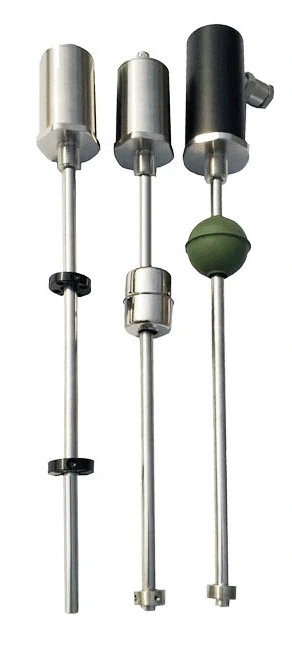 SI-100 Magnetostrictive
Sub-millimetre accuracy on clean liquids in smaller tanks.
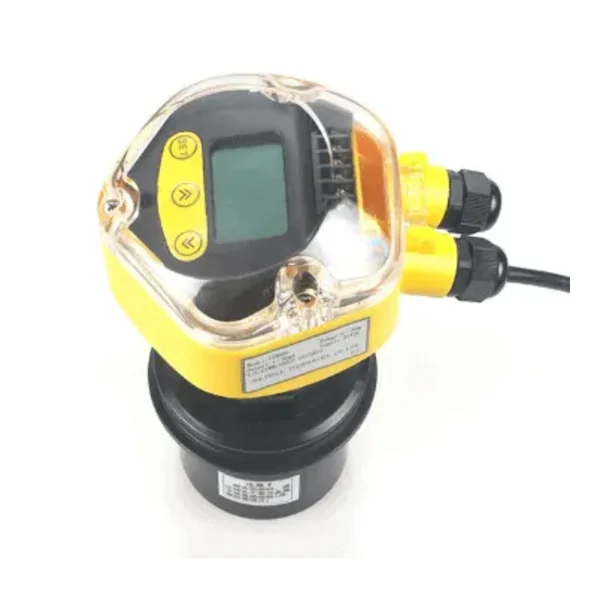 Ultrasonic Level Transmitter
Non-contact level for clean, open or vented tanks.
All Level InstrumentsCompare radar, ultrasonic, magnetostrictive, and hydrostatic.
Browse all level instruments →
Request a quote
Tell us five things and we set the probe for your vessel:
- Medium and whether it coats, conducts, or is a solid
- Span and tank height (rod or cable probe)
- Temperature at the probe and the ambient at the head
- Connection (BSPT thread or flange) and any split-cable length
- Area (standard or intrinsically-safe)
Ordering example: RF admittance level sensor, insulated cable probe 6 m, 4–20 mA, flange connection, split cable 10 m, standard area, sticky slurry service.
Tell us the application and we configure one unit, not a shelf part. Have a coating or hot-media tank we have not covered? Reach our application engineers.