Flow Meters › Differential Pressure Flow Meters › Averaging Pitot Tube Flow Meter
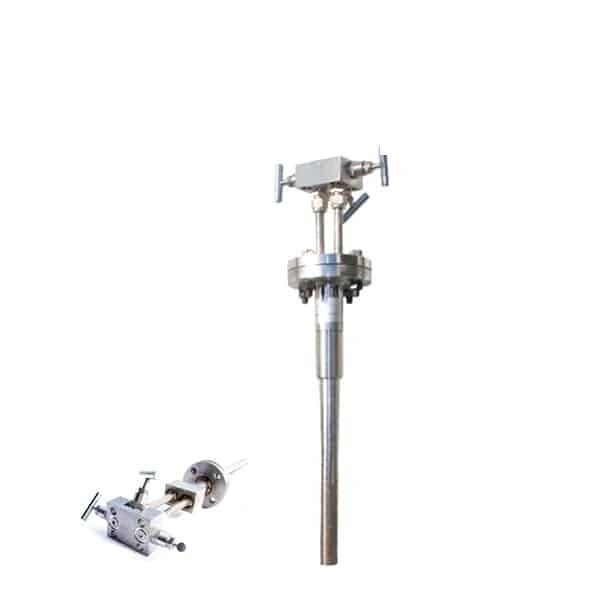
Averaging Pitot Tube Flow Meter
An averaging pitot tube, also called an annubar-type flow meter, is an insertion differential pressure element. A slim probe spans the pipe and senses the velocity pressure at several points, averages it, and a DP transmitter reads the result. The thin probe blocks almost none of the bore, so it has the lowest permanent pressure loss of any DP meter and installs through a single tap.
- Principle: Averaging pitot tube, insertion DP
- Pressure loss: Lowest of the DP family
- Line size: DN50 to DN5000, plus square and rectangular ducts
- Install: Single penetration, hot-tap
- Accuracy: About 1% of rate; repeatability 0.1%
- Output: Pairs with a 4-20 mA DP transmitter, HART
Overview
An averaging pitot tube flow meter is a differential pressure element built as an insertion probe rather than a restriction in the line. The probe reaches across the pipe and carries several upstream sensing ports that face the flow. Each port picks up the velocity pressure at its point in the profile, and the probe averages them into one upstream signal; a downstream port reads the static pressure. A DP transmitter takes the difference, and flow follows the square root of it, the same law as every DP meter.
The averaging is the point. A plain pitot tube reads one point and assumes the profile; an averaging pitot tube samples several points across the bore, so it stays accurate without that assumption. And because the probe is slim, it blocks almost none of the pipe. That gives the lowest permanent pressure loss of the whole DP family, a single-tap installation that can be done hot, and a meter that scales to very large pipes and to square or rectangular ducts.
Features
Everything here follows from one idea: average the velocity across the pipe with a slim insertion probe instead of restricting the line.
Lowest pressure loss
The thin probe blocks almost none of the bore, so permanent head loss is far below an orifice, venturi, or wedge.
Averages the profile
Several sensing ports read across the pipe and average the velocity, so it is more accurate than a single-point pitot tube.
Single penetration, hot-tap
It installs through one tap and can be inserted or pulled live, so a retrofit needs no line shutdown.
Big pipes and ducts
Built DN50 to DN5000 and fits round, square, or rectangular ducts, where a plate or tube would be huge and costly.
Multivariable
An optional integrated thermowell adds temperature, so one penetration gives flow with temperature and pressure compensation.
Stable and low cost
There is no flow coefficient drift over time, and a probe costs far less to buy and install than a large in-line element.
Working principle
The averaging pitot tube follows the same square-root law as any differential pressure meter. The probe carries a row of upstream ports facing the flow; each senses the total pressure at its depth, and an internal chamber averages them into a single high-pressure signal. A downstream port senses the lower static pressure. The transmitter reads the difference, which is the average velocity pressure, and flow follows the square root of it, scaled by the probe coefficient and the pipe area.
Because the probe samples the whole profile, the reading does not depend on perfect, fully developed flow the way a single-point pitot tube does. A honeycomb, hexagonal probe section keeps the signal steady and widens the usable range, and there is no sharp edge or coefficient that drifts as the meter ages.
Technical specifications
| Parameter | Specification |
|---|---|
| Measurement principle | Averaging pitot tube; multi-port average of velocity pressure; flow follows the square root of the differential |
| Element type | Insertion probe with a honeycomb hexagonal section, single pipe penetration |
| Accuracy | About 1% of rate, set with the DP transmitter |
| Repeatability | 0.1% |
| Turndown (range ratio) | Volume flow 10:1; mass flow 8:1 |
| Nominal diameter | DN50 to DN5000 (insertion DN500 to DN5000); round, square, or rectangular ducts |
| Operating pressure | Fixed (non-retractable) type up to 20 MPa; retractable type up to 10 MPa |
| Process temperature | Up to 450 C |
| Viscosity | Up to about 30 cP (heavy oil) |
| Permanent pressure loss | Very low; the slim probe blocks little of the bore |
| Multivariable | Optional integrated thermowell for temperature; temperature and pressure compensation |
| Mounting | Single penetration; hot-tap insertion and removal without shutdown |
| Materials | Probe and three-valve manifold in stainless steel grades; main pipe and flange in stainless or carbon steel |
| Secondary instrument | DP transmitter, 4-20 mA with HART, with an integrated three-valve manifold |
| Media | Clean gas, liquid, and steam; flue gas, combustion air, and other large-duct service |
Probe length, mounting, materials, and pressure rating are set per line and service. Send the line or duct size, fluid, flow range, pressure, and temperature and we size the probe.
Pitot vs orifice
The averaging pitot tube and the orifice plate sit at opposite ends of the differential pressure family. An orifice restricts the whole bore, which gives a strong, repeatable signal and a published ISO 5167 standard, but it wastes a lot of pressure and is costly on large pipe. An averaging pitot tube barely touches the flow, so its pressure loss and its installed cost are the lowest of any DP meter, at the cost of a smaller signal and a narrower turndown. It also beats a single-point pitot tube, which reads only one point and drifts when the profile changes.
| Point | Averaging pitot vs orifice |
|---|---|
| Pressure loss | Pitot lowest of all; orifice high. Choose the pitot to save pumping energy. |
| Large pipe and ducts | Pitot installs through one tap on any size; an orifice on big pipe is large and expensive. |
| Signal and turndown | Orifice gives a stronger signal and wider turndown; the pitot signal is small at low flow. |
| vs single-point pitot | Averaging across the profile is far more accurate than reading one point. |
Applications
The averaging pitot tube fits best where the pipe is large, the head budget is tight, or a tap retrofit beats cutting in an element:
- Stack, flue gas, and combustion air on large round or rectangular ducts
- Compressed air and plant gas headers
- Water mains and cooling water where head loss must stay low
- Natural gas and process gas on big lines
- HVAC and energy metering, and low-head-loss retrofits done hot
Challenge: A distributor in Africa needed diesel fuel flow on a line where permanent pressure loss had to stay low, without cutting a large element into the pipe.
Solution: An averaging pitot tube installed through a single tap, chosen for its very low head loss and simple insertion on the diesel line.
Result: The probe gave the distributor a low-loss flow element that dropped in through one penetration, with far less installed cost than an in-line meter of the same size.
Related products
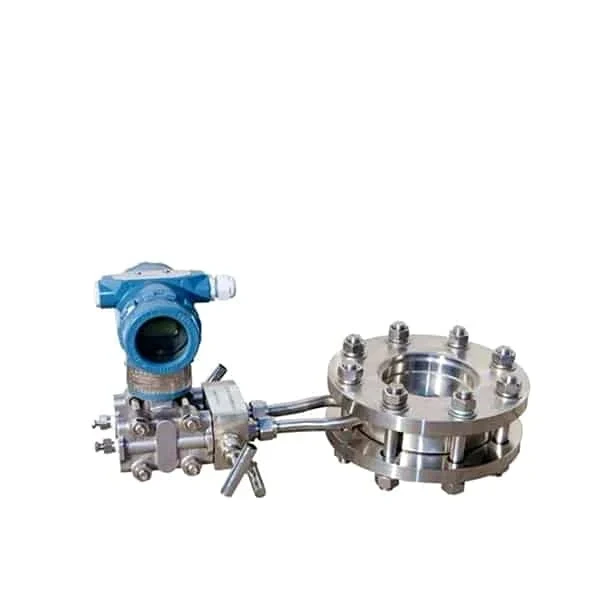 Orifice Plate Flow Meter
The standard, low-cost in-line DP element with a strong signal for clean service.
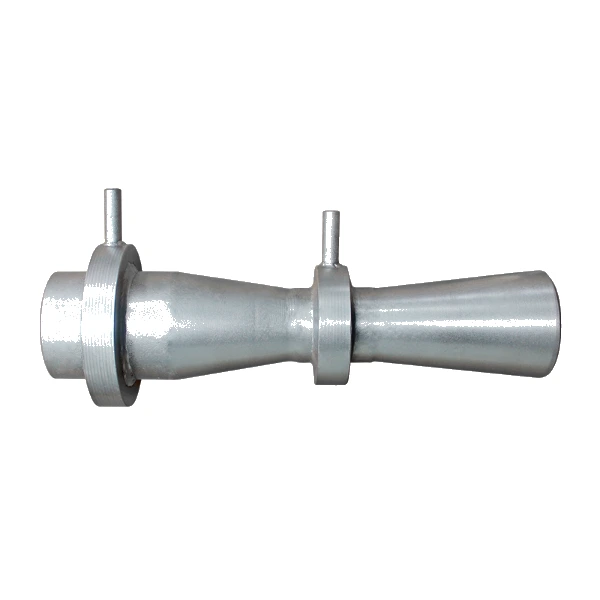 Venturi Flow Meter
A classical venturi tube with low head loss and a stronger signal than a pitot.
Browse all differential pressure flow meters →
Related applications: Steam.
Background reading: the flow rate and pressure relationship guide works through the square-root law that converts this DP signal into a flow value.
New to the terminology? Our static vs dynamic vs total pressure guide walks through which port of the probe reads which pressure, with the working formulas and a worked duct traverse.
FAQ
What is an averaging pitot tube flow meter?
It is an insertion differential pressure flow meter. A slim probe spans the pipe with several ports that sense the velocity pressure across the profile, averages them, and a DP transmitter reads the difference against a downstream static port. It is often called an annubar-type flow meter.
How does an averaging pitot tube work?
It uses the square-root law. The upstream ports sense and average the total pressure across the pipe, the downstream port senses the static pressure, and the difference is the average velocity pressure. Flow follows the square root of that difference, scaled by the probe coefficient and the pipe area.
What is the difference between an annubar and a pitot tube?
A plain pitot tube reads the velocity at a single point and assumes the rest of the profile. An averaging pitot tube, or annubar-type probe, has several sensing points across the pipe and averages them, so it stays accurate even when the velocity profile is not perfectly uniform.
What is the difference between an averaging pitot tube and an orifice plate?
An orifice restricts the whole bore for a strong signal and wide turndown, but it wastes a lot of pressure and is costly on large pipe. An averaging pitot tube barely blocks the flow, so it has the lowest pressure loss and installs through one tap, with a smaller signal and a narrower turndown.
Where are averaging pitot tubes used?
On flue gas, combustion air, and large ducts, compressed air and plant gas headers, water mains and cooling water, natural gas lines, and HVAC or energy metering, especially on big pipes and low-head-loss retrofits that can be tapped hot.
Request a quote
Send us the line or duct size, the fluid, the flow range, and the pressure and temperature, and we size the averaging pitot tube and set the transmitter.