By Wu Peng, Senior Process Instrumentation Engineer · Last reviewed July 22, 2026
An IP rating (ingress protection rating, defined in IEC 60529) is a two-digit code that states how well an enclosure keeps out solids and water. The first digit covers solids from hands down to dust; the second covers water from drips to continuous submersion. The practical difference between the common industrial grades is short: IP65 survives water jets, IP67 survives temporary immersion, and IP68 survives continuous submersion to a depth the manufacturer declares.
On instrumentation, the IP rating decides whether a transmitter that works on day one still works after the first storm, the first hose-down, or the first flooded pit. This guide reads the code digit by digit, compares IP65 vs IP67 vs IP68 head to head, adds the NEMA cross-reference, and ends with the rating to specify for each mounting location.
Contents
- Reading an IP code
- First digit table
- Second digit table
- IP65 vs IP67
- IP66 and washdown
- IP68 and submersion
- IP ratings for instruments
- NEMA and IP
- Beyond the IP code
- FAQ
Reading an IP code
The letters IP stand for ingress protection. The first digit runs 0 to 6 and grades protection against solid objects and dust. The second digit runs 0 to 9 and grades protection against water. Higher digits mean tougher tests, with one important exception covered below: the jet ratings (5 and 6) and the immersion ratings (7 and 8) are separate test tracks, not one ladder.
An X in either position means that position was simply not tested. IPX7 says nothing about dust; IP6X says nothing about water. On a nameplate, a rating like IP66/IP67 means the enclosure passed both the jet test and the immersion test.
First digit table
| Digit | Protection against solids |
|---|---|
| 0 | No protection |
| 1 | Objects over 50 mm (back of a hand) |
| 2 | Objects over 12.5 mm (a finger) |
| 3 | Objects over 2.5 mm (tools, thick wire) |
| 4 | Objects over 1 mm (fine wire) |
| 5 | Dust-protected: some dust may enter but not enough to interfere with operation |
| 6 | Dust-tight: no ingress at all, verified under vacuum |
Every serious field instrument starts at 5 or 6. The difference matters in cement plants, grain handling and any site where fine powder hangs in the air: dust-protected housings collect a little dust over the years, dust-tight housings do not.
Second digit table
| Digit | Protection against water |
|---|---|
| 0 | No protection |
| 1 to 2 | Vertical drips; drips with the housing tilted 15 degrees |
| 3 to 4 | Spray to 60 degrees from vertical; splashes from any direction |
| 5 | Water jets from a 6.3 mm nozzle, any direction |
| 6 | Powerful jets from a 12.5 mm nozzle, any direction |
| 7 | Temporary immersion, 15 cm to 1 m depth for 30 minutes |
| 8 | Continuous immersion beyond 1 m, depth and duration declared by the manufacturer |
| 9K | High-pressure, high-temperature jets (about 80 °C water at 80 to 100 bar, close range, per ISO 20653) |
Digits 7 and 8 are still-water immersion tests. They do not include the jet tests of digits 5 and 6; see the next section.
IP65 vs IP67
Both ratings are dust-tight; the difference is the water test. IP65 passes jets from a 6.3 mm nozzle sprayed from all directions. IP67 passes 30 minutes of still-water immersion at up to 1 m. For a field instrument, that translates to weather and hose water on one side, and flooded pits, tank tops under standing water, and accidental dunking on the other.
The common mistake is reading the second digit as a single ladder. It is not. An IP67 housing was tested under still water, not against a pressurized jet, so IP67 does not automatically include IP65 or IP66 performance. A gasket that seals calmly at 1 m can leak under a 100 liter per minute jet aimed at the cable gland. Manufacturers that certify both print both, as IP66/IP67 or IP65/IP67. If your line gets hosed down and can flood, ask for the dual marking.
Cost tracks sealing effort. IP65 is the standard weatherproof grade for transmitters and meter electronics; IP67 adds better gaskets, potting or gland sealing and a price step. Specify what the location demands rather than defaulting to the biggest number.
IP66 and washdown
IP66 is the heavy jet rating: a 12.5 mm nozzle at roughly 100 liters per minute from any direction. That is the test that resembles a plant washdown hose, which is why food, beverage and pharmaceutical lines that get cleaned daily should look for IP66 rather than stopping at IP65.
Where cleaning is done with high-pressure hot water lances, the relevant grade is IP69K: water near 80 °C at 80 to 100 bar from close range. It comes from the automotive standard ISO 20653 and has been adopted for hygienic washdown equipment. A housing can carry IP69K and still not be rated for immersion, which repeats the lesson above: match the rating to the actual water exposure, not to the largest number in the catalog.
IP68 and submersion
IP68 means continuous immersion deeper than 1 m, with the exact depth and duration declared by the manufacturer. That declaration is the part to read. One vendor’s IP68 is 1.5 m for an hour; another’s is a probe that lives at the bottom of a 100 m well for years. The digits are the same, the engineering is not.
On our own instruments the declarations look like this: a submersible pressure transducer hangs permanently in the liquid with an IP68 probe body, an ultrasonic water meter is rated IP68 so a flooded meter pit does not stop billing, and the clamp-on transducers of an ultrasonic flow meter are IP68 while the wall-mounted converter above them is IP67. Split installations like that last pair are the normal pattern: the part that can drown is rated for it, the electronics live higher and drier.
IP ratings for instruments
Specify the rating from the mounting location, not from habit:
| Mounting location | Rating to specify |
|---|---|
| Indoors, clean and dry | IP54 is common for panel gear; dust-heavy rooms justify IP65 |
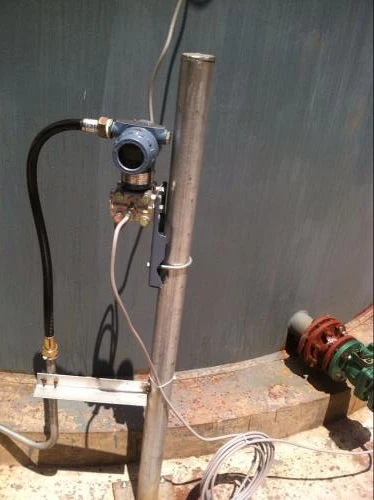
| Outdoor field mount | IP65 minimum; the usual grade for a field temperature transmitter or pressure transmitter head |
| Washdown areas | IP66; add IP69K where hot high-pressure lances are used |
| Pits and flood-prone spots | IP67, or IP68 if standing water can persist |
| Permanently submerged | IP68 with the depth and duration declared in writing |
Application example
Food processing, Philippines. A plant asked for a DN100 food-grade magnetic flow meter for a 160 m³/h line, and the request named IP65 in the same breath as the Hastelloy electrodes and the 0 to 10 bar service. That is the right way around: the ingress rating sat in the purchase specification from the first inquiry, not as an afterthought at installation.
NEMA and IP
North American specifications often use NEMA 250 type ratings instead of IP. The two systems test differently and there is no exact conversion, but the working equivalents are close enough for a first read:
| NEMA type | Approximate IP equivalent |
|---|---|
| NEMA 12 | IP52 |
| NEMA 4 | IP56; many manufacturers also test to IP66 |
| NEMA 4X | IP56 to IP66, plus corrosion resistance |
| NEMA 6 | IP67 |
| NEMA 6P | IP67, with prolonged submersion tested |
One-way approximation per the NEMA 250 derived comparison chart; published charts differ slightly. A NEMA type meets or exceeds the listed IP rating, but an IP rating does not prove NEMA compliance, because NEMA adds tests such as corrosion, icing and oil exposure.
Beyond the IP code
The IP code grades ingress and nothing else. It says nothing about corrosion, UV aging of plastics and gaskets, mechanical impact (that is the separate IK scale), vibration, or temperature limits. A coastal site can need a 316 stainless or coated housing at the same IP65 as an inland one. Gaskets also age: an enclosure holds its rating only as long as the seals, glands and covers are intact and properly closed after every visit.
Hazardous-area approval is a separate marking as well. Ex d or Ex ia on a nameplate certifies explosion protection, not water ingress, and the two are specified together on transmitters for tank farms and gas plants. How those area classifications work is covered in our guides to Class 1 Div 1 vs Div 2 and zones vs divisions.
FAQ
Is IP67 completely waterproof?
No. IP67 certifies 30 minutes of still-water immersion at up to 1 m. It does not certify continuous submersion (that is IP68) and it does not certify resistance to pressurized jets (that is IPX5/IPX6), because immersion and jets are separate tests.
Is IP65 enough for rain?
Yes. Rain is far gentler than the IPX5 jet test, so IP65 handles weather, including wind-driven rain. Check the rest of the environment: flooding or hose-down cleaning calls for IP66 or IP67 instead.
Is IP65 or IP66 better?
IP66 is the higher water rating. IP65 is tested with a 6.3 mm nozzle, IP66 with a 12.5 mm nozzle at much greater flow. Both are dust-tight. For washdown areas or exposed marine decks, specify IP66.
Is IP65 ok for outside?
For most outdoor instrument installations, yes; IP65 is the standard weatherproof grade for field-mounted transmitters. Move up to IP66 or IP67 where the housing can be hosed down or temporarily flooded, and remember that UV and temperature limits are separate from the IP code.
Request a quote
Every instrument we quote carries its IP rating in the datasheet, and split versions are available where the sensor is submerged and the electronics are not. Tell us the application and we configure one system, not a shelf part. Reach our application engineers or use the form below.
Written and technically reviewed by Wu Peng and the Instranova engineering team.