Home › Products › Level instruments › Ultrasonic level switch
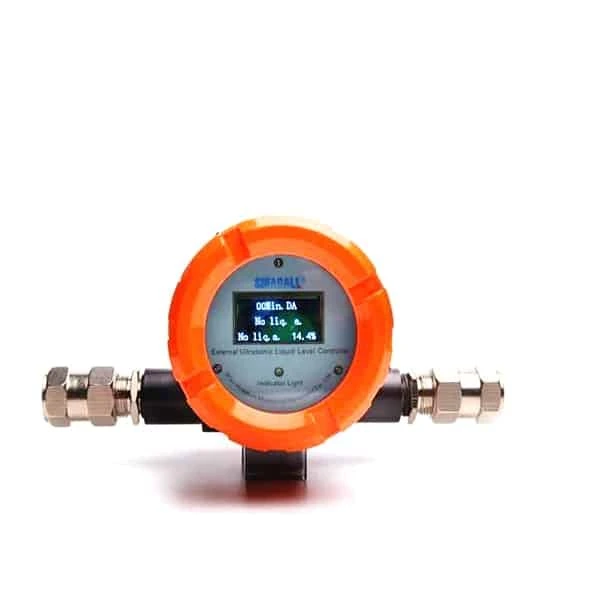
Ultrasonic Level Switch
An ultrasonic level switch detects the presence or absence of liquid at one point and sends a relay signal for a high or low alarm. The HS-ULC mounts on the outside of the tank wall and reads through it, so nothing is cut into the vessel and nothing touches the process. That makes it a clean fit for sealed, pressurized, toxic, or corrosive tanks.
- Type: Non-contact, external (clamp-on) point switch
- Output: Relay contact (high or low alarm)
- Tank wall: 2 to 70 mm, metal or non-metal
- Power: 24 VDC (18 to 36 V)
- Rating: IP65, Ex d IIC T6 Gb
Overview
An ultrasonic level switch is a point-level device: it answers one question, is the liquid at this height or not, and switches a relay when the answer changes. The HS-ULC does this from outside the tank. The sensor head is coupled to the tank wall, sends an ultrasonic pulse through the wall, and watches how that pulse behaves. With liquid on the other side the sound passes into the liquid; with only gas or vapor it reflects back. From that difference the switch decides wet or dry and drives its relay.
Because it never penetrates the wall, the HS-ULC adds a high-level overfill alarm, a low-level or dry-run cutout, or a pump control point to a tank that cannot be drilled, that holds a hazardous medium, or that is already in service. For continuous level rather than a single switch point, use an ultrasonic level transmitter or a radar transmitter instead.
Features
Mounts on the outside wall, so no holes, no shutdown, no leak path.
The process never touches the sensor, ideal for toxic or corrosive media.
Reads through 2 to 70 mm of metal, non-metal, or non-foamed plastic.
Drives a high or low alarm, a pump, or a dry-run cutout directly.
A 1 to 3 second delay ignores waves and splashing for a stable signal.
Ex d IIC T6 Gb and IP65 for flammable and outdoor service.
Working principle
The switch works by sending ultrasound through the tank wall and reading the echo. A piezo element bonded to the outside of the wall transmits a high-frequency pulse. When liquid is in contact with the inside of the wall at that point, the pulse couples into the liquid and the returning echo is strongly damped. When only gas is present, the wall rings and the echo is large. The electronics compare the echo to a threshold and set the relay accordingly, with a short time delay (about 1 to 3 seconds) to ignore splashing and waves.
Technical specifications
| Parameter | Specification |
|---|---|
| Type | Non-contact, external-mounted ultrasonic point level switch |
| Function | Single or two-point control (high and low), relay output |
| Output signal | Relay contact |
| Power supply | 24 VDC (18 to 36 V), about 0.05 A |
| Repeatability | ±2 mm |
| Response time | 1 to 3 seconds |
| Tank wall thickness | 2 to 70 mm |
| Tank wall material | Metal, non-metal, or non-foamed plastic |
| Tank shape | Horizontal, vertical, or spherical |
| Enclosure | Cast aluminum |
| Ingress protection | IP65 |
| Hazardous area | Ex d IIC T6 Gb |
| Relay capacity | DC 30 V 6 A / AC 250 V 6 A (passive SPDT contact) |
| Cable entry | Threading hole 8 mm (cable 6 to 8 mm) |
Relay contact rating and electrical interface are set per order and operating condition.
Switch versus continuous level
Choose by whether you need a single decision point or a full level reading.
| If you need to | Use |
|---|---|
| Trigger a high or low alarm or control a pump at one point | Ultrasonic level switch (this product) |
| Read the level continuously as a 4-20 mA signal | Ultrasonic level transmitter or radar |
| Detect level on a tank you can drill and tap | Float level switch |
Installation and tank suitability
The switch is clamped to the outside of the wall at the height where you want the trip point, then coupled to the wall so sound passes cleanly. It suits solid, homogeneous walls; it does not read through double walls, air gaps, heavy internal coating or scale at the spot, or foamed or porous plastic. Wall thickness from 2 to 70 mm is supported, on horizontal, vertical, or spherical tanks. Aerated or heavily bubbling liquids at the trip point can affect the reading, so the spot is chosen on a clear section of wall.
Applications
Ultrasonic level switches fit any point alarm where penetrating the tank is undesirable: overfill protection on chemical and fuel storage, pump dry-run protection, high and low alarms on sealed or pressurized vessels, and presence checks on toxic, corrosive, or high-purity media. They are common in chemical processing, oil and gas, water treatment, and tank farms.
Application example
Challenge. A chemical site needed a dependable high-level alarm on a sulfuric acid storage tank, but wanted no sensor in contact with the acid and no new penetration in the vessel.
Solution. A non-contact ultrasonic level switch was clamped to the outside wall at the high-level point, reading through the wall to trip a relay alarm with nothing exposed to the acid.
Result. The tank gained a reliable overfill alarm with no wetted parts and no shutdown to install, removing the corrosion and leak-path concerns of an in-tank switch.
Related products
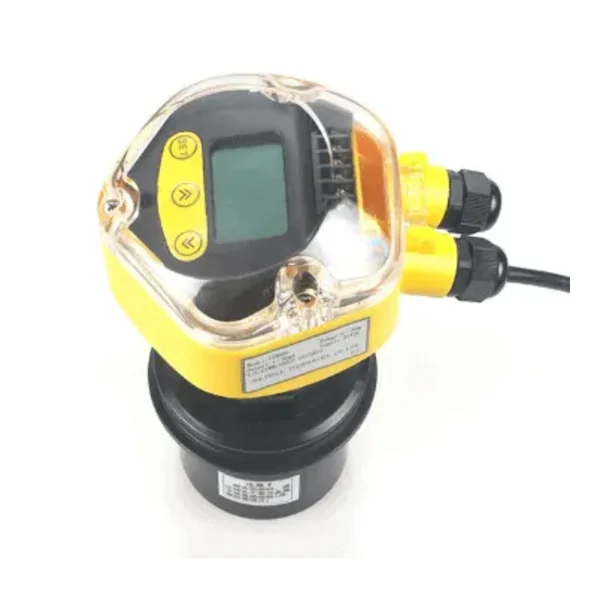 Ultrasonic Level Transmitter
Continuous non-contact level as a 4-20 mA signal.
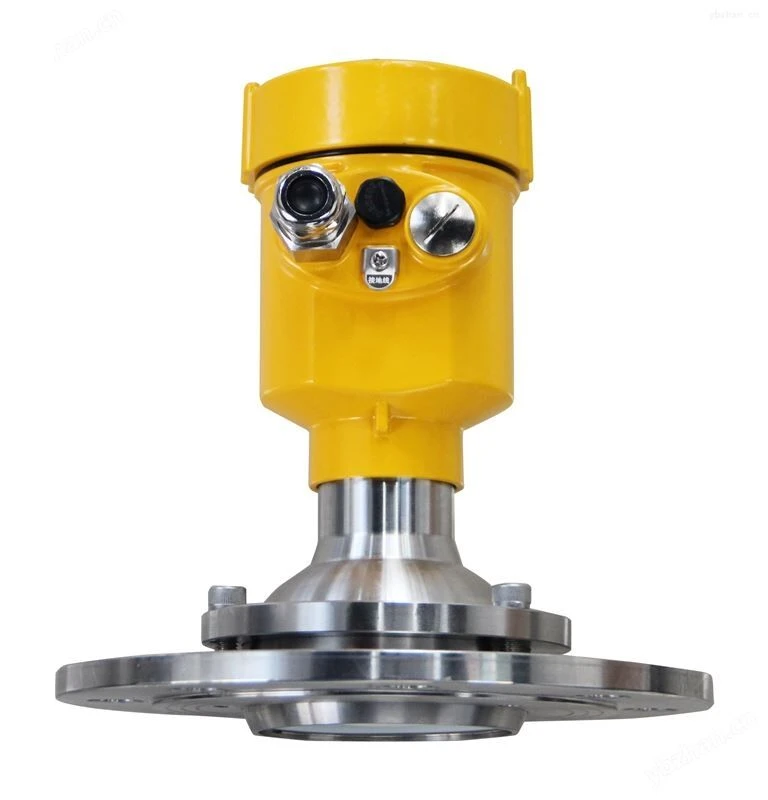 Radar Level Transmitter
Continuous level through vapor, foam, and pressure.
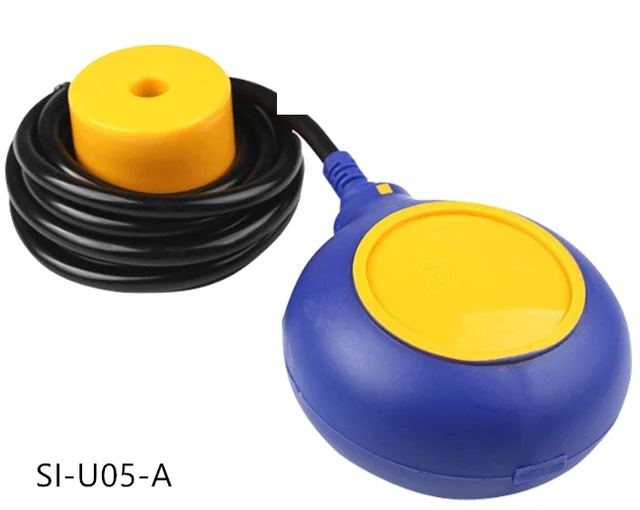 Float Level Switch
Simple mechanical point switch for open tanks.
Related switch: for a point switch that also handles powders, granular solids and hot media with no moving parts, see the tuning fork level switch.
FAQ
How does an ultrasonic level switch work?
It sends an ultrasonic pulse through the tank wall and reads the echo. Liquid against the inside of the wall damps the echo; gas lets the wall ring. The switch compares the echo to a threshold and trips its relay, so it detects whether liquid is present at that one point.
Can an ultrasonic level switch mount outside the tank?
Yes. The HS-ULC is a non-contact, external-mounted switch. It clamps to the outside wall and reads through it, so there is no hole in the tank and nothing touches the process.
What tank materials and wall thickness does it work on?
It works on solid metal, non-metal, and non-foamed plastic walls from 2 to 70 mm thick, on horizontal, vertical, or spherical tanks. It cannot read through double walls, air gaps, or foamed plastic.
What is the difference between an ultrasonic level switch and a level sensor?
A switch detects one point and outputs a relay for an alarm or pump. A continuous sensor measures the level across the whole range as a 4-20 mA signal. For continuous level use an ultrasonic level transmitter or radar.
Can it be used for pump dry-run or overfill protection?
Yes. With its relay output it is well suited to high-level overfill alarms, low-level or dry-run cutouts, and simple pump control, especially on tanks that cannot be penetrated.
Request a quote
Send the tank wall material and thickness, the trip point, the medium, and any area approvals, and we configure one switch for the point.
About this page: written by Instranova application engineers from real HS-ULC product data.