Home › Products › Level Instruments › Tuning Fork Level Switch
Tuning Fork Level Switch
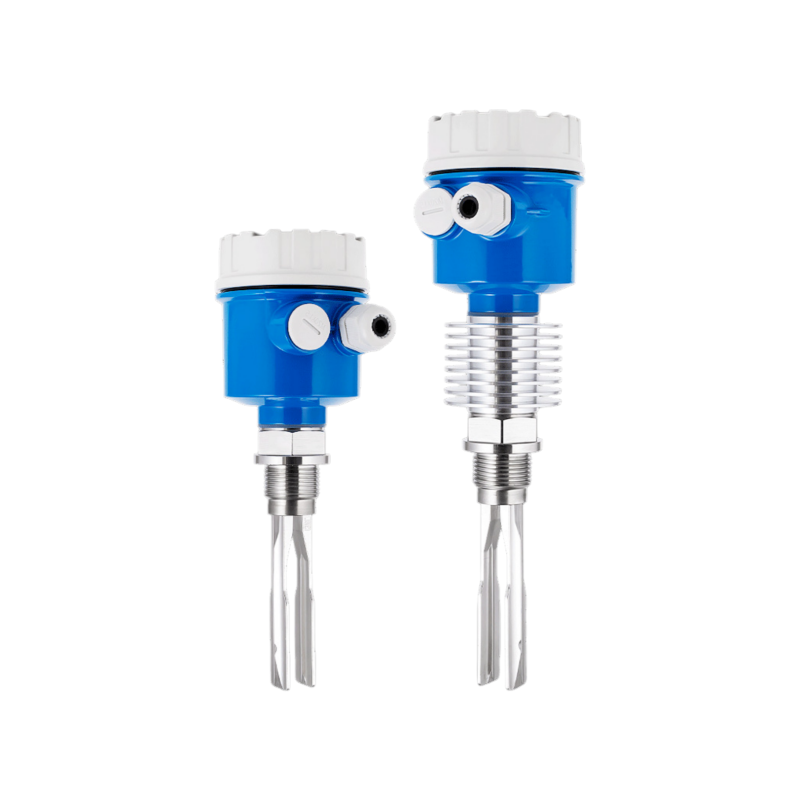
A vibrating tuning fork point level switch (FY-YC01 series) for high or low level alarm and pump protection in liquids, powders and granular solids. A piezo-driven fork vibrates at a fixed frequency; when material covers the fork the frequency shifts and the relay switches. With no moving parts and a self-cleaning fork, it is the modern replacement for float switches in tanks and silos.
- Media: liquids, powders, granular solids (solid ≥ 0.1 g/cm³, liquid ≥ 0.7 g/cm³)
- Process temperature: −20 to +220 °C (B / Z / G variants)
- Pressure: −0.1 to +4.0 MPa
- Output: relay (SPDT), or NPN / PNP; DC24V or AC220V
- Protection / Ex: IP65; Exd IIB / IIC T1–T6
Overview
A tuning fork level switch – also called a vibrating fork level switch – is a point level device. It detects one fixed level and gives an on/off signal for high-level alarm, low-level alarm, overfill prevention or dry-run pump protection. The FY-YC01 fork works in liquids and in bulk solids such as powders and granules, so a single switch technology covers both a chemical storage tank and a cement or grain silo.
Because detection depends only on whether material touches the fork, the reading is not affected by flow, turbulence, bubbles, foam, conductivity, dielectric constant, coating or vibration. That immunity, together with a fork geometry that shakes off buildup, is why the tuning fork has become the standard replacement for float switches, which can jam with buildup, viscous media or agitation.
Features
Built as an all-metal, maintenance-free point switch for demanding tank and silo service:
Working principle
An electronic circuit drives a piezoelectric crystal that makes the two-prong fork vibrate at its natural resonant frequency of about 300 Hz. In free air the fork vibrates freely. When process material rises to cover the fork, the added mass and damping lower the vibration frequency. The electronics detect that frequency shift and flip a relay (and open-collector) output. When the level falls and the fork is exposed again, the fork returns to its free frequency and the output resets – a clean, repeatable on/off point.
Technical specifications
| Parameter | Specification (FY-YC01) |
|---|---|
| Measured media | Liquids, powders or granular solids |
| Medium density | Solid ≥ 0.1 g/cm³; liquid ≥ 0.7 g/cm³ |
| Particle / viscosity limit | Solid particle ≤ 10 mm; liquid viscosity < 1000 mm²/s; angle of repose ≥ 20° |
| Medium temperature | −20 to +220 °C (B: to +80; Z: to +130; G: to +220) |
| Ambient temperature | −40 to +70 °C; storage −40 to +85 °C |
| Process pressure | −0.1 to +4.0 MPa |
| Fork vibration frequency | 300 ± 50 Hz |
| Action time | 3 s |
| Wetted material (fork) | SS 304 or SS 316; housing die-cast aluminum |
| Process connection | Thread G1/2, G3/4, G1 (or NPT); flange; 50.5 mm sanitary clamp |
| Fork length | Standard 100 mm; small fork 45 mm; extended on request |
| Supply voltage | DC24V or AC220V 50 Hz |
| Output | Relay SPDT AC250V/4A, DC60V/4A; or NPN / PNP open collector 400 mA |
| Power consumption | AC 3 W max; DC 5 W max |
| Electrical connection | M20×1.5; junction box, Ex box, M12 plug or Hesmann connector |
| Protection / Ex | IP65; Exd IIB T1–T6 or Exd IIC T1–T6 |
Selecting the right fork
Four choices define an FY-YC01 order. Match them to your medium and mounting:
1. Liquid or solid, by density
The fork needs enough mass on it to damp the vibration. Liquids should be at least 0.7 g/cm³ and solids at least 0.1 g/cm³. For a light powder near the 0.1 g/cm³ floor, an extended or small fork improves sensitivity. Solid particles up to 10 mm and liquids up to 1000 mm²/s viscosity are handled directly.
2. Temperature variant
Pick B (to +80 °C) for ambient tanks, Z (to +130 °C) for warm process, or G (to +220 °C) with a temperature spacer for hot oil, boiler drums and hot silos. Example: an edible-oil tank running at 150 °C needs the G variant, whose spacer keeps the electronics below their +70 °C ambient limit while the fork sits in the hot medium.
3. Fork length and connection
The standard 100 mm fork suits side or top mounting; the 45 mm small fork fits small vessels and pipes. Choose a threaded (G1/2, G3/4, G1), flanged, or 50.5 mm sanitary clamp connection to match the vessel boss.
4. Output and enclosure
Use the SPDT relay for direct alarm or contactor control, or NPN / PNP open collector for a PLC input. Add the Ex enclosure (Exd IIB / IIC) for hazardous areas, and select DC24V or AC220V supply.
Output and wiring
The standard junction box provides power terminals (L, N, PE) and a change-over relay (COM, NO, NC), plus POWER and STATE indicators and a SET key. With AC220V the power terminals are non-polar. The M12 plug and Hesmann versions bring the same relay contacts out on a connector. The relay is factory-set, so no field calibration is normally needed; a SET routine is available if a threshold has to be re-taught for an unusual medium.
Applications
Typical duties across process and bulk-handling plants:
- High / low level alarm in storage and process tanks – water, oil, acids, alkalis, solvents.
- Silo level switching for cement, fly ash, coal powder, grain, flour, feed, plastic pellets and sand.
- Overfill prevention and dry-run pump protection on pipelines and pump suctions.
- Boiler and steam-drum water-level limit alarm (G variant).
- Food and water treatment point level with a sanitary clamp fork.
Challenge: a grain and feed handling plant needed a reliable high-level cutoff on dusty silos where an earlier point switch gave nuisance trips from dust and product buildup on the probe.
Solution: a tuning fork level switch mounted through the silo wall at the fill limit; the self-cleaning fork ignores dust clouds and light coating, and has no float to seize.
Result: a dependable fill cutoff with no false alarms from dust, and no periodic cleaning of the probe – the switch runs maintenance-free between inspections.
Related products
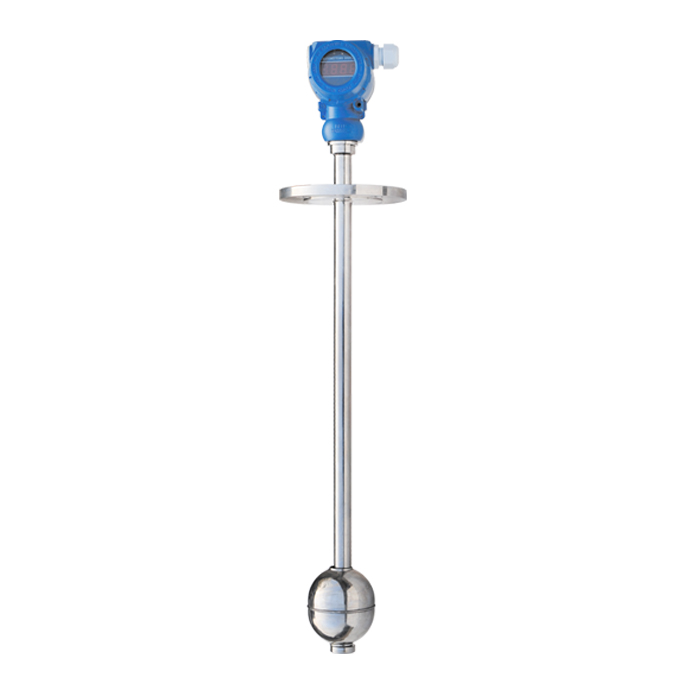 Float Level SensorBuoyant magnetic float with reed set points.
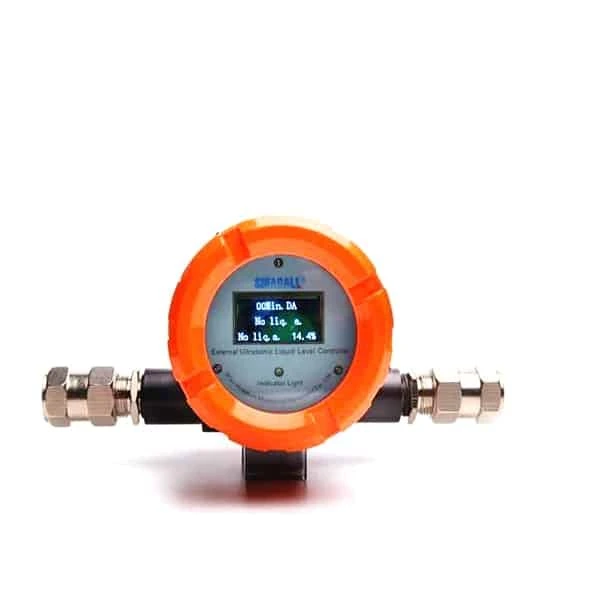 Ultrasonic Level SwitchNon-contact external point switch.
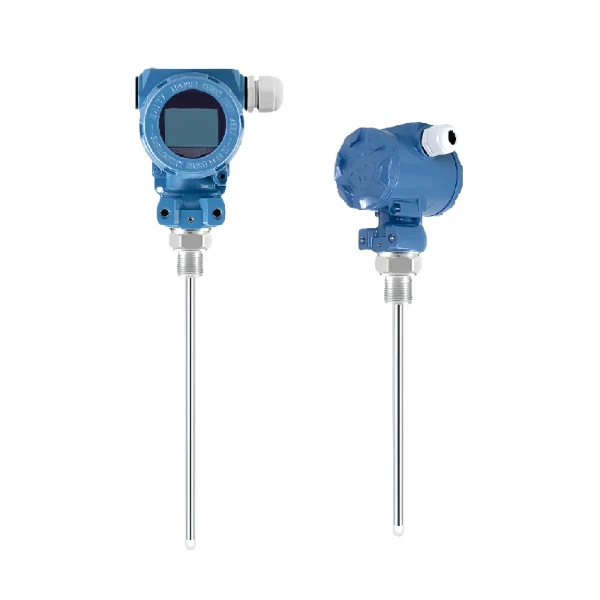 Capacitance Level TransmitterContinuous level for coating media.
Browse all level instruments →
Related switch: for heavier, free-flowing bulk solids in silos and bins, see the rotary paddle level switch.
FAQ
How does a tuning fork level switch work?
A piezoelectric crystal drives a two-prong fork at about 300 Hz. In air the fork vibrates freely; when liquid or solid covers it, the frequency drops. The electronics sense that shift and switch a relay, giving a level-present / level-absent signal.
What is a vibrating fork level switch?
It is the same device – “vibrating fork” and “tuning fork” level switch are two names for a vibronic point level switch. It is used for point (on/off) detection, not continuous measurement.
What is the application of a tuning fork level switch?
High and low level alarm, overfill prevention, and pump dry-run protection in tanks and silos, for liquids, powders and granular solids across chemical, food, water treatment, cement, power and grain industries.
Is a tuning fork switch better than a float switch?
For most process duties, yes. A float has a moving part that can stick with viscous media, buildup or agitation. The fork has no moving parts and a self-cleaning geometry, so it is more reliable in foamy, coating, turbulent or dusty service – which is why it is the common float-switch replacement.
Request a quote
Tell us the medium, its density and temperature, the mounting (side or top, thread / flange / clamp) and the output you need, and we will configure the right FY-YC01 fork – not a shelf part. Specifications are representative; confirm the exact configuration against the datasheet for your application.
About this page. Written by the Instranova engineering team. Specifications are representative of the FY-YC01 series; confirm the exact model, materials and approvals against the datasheet for your application.