Products › Level instruments › Ultrasonic Level Transmitter
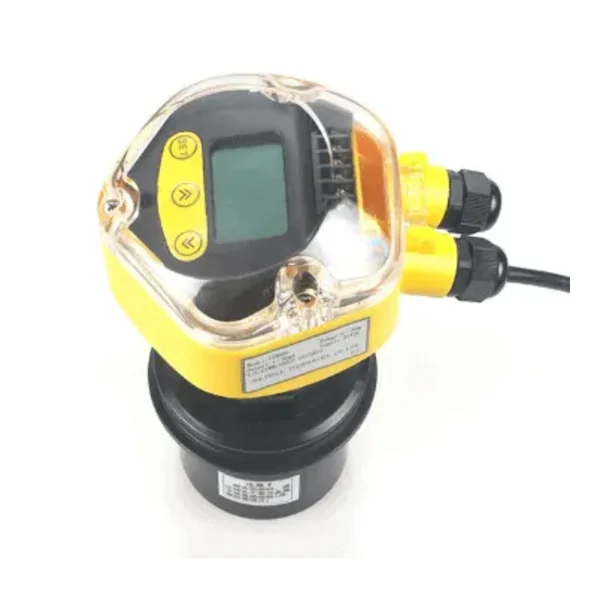
Ultrasonic Level Transmitter
A non-contact level transmitter that fires an ultrasonic pulse at the liquid and times the echo. Nothing touches the medium, so it suits water, wastewater and many tanks; but it has rules, and steam, heavy foam or a pressurized tank will defeat it.
- Method: non-contact, echo time of flight
- Output: 4-20 mA or RS-485
- Types: general and intrinsically safe
- Watch: blind zone, foam, vapor, dust
- Not for: pressurized vessels
Overview
An ultrasonic level transmitter sits above the liquid and never touches it. It sends a sound pulse down, the surface bounces it back, and the time for the round trip gives the distance to the surface, which it turns into level. Because it is non-contact it handles corrosive and dirty liquids that would attack a probe, installs easily, and does not care about viscosity or density. It is a low-cost workhorse for open tanks, sumps, channels and rivers, with a 4-20 mA or RS-485 output.
Where it cannot reach, the alternatives are contact methods: a hydrostatic level transmitter submerged in the liquid, or a DP level transmitter for closed and pressurized tanks. Radar is the non-contact answer where vapor or foam rules ultrasonic out.
Working principle
The transducer emits a high-frequency pulse and then listens for the echo from the liquid surface. Distance is half the round trip: S = C x T / 2, where C is the speed of sound and T the measured time. Level is the tank height minus that distance. The catch is C: the speed of sound in air changes with temperature, roughly v = 331.5 + 0.6 x T (m/s), so every ultrasonic transmitter measures temperature and corrects for it. The unit is built from three parts, a transducer, a processing unit and the output stage.
Strengths and limitations
Ultrasonic earns its keep on open, calm liquid surfaces, and most failed installs come from ignoring its limits. The honest list:
- Blind zone. A dead band sits just below the transducer where it cannot measure; it grows with the sensor’s range, so mount the transducer high enough that the highest level never enters it.
- Temperature. Sound speed drifts with air temperature; the built-in compensation handles steady changes, but strong gradients above the liquid still add error.
- Foam, vapor and volatiles. Heavy foam, dense vapor or volatile media absorb or scatter the pulse and the echo is lost. Use radar there.
- Pressurized vessels. Pressure (and the temperature that rides with it) disturbs the reading, so ultrasonic is for open or vented tanks, not pressure vessels.
- Obstacles and dust. Anything in the beam, agitators, ladders, fill streams, returns a false echo; heavy dust attenuates the pulse.
Technical specifications
| Parameter | Specification |
|---|---|
| Method | Non-contact ultrasonic echo (time of flight) |
| Range | Model-dependent, from about 5 m up to tens of meters |
| Blind zone | A dead band below the transducer; larger on longer-range models |
| Output | 4-20 mA or RS-485 to a secondary meter / control system |
| Temperature compensation | Built in (v = 331.5 + 0.6 x T m/s) |
| Types | General purpose and intrinsically safe |
| Mounting | Top of tank, beam clear of obstacles; integrated or split (remote transducer) |
| Not suitable for | Pressurized vessels; heavy foam, vapor or volatile media |
Representative specifications. Exact range, blind zone, accuracy and approvals depend on the model; confirm per datasheet.
Models and ordering
Quote checklist: send these five points and we configure one unit, not a shelf part.
- Maximum level (tank height) and the minimum level you must still read
- Medium and whether it foams, gives off vapor, or sits in a closed/pressurized tank
- Mounting height and anything in the beam (agitator, ladder, fill pipe)
- Output: 4-20 mA or RS-485; integrated or split transducer
- General purpose or intrinsically safe
Ordering example: ultrasonic level transmitter, 0 to 6 m, 4-20 mA, integrated head, general purpose, for an open wastewater sump with a clear beam path.
Applications
- Water and wastewater tanks, sumps, wet wells and channels
- Open process and storage tanks
- Rivers, reservoirs and open channels
- Chemical tanks where a probe should not contact the liquid
- Pump control and high/low alarms
Application example
Hazardous-area liquid transfer. A site moving liquid in a classified area wanted continuous level plus a running total of volume transferred, with no probe in the liquid. An intrinsically safe ultrasonic transmitter fit: non-contact from the top of the tank, 4-20 mA into the totalizer, and an Ex rating for the area. The one design check was the beam path and the blind zone, so the transducer was mounted clear of the fill stream and high enough that a full tank stayed out of the dead band.
For a single high or low alarm point rather than continuous measurement, use the ultrasonic level switch.
Related products
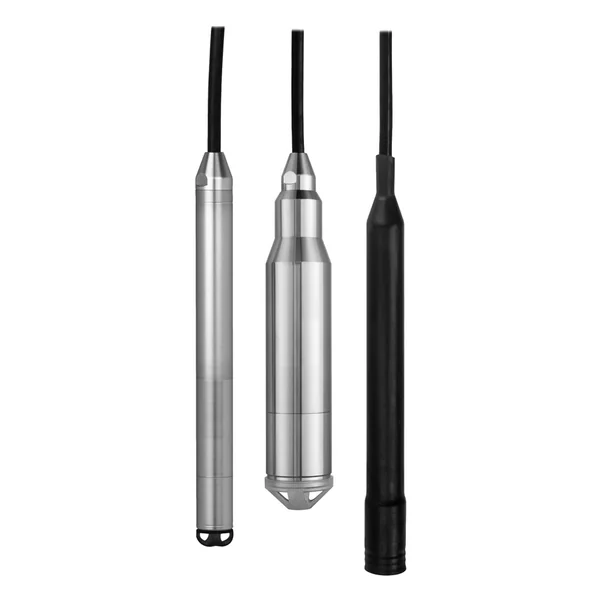 Hydrostatic Level Transmitter
Contact method, submerged; unaffected by foam or vapor.
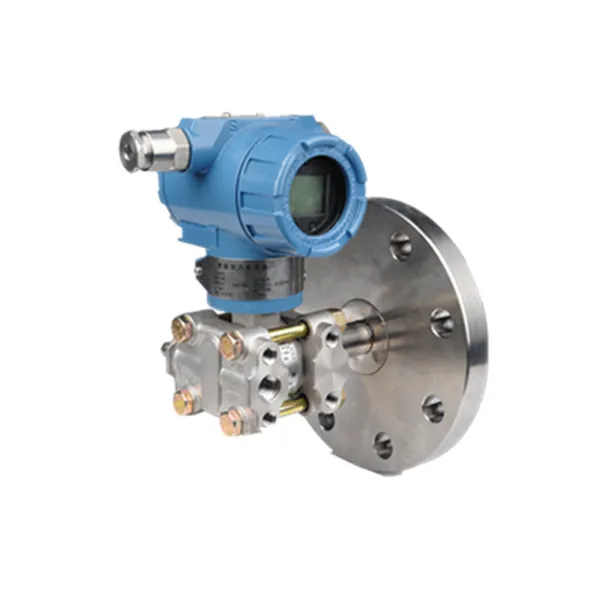 DP Level Transmitter
For closed and pressurized tanks where ultrasonic cannot go.
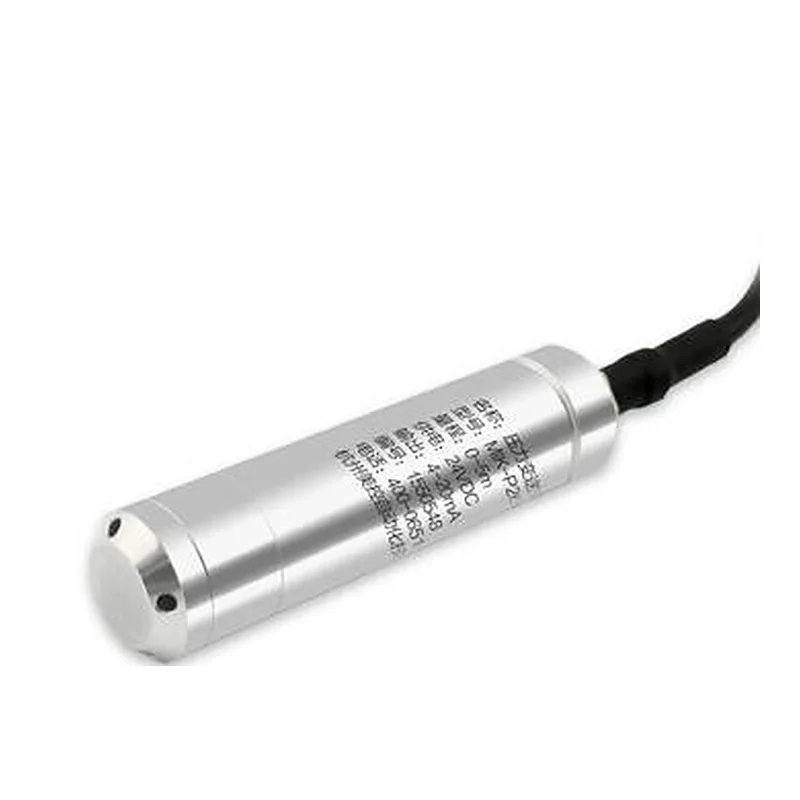 Submersible Pressure Transducer
Cabled probe for wells and deep sumps.
Browse all level instruments →
For where a non-contact transmitter sits among the other options on water storage, see our guide to water storage tank level sensors.
FAQ
How does an ultrasonic level transmitter work?
A transducer at the top of the tank sends an ultrasonic pulse toward the surface and times the echo that returns. The distance is the speed of sound times the travel time, divided by two, and the level is the tank height minus that distance. Because it relies on sound travelling through the gas above the liquid, it is a non-contact method for open or vented tanks.
What is an ultrasonic level transmitter?
It is a non-contact level instrument that measures by timing an ultrasonic echo from the surface and outputs a 4–20 mA (or RS-485) signal. It suits open tanks, sumps, and channels with clean, vented conditions, and is not used on pressurised or vacuum vessels.
What are the advantages of an ultrasonic level transmitter?
Nothing touches the medium, so there is no probe to foul or corrode; there are no moving parts; it top-mounts and sets up simply; and it costs less than radar. That makes it a practical choice for water, wastewater, sumps, and open channels.
What is the difference between ultrasonic and radar level transmitter?
Ultrasonic uses sound; radar uses microwave. Sound needs a gas to travel, so ultrasonic drifts with temperature, pressure, and vapor and cannot work in vacuum; radar is unaffected by those and reaches farther. Use ultrasonic for clean, vented tanks; for vapor, pressure, foam, or long range use the radar level transmitter.
Request a quote
Send the five points in the checklist above and our application engineers will configure an ultrasonic level transmitter for your tank, range and area. Tell us the application and we configure one unit, not a shelf part. Reach our application engineers.