Products › Pressure instruments › HART Pressure Transmitter
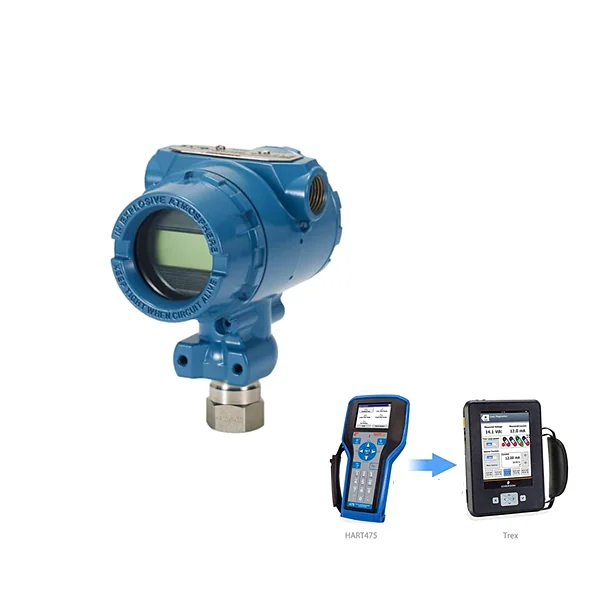
HART Pressure Transmitter
A smart 4-20 mA pressure transmitter that also speaks HART. The digital signal rides on the same two wires as the current loop, so you can configure the range, read diagnostics and calibrate from a handheld or the control room without breaking the loop.
- Output: 4-20 mA with HART (2-wire)
- HART signal: FSK (Bell 202), 1.2 kbps
- Types: gauge, absolute, differential, level
- Config: on-unit keys + HART communicator
- Zero / span: local and remote
Overview
A plain 4-20 mA transmitter sends one number and nothing else: to change its range or check its health you walk out to it and break the loop. A HART transmitter keeps the 4-20 mA signal but layers a digital channel on top of the same two wires, so a technician with a handheld, or the control system itself, can read the range, trim the zero and span, pull diagnostics and run a calibration without disconnecting anything. It is the standard way to commission and maintain pressure points in a modern plant.
This HART transmitter is built on the 3151 capacitive platform and ships as a gauge, absolute, differential or level instrument. For the exact ranges and wetted parts of each, see the gauge pressure transmitter, the absolute pressure transmitter and the differential pressure transmitter; this page covers the HART capability they share.
HART signaling
HART (Highway Addressable Remote Transducer) puts a digital signal on top of the analog loop. It uses FSK (frequency-shift keying) on the Bell 202 standard: a small 0.5 mA signal is superimposed on the 4-20 mA current at 1.2 kbps. Because the average of that FSK signal is zero, it does not shift the analog value the control system reads, so HART is fully backward-compatible with existing 4-20 mA wiring. The primary variable still travels as 4-20 mA; range, configuration, calibration and diagnostic data travel digitally and are read on demand.
HART vs 4-20 mA
They are not the same thing; HART extends 4-20 mA rather than replacing it. A 4-20 mA loop is one analog number, one direction, no configuration or diagnostics. HART adds half-duplex digital communication on the same pair: bidirectional, so you can change the range or zero remotely, read fault and loop-integrity diagnostics, and pull more than one variable. It stays compatible with the analog system, and several devices can share a pair in multidrop. Use plain 4-20 mA for a simple budget loop; use HART where commissioning, diagnostics and remote configuration save plant time.
Technical specifications
| Parameter | Specification |
|---|---|
| Output / communication | 4-20 mA with superimposed HART (2-wire) |
| HART signaling | FSK, Bell 202; 0.5 mA superimposed; 1.2 kbps |
| Pressure types | Gauge, absolute, differential, level (3151 platform) |
| Range | Set by variant; see gauge / absolute / differential pages |
| Compensation | Digital compensation and nonlinear correction; -10 to 80 C |
| Zero and span | Local push-button and remote over HART |
| Configuration | On-unit keys plus HART communicator (e.g. HART 475, Trex) |
| Multidrop | Up to 15 devices on one pair (HART standard) |
| Diagnostics | Device status, loop integrity, remote read |
Representative specifications. Range, accuracy, wetted parts and approvals are set by the 3151 variant; confirm per datasheet.
Calibration with a HART communicator
Calibration is where HART earns its place. The short version: isolate the transmitter from the process and its loop, connect a calibrator across the mA terminals and a HART communicator (such as a HART 475 or Trex), and press HART to read the configuration. Generate a known input pressure with a pump, record the As-Found reading, then trim the zero, the span and the sensor if the output is outside tolerance, and record As-Left. The HART communicator does the trim digitally, so there are no span pots to chase. A full step-by-step belongs in the manual; the point is that one handheld covers configuration, diagnostics and calibration on the same two wires.
Models and ordering
Quote checklist: send these five points and we configure one unit, not a shelf part.
- Pressure type and range (gauge, absolute, differential or level)
- That you want HART on the 4-20 mA output
- Media, temperature and wetted-part material
- Process connection and any display or bracket
- Approvals your site needs (hazardous-area, etc.)
Ordering example: HART gauge pressure transmitter, 0 to 1 MPa, 4-20 mA + HART, 316L wetted parts, 1/2 NPT, with local display.
Applications
- Process plants where points are commissioned and diagnosed remotely
- Oil, gas and petrochemical units on a HART-enabled control system
- Retrofits that need diagnostics without rewiring
- Multidrop loops sharing one wire pair
- Sites standardized on HART handhelds for maintenance
Application example
Refinery, new unit (EPC). An EPC contractor outfitting a new refinery unit specified pressure transmitters for the process lines and needed them to commission and self-diagnose from the control room rather than point by point. HART on the 4-20 mA loop was the requirement: ranges set and verified digitally at commissioning, device status read remotely afterward. Local-language datasheets and post-install metrology registration were handled as part of the supply.
Related products
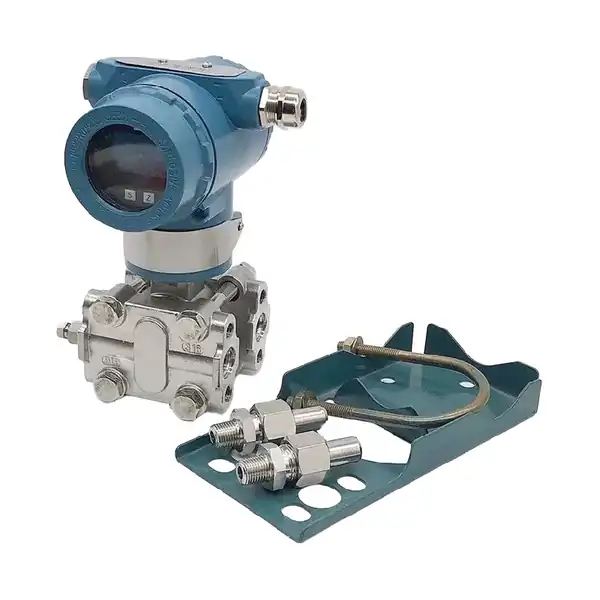 Gauge Pressure Transmitter
Capacitive 3151 gauge transmitter; HART available.
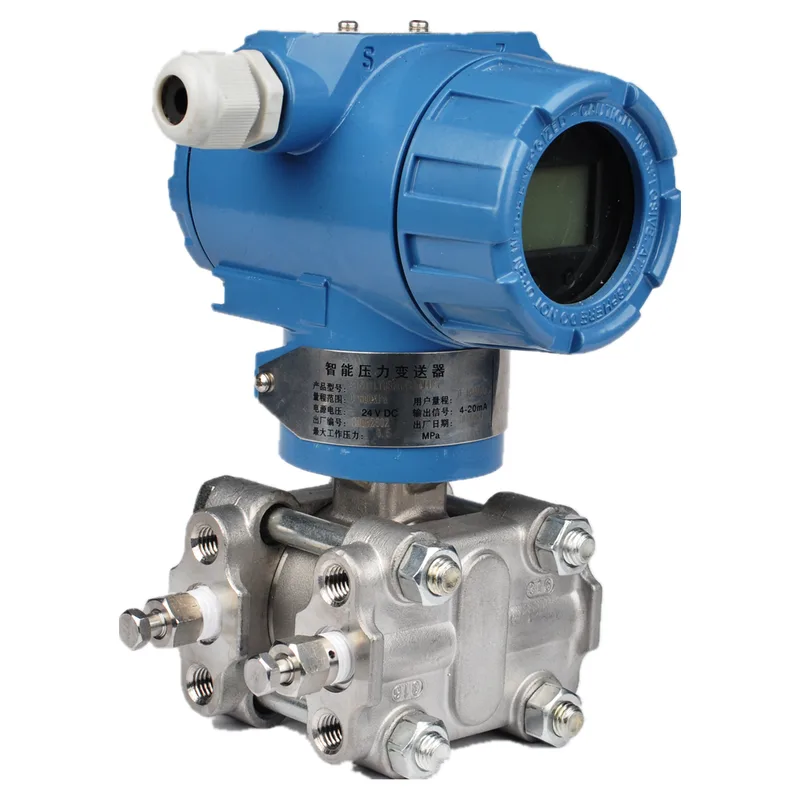 Absolute Pressure Transmitter
Absolute reference on the same 3151 platform.
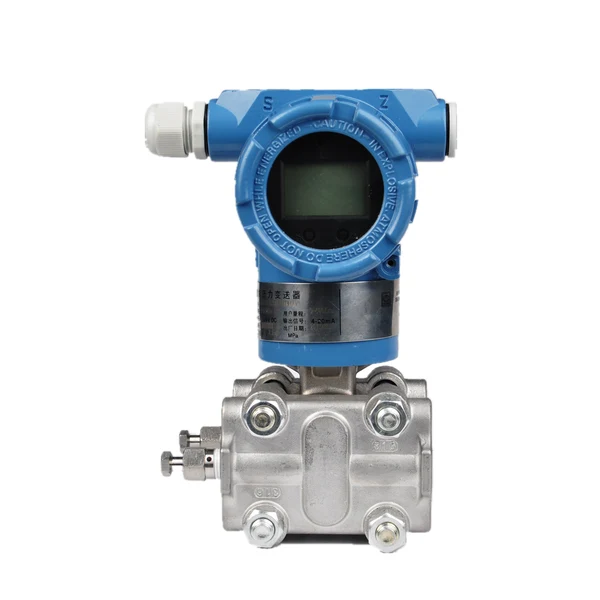 Differential Pressure Transmitter
DP and level on the same platform, with HART.
Browse all pressure instruments →
Sensor trim and output trim are forms of adjustment, not calibration; the distinction and the as-found and as-left workflow are explained in our guide to calibration, verification, and adjustment.
Communicator trim menus, the five-point verification and when a re-range is the wrong answer are covered in our pressure transmitter calibration guide.
For the protocol itself, including the loop resistance HART needs and what changed across revisions 5, 6 and 7, see the HART communication protocol guide.
If you are choosing between this HART output and a Modbus port, the comparison is in our HART vs Modbus guide.
FAQ
What is the HART protocol?
HART (Highway Addressable Remote Transducer) is a digital communication protocol that rides on top of the 4–20 mA analog signal. Over the same two wires you can read the measurement, configure the transmitter, and run diagnostics. The HH3151 supports HART.
What is the difference between Modbus and HART protocol?
HART overlays a digital signal on the 4–20 mA loop, so it keeps the analog reading and adds digital configuration on the same wires; Modbus is a fully digital, multi-drop serial protocol (over RS-485) with no analog signal. HART suits 4–20 mA installations, Modbus suits all-digital networks.
What is the difference between 4-20 mA and HART?
4–20 mA is the analog current that carries the primary measurement; HART is a digital signal modulated on top of it that carries extra data such as configuration, diagnostics, and secondary variables. A HART transmitter gives both at the same time.
Is HART still used in industry?
Yes, widely. HART remains one of the most common protocols for process transmitters because it adds digital configuration and diagnostics to the established 4–20 mA loop without rewiring. The HH3151 uses it for setup and diagnostics.
Request a quote
Send the five points in the checklist above and our application engineers will configure a HART pressure transmitter for your range, type and approvals. Tell us the application and we configure one unit, not a shelf part. Reach our application engineers.