Home › Products › Pressure Instruments › Gauge Pressure Transmitters
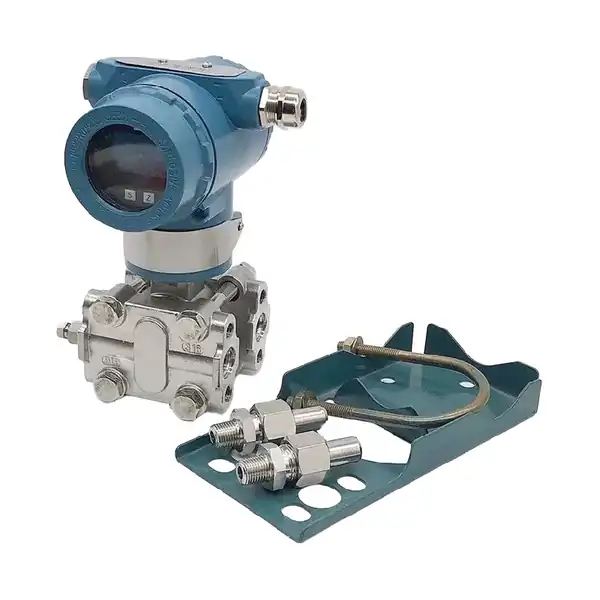
SI-3151GP Capacitive Gauge Pressure Transmitter
The capacitive 1151-pattern transmitter ran process plants for four decades, and the original is now a discontinued part serviced from surplus stock. The SI-3151GP keeps that architecture in production: a micro-capacitance silicon cell behind an isolating diaphragm, a dual-compartment body, and electronics you can repair in the field with common spare parts instead of scrapping the unit.
- Spans: nine standard groups, 0–0.1 kPa up to 0–41 MPa
- Reference accuracy: ±0.075% / ±0.1%, varies by span and material
- Stability: ±0.1% URL over 10 years
- Communication: 4–20 mA with HART 5.2 multi-drop, or Modbus RS-485
- Protection: IP66/IP67; flameproof and intrinsically safe versions
Gauge pressure reads against local atmosphere through a vented reference, which is what most plant measurements actually want: tank head, pump discharge, line pressure. The capacitive cell measures by pole-distance change: process pressure deflects a metal membrane, the capacitance between the membrane and a fixed electrode shifts, and the measuring circuit turns that shift into the output. Capacitance cells take little input energy, respond fast and ride out harsh environments, which is why this architecture earned its installed base. Our piezoresistive lines cover the same duties in a compact body: the SI-300 for process points and the SI-390 for OEM design-ins.
Span options
| Span group (SI units) | Equivalent |
|---|---|
| 0–0.1 to 0–3.5 kPa | 0–10 to 0–350 mmH2O |
| 0–0.8 to 0–8 kPa | 0–80 to 0–800 mmH2O |
| 0–4 to 0–40 kPa | 0–400 to 0–4,000 mmH2O |
| 0–20 to 0–200 kPa | 0–2,000 to 0–20,000 mmH2O |
| 0–70 to 0–700 kPa | 0–0.7 to 0–7 kgf/cm2 |
| 0–210 to 0–2,100 kPa | 0–2.1 to 0–21 kgf/cm2 |
| 0–700 to 0–7,000 kPa | 0–7 to 0–70 kgf/cm2 |
| 0–2.1 to 0–21 MPa | 0–21 to 0–210 kgf/cm2 |
| 0–4.1 to 0–41 MPa | 0–41 to 0–410 kgf/cm2 |
Each group is continuously rangeable within its limits, so a 0–20 to 0–200 kPa cell can be calibrated to any span in between. Pick the group whose upper limit puts your working pressure at 60 to 80% of the calibrated span.
Technical specifications
| Parameter | Specification |
|---|---|
| Reference accuracy | ±0.075% or ±0.1% of calibrated span, varies by material and span |
| Long-term stability | ±0.1% of URL over 10 years |
| Sensing element | High-reliability micro-capacitance silicon cell |
| Fill fluid | Silicone oil standard; fluorine oil for oxygen and chlorine service |
| Wetted materials | SUS316 (diaphragm SUS316L); Hastelloy C; Tantalum; Monel, gold plating and ceramic by custom build |
| Power supply | 17.9 to 42 VDC |
| Output signal | 4–20 mA (SFN or HART communication); Modbus RS-485 |
| Display | Versatile indicator with push-button programming; built-in loop calibration |
| Process connection | Rc 1/2 or 1/2 NPT internal thread; remote seals can be fitted |
| Ingress protection | IEC IP66 / IP67 |
| Hazardous area | Flameproof and intrinsically safe versions available; confirm certification documents for your destination market at order |
| Serviceability | Field repair with common spare parts; HART 5.2 multi-drop |
Specifications at reference conditions unless stated. Confirm the exact figure for your span, material and options on the order sheet.
Replacing a 1151-pattern fleet
Plants with decades of capacitive transmitters on the books face the same fork: hunt surplus stock and refurbished units, re-engineer every loop to a modern coplanar platform, or fit a new-build unit on the same architecture. The SI-3151GP exists for the third path. The push-button display, the loop calibration facility and the spare-parts serviceability follow the conventions your instrument techs already know; send us the model code from the nameplate of the unit you are replacing and we will match span, materials, connection and options line by line.
The buying pattern is familiar from our inquiry file: a German plant came to us to second-source legacy imported instruments their vendor had moved on from, flow meters in that case, and the logic is identical for pressure fleets. Nobody wants to re-validate forty loops because one vendor retired a product line.
Models and ordering
Every SI-3151GP is assembled to its order code. Span group and wetted material drive the build; everything else is option codes.
Quote checklist: five things to put in your inquiry
- Working pressure and calibrated span (we size for 60–80% of span; nine groups cover 0.1 kPa to 41 MPa)
- Medium and wetted material: SUS316/316L standard, Hastelloy C or Tantalum for aggressive service; fluorine fill for oxygen or chlorine
- Communication: 4–20 mA with HART, or Modbus RS-485
- Process connection (Rc 1/2 or 1/2 NPT) and whether a remote seal is needed
- Replacement details if this swaps an existing unit: the old model code from the nameplate, plus hazardous-area requirements
Ordering example: SI-3151GP, span group 0–20 to 0–200 kPa calibrated to 0–200 kPa, SUS316L diaphragm, silicone fill, 4–20 mA HART, Rc 1/2, display fitted, for a pump discharge running at 140 kPa. The working point sits at 70% of calibrated span.
Applications
Process plant service
- Water plants and sewage treatment
- Oil refineries and chemical processing
- Building materials, light industry, machinery
- Liquid, gas and steam pressure on vented-reference points
Beyond plain pressure
- Tank head and hydrostatic level via the DP line
- Density and interface inference with remote seals
- Legacy 1151-pattern loop replacement programs
- Oxygen and chlorine service with fluorine fill
Related products
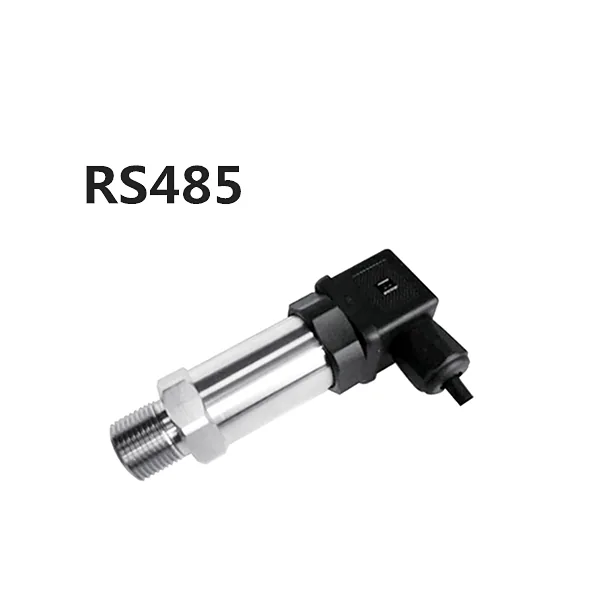 Digital Pressure Sensors
SI-520 RS485 Modbus output for PLC and SCADA.
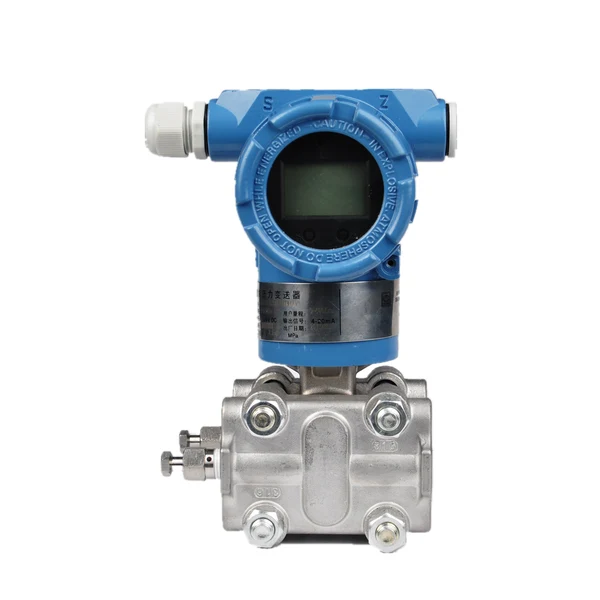 Differential Pressure Transmitters
The DP side of the 3151 line: flow, level and filter monitoring.
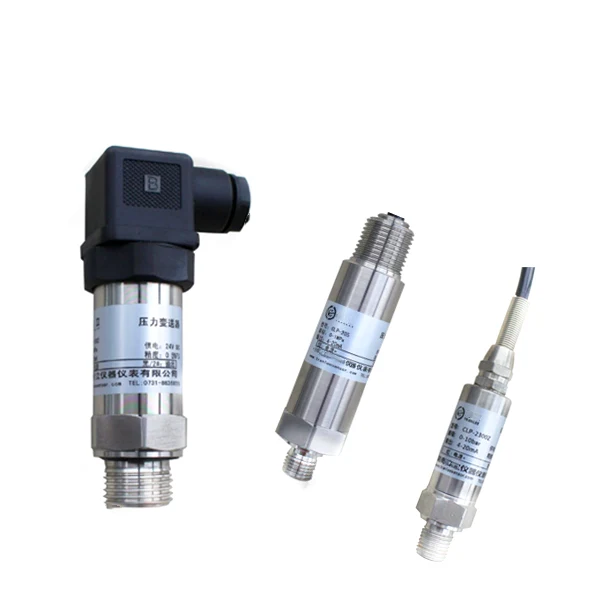 Pressure Transmitters
Compact piezoresistive line for gauge and absolute process points.
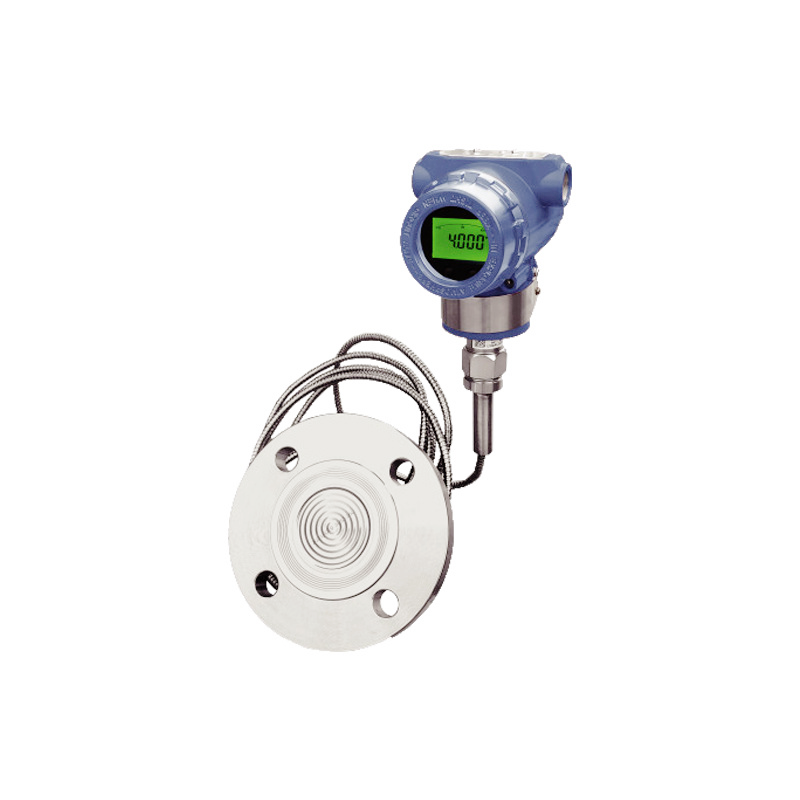 Diaphragm Seal Pressure Transmitters
Remote seals fit this transmitter for hot, corrosive or clogging media.
Deciding between gauge and absolute? See PSI vs PSIA vs PSIG for what the suffixes mean and which reference to specify.
FAQ
What is a gauge pressure transmitter?
A transmitter that measures pressure relative to local atmospheric pressure, with the reference side of the sensing element vented to ambient. Readings above atmosphere are positive, below it negative, and the output shifts with weather and altitude because the reference does. That is the right behavior for most plant measurements, where the equipment around the instrument also lives at local atmosphere.
Gauge or absolute: which do I order?
Gauge when the process only fills against atmosphere and your other instruments read gauge too. Absolute when the measurement must not move with the weather: vacuum processes, vapor pressure work, anything referenced to a sealed or evacuated state. The two are different builds with different references; one cannot stand in for the other. Absolute pressure equals gauge pressure plus local atmospheric pressure.
Can it replace my old 1151-pattern transmitter?
That is the design intent: same capacitive architecture, conventional dual-compartment body, field-repairable electronics, spans from 0.1 kPa to 41 MPa, HART communication. Send the complete model code from your existing nameplate and we confirm span, wetted materials, process connection and options against it before quoting, so the swap is verified on paper before anything ships.
Request a quote
Tell us the span, the medium and wetted material, the communication option and, for replacements, the old model code. We respond with a configured model, lead time and price, usually within one working day.