Products › Pressure instruments › SI2088-W Wireless Pressure Transmitter
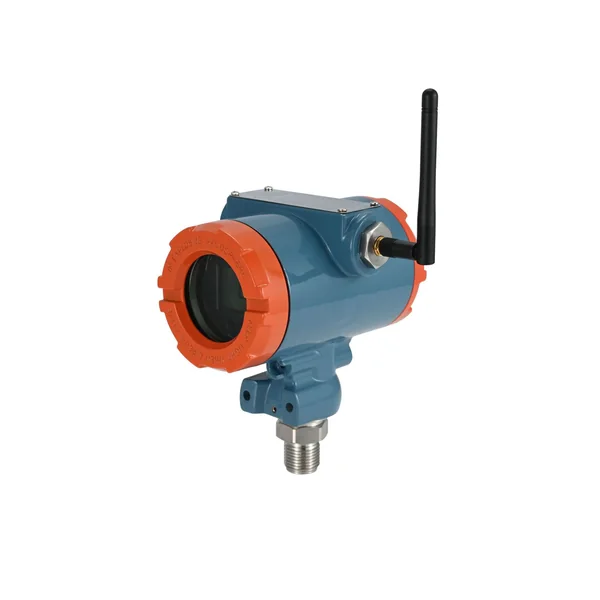
SI2088-W Wireless Pressure Transmitter
A battery-powered pressure transmitter that reports over NB-IoT, LoRaWAN or GPRS. There is no power cable and no signal pair to run: the unit measures, shows the reading on a five-digit LCD, and uploads it to a server or cloud platform on a schedule you set.
- Range: -100 kPa to 250 MPa
- Accuracy: ±0.2 to ±0.5% FS
- Network: NB-IoT / LoRaWAN / GPRS (selectable)
- Power: Dual battery pack, 38,000 mAh, 4 to 6 year life
- Protection: IP67
Overview
A pressure point at the far end of a water main, a remote wellhead or a buried pipe has no power outlet and no easy route for a signal cable. Trenching conduit to it often costs more than the transmitter. The SI2088-W solves that by carrying its own power and its own radio: a lithium battery runs the electronics, and the reading goes out over a wireless network instead of a 4-20 mA loop.
It reads sealed-gauge, absolute or differential pressure from -100 kPa to 250 MPa, shows the value on a five-digit LCD, and uploads on a schedule you set, with an immediate report when the pressure moves past an alarm limit. For a wired loop instead, see the gauge pressure transmitter; for a submerged level probe on a cable, the submersible pressure transducer covers that job.
Working principle
Pressure acts on a diaphragm and a piezoresistive cell behind it. The bridge signal is amplified, temperature-compensated and digitized by a 24-bit converter, and a microcontroller stores the value and drives the display. Instead of pushing the result onto a current loop, the radio module sends it to the operator network and on to your server or cloud platform. Between readings the electronics drop into a sleep state drawing tens of microamps, which is what lets one battery cover years of service.
Networks: NB-IoT vs LoRaWAN vs GPRS
The network decides the install, so pick it first. All three carry the same reading; they differ in who owns the link, how deep the coverage reaches, and how much battery the radio costs.
| Network | How it connects | Best when |
|---|---|---|
| NB-IoT | Licensed carrier cell, SIM, to operator and your cloud | Deep or buried coverage; its link budget runs about 20 dB beyond GPRS (164 dB MCL), so it reaches pits and basements |
| LoRaWAN | Unlicensed sub-GHz to a gateway you own | A site or campus with no cellular plan; you run the gateway and keep the data on site |
| GPRS / 4G | Cellular data, SIM, to your server | Where 2G/4G is solid and you want more frequent or larger payloads; it draws more power, so battery life is shorter |
The default message format is Modbus RTU, and the platform exposes a Modbus-TCP or open API feed, so the readings drop into existing SCADA or configuration software without a custom driver. If your stack already speaks Modbus over a wired bus, the digital pressure sensor covers that case on RS485.
Technical specifications
| Parameter | Specification |
|---|---|
| Pressure range | -100 kPa to 250 MPa |
| Pressure type | Sealed gauge, absolute or differential |
| Accuracy | ±0.2 to ±0.5% FS |
| Display | Five-digit LCD, white backlight |
| Wireless network | NB-IoT / LoRaWAN / GPRS (built to order); external antenna |
| Protocol | Modbus RTU default (message format customizable); Modbus-TCP / open API at the platform |
| Sampling interval | Settable in seconds (0 = continuous) |
| Upload interval | Settable in minutes, fastest 1 minute; immediate report when change exceeds 10% FS (default, settable) |
| Wake-up | Timer, button or alarm |
| Configuration | Local panel or remote |
| ADC | 24-bit |
| Power supply | Dual battery pack, 38,000 mAh (two 3.6 V Li-SOCl2 cells); external 5-30 VDC option |
| Current draw | Standby ≤50 µA; transmit average ≤100 mA |
| Battery life | Up to 4 to 6 years (38,000 mAh dual pack), set by upload interval |
| Working temperature | -20 to 70 C; storage -40 to 85 C; high-temperature versions to order |
| Vibration | ≤3 g, 10 to 150 Hz (IEC 60068-2-6) |
| Protection | IP67 |
| Housing | 304 stainless connection, cast aluminum-alloy case |
| Mounting | Vertical or horizontal |
Representative specifications, at room temperature and rated supply unless stated. Values typical; confirm the exact build, network band and certification per datasheet.
Power and battery life
Two facts set the runtime: the unit sleeps at no more than 50 µA, and each upload is a short burst that averages up to 100 mA. Held in sleep, 50 µA draws only about 0.05 mA × 24 × 365 = roughly 440 mAh in a year, a small fraction of the 38,000 mAh dual battery pack. The transmit bursts add to that, so the reporting duty cycle, how often the unit wakes to send, is the lever you actually pull: report once an hour and the pack lasts for years; report every minute and the radio dominates and the life drops. With the standard 38,000 mAh pack the unit runs up to four to six years on standby, set by how often it uploads. An external 5-30 VDC input is available where mains or solar is within reach and you want the battery only as a backup.
Models and ordering
The SI2088-W is the gauge and absolute pressure unit. The same platform is also built as a wireless differential pressure transmitter, a wireless absolute pressure transmitter, a wireless hydrostatic level transmitter and a wireless temperature transmitter, so a single network and platform can carry a mixed set of points.
Quote checklist: send these five points and we configure one unit, not a shelf part.
- Pressure range and reference (sealed gauge, absolute or differential)
- Network: NB-IoT, LoRaWAN or GPRS, and whether you have carrier coverage or want a LoRa gateway
- Reporting plan: upload interval and any alarm limit that should trigger an immediate report
- Platform: your server, our cloud, or a Modbus / API feed into existing SCADA
- Process connection, medium and mounting (vertical or horizontal), any high media temperature (high-temperature build to order), plus external power
Ordering example: SI2088-W, 0 to 1.6 MPa sealed gauge, NB-IoT, upload every 30 minutes with an immediate report above 1.2 MPa, Modbus feed to SCADA, G1/2 connection for a city water main.
Applications
- City water supply and pressure-zone monitoring
- Fire water mains, pump rooms and fire terminals
- Oil and gas gathering lines and remote wellheads
- District heating networks
- Agriculture, irrigation and remote tanks
- Any point where running power and signal cable is impractical
Application example
Oil and gas, remote monitoring. An EPC contractor building out a gas-gathering project needed pressure, flow and level points fed back to a central SCADA system across sites that were far apart and hard to cable. The brief was as much about integration as about the sensor: the readings had to land in the existing SCADA without a custom driver. Specifying battery transmitters that report over a cellular link and expose a Modbus feed kept the field wiring to the process connection alone and let the points join the SCADA poll directly.
Related products
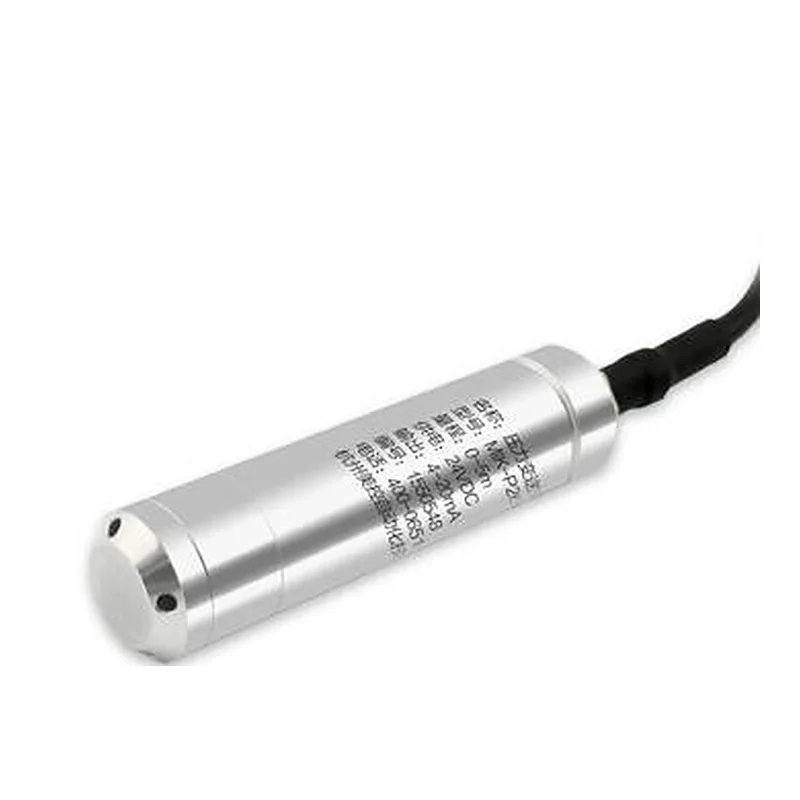 Submersible Pressure Transducer
Cabled level probe for wells and tanks, IP68 with a vented cable.
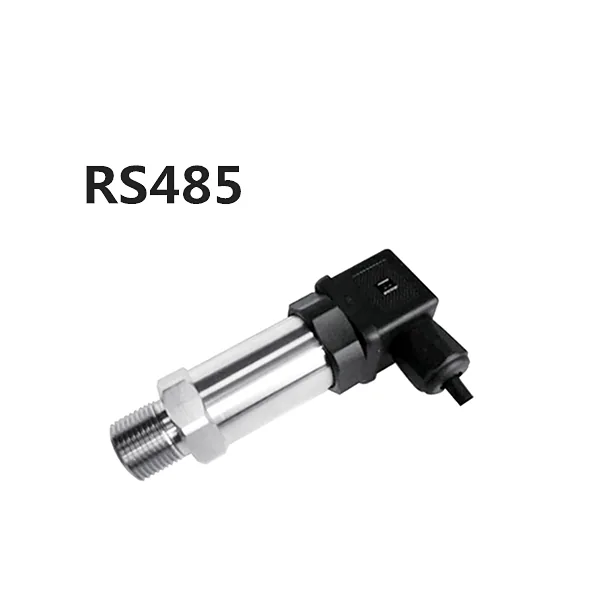 Digital Pressure Sensor
RS485 Modbus RTU output for wired digital control systems.
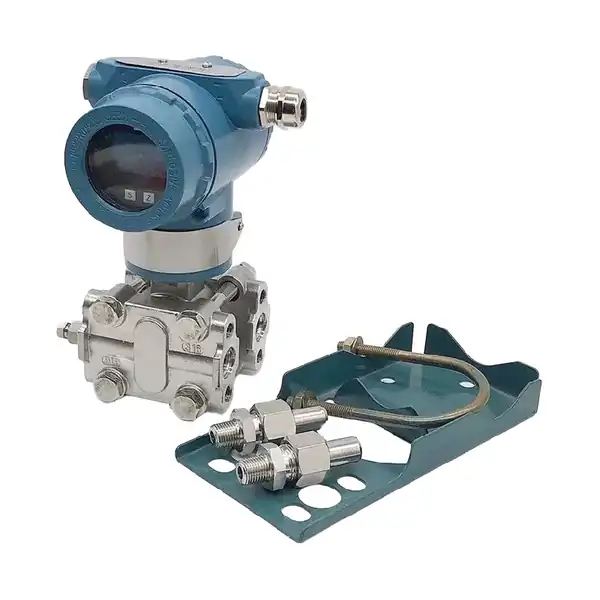 Gauge Pressure Transmitter
Wired 4-20 mA loop transmitter for standard process points.
Browse all pressure instruments →
FAQ
What does a pressure transmitter do?
A pressure transmitter turns the pressure of a gas or liquid into a measurable signal. A wireless model like the SI2088-W adds a radio and a battery: instead of running a 4-20 mA cable back to the control room, it digitises the reading and sends it over NB-IoT, LoRa, or GPRS to a server or cloud dashboard, so you can monitor pressure at sites where wiring is impractical.
What is the difference between a pressure sensor and a pressure transmitter?
The sensor is just the sensing cell and gives a small millivolt signal. A transmitter wraps that cell in electronics that condition, temperature-compensate, and convert the signal into a usable output. In a wireless transmitter those electronics also run the radio and power management, packing each measurement into data packets and sleeping between readings to stretch battery life.
What is the purpose of a transmitter?
The purpose of a transmitter is to deliver a reliable, standardised pressure reading to wherever a decision gets made. A wireless transmitter extends that to remote or moving assets, pipelines, wells, tanks, and skids, where a permanent cable would be costly or impossible. It reports on a set interval so the data arrives without a field visit.
Request a quote
Send the five points in the checklist above and our application engineers will configure an SI2088-W for your range, network and platform. Tell us the application and we configure one unit, not a shelf part. Reach our application engineers.