By Wu Peng, Senior Process Instrumentation Engineer · Last reviewed July 20, 2026
Home › Tools › Pressure Unit Converter
This pressure unit converter takes one value in any of 13 engineering units and shows the equivalent in all of them at once: Pa, kPa, MPa, bar, mbar, psi, kgf/cm2, atm, Torr (mmHg), inHg, inH2O, mmH2O, and mH2O. Every conversion runs through the pascal: value in Pa = value x unit factor. Results update as you type, and you choose how many significant figures to show.
Unit conversion changes the label, never the reference. A gauge reading stays gauge and an absolute reading stays absolute in every unit; if you need to move between those references, use the absolute and gauge pressure calculator. For what each unit family means and where it comes from, see the pressure units guide.
Calculator
Pressure unit converter
Results update as you type. Factors use exact definitions (1 psi = 6,894.757 Pa; water column units at 4 °C, mercury units at 0 °C). Negative values are accepted for vacuum on a gauge scale.
Conversion factors
Every unit is defined as a fixed number of pascals, so any conversion is two steps: multiply by the source factor to get pascals, then divide by the target factor. Convert 5 bar to psi: 5 x 100,000 = 500,000 Pa, then 500,000 / 6,894.757 = 72.52 psi. The factors are exact by definition, not measured values: 1 bar is exactly 100,000 Pa, 1 psi is 6,894.757 Pa, 1 atm is 101,325 Pa, 1 kgf/cm2 is 98,066.5 Pa, and 1 Torr is 101,325/760 Pa. One alias is worth knowing on top: 1 MPa is identical to 1 N/mm2, the form hydraulic specifications often use.
Quick reference
Six identities cover most field conversations. The full grid above gives the rest.
| One unit of | Equals |
|---|---|
| 1 bar | 100 kPa = 14.504 psi = 1.0197 kgf/cm2 = 401.46 inWC |
| 1 psi | 6.8948 kPa = 68.948 mbar = 27.680 inWC = 51.715 Torr |
| 1 kgf/cm2 | 98.067 kPa = 0.98067 bar = 14.223 psi |
| 1 atm | 101.325 kPa = 1.01325 bar = 14.696 psi = 760 Torr |
| 1 inWC | 249.09 Pa = 2.4909 mbar = 25.4 mmH2O = 0.036127 psi |
| 1 Torr | 133.32 Pa = 1 mmHg = 1.3332 mbar |
Watch the kgf/cm2 row: it sits about 2 percent below the bar. Specifications that treat the two as equal misstate a span by that margin.
Worked examples
Transmitter span in three unit systems. A buyer orders a pressure transmitter in psi against a piping spec written in MPa. Enter 1.6 MPa: the span 0 to 1.6 MPa reads 0 to 232.06 psi and 0 to 16.316 kgf/cm2. All three describe the same instrument; the purchase order, the nameplate, and the DCS range just need to say so consistently.
A DP span quoted two ways. Differential pressure work mixes units constantly, because DP spans are small: 10 kPa = 100 mbar = 40.146 inWC = 1.4504 psi. Anyone reading a differential pressure transmitter datasheet meets at least three of those forms, and in the kilopascal band a low pressure transducer spec sheet adds mmH2O on top.
Application example
Cryogenic skid builder, United Kingdom. An inquiry for a differential pressure transmitter on liquid nitrogen and liquid hydrogen service arrived with the static line pressure in bar (200 bar) and the DP span quoted both ways in the same email: about 10 kPa, then 100 mbar two lines later. The converter confirms in one entry that they are the same span: 10 kPa = 100 mbar = 40.1 inWC. We aligned the whole quotation on kPa before it went out; the selection is still in technical review, and the review now covers one span, stated one way.
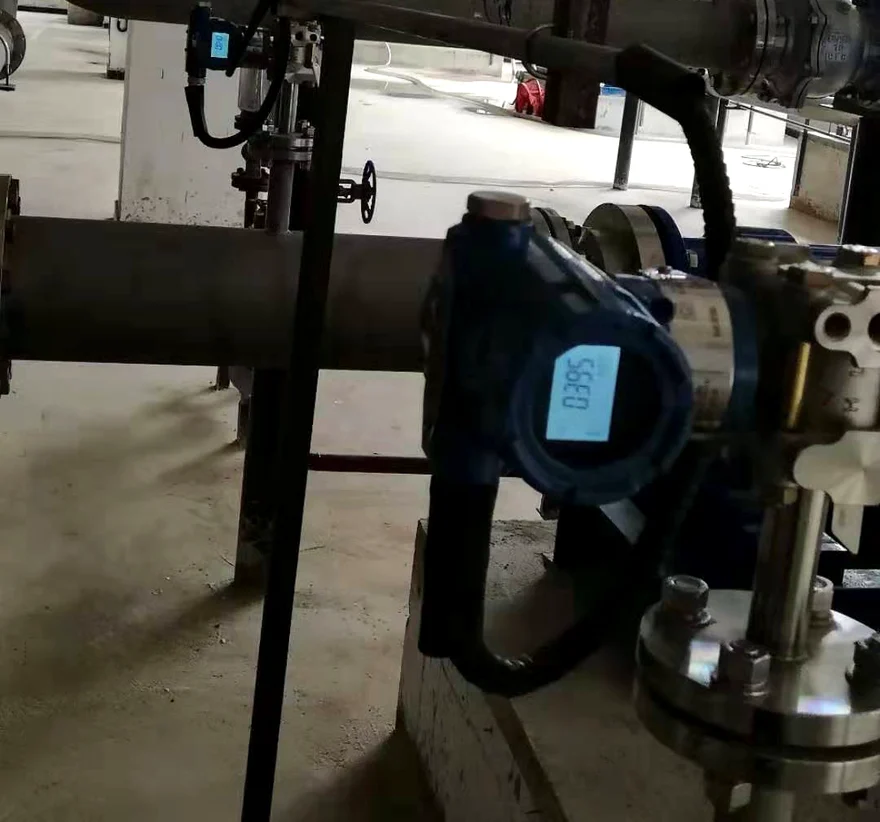
Water column conventions
Inches of water is the one unit with three competing definitions, because water density depends on temperature. The common reference points are 4 °C (249.089 Pa, maximum density), 60 °F (248.84 Pa), and 68 °F (248.64 Pa). The spread is about 0.1 percent from top to bottom. This converter uses the 4 °C convention for inH2O, mmH2O, and mH2O. For most plant work the difference is invisible; for calibration certificates on low-range instruments, check which convention the certificate states before comparing numbers. These units all descend from liquid columns, and the U-tube manometer guide shows the physics that created them.
Gauge and absolute
No unit conversion moves a reading between gauge and absolute; that is a change of reference, worth one atmosphere, roughly 101.3 kPa. A tank at 50 kPa gauge is at about 151 kPa absolute, in any unit you like. Suffixes carry the reference in imperial practice (psig and psia), while SI practice spells it out. When a datasheet mixes the two, convert the units here, then settle the reference with the absolute and gauge calculator; the absolute vs gauge pressure guide explains which reference each application needs.
Related guides and tools
The pressure units guide explains where each unit family comes from and which industries use which. The absolute and gauge pressure calculator handles the reference change this converter deliberately leaves alone. The U-tube manometer guide covers the liquid columns behind inWC and mmHg. All calculators live under Tools.
FAQ
How to convert units of pressure?
Multiply the value by its unit’s pascal factor, then divide by the target unit’s factor. Example: 5 bar to psi is 5 x 100,000 Pa = 500,000 Pa, divided by 6,894.757 = 72.52 psi. A pressure conversion calculator like the one above does both steps for 13 units at once.
How do you convert pressure to psi?
Divide the value in pascals by 6,894.757. Faster in practice: multiply kPa by 0.14504, bar by 14.504, or kgf/cm2 by 14.223. So a 250 kPa reading is 36.26 psi, and a 4 bar setpoint is 58.02 psi.
What is 1 psi equal to?
1 psi equals 6,894.757 Pa, which is 6.895 kPa, 68.95 mbar, 0.06895 bar, 27.68 inches of water column, 703.1 mmH2O, or 51.71 Torr. It is defined as one pound-force spread over one square inch.
Request a quote
Once the span reads the same in every unit, the next step is an instrument configured to it. Send the range, in whichever unit your spec uses, and we will quote a matching transmitter. Reach our application engineers or use the form below.
Written and technically reviewed by Wu Peng and the Instranova engineering team.