Home › Products › Level Instruments › Rotary Paddle Level Switch
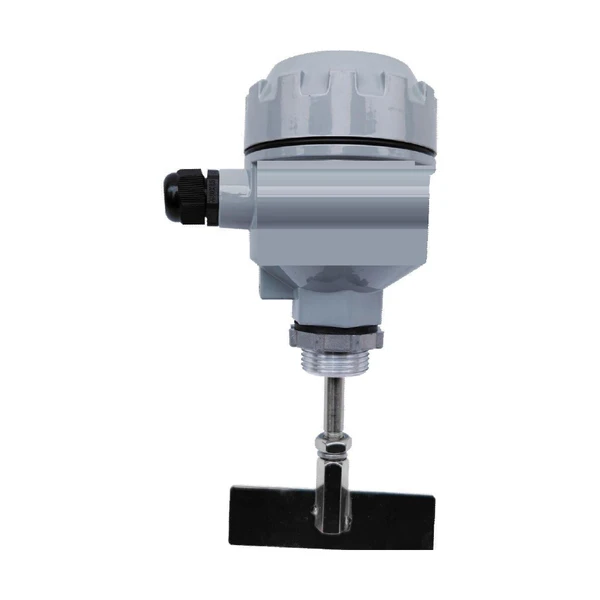
Rotary Paddle Level Switch
A motor-driven rotary paddle level switch (SR series) for point level detection of dry bulk solids in silos, bins, hoppers and chutes. A slow paddle turns at about 1 rpm; when material buries the paddle the rotation stalls, a counter-torque trips the internal microswitch, and the motor stops. When the level drops, a spring resets the assembly and the paddle turns again. Spring torque is adjustable to the bulk density of the product.
- Media: dry bulk solids, powders and granules (density ≥ 0.4 g/cm³)
- Blade speed: ~1 rpm; rotational torque 1.0 N·m
- Output: SPDT microswitch (NO / COM / NC), 5 A / AC250V
- Supply: AC220V, AC110V or DC24V
- Temperature / Ex: −30 to +80 °C (high-temp to 800 °C); IP65; Exd IIB T4
Overview
A rotary paddle level switch – also called a paddle level switch or rotating paddle switch – is the most widely used point level indicator for dry bulk solids. It detects one level and gives an on/off contact for high-level (overfill), mid-level or low-level (empty) alarm, and for plugged-chute detection. Because it senses material by mechanical resistance to a turning paddle, it is unaffected by dust, humidity or the electrical conductivity of the product.
The SR series covers most powders and granular solids – cement, fly ash, coal, grain, flour, feed, plastic pellets, sand, aggregates and similar – in silos, bins, hoppers and chutes. A choice of blade shapes and adjustable spring torque let one design suit both light powders and heavy free-flowing material.
Features
A rugged electromechanical point switch built for silo and hopper service:
Working principle
A geared synchronous motor turns the paddle blade slowly, at about 1 rpm, inside the vessel. While the paddle is in free air it rotates without load. When bulk material rises to the blade, the material blocks the rotation and creates a counter-torque. That torque swivels the motor assembly against a calibrated spring and trips a microswitch, which changes the NO/COM/NC contacts and cuts power to the motor so it does not fight the material. When the level falls and the paddle is clear again, the spring returns the assembly, the contacts reset and the motor restarts. Turning the spring tension changes the force needed to trip – strong for heavy material, weak for light powders.
Technical specifications
| Parameter | Specification (SR series) |
|---|---|
| Measured media | Dry bulk solids, powders and granular material |
| Material density | ≥ 0.4 g/cm³ |
| Blade speed | ~1 rpm |
| Rotational torque | 10 kg·cm (1.0 N·m) |
| Operating temperature | −30 to +80 °C (high-temperature version to 800 °C) |
| Blade material | SUS 304 stainless steel |
| Power of motor | 3 W |
| Supply voltage | AC220V, AC110V or DC24V |
| Output contact | SPDT microswitch (NO / COM / NC), 5 A / AC250V |
| Insulation resistance | ≥ 100 MΩ (DC500V) |
| Electrical connection | M20×1.5 |
| Process connection | Thread G1 or G3/4; flange DN65 PN6 (or 2.5 in PN6) |
| Standard insertion depth | 100 mm (extended shaft or cable versions available) |
| Protection / Ex | IP65; explosion-proof version Exd IIB T4 |
Selecting the right switch
Match blade, model, torque and connection to the product and the vessel:
1. Blade shape by product
The SR series offers square blades (A: 100×30, B: 65×80, C: 50×30 mm) for general free-flowing solids, sickle blades (D / F) for products that pack or bridge, and a folding blade (E: 30×200 mm) that fits through a small mounting boss and opens inside the vessel. Choose a smaller blade or set the spring stronger for heavy dense material, and a larger blade or weaker spring for light powders.
2. Model series by mounting
SR10 is the standard threaded or flanged unit. SR20 adds a shaft-protection tube for abrasive flow. SR30 has an adjustable shaft length for deep top mounting. SR40 uses a steel cable to hang the blade far down a tall silo. SR80 is a small, low-resistance unit for light material and small bins.
3. Torque to the bulk density
The spring sets the force at which the paddle trips. As a rule, set the spring to its strongest position for heavy material (for example aggregate or cement) and to its weakest for very light powders, so the switch trips at the true level and does not miss light product. The switch handles material of about 0.4 g/cm³ and above.
4. Connection and area
Pick a G1 or G3/4 thread or a DN65 PN6 flange to match the boss, and the Exd IIB T4 enclosure for a dust-hazard silo. Mount at the top for overfill cutoff, near the outlet for low-level, or on a chute for blockage detection.
Output and wiring
The switch provides a single-pole double-throw (SPDT) contact set: power to the motor, and NO, COM and NC terminals for the alarm or control circuit. Wire the motor supply to match the ordered voltage (AC220V, AC110V or DC24V) and take the level signal from the NO/COM (or NC/COM) pair. A torsion spring inside the head is set with a marked scale (weakest to strongest) to tune the trip force to the product; the spring is factory-fitted and should not be swapped, only adjusted.
Applications
Point level control across bulk-handling and process plants:
- Overfill prevention at the top of silos and bins to stop the fill conveyor or blower.
- Low-level / empty alarm near the outlet of a bin or hopper.
- Plugged-chute detection to catch blockages before equipment is damaged.
- Cement, mining and building materials – cement, fly ash, clinker, sand, aggregate.
- Grain, feed, food, plastics and chemicals – grain, flour, feed, pellets, powders.
Challenge: a building-materials plant needed a dependable high-level cutoff on aggregate and cement silos to stop the fill conveyor and prevent spills, in a dusty area where non-mechanical switches gave false trips.
Solution: rotary paddle switches mounted at the fill limit, with the spring torque set to the strongest position to suit the heavy, free-flowing material.
Result: a reliable overfill cutoff that is not fooled by dust, with the paddle turning freely below the set level – the switch runs maintenance-free between inspections.
Related products
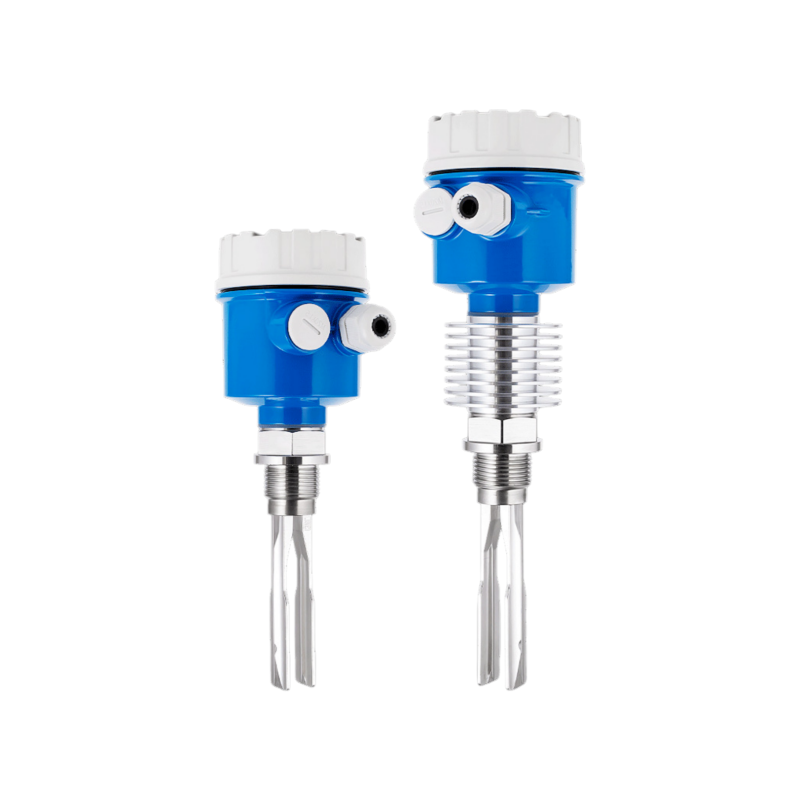 Tuning Fork Level SwitchPoint switch for powders, light solids and liquids.
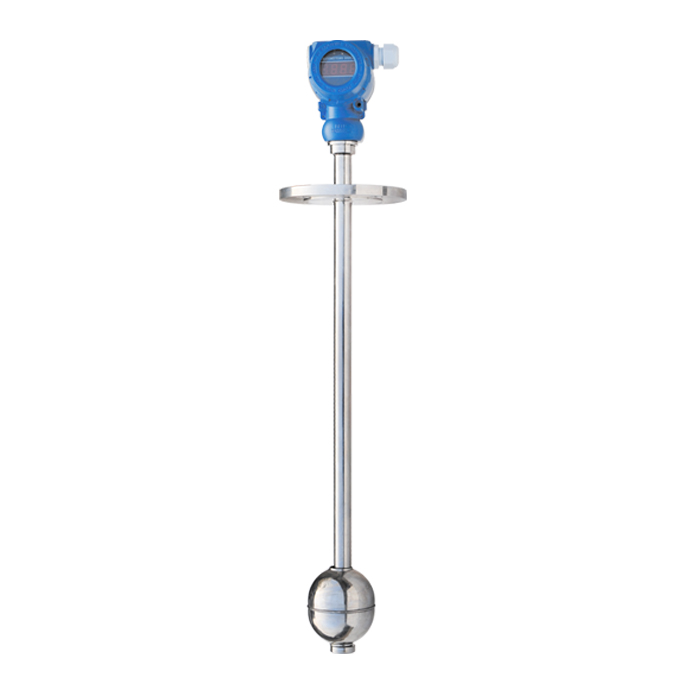 Float Level SensorPoint level for liquids with reed set points.
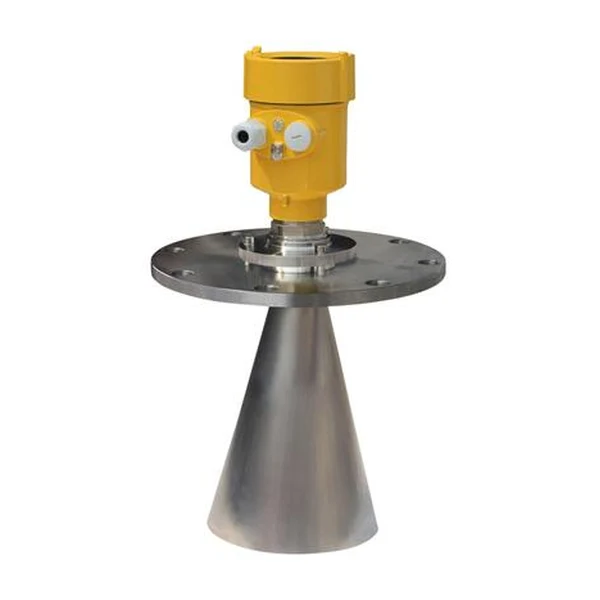 Radar Level Sensor for SolidsContinuous non-contact level for silos.
Browse all level instruments →
FAQ
How does a rotary paddle level switch work?
A low-speed motor turns a paddle at about 1 rpm. When bulk solids reach the paddle, the material stalls it; the resulting counter-torque swivels the motor assembly against a spring and trips a microswitch, giving an on/off signal and stopping the motor. When the level drops, the spring resets and the motor restarts.
What is a rotary paddle level switch used for?
Point level detection of dry bulk solids in silos, bins, hoppers and chutes – high-level overfill cutoff, low-level / empty alarm and plugged-chute detection – in cement, mining, grain, feed, food, plastics and chemical plants.
What material density can it detect?
The SR series reliably senses free-flowing solids of about 0.4 g/cm³ and heavier. For lighter powders, set the torque spring to its weakest position and use a larger paddle so the switch still trips at the true level.
Rotary paddle or tuning fork – which should I use?
Use a rotary paddle for heavier, free-flowing bulk solids in silos and bins, where its blade cuts through product and adjustable torque suits the density. Use a tuning fork level switch for fine powders, light or sticky solids, and for liquids, where a vibrating fork with no moving parts is a better fit.
Request a quote
Tell us the material and its bulk density, the vessel and mounting point (top, side or chute), the connection (thread or flange) and the supply voltage, and we will configure the right SR paddle switch with the correct blade and torque – not a shelf part. Specifications are representative; confirm the exact configuration against the datasheet for your application.
About this page. Written by the Instranova engineering team. Specifications are representative of the SR series; confirm the exact model, materials and approvals against the datasheet for your application.