Home › Products › Density Meters › Optical Density Meter
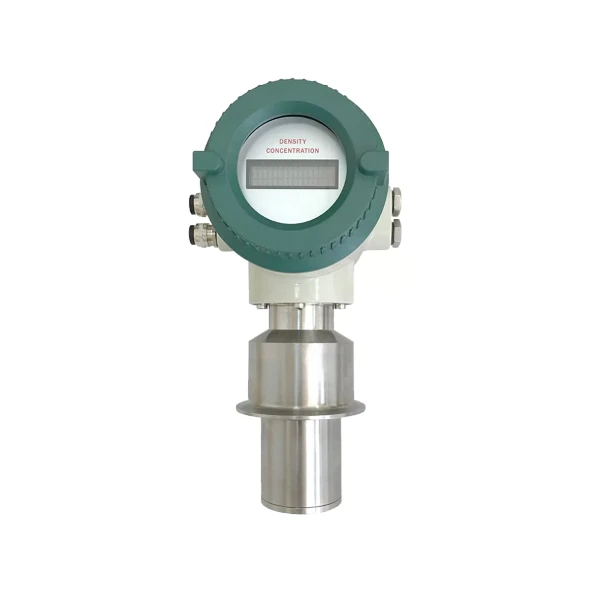
Optical Density Meter (Inline Liquid Densitometer)
An inline optical density meter, or liquid densitometer, measures the concentration of a transparent process liquid from how much light passes through it. A spectral sensor reads the transmitted light, software and a calibration curve convert it to concentration, and a built-in temperature sensor corrects the reading. It is built for clear liquids such as ammonia solution, sugar syrup, and acid or caustic where a continuous concentration signal is the control variable.
- Measures: concentration of transparent liquids (0–100%, calibrated to range)
- Accuracy: ±0.5%; repeatability ±0.2%
- Output: 4–20 mA (concentration), 4-wire; 24 VDC
- Wetted parts: 316L, PTFE; acid/alkali-resistant glass window
- Principle: light transmission (no moving parts); Ex d IIC T6, IP65
Overview
The optical density meter is an inline process instrument that turns the clarity of a liquid into a concentration reading. It shines a light through the liquid, measures how much reaches a spectral detector on the other side, and applies a calibration curve plus temperature compensation to output concentration directly on 4–20 mA. There are no moving parts in the wetted path, so it runs continuously with little maintenance.
It is the right tool when the process liquid is reasonably clear and concentration is what you control: ammonia solution strength on a denitrification skid, sugar concentration (°Brix) on a beverage line, or acid and caustic strength in chemical service. Because the measurement depends on light passing through the fluid, it is not for opaque slurries or heavy two-phase liquids. Those belong to a DP slurry density meter, while clean single-phase fluids that need the tightest density accuracy suit a Coriolis density meter.
Features
Light-transmission sensing means nothing in the wetted path moves, fouls, or wears, so the meter runs continuously with little maintenance.
A calibration curve converts light transmission into concentration in percent, °Brix, or °Be, sent to the control system on 4–20 mA.
A built-in temperature sensor corrects the reading, holding a process temperature effect of about ±0.001% per °C after correction.
316L and PTFE wetted parts with an acid- and alkali-resistant glass window suit a range of acids, caustics, and organic solutions.
Flange or tri-clamp process connections let the sensor sit in a pipeline or on a vessel wall, in line with the flow.
Ex d IIC T6 Gb flameproof enclosure rated IP65, for chemical and process areas where a clear-liquid concentration reading is needed.
Working principle
Optical density is the logarithmic ratio of the light entering a sample to the light leaving it. The more dissolved or suspended material a clear liquid carries, the less light passes through, and that change tracks concentration. A flashlight through a glass of water passes almost all of its light; through a darker or more concentrated liquid, less light gets through.
The inline meter puts that idea on a process line. A light source shines through the liquid in the flow cell, a high-resolution spectral detector on the far side measures the transmitted light, and the software compares it against a calibration built for that fluid. A built-in temperature sensor corrects for temperature, and the result is sent out as concentration on 4–20 mA. Because it reads transmitted light, the liquid must have a degree of transparency; only trace particles and a few small bubbles are tolerated.
Technical specifications
| Parameter | Specification |
|---|---|
| Measuring range | 0–100% concentration (calibrated to the working range at 20 °C) |
| Accuracy | ±0.5% |
| Repeatability | ±0.2% |
| Process temperature effect | ±0.001% per °C (after correction) |
| Process pressure effect | Negligible (corrected) |
| Process temperature | -10 °C to +60 °C |
| Ambient temperature | -10 °C to +45 °C |
| Wetted parts | 316L, PTFE; acid/alkali-resistant glass window |
| Working pressure | 0.8 MPa (tested at 1.5x; limited by the process connection rating) |
| Process connection | Flange or tri-clamp |
| Viscosity range | < 5000 mPa·s |
| Medium condition | Transparent; trace particles and a few small bubbles allowed; velocity > 1.5 m/s |
| Explosion protection | Ex d IIC T6 Gb |
| Enclosure | IP65 aluminum alloy |
| Power supply | 24 VDC, 50 mA |
| Output | 4-wire, 4–20 mA (concentration) |
Representative specifications; confirm the exact build, calibration, and wetted materials against the datasheet for your fluid.
Materials and fluid compatibility
The wetted parts are matched to the fluid. The table below summarizes how common wetted materials hold up against typical process liquids; confirm the final choice for your exact concentration and temperature.
| Medium | Conc. | 316L | Hastelloy | Titanium | PTFE |
|---|---|---|---|---|---|
| Hydrochloric acid (no HF) | 0–40% | Not suitable | Limited | Not suitable | Recommended |
| Sulfuric acid | 0–50% | Limited | Recommended | Limited | Recommended |
| Nitric acid | 0–100% | Limited | Limited | Limited | Recommended |
| Sodium hydroxide | 0–50% | Recommended | Recommended | Recommended | Recommended |
| Hydrogen peroxide | 0–90% | Recommended | Recommended | Limited | Recommended |
| Urea (carbamide) | 0–100% | Recommended | Recommended | Limited | Recommended |
Recommended: suitable. Limited: use within specific concentration and temperature limits. Not suitable: do not use. Zirconium is also available for strong acids; confirm per fluid.
Honest limits. An optical density meter reads only liquids with a degree of transparency. Opaque slurries, heavy two-phase fluids, and liquids that coat or darken the glass window are out of scope and belong to a hydrostatic or mechanical meter. Each fluid needs its own calibration curve, and the glass window must stay clean for the reading to hold.
Optical vs other density and concentration meters
Density and concentration can be measured several ways. The right one depends on how clear the fluid is and whether you want concentration or bulk density.
| Technology | Best for | Limit |
|---|---|---|
| Optical (this meter) | Concentration of clear liquids: ammonia, Brix, acid and caustic strength | Needs a transparent fluid and a per-fluid calibration |
| Coriolis | Tightest density and concentration on clean single-phase fluids | Higher cost; sensitive to entrained gas |
| Tuning fork | In-line density of process liquids and light slurries | Coating can shift the reading |
| DP / hydrostatic | Opaque slurries, tailings, and viscous liquors | Needs a vertical column; lower precision |
Applications
Optical density meters fit anywhere a clear process liquid carries a concentration that has to be held on target.
- Denitrification: aqueous ammonia concentration (0–30%) for SCR and SNCR dosing
- Food & beverage: sugar concentration (°Brix) in juice, syrup, and soft drinks; brewing
- Chemical: sodium hydroxide, potassium hydroxide, hydrogen peroxide, and acid concentration control
- Battery & new energy: lithium hydroxide, electrolyte, and sulfuric acid solution strength
- Petrochemical: refining and blending of clear product streams
- Mineral & brine: potash and brine concentration in clear liquor
- Pharmaceutical: concentration control and alcohol recovery in clear solutions
Challenge. A denitrification skid dosing aqueous ammonia into a flue-gas SCR system needed to hold the ammonia solution strength on target. The solution is clear, and the team wanted a continuous concentration signal rather than periodic lab titration.
Solution. An inline optical density meter on the ammonia line, calibrated for the 0–30% working range with temperature compensation, fed concentration to the dosing control on 4–20 mA.
Result. The skid ran on a live concentration reading from a no-moving-parts sensor in the clear ammonia solution, with the calibration set to the plant’s working range. (Representative application; configured per the fluid and range.)
Related products
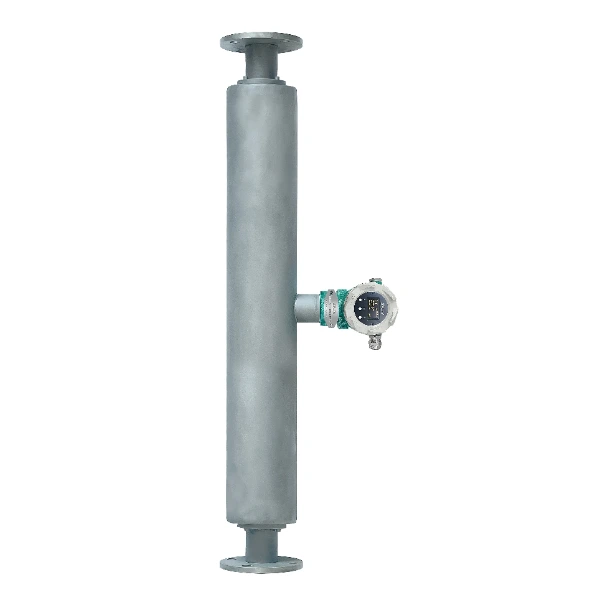 Coriolis Density Meter
Inline Coriolis density and concentration to ±0.001 g/cc for clean, single-phase fluids.
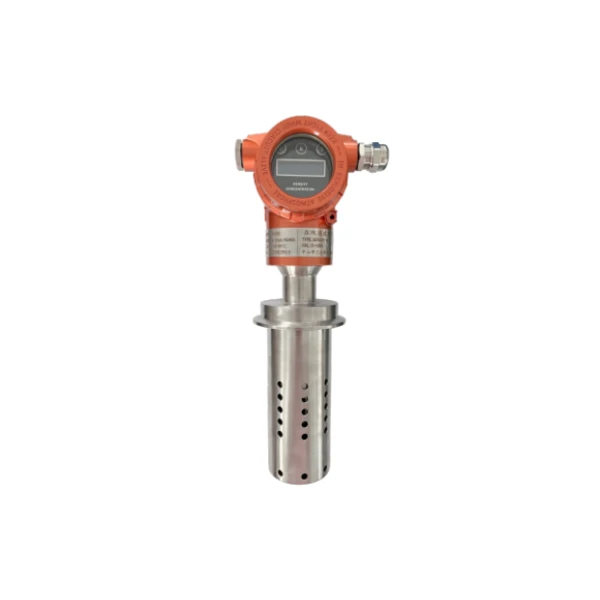 Alcohol Density Meter
Inline alcohol density / concentration meter: reads ethanol % at 20 C for spirits and brewing.
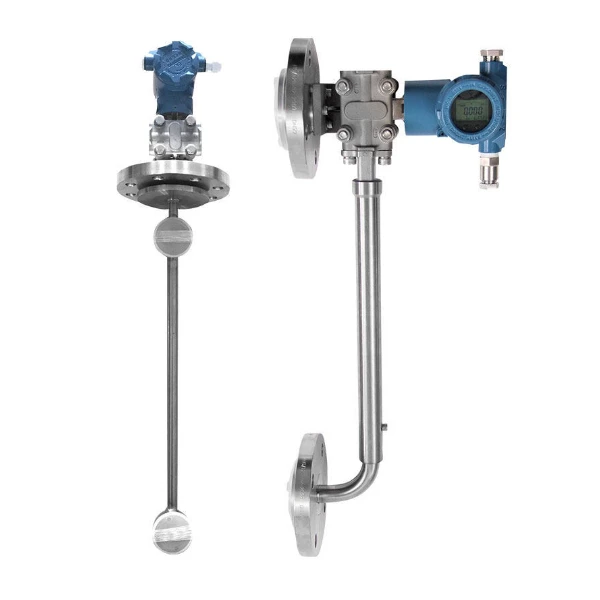 DP / Slurry Density Meter
Hydrostatic density for opaque slurries and viscous fluids where light cannot pass through.
FAQ
What is a liquid densitometer used for?
A liquid densitometer measures the density or concentration of a process liquid online, so the plant can control a recipe, a reaction, or a product spec from a live signal instead of grab samples. An optical liquid densitometer is the version for clear liquids, where it reads concentration such as ammonia strength, sugar °Brix, or acid percent.
How does an optical density meter measure concentration?
It shines light through the liquid and measures how much reaches a spectral detector on the far side. More dissolved or suspended material lets less light through, and a calibration curve built for that fluid converts the transmitted light into concentration. A built-in temperature sensor corrects the reading, which is output on 4–20 mA.
Can an optical density meter measure opaque or slurry liquids?
No. The measurement depends on light passing through the liquid, so it needs a transparent fluid and tolerates only trace particles and a few small bubbles. For opaque slurries, tailings, or heavy two-phase liquors, use a hydrostatic DP density meter instead.
What is the difference between a density meter and a densitometer?
The terms overlap. In process instrumentation both describe an instrument that measures the density or concentration of a fluid; “densitometer” is often used for the optical and laboratory styles, while “density meter” is the common term for inline Coriolis, tuning-fork, and DP instruments. What matters is the sensing method and whether you need bulk density or concentration of a specific fluid.
Request a quote
Send the liquid, the concentration range you need to hold, the process temperature and pressure, and the process connection. Our engineers confirm whether the fluid is clear enough for optical sensing, match the wetted materials, and return a calibration plan and quote.
About this page. Written by the Instranova engineering team. Specifications are representative; confirm the exact configuration, calibration, and wetted materials against the datasheet for your application.