Flow Meters › Magnetic Flow Meters
Magnetic flow meters measure the volume flow of any liquid that conducts electricity, from clean water to abrasive slurry and aggressive chemicals. With an empty bore and no moving parts, they add no pressure loss and pass solids that would jam a mechanical meter. The right meter comes down to size, liner, electrode, and where the converter sits. Start with the flagship below, or use the selection table to narrow the version.
Our magnetic flow meters
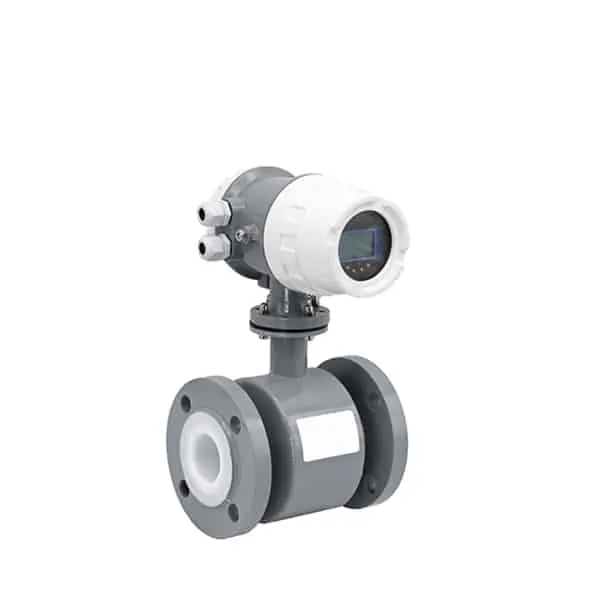 Magnetic Flow Meter
DN6 to DN2000, +/-0.5% accuracy, rubber to PTFE liners, integral or remote.
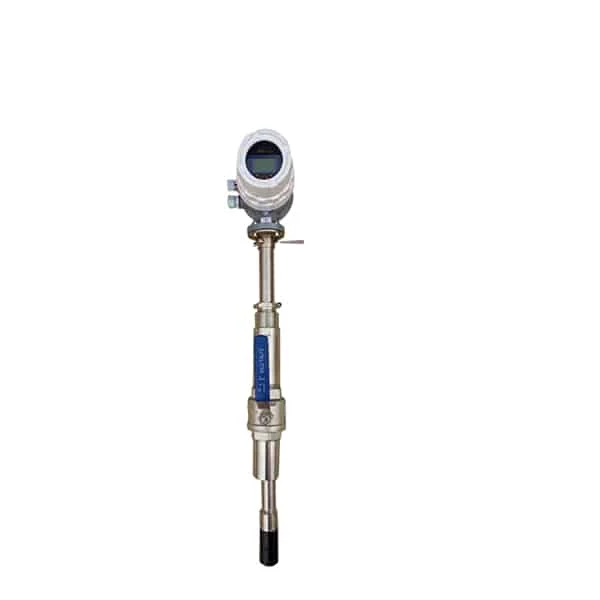 Insertion Magnetic Flow Meter
Low-cost probe (SI-3121) for large mains DN300 to DN3000; ball-valve hot-tap.
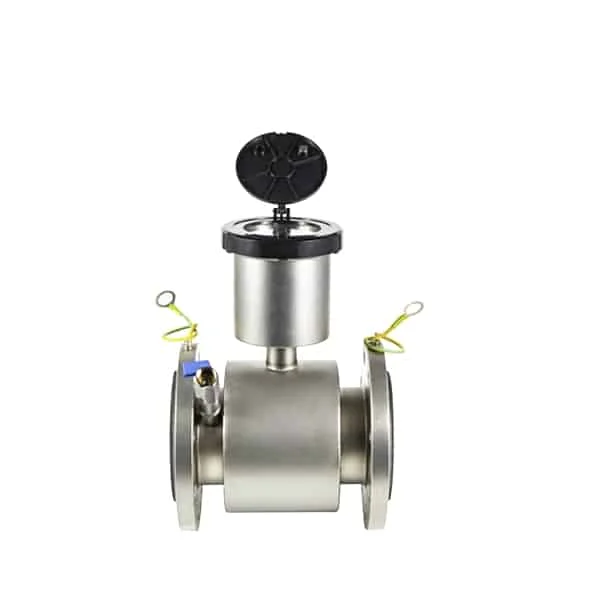 Battery-Powered Magnetic Flow Meter
Lithium battery (SI-3135) lasts 3 to 5 years; meters water mains with no mains power.
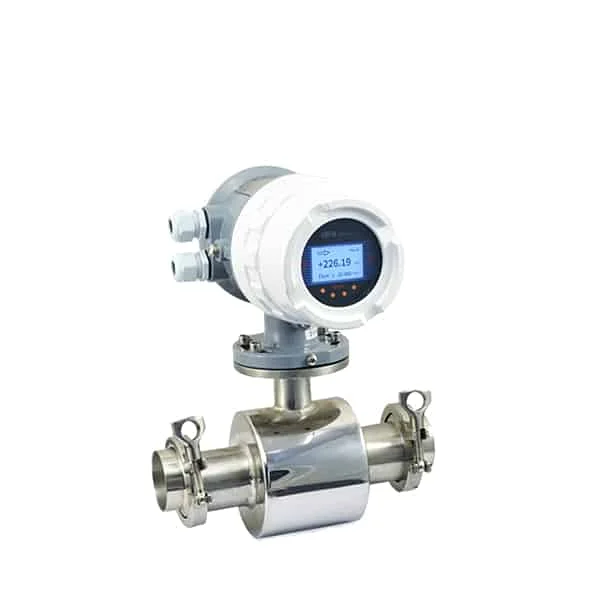 Sanitary Magnetic Flow Meter
Hygienic PFA-lined, tri-clamp mag meter for food, beverage and pharma; CIP-ready.
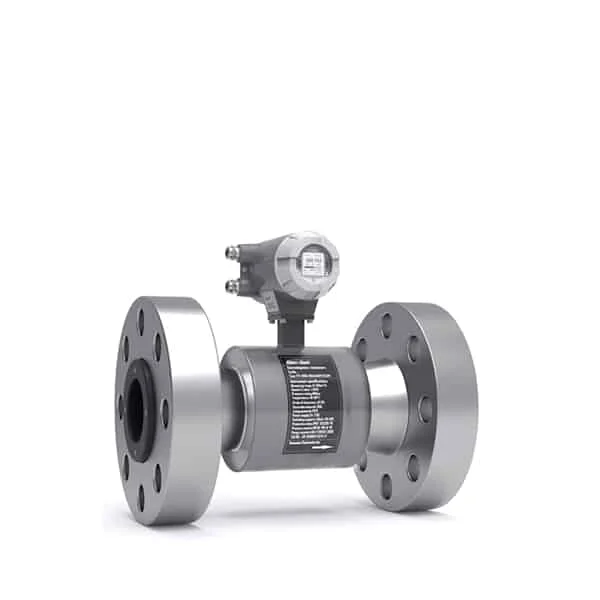 High-Pressure Magnetic Flow Meter
Rated 10 to 42 MPa for oilfield water injection and high-pressure dosing; Ex option.
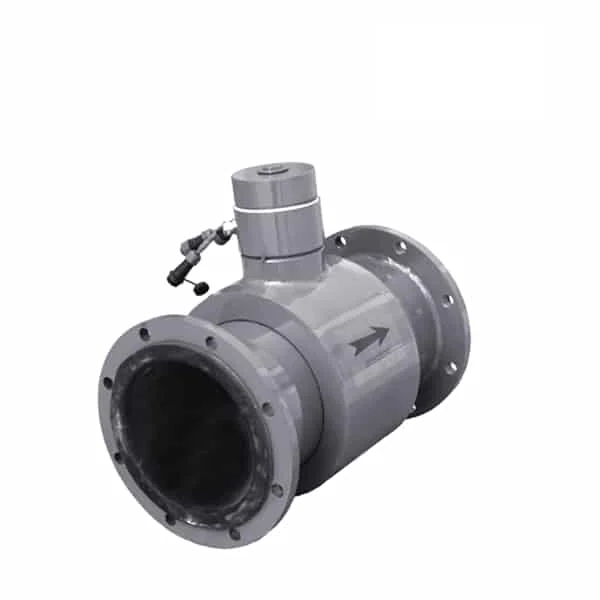 Partially Filled Pipe Flow Meter
Meters a part-full sewer or open channel by level and velocity; circular to DN6000.
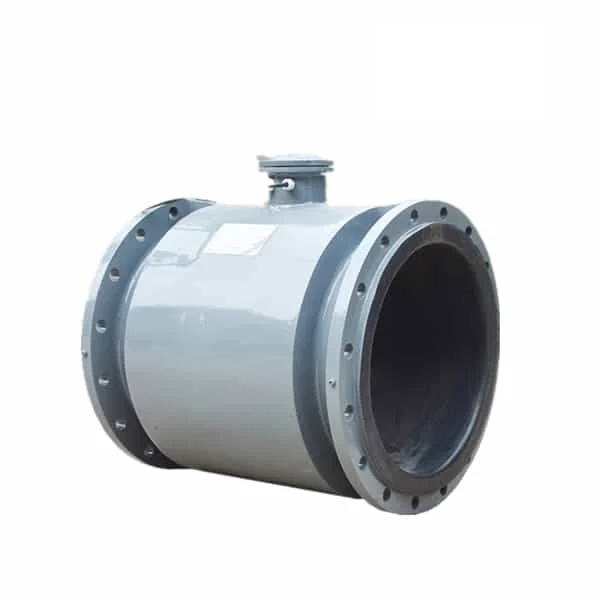 Large-Diameter Magnetic Flow Meter
Full-bore mag for big mains DN350 to DN3800; plus or minus 0.5% for billed water.
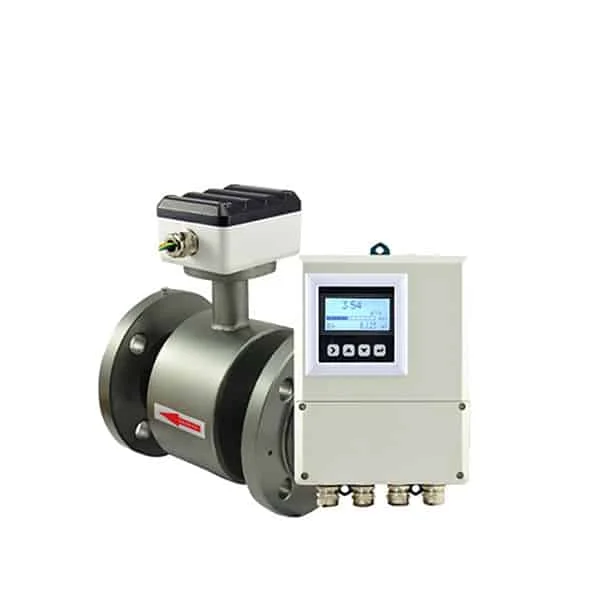 Remote Magnetic Sewage Flow Meter
Split mag with IP68 submersible sensor and a dry remote converter; for sewage stations.
Remote, battery, insertion, sanitary, and partially-filled versions are configured from the same platform. Tell us the line and we route you to the right build.
Choosing a magnetic flow meter
Pick the version by where the meter sits and how the line is powered, then set the liner and electrode by the chemistry.
| If your line is… | Pick |
|---|---|
| Accessible pipe, mains power | Integral (compact) meter |
| Hot, vibrating, flooded, or hard to read | Remote-converter version |
| No mains power, distribution or irrigation | Battery version |
| Large pipe, cost-sensitive, hot-tap | Insertion version |
| Abrasive slurry or sand | Polyurethane liner, 316L electrodes |
| Hot or aggressive acids and alkalis | PTFE liner, Hastelloy or tantalum electrodes |
For the full specification, liner and electrode tables, and ordering checklist, see the magnetic flow meter page.
A magnetic meter needs only about 5D upstream and 3D downstream, but other technologies need far more. See the full straight run requirements by meter type.
FAQ
Can a magnetic flow meter measure wastewater?
Yes. Municipal and industrial wastewater conducts well above the 5 µS/cm threshold, and the empty bore passes rag, grit, and sludge. A rubber or polyurethane liner handles the abrasion; PTFE handles chemically loaded effluent.
What is the minimum conductivity for a magnetic flow meter?
About 5 µS/cm. Below that, or for non-conductive fluids such as oils, hydrocarbons, and deionized water, a magnetic meter cannot read; use a Coriolis, ultrasonic, or vortex meter instead.
What is the difference between an integral and a remote magnetic flow meter?
An integral meter carries the converter on the sensor for accessible, cooler lines. A remote version puts the converter on a nearby wall, which suits hot, vibrating, flooded, or hard-to-read installations.
Request a quote
Send your pipe size and flange standard, the medium, the flow range, temperature and pressure, and the output and power you need. Our application engineers will choose the liner and electrode for your chemistry and confirm the version. Browse the full flow meter range, or talk to our application engineers.