Home › Products › Flow Meters › Turbine Flow Meters › Sanitary Turbine Flow Meter
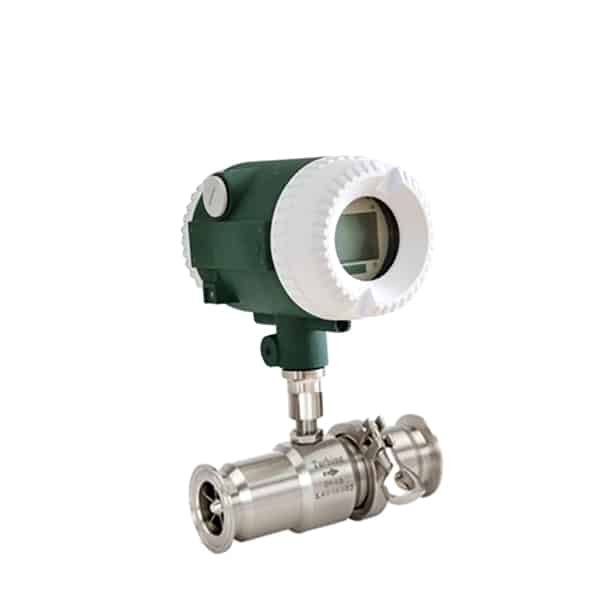
Sanitary Turbine Flow Meter
A turbine flow meter in 316L with tri-clamp connections for food, beverage and pharma. It meters clean liquids like water, beer, beverage and glycol on DN4 to DN50 to 0.2% FS, and the quick-release clamps let it come apart for cleaning.
- Body: 316L stainless, tri-clamp connection
- Size: DN4 to DN50
- Accuracy: 0.2% FS to 1.5% FS
- Range: 0.04 to 40 m3/h
- Output: 4-20 mA, pulse, RS485 Modbus
Overview
A sanitary turbine flow meter is a turbine meter built to a hygienic standard, in 316L stainless with tri-clamp connections so it takes apart for cleaning. It meters clean, low-viscosity liquids such as water, beer, beverage, glycerin and glycol on DN4 to DN50, to 0.2% FS in the high-accuracy build, and reads instantaneous and total flow on a wide LCD at the meter.
The body, turbine and wetted parts are 316L, the clamps release without tools, and the meter is sized small for a process or filling line rather than a main. It outputs 4-20 mA, pulse and RS485 Modbus, so it drives a batch controller or a PLC, and a high-temperature build takes the line to 180 C for a hot CIP wash.
Features
Why a sanitary turbine suits a hygienic line:
316L and tri-clamp
A 316L body with tri-clamp connections that release without tools for cleaning.
0.2% FS accuracy
Reads to 0.2% FS in the high-accuracy build, with 1% linearity for batching.
CIP to 180 C
A high-temperature build holds a hot clean-in-place wash to 180 C between batches.
Small line sizes
DN4 to DN50 for a filling, dosing or process line rather than a large main.
LCD readout
A wide LCD shows instantaneous, total, percentage and frequency in l/min or m3/h.
4-20 mA and pulse
4-20 mA, pulse and RS485 Modbus to a batch controller or a PLC.
Working principle
Liquid flowing through the meter spins a 316L turbine rotor, and the rotor turns at a speed proportional to the flow. A pickup counts the rotor and the meter scales the count to the volume. The hygienic build keeps that same turbine principle but uses polished 316L wetted parts and tri-clamp fittings so the meter has no crevice to trap product and comes apart for inspection.
A turbine suits a clean, low-viscosity liquid, which is what most hygienic duties are: water, beer, a beverage, a thin syrup or a glycol. It reads poorly on a thick, pulpy or aerated product, where the rotor stalls or over-reads, so a high-pulp juice or a foaming product is better on a meter with no moving parts.
Technical specifications
| Parameter | Specification |
|---|---|
| Medium | Clean liquid: water, beer, beverage, glycerin, glycol |
| Nominal diameter | DN4 to DN50, tri-clamp connection |
| Accuracy | 0.2% FS, 0.5% FS, 1.0% FS or 1.5% FS |
| Range / resolution | 0.04 to 40 m3/h; 0.1 l/min, 0.005 m3/h |
| Operating temperature | Minus 35 to 60 C standard; to 180 C high-temperature build |
| Viscosity / pressure | 0.8 to 30 cSt; 1.6, 2.5 or 4.0 MPa |
| Wetted material | 316L body and turbine; tungsten-carbide bearing, ruby optional |
| Output | 4-20 mA, pulse, RS485 Modbus |
Flow ranges by size
| Size | Normal range (m3/h) |
|---|---|
| DN4 | 0.04 to 0.25 |
| DN10 | 0.2 to 1.2 |
| DN15 | 0.6 to 6 |
| DN25 | 1 to 10 |
| DN40 | 2 to 20 |
| DN50 | 4 to 40 |
Hygienic design and CIP
The hygienic build is about what touches the product and how it cleans. The wetted parts are 316L, and the tri-clamp connections release without tools so the meter comes apart for inspection and leaves no threaded crevice to trap product. The high-temperature build holds a clean-in-place wash to 180 C, so the line is cleaned and sanitized between batches without removing the meter. We follow hygienic practice for the surfaces and the fittings; tell us if a formal food-contact certificate is required for your line and we confirm what the build carries.
Installation
Fit the meter on a horizontal run with the flow arrow correct, on a straight run of at least ten diameters upstream and five downstream so the profile is developed. Keep it full of liquid, because a turbine over-reads on a partly filled line, and fit it where the tri-clamps are reachable for cleaning. Set the units and the K-factor, and prove the meter against a reference if it is used for a batched or billed quantity.
Applications
- Beer, beverage and soft-drink lines
- Dairy and liquid-food dosing and filling
- Pharmaceutical purified-water and process lines
- Glycol, glycerin and clean process liquids
- Batch and recipe dosing with a controller
A beverage line needed to meter a clean product into a batch and be cleaned between flavors. A sanitary turbine in 316L with tri-clamp connections metered the batch to a controller, came apart for inspection, and held the hot clean-in-place wash on the high-temperature build, so a flavor change did not need the meter removed.
Related products
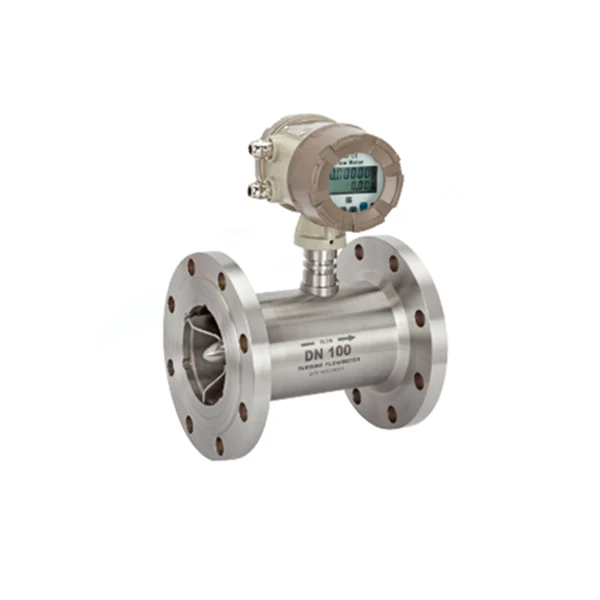 Turbine Flow Meter
The industrial LWGY in 304 or 316L with flange or thread, for a general clean liquid.
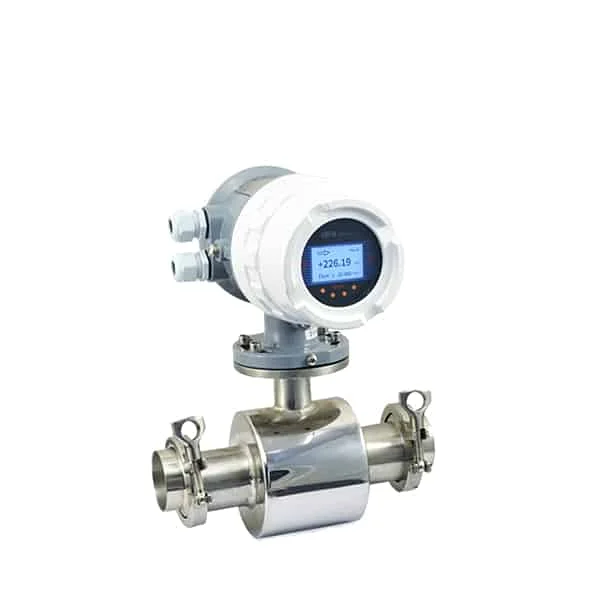 Sanitary Magnetic Flow Meter
The hygienic mag option for a conductive or pulpy product, with no moving parts.
Browse all turbine flow meters →
Related applications: Sanitary.
For where a sanitary turbine sits among the other streams in a brewery, the flow meters for brewing overview walks the whole plant.
FAQ
What makes a turbine flow meter sanitary?
The wetted parts are 316L, the connections are tri-clamp so they release without tools and leave no crevice to trap product, and a high-temperature build takes a clean-in-place wash. It is the same turbine principle in a build that cleans to a hygienic standard.
Can it be cleaned in place?
Yes. The high-temperature build holds a clean-in-place wash to 180 C, so the line is cleaned and sanitized between batches without removing the meter, and the tri-clamps let it come apart for inspection when needed.
How accurate is it?
To 0.2% FS in the high-accuracy build, with 1% linearity, which suits batching and dosing on a small hygienic line.
Request a quote
Tell us the product, the line size, the temperature and the accuracy you need, and we configure one sanitary meter for the application, not a shelf part.