Flow Meters › Differential Pressure Flow Meters › High Temperature Gas Flow Meter
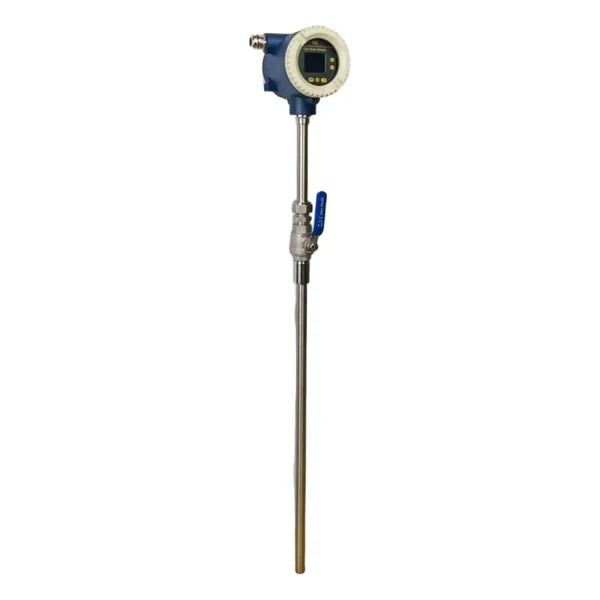
High Temperature Gas Flow Meter
A high temperature gas flow meter measures hot gas with an insertion airspeed probe. The probe senses the velocity pressure of the flowing gas and derives flow from the pressure difference across it, then compensates for temperature and pressure to read standard volume in Nm3/h. The sensor handles gas to 800 C, with a special build to 1500 C, so it meters flue gas, exhaust, and combustion air that would destroy most flow sensors.
- Principle: Averaging pitot tube, insertion DP
- Pressure loss: Lowest of the DP family
- Line size: DN50 to DN5000, plus square and rectangular ducts
- Install: Single penetration, hot-tap
- Accuracy: About 1% of rate; repeatability 0.1%
- Output: Pairs with a 4-20 mA DP transmitter, HART
Overview
A high temperature gas flow meter measures the flow of hot gas where a thermal or in-line meter cannot survive. An insertion airspeed probe is fitted through a single tap and reads the velocity pressure of the gas; the meter derives flow from the pressure difference across the probe and compensates for temperature and pressure to report standard volume in Nm3/h.
The sensor is rated to 800 C, with a special build to 1500 C, and fits round pipe from DN25 to DN8000 as well as square and rectangular ducts. It suits flue gas, exhaust, combustion air, and hot process gas in power, metallurgy, cement, and chemical plants. Where the gas is cool enough, a thermal mass flow meter gives direct mass without compensation; for general DP measurement, see the averaging pitot tube flow meter.
Features
Everything here follows from one idea: average the velocity across the pipe with a slim insertion probe instead of restricting the line.
Lowest pressure loss
The thin probe blocks almost none of the bore, so permanent head loss is far below an orifice, venturi, or wedge.
Averages the profile
Several sensing ports read across the pipe and average the velocity, so it is more accurate than a single-point pitot tube.
Single penetration, hot-tap
It installs through one tap and can be inserted or pulled live, so a retrofit needs no line shutdown.
Big pipes and ducts
Built DN50 to DN5000 and fits round, square, or rectangular ducts, where a plate or tube would be huge and costly.
Multivariable
An optional integrated thermowell adds temperature, so one penetration gives flow with temperature and pressure compensation.
Stable and low cost
There is no flow coefficient drift over time, and a probe costs far less to buy and install than a large in-line element.
Working principle
The sensor is an insertion airspeed tube with pressure ports front and rear. The front port reads the velocity pressure of the flowing gas while the rear port holds a static reference; the higher the gas flow, the larger the pressure difference between them. The meter derives flow from that pressure difference and applies temperature and pressure compensation, so it reports a standard-volume reading in Nm3/h that is almost unaffected by changing process pressure and temperature.
Technical specifications
| Parameter | Specification |
|---|---|
| Measurement principle | Insertion airspeed tube; flow from the pressure difference across the probe, with temperature and pressure compensation to standard volume |
| Structure | Insertion probe; single-tap mounting, with hot-tap on a ball valve where conditions allow |
| Medium | Gases (steam excepted): flue gas, exhaust, combustion air, and process gas |
| Line size | DN25 to DN8000; round pipe and square or rectangular ducts |
| Velocity range | 2 to 70 m/s |
| Accuracy | About 1.0% of reading |
| Process temperature | Sensor -25 C to +800 C; special material to 1500 C |
| Working pressure | Up to about 50 kPa medium pressure |
| Response time | About 1 s |
| Output | 4-20 mA, RS-485 Modbus RTU, pulse, and two relay contacts; reads in Nm3/h |
| Power | 24 VDC, up to 0.06 A |
| Display | Color LCD: instant flow, total, unit, and percent |
| Wetted material | 316L stainless or special material |
| Protection | IP66 |
| Build | Integral transmitter |
Airspeed or thermal
For hot gas the choice is about temperature. An insertion airspeed meter reads the velocity pressure and survives to 800 C, or 1500 C with a special build. A thermal mass gas meter gives direct mass with no compensation, but its sensor is limited to a few hundred degrees, so it fits cooler gas.
| Choose | When |
|---|---|
| Airspeed insertion (this meter) | Hot gas to 800 C, or 1500 C special; large pipes and ducts; flue and exhaust gas |
| Thermal mass gas meter | Cooler gas within the thermal sensor rating; direct mass with no temperature or pressure compensation |
Applications
The high-temperature airspeed probe suits hot-gas metering across heavy industry:
- Flue gas and stack gas on boilers, furnaces, and incinerators
- Combustion and secondary air to burners and kilns
- Hot process gas in metallurgy, cement, and glass plants
- Exhaust and waste-gas ducts, including large square and rectangular ducts
- Energy and emissions accounting in standard volume (Nm3/h)
Application example
Challenge: A plant needed flue-gas flow on a large duct running well above 400 C, where a thermal sensor could not survive.
Solution: A high-temperature airspeed probe was hot-tapped into the duct through a ball valve and set to read standard volume.
Result: The hot duct was metered without a shutdown, and the temperature-compensated Nm3/h reading fed the plant energy and emissions totals.
Related products
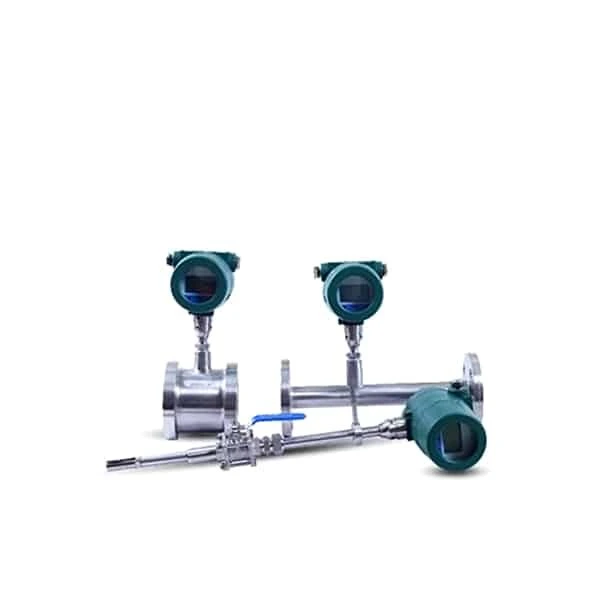 Thermal Mass Flow Meter
Direct gas mass flow with no temperature or pressure compensation, for cooler gas.
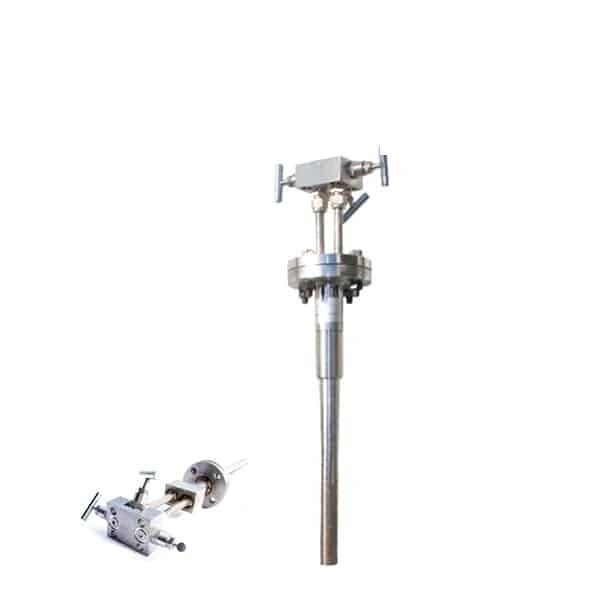 Averaging Pitot Tube Flow Meter
Insertion DP probe with the lowest pressure loss, for gas, liquid, and steam.
FAQ
What is a high temperature gas flow meter?
It is an insertion gas flow meter built to survive hot gas. An airspeed probe reads the velocity pressure of the gas and derives flow from the pressure difference across it, with temperature and pressure compensation to standard volume. The sensor is rated to 800 C, or 1500 C with a special build.
How hot a gas can it measure?
The standard sensor reads gas to 800 C, and a special-material build extends that to 1500 C. That covers flue gas, exhaust, and combustion air that exceed the rating of a thermal sensor.
How is it installed?
The probe enters through a single tap in the pipe or duct wall. With a ball valve fitted it can be hot-tapped and withdrawn under process conditions, so installation and service need no shutdown. It fits round pipe from DN25 to DN8000 and square or rectangular ducts.
Airspeed or thermal mass for hot gas?
Use the airspeed insertion meter for hot gas above the rating of a thermal sensor. For cooler gas, a thermal mass flow meter gives direct mass with no temperature or pressure compensation.
Request a quote
Send us the line or duct size, the fluid, the flow range, and the pressure and temperature, and we size the averaging pitot tube and set the transmitter.