Products › Pressure instruments › High-Frequency Dynamic Pressure Sensor
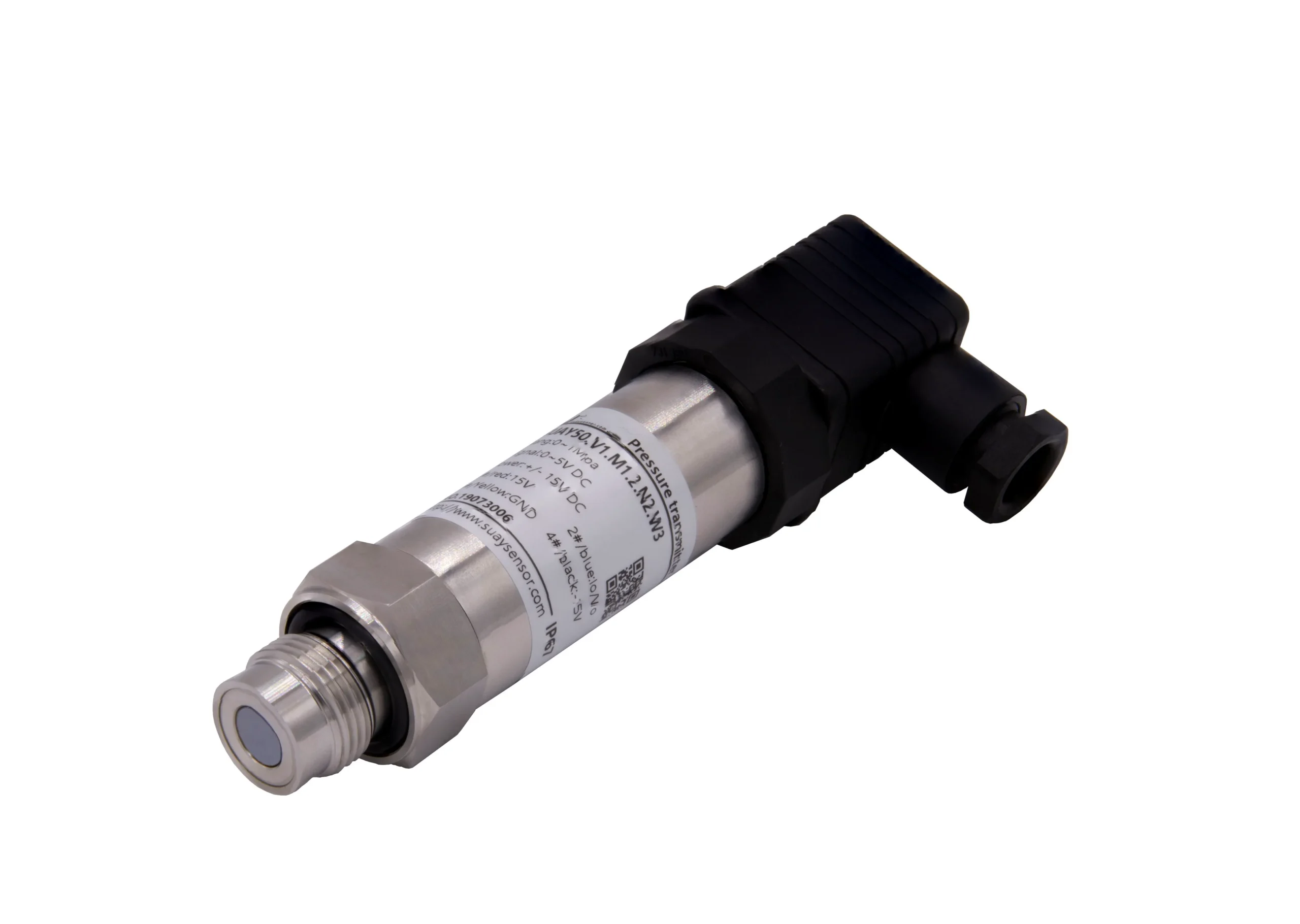
High-Frequency Dynamic Pressure Sensor
A fast pressure sensor built to catch transients that a standard 4-20 mA transmitter smears over: combustion, blast, water hammer and pulsation. A stiff silicon cell gives a high natural frequency and a short rise time, so the waveform reaches the recorder intact.
- Range: -100 kPa to 100 MPa
- Natural frequency: 150 kHz to 2 MHz
- Rise time: down to 2 µs
- Accuracy: ≤±0.25% FS (0.5% FS option)
- Output: 4-20 mA, 0-10 V, or mV/V sensor
Overview
Most process transmitters are tuned for slow, steady pressure. Point one at a combustion event, a valve slam or a shock wave and it reads an average, not the peak: the cell and the electronics simply cannot follow the change. A dynamic pressure sensor is built the other way around, for speed. Its sensing element is stiff, so its natural frequency is high, and its electronics pass a wide band, so a microsecond-scale pressure step comes through with its shape.
This sensor reads gauge, absolute or negative pressure from -100 kPa to 100 MPa, with a natural frequency of 150 kHz to 2 MHz and a rise time down to 2 µs. It is offered with a 4-20 mA, 0-10 V or 0-5 V output, or as a millivolt (mV/V) sensor for a dedicated charge or instrument amplifier. For steady process pressure, a standard pressure transmitter is the right tool; for very high static pressure see the high pressure transducer.
Working principle
Pressure acts on a thin stainless-steel diaphragm bonded to a silicon strain element. Because the element is small and stiff, its mechanical natural frequency is high, in the 150 kHz to 2 MHz range. A sensor only reports a pressure change faithfully well below its natural frequency, so a high natural frequency is what lets it track fast events. The conditioning electronics add a wide frequency response and a short rise time, then deliver the signal as a current, a voltage, or a raw mV/V output for an external amplifier.
Static vs dynamic: why natural frequency matters
The single number that decides whether a sensor can see your event is its natural frequency. A common rule is to pick a natural frequency at least 5 to 10 times the highest frequency of interest, so the response stays flat across your band. If the meaningful content of a combustion or shock event runs to 10 kHz, you want roughly 50 to 100 kHz of natural frequency as a floor; this sensor’s 150 kHz to 2 MHz clears that with margin. Rise time tells the same story in the time domain: to resolve a 50 µs pressure step the 2 µs rise time has roughly 25 times the speed it needs. A standard process transmitter, with a response measured in milliseconds, would report only the average and miss the peak entirely.
Technical specifications
| Parameter | Specification |
|---|---|
| Measuring range | -100 kPa to 100 MPa |
| Pressure type | Gauge, absolute or negative |
| Natural frequency | 150 kHz to 2 MHz |
| Frequency response | 0 to 200 kHz (transmitter output) |
| Rise time | Down to 2 µs |
| Comprehensive accuracy | ≤±0.25% FS (0.5% FS option); includes linearity, hysteresis, repeatability |
| Long-term stability | ±0.1% FS typical, ±0.2% FS per year max |
| Overload | 2x FS (1.1x FS on the 100 MPa range) |
| Zero temp drift | ±0.02% FS/C typical, ±0.05% FS/C max |
| Vibration effect | ≤±0.01% FS (X/Y/Z, 200 Hz/g) |
| Ambient temperature | -20 to 85 C |
| Medium temperature | -40 to 85 C; to 200 C on special build |
| Output | 4-20 mA, 1-5 V, 0-10 V or 0-5 V; mV/V sensor 1.5 to 15 mV/V |
| Excitation | Transmitter 12-36 VDC (24 VDC typ); sensor 1-4 mA constant current or 5-24 VDC |
| Insulation | 100 MΩ at 500 VDC |
| Wetted material | 316L stainless steel; 304 housing |
| Process connection | M20 x 1.5, G1/4, flush diaphragm or custom thread |
| Protection | IP67 (cable), IP65 (connector) |
Representative specifications, at room temperature and rated supply unless stated. Values typical; confirm the exact build per datasheet.
Models and ordering
Quote checklist: send these five points and we configure one unit, not a shelf part.
- Pressure range and reference (gauge, absolute or negative)
- The fastest event you need to capture: its frequency content or rise time
- Output: 4-20 mA, voltage, or raw mV/V into your own amplifier
- Excitation available: loop power, +/-15 VDC, constant current or constant voltage
- Process connection, medium and temperature (note any medium above 85 C)
Ordering example: dynamic pressure sensor, 0 to 10 MPa gauge, mV/V output for a charge amplifier, G1/4 flush diaphragm, for engine cylinder pressure to about 10 kHz.
Applications
- Engine and combustion-chamber pressure
- Explosion and blast testing
- Ballistics and interior gun pressure
- Fluid dynamics and shock-tube research
- Water hammer and pulsation in pipework
- Petroleum well testing and downhole transients
Application example
Diesel engine, cylinder pressure. An engine builder testing a diesel unit needed in-cylinder combustion pressure to about 250 bar, with a voltage output the test bench could log. In-cylinder pressure is a fast, repetitive event, so the selection turned on speed, not just range: a sensor whose natural frequency sits well above the combustion frequency, with the wetted parts able to take hot combustion gas. The range, output and connection were matched to the bench before quoting.
Related products
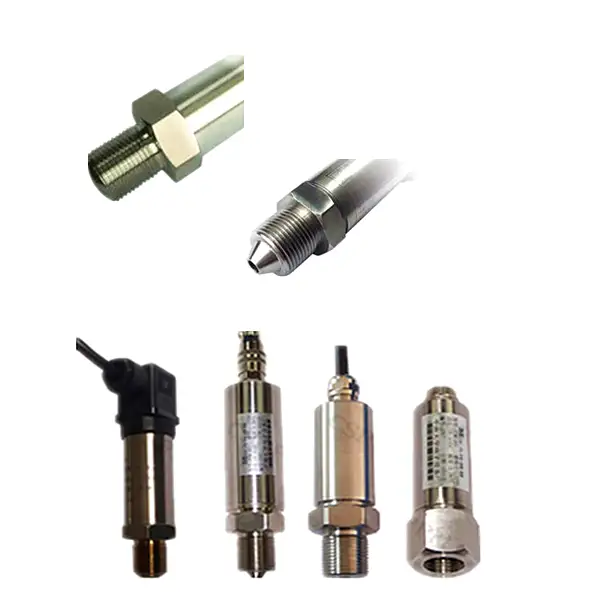 High Pressure Transducer
Static high and ultra-high pressure to 1500 MPa, sealed metal cell.
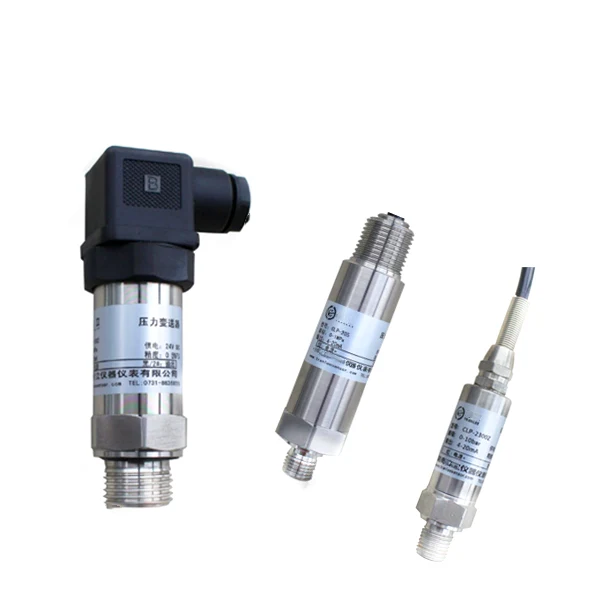 Pressure Transmitter
Standard 4-20 mA loop transmitter for steady process pressure.
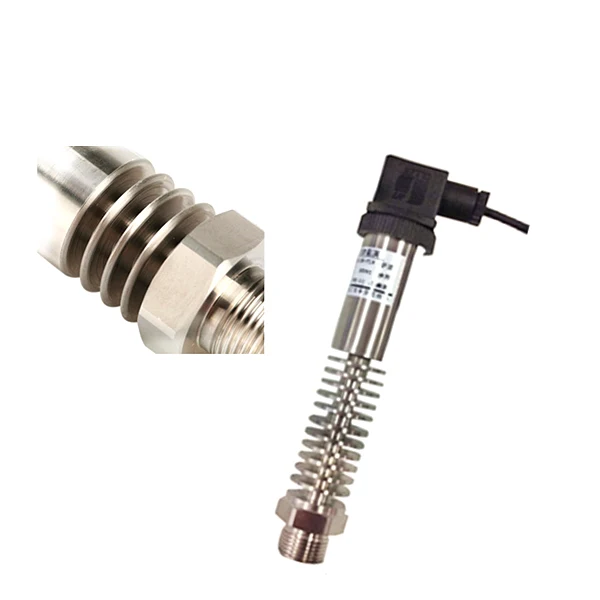 High-Temperature Pressure Transmitter
For hot media where the cell must be kept off the process heat.
Browse all pressure instruments →
FAQ
What is a dynamic pressure sensor?
A pressure sensor built to capture rapidly changing pressure: pulsations, transients, spikes, and water hammer. It has a high natural frequency and fast response. This model uses a high-frequency silicon piezoresistive element to follow fast events that a standard transmitter would average out.
What is the difference between a static and dynamic pressure transducer?
A static transducer measures steady or slowly-changing pressure and is tuned for accuracy at low bandwidth; a dynamic transducer measures fast-changing pressure and is tuned for response speed and high frequency. Use static for process level and flow, and dynamic for pulsation, combustion, and transient testing.
What is dynamic pressure in simple terms?
It is the part of pressure that changes with time or motion, as opposed to the steady (static) pressure. In a pipe it shows up as the rapid fluctuations on top of the average pressure, and a dynamic sensor is built to capture exactly those.
Request a quote
Send the five points in the checklist above and our application engineers will configure a dynamic pressure sensor for your range, speed and output. Tell us the application and we configure one unit, not a shelf part. Reach our application engineers.