Home › Products › Density Meters › Handheld Density Meter
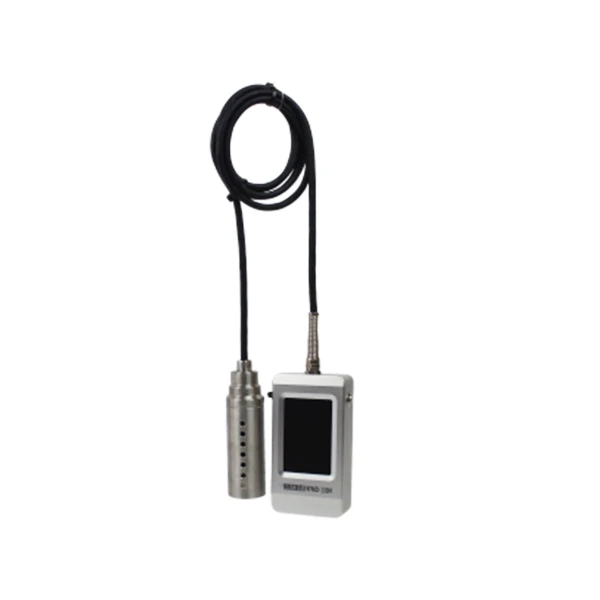
Handheld Density Meter (Portable Digital, for Petroleum)
A handheld density meter is a portable digital instrument that reads the density and temperature of a liquid sample on the spot. This one uses a micro-vibrating element, the same physics as a tuning-fork meter, and converts the result to density, specific gravity, or °API with automatic temperature compensation. It is built for petroleum product checks: fuel and diesel quality, lubricant blending, and pipeline interface detection.
- Density range: 0–2 g/cm³; accuracy ±0.003 g/cm³
- Resolution: 0.0001; repeatability 0.0005 g/cm³
- Reads: density, SG, °API, °Brix, concentration %, mass/volume %
- Temperature: medium 0–100 °C; automatic compensation
- Wetted parts: 316L, ceramic, zirconia; digital LCD, portable
Overview
The handheld density meter brings a lab-grade density reading to the tank, the loading rack, and the refinery floor. You draw a small sample, the vibrating element measures it, and the display shows density and temperature along with the value you actually want, such as °API or specific gravity, already corrected to reference temperature. There is no float to read against a scale and no manual temperature correction.
It is built around petroleum work, where density and °API are the controlled parameters for fuel, diesel, gasoline, and lubricants, and where the density step between two products is what flags a pipeline interface. For a continuous in-line signal on a process line, a Coriolis density meter fits instead, and for a general-purpose field unit across chemical service, see the portable density meter.
Features
Density, specific gravity, and °API gravity from one sample, the parameters petroleum product checks are built around.
A built-in temperature sensor corrects the reading to reference temperature, so field and lab numbers line up without manual tables.
Resolution 0.0001 g/cm³ with ±0.003 g/cm³ accuracy resolves the small density steps between fuel grades and product batches.
Hand-held design with a digital LCD; about 100 mL of sample is enough to take a reading anywhere on site.
Calibrate against pure water or a standard substance to keep the reading traceable between checks.
316L, ceramic, and zirconia wetted parts with a standard, PFA-coated, or electropolished tine for a range of fluids.
Working principle
The sensor is a micro-vibrating element, similar to a two-tine tuning fork, driven by a piezoelectric crystal at the root of the tines. A second crystal reads the frequency, and the electronics hold the fork at its natural resonant frequency. When a liquid surrounds the tines, the added mass lowers that frequency, and the frequency shift tracks the density of the liquid.
Density relates to the measured frequency through a calibration of the form D = K0 + K1·T + K2·T², where T is the frequency and K0, K1, K2 are calibration constants for the element. The electronics solve it and apply temperature compensation, then convert to the unit you select. This is the same oscillating-element method used by laboratory and on-site petroleum density meters.
Technical specifications
| Parameter | Specification |
|---|---|
| Density range | 0–2 g/cm³ (g/ml) |
| Density accuracy | ±0.003 g/cm³ |
| Resolution | 0.0001 g/cm³ |
| Repeatability | 0.0005 g/cm³ |
| Medium temperature | 0–100 °C (liquid must stay fluid) |
| Ambient temperature | -40–85 °C |
| Temperature compensation | Automatic |
| Sample volume | About 100 mL |
| Wetted materials | 316L stainless, ceramic, zirconia |
| Tine finish | Standard, PFA-coated, or electropolished |
| Readings | Density, specific gravity, °API, °Brix, concentration %, mass %, volume % |
| Display | Digital LCD; portable hand-held housing |
Representative specifications; confirm the exact range, accuracy, and sampling against the datasheet for your fluid.
Readings and calibration
The meter measures density and temperature, then derives the value you need from a built-in conversion. For petroleum work that is usually °API gravity at the reference temperature; for sugar and beverage work it is °Brix; for chemical solutions it is concentration, mass percent, or volume percent. Specific gravity and basic density are always available.
Calibration is straightforward: zero against pure water or a known standard substance, and the meter holds traceability between checks. Because the value is temperature compensated, a reading taken at the loading rack matches a reading taken later in the lab for the same product, which is what makes a handheld unit dependable for custody and quality decisions. Confirm the reference-temperature basis and the °API table for your product specification.
Handheld vs hydrometer and inline meters
A handheld digital density meter sits between a glass hydrometer and a permanently installed inline meter. The table shows where each one fits.
| Tool | Best for | Limit |
|---|---|---|
| Handheld digital (this meter) | Fast on-site density and °API with automatic temperature correction | Spot reading, not a continuous signal; needs a drawn sample |
| Glass hydrometer | Low-cost manual check | Read by eye; manual temperature correction; fragile |
| Portable density meter | General field density across chemical and process service | Also a spot check, not a fixed install |
| Inline Coriolis | Continuous in-line density and concentration on a process line | Fixed installation; higher cost |
Applications
The handheld density meter is used wherever a quick, traceable density or °API reading decides quality, custody, or a process step.
- Petroleum & refining: density and °API of crude, gasoline, diesel, jet fuel, and fuel oil for quality and custody
- Pipeline operations: interface detection between products in a multi-product pipeline by the density step
- Lubricant production: checking base oil and additive blend density on the line
- Brewing & beverage: alcohol and sugar (°Brix) checks during production
- Food & pharmaceutical: concentration and consistency checks for ingredients and formulations
- Mineral processing: clays, carbonates, and silicates concentration spot checks
Challenge. A fuel terminal needed to verify the density and °API of gasoline and diesel at the loading rack, where samples sit at varying ambient temperature and a glass hydrometer read by eye was slow and hard to correct.
Solution. Technicians drew a sample into the handheld meter, which returned density and °API already corrected to reference temperature, with gasoline in the 0.725–0.775 g/cm³ range and diesel near 0.82–0.85 g/cm³.
Result. Each batch was checked in seconds against its °API specification with a traceable, temperature-corrected reading. (Representative application; density ranges are typical product figures.)
Related products
 Portable Density Meter
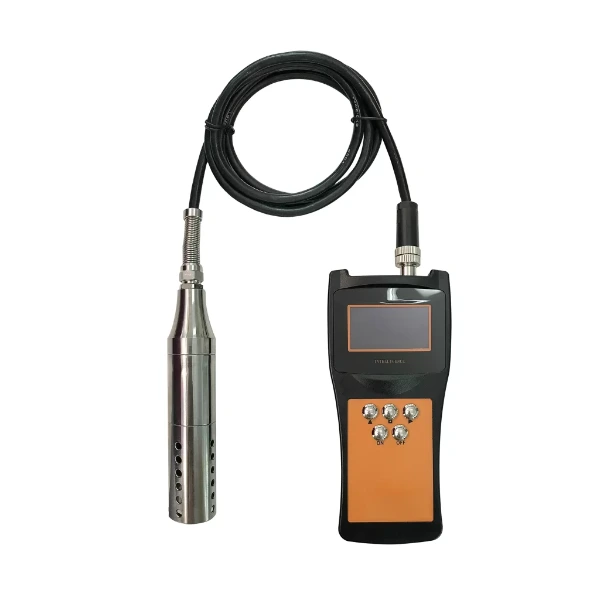
General-purpose portable tuning-fork density meter for field density across process service.
 Coriolis Density Meter
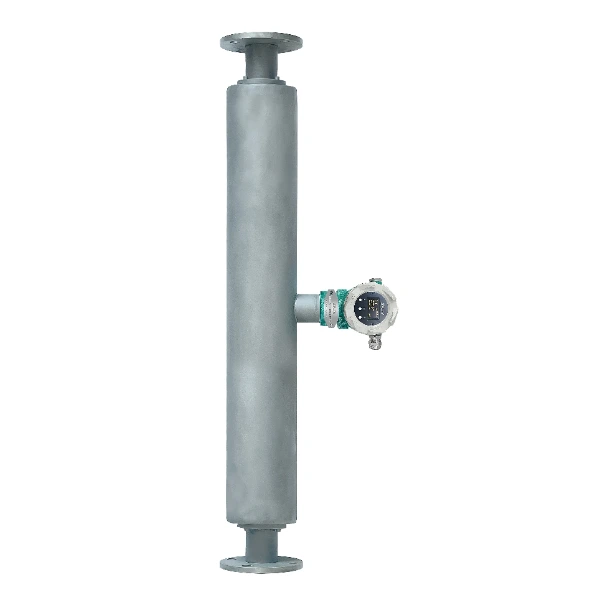
Inline Coriolis density and concentration to ±0.001 g/cc for continuous process measurement.
FAQ
What instrument is used to measure the density of oil?
Density of oil and fuel is measured with a hydrometer or, for a faster and more repeatable result, a digital density meter. A handheld digital density meter reads density and °API gravity from a small sample with automatic temperature correction, which is why it is common at refineries, terminals, and loading racks.
What is the difference between a hydrometer and a digital density meter?
A glass hydrometer floats in the liquid and is read by eye against a scale, then corrected for temperature by hand. A digital density meter measures the resonant frequency of a vibrating element, computes density electronically, and applies temperature compensation automatically, giving a faster reading with higher resolution and direct °API or specific gravity output.
What is a DMA 35 density meter?
DMA 35 is Anton Paar’s portable digital density meter, a well-known handheld in petroleum work. This handheld density meter is in the same class: a portable oscillating-element instrument that reads density, specific gravity, and °API on site. Compare the sample volume, accuracy, and certifications against your specification when selecting.
What is the use of a portable density meter?
It lets you check density or concentration where the liquid is, instead of carrying samples to a lab. For petroleum that means verifying fuel and diesel quality, confirming °API for custody, and catching the density change at a pipeline interface; for other industries it means quick checks of sugar, alcohol, or chemical concentration.
Request a quote
Send the products you check, the density or °API range and reference temperature, and the sampling conditions. Our engineers confirm the configuration, wetted materials, and calibration approach and return a quote.
About this page. Written by the Instranova engineering team. Specifications are representative; confirm the exact configuration and calibration against the datasheet for your application.