Home › Pressure Instruments › Pressure Gauges
An industrial pressure gauge gives a local, power-free reading of process pressure on a mechanical dial. Instranova builds diaphragm and differential gauges for process, chemical and HVAC service, where a technician needs to see the pressure at the equipment without wiring or a power supply. Pick the type by what you measure; the pages below give real specifications and a quote checklist.
Our pressure gauges
A diaphragm gauge reads pressure against the atmosphere through a flush or chemical-resistant diaphragm; a differential gauge reads the gap between two ports for filter, pump and flow monitoring.
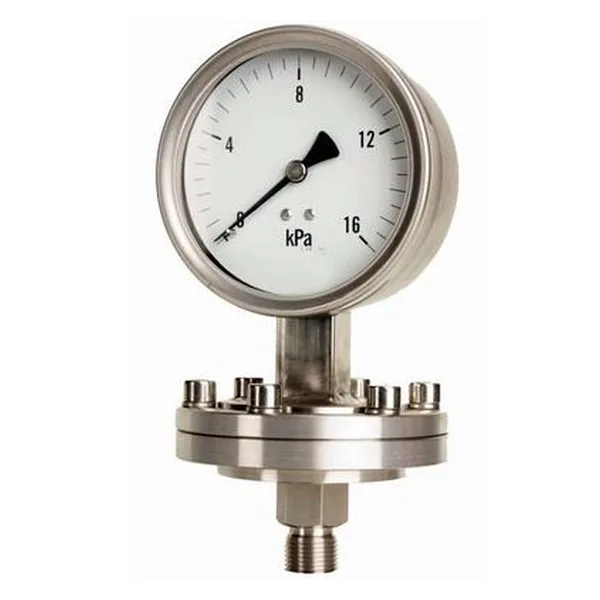 Diaphragm Pressure Gauge
Flush diaphragm for low-pressure, viscous and corrosive media.
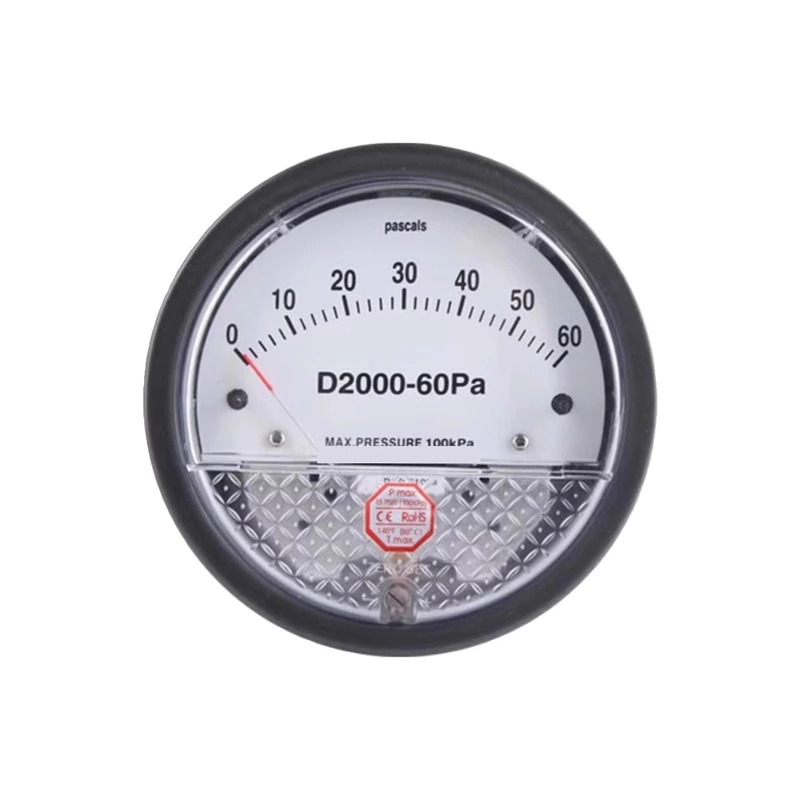 Differential Pressure Gauge
Reads the drop across filters, pumps and strainers on one dial.
Choosing a pressure gauge
The fork is simple: a single pressure against atmosphere, or the difference between two points.
| What you measure | Pick | Typical use |
|---|---|---|
| A single pressure, often low, viscous or corrosive | Diaphragm gauge | Chemical dosing, low-pressure process, clogging media |
| The difference across two points | Differential gauge | Filter and strainer drop, pump head, flow indication |
A gauge gives a local reading only. Where you need that pressure sent to a control system, pair it with a pressure transmitter or a compact pressure sensor.
FAQ
How does a pressure gauge measure pressure?
Process pressure pushes on an elastic element, a Bourdon tube or a diaphragm, and deflects it. A linkage and gear train turn that small movement into a pointer angle on the dial. No power is needed; the energy comes from the pressure itself, which is why a mechanical gauge keeps reading during a power loss.
How do you read a pressure gauge?
Read the pointer against the printed scale, noting the units, usually psi, bar or kPa. For accuracy, read with the gauge at its working temperature and with the pointer settled, and pick a gauge whose normal operating pressure sits in the middle third of the range. A differential gauge shows the difference between its two ports, not a single line pressure. Our reading guide walks the steps with worked psi, bar and vacuum examples.
How do you test if a pressure gauge is working?
Compare it against a reference gauge or a deadweight tester on the same pressure, and check that the pointer returns to zero when pressure is removed. A pointer that sticks, reads off-zero at rest, or disagrees with a known reference is due for recalibration or replacement.
Request a quote
Quote checklist, send these five points: the type (diaphragm or differential); the range and the units; the process media and temperature; the dial size and connection; and any wetted-material or fill requirement. Tell us the application and we configure one unit, not a shelf part.
Written and technically reviewed by the Instranova engineering team, last reviewed 2026-06-21. Based on the Instranova pressure gauge series datasheets plus field experience in process and chemical service. Questions? Reach our application engineers.