Home › Temperature instruments › Thermocouple
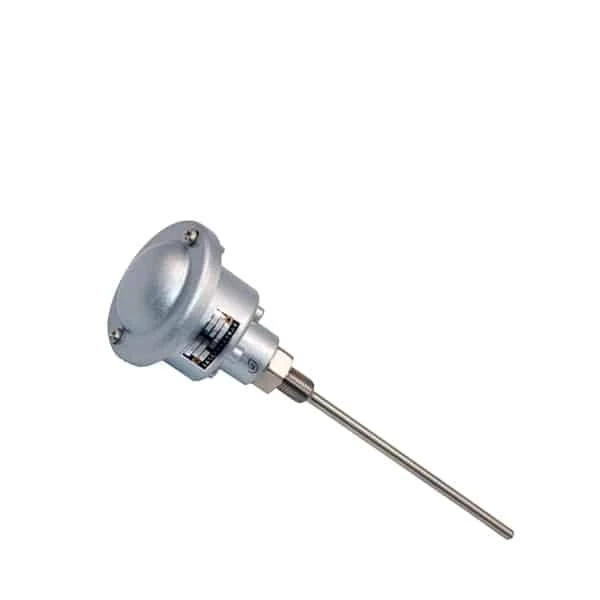
Thermocouple (WRN / WRP Series)
A thermocouple measures temperature from the small voltage two dissimilar metals produce at a hot junction. It reaches far higher than an RTD, responds fast, needs no excitation power, and survives rough, high-heat service. Base-metal types (K, J, E, T, N) cover most plants; noble platinum-rhodium types (S, R, B) handle the extreme high end. Pair it with a temperature transmitter for a 4-20 mA loop.
- Types: K, J, E, T, N (base); S, R, B (platinum-rhodium)
- Output: thermo-EMF (mV); 4-20 mA with a transmitter
- Range: -200 to +1700 °C (type dependent)
- Tolerance: Class 1 or Class 2 (IEC 60584)
- Construction: assembled or mineral-insulated sheathed
- Mounting: thread or flange, connection head; Ex option
Overview
A thermocouple is two dissimilar metal wires joined at a hot junction. The Seebeck effect makes that junction produce a small voltage that rises with temperature, and the instrument reads it back as a temperature. Because it is just a welded wire pair in a protection tube, a thermocouple is rugged, fast, cheap, and reaches temperatures no RTD can touch, up to 1700 °C with platinum-rhodium types.
The trade is accuracy: a thermocouple drifts more than an RTD and needs cold-junction compensation. For accurate measurement below about 600 °C, use an RTD (Pt100) instead; for high heat, the thermocouple wins. The assembly outputs a millivolt signal, so it is paired with a transmitter or indicator that compensates the cold junction and sends 4-20 mA to the control system.
Features
Very high temperature
To 1700 °C with platinum-rhodium types, far beyond an RTD.
Fast response
Low thermal mass at the junction reacts quickly to temperature change.
Eight standard types
K, J, E, T, N base metal and S, R, B platinum, to IEC 60584.
Bendable sheathed build
Mineral-insulated sheath bends to route into tight or complex equipment.
Transmitter ready
Add a head transmitter for cold-junction compensation and a 4-20 mA or HART output.
Hazardous-area option
Splash-proof, waterproof, or explosion-proof connection heads.
Working principle
Join two dissimilar metals at one end and heat that junction: a voltage appears across the open ends that depends on the temperature difference between the hot junction and the cold (reference) junction. This is the Seebeck effect. The instrument reads the millivolts, applies the metal pair’s known curve, and adds the measured cold-junction temperature back in to report an absolute reading. No power is fed to the sensor; the junction itself generates the signal.
Thermocouple types
Pick the type by temperature, atmosphere, and accuracy. Base-metal types are economical and cover most plants; platinum types reach the highest temperatures and resist oxidation but cost far more.
| Type | Alloys | Range | Best for |
|---|---|---|---|
| K | Ni-Cr / Ni-Al | -200 to 1300 °C | The default: furnaces, general process |
| J | Iron / Cu-Ni | 0 to 760 °C | Economical; non-oxidizing atmospheres |
| E | Ni-Cr / Cu-Ni | -200 to 900 °C | Highest output; good sensitivity |
| T | Cu / Cu-Ni | -200 to 350 °C | Cryogenic and accurate low temperature |
| N | Nicrosil / Nisil | -200 to 1300 °C | Stable high temperature without platinum |
| S / R | Pt-Rh10 or Pt-Rh13 / Pt | 0 to 1600 °C | High heat, oxidizing; reference grade |
| B | Pt-Rh30 / Pt-Rh6 | 0 to 1700 °C | The highest temperature; kilns, glass, metals |
Ranges are typical maximums for the type and depend on wire gauge and protection tube. Type K is the most common; choose N or a platinum type when K oxidizes or drifts at sustained high heat.
Cold-junction compensation
A thermocouple only measures the difference between its hot and cold junctions, so the instrument must know the cold-junction (terminal) temperature to report an absolute reading. A transmitter or input card measures the terminal temperature and adds it back automatically. Use the correct compensating or extension cable for the type all the way to the cold junction; ordinary copper wire introduced before the terminals creates a second, unwanted junction and shifts the reading. Type B is a special case: its output near room temperature is so low that compensation is often unnecessary.
Technical specifications
| Parameter | Specification |
|---|---|
| Sensor types | Base metal K, J, E, T, N; noble S, R, B (IEC 60584) |
| Measuring range | -200 to +1700 °C (type dependent) |
| Tolerance class | Class 1 or Class 2 (IEC 60584); Type K Class 1 ±1.5 °C or ±0.4% |t| |
| Output | Thermo-EMF (mV); 4-20 mA or HART with a transmitter |
| Construction | Assembled (replaceable element + protection tube) or mineral-insulated sheathed |
| Junction | Simplex or duplex; grounded, ungrounded, or exposed |
| Protection tube | Stainless steel, Inconel, or ceramic per temperature |
| Process connection | Threaded or flange; thermowell available |
| Connection head | Splash-proof, waterproof, or explosion-proof |
Representative specifications. Element type, insertion length, and head are configured to the point; confirm on the datasheet.
Models and ordering
Assembled thermocouples follow the WR series code by element, then are built out with mounting, head, and protection tube. Send the type, the working temperature, the connection, and the insertion length, and we build it.
| Model | Element | Use |
|---|---|---|
| WRN | Type K (Ni-Cr / Ni-Al) | General high-temperature, the common choice |
| WRE | Type E (Ni-Cr / Cu-Ni) | High output, medium temperature |
| WRP / WRQ | Type S / R (Pt-Rh / Pt) | High heat, oxidizing; reference grade |
| WRR | Type B (Pt-Rh30 / Pt-Rh6) | The highest temperature service |
Quote checklist, send these five points: type and class (e.g. Type K Class 1); working temperature; process connection (thread or flange); insertion length; head type (and Ex if needed).
Ordering example: WRN Type K, Class 1, simplex, sheathed, fixed thread M27, 300 mm insertion, waterproof head, with a 4-20 mA head transmitter.
Applications
Thermocouples cover the hot end of almost every industry, plus cryogenic points for the low-temperature types. Common uses:
- Furnaces, kilns, and heat treatment: Type K, N, or platinum to 1700 °C
- Oil, gas, and petrochemical: reformers, heaters, and flue gas, often with explosion-proof heads
- Power and boilers: steam, superheater, and flue-gas temperature
- Glass and metals: molten and near-molten service with Type S, R, or B
- Cryogenic and food: Type T for accurate low-temperature points
Application example
Oil and gas, fired-heater temperature. The site needed temperature across a fired heater running well above an RTD’s reach, with one consistent configuration for procurement. It standardized on Type K thermocouples rated to 1250 °C, each paired with a head-mount transmitter so the cold-junction compensation and the 4-20 mA conversion happened at the sensor. One element type and one head across the heater kept spares simple and the readings consistent.
Related products
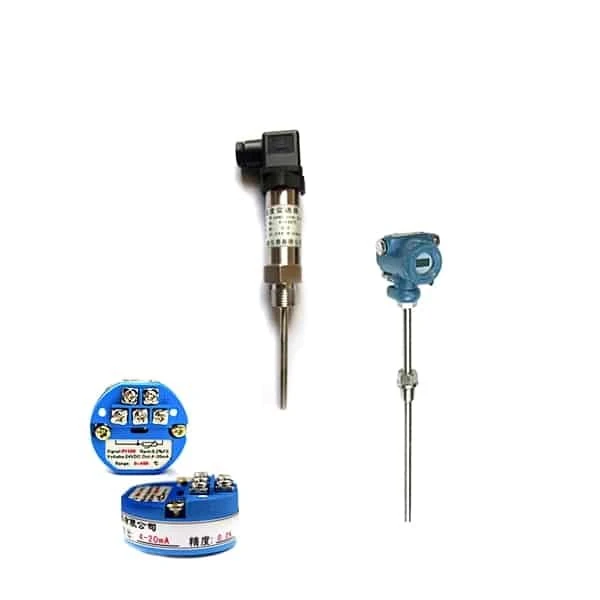 Temperature Transmitter
Compensates the cold junction and sends 4-20 mA with HART.
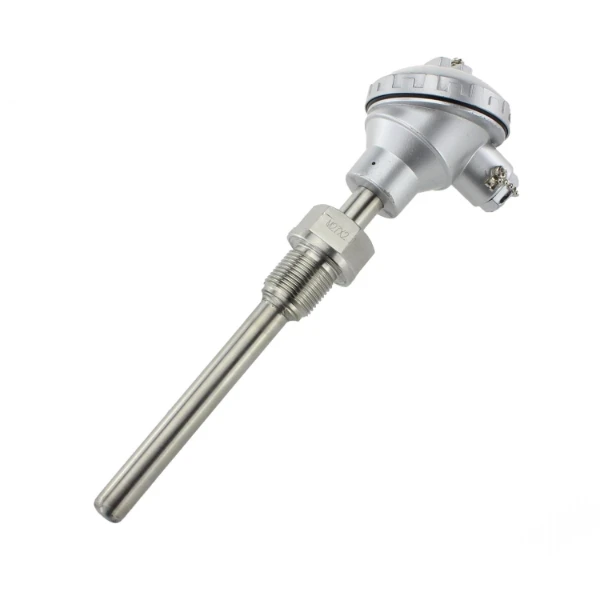 RTD Temperature Sensor (Pt100)
More accurate and stable below 600 °C.
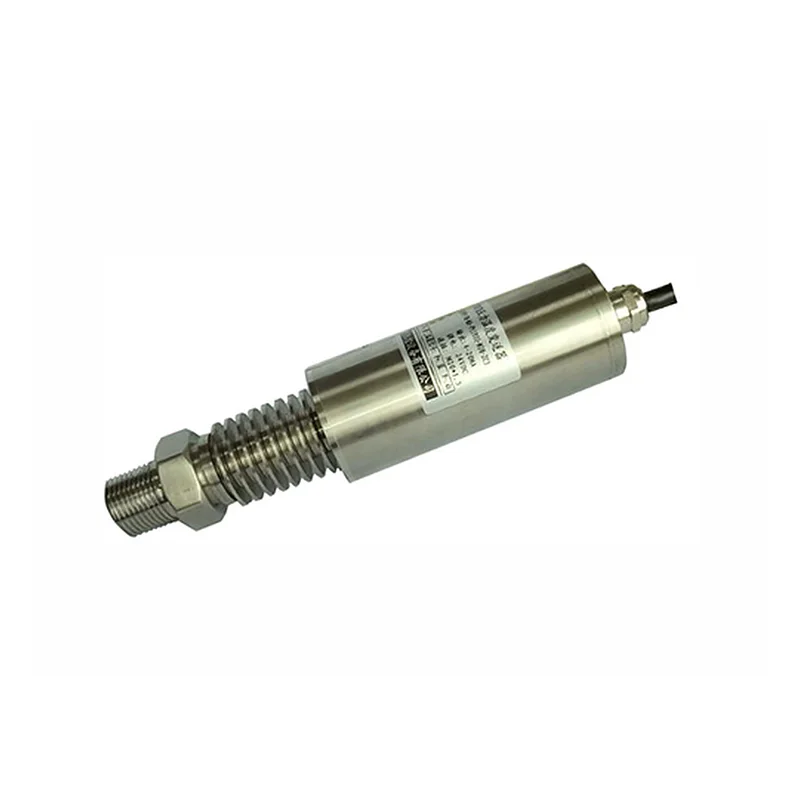 Combined Pressure and Temperature Sensor
Pressure and temperature at one point (SI-706).
Browse all temperature instruments →
For a side by side comparison of all eight letter types, with IEC and ASTM tolerance classes and wire color codes, see our thermocouple types chart.
Still weighing a platinum sensor against a thermocouple for the point? Our RTD vs thermocouple comparison puts numbers on accuracy, range and drift.
Background reading: what a thermocouple is and how it works explains the measuring chain from junction to instrument, and the Type K guide covers ranges, tolerances and wire grades for the most common type.
If the letter type is still open, our guides to Type J, T and E and to Type S, R and B set the ranges, tolerances and atmosphere limits side by side.
For the cable between the head and the instrument, see our guide to thermocouple extension wire and compensating cable.
Commissioning and fault-finding on an installed assembly follow the field procedure in our guide to checking a thermocouple with a multimeter.
Sheathed assemblies ship with a grounded, ungrounded or exposed measuring junction; which one to specify for your input wiring is explained in our junction construction guide.
FAQ
How does a thermocouple work?
Two dissimilar metal wires joined at a hot junction produce a small voltage (the Seebeck effect) that depends on the temperature difference between that junction and the cold reference junction. The instrument reads the millivolts, applies the type’s curve, and compensates the cold junction to report an absolute temperature. Our thermocouple working principle guide goes through this chain step by step.
What are the types of thermocouples?
The base-metal types are K, J, E, T, and N; the noble platinum-rhodium types are S, R, and B (IEC 60584). They differ in metal pair, temperature range, and atmosphere tolerance, from Type T at cryogenic ranges to Type B up to about 1700 °C.
Which thermocouple type is most common?
Type K (nickel-chromium / nickel-aluminum) is the most widely used. It balances range, stability, response, and cost, covering general process and high-temperature work to about 1300 °C. Step up to Type N or a platinum type when K oxidizes or drifts under sustained high heat.
Do thermocouples need cold-junction compensation?
Yes, in nearly all cases, because a thermocouple measures only the hot-to-cold temperature difference. A transmitter or input card measures the terminal temperature and adds it back. Type B is the exception, its output near ambient is low enough that compensation is often unnecessary.
Request a quote
Send the type and class, the working temperature, the process connection, the insertion length, and the head type, and our application engineers will build the thermocouple, with a transmitter if you need a 4-20 mA output.