Home › Products › Pressure Instruments › Combined Pressure and Temperature Sensors
SI-706 Combined Pressure and Temperature Sensor
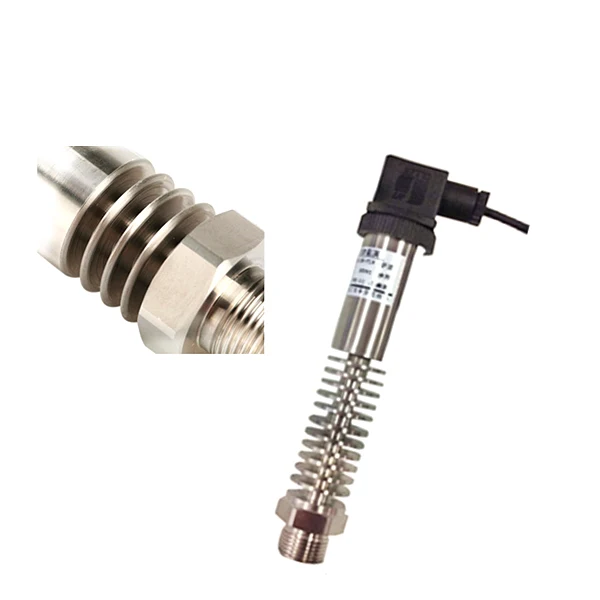
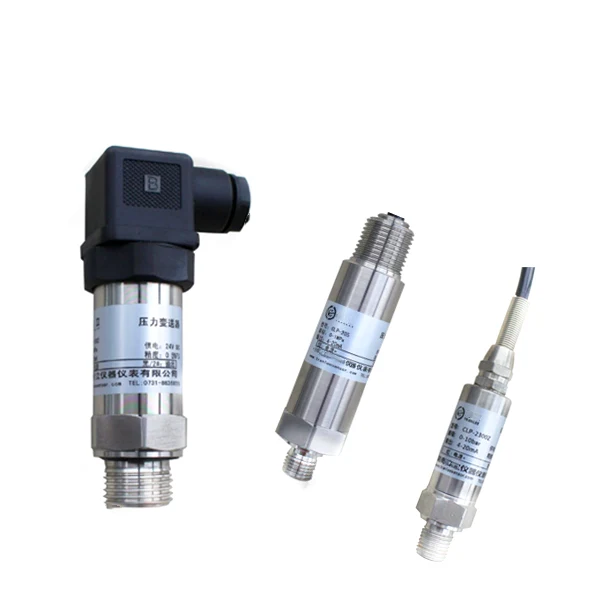
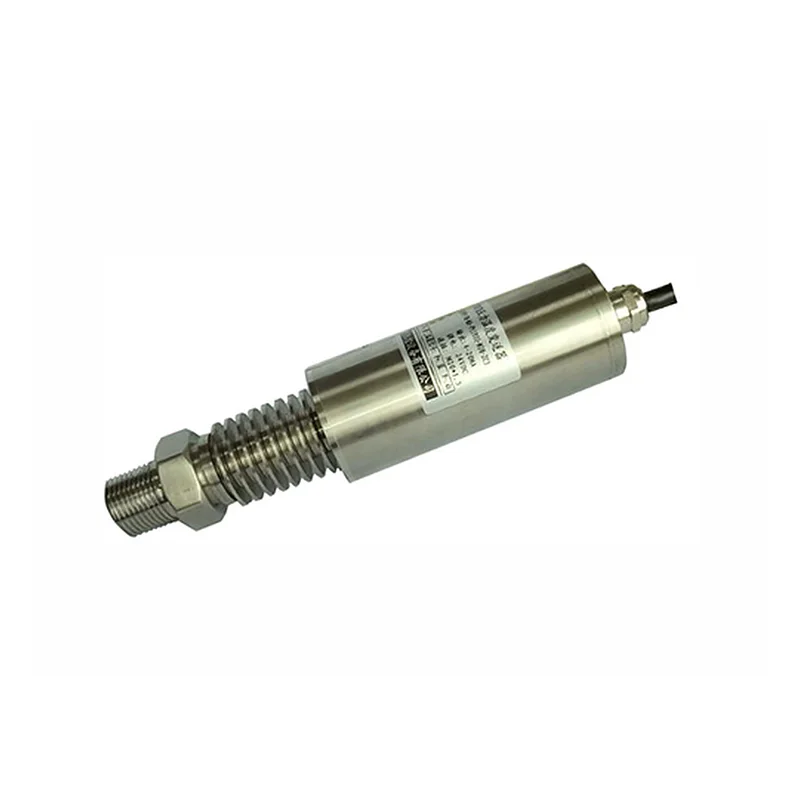
Dual-function sensor that reads media pressure and temperature at the same point through one process connection. Two independent outputs from one body, spans from 20 kPa to 100 MPa, and a temperature channel delivered as thermocouple, PT100, digital or analog signal. Pressure and temperature sides are each built for the application: low-temperature, high-temperature and high-pressure versions are routine.
- Function: Pressure + temperature, one process point
- Pressure spans: 0–20 kPa up to 0–100 MPa
- Accuracy: ±0.2 / ±0.5 / ±1.0 % FS composite
- Outputs: 4–20 mA or 0–5 / 1–5 / 0–10 V; temperature via J/K/E, PT100, DS18B20 or analog signal
- Custom builds: Low-temperature, high-temperature and high-pressure per application
- Media temperature: −20 to 85 °C standard; high-temperature builds delivered to 800 °C
Overview
Measuring pressure and temperature on the same line usually costs two tappings, two instruments, two cable runs and two loop budgets. The SI-706 collapses that into one: a pressure cell and a temperature element share a single welded body and a single process connection, and each reports on its own channel. The two outputs do not load each other, and the whole assembly draws the power of one sensor.
There is a measurement argument as well as a piping one. Where pressure and temperature move together, on a common-rail system, a hydraulic test stand, an oil well, the compensation math only works if both values come from the same point at the same moment. Two instruments half a meter apart on a hot line do not see the same fluid state; one combined probe does. For pressure-only points, start from the general-purpose transmitter; the full lineup sits under pressure instruments.
Technical specifications
| Parameter | Specification |
|---|---|
| Pressure spans | 0–20 kPa up to 0–100 MPa, configured per application |
| Composite accuracy | ±0.2 % FS; ±0.5 % FS; ±1.0 % FS classes |
| Pressure output | 4–20 mA two-wire; 0–5 / 1–5 / 0–10 VDC three-wire; RS-485 digital option |
| Temperature output | Type J, K or E thermocouple; PT100 platinum RTD; DS18B20 digital; analog temperature channel (4–20 mA / 0–10 V) per configuration |
| Sensing element | Resistance strain gauge or diffused-silicon pressure chip; isolation diaphragm |
| Power supply | 24 VDC nominal, 10–30 VDC; both channels on one sensor budget |
| Media temperature | −20 to 85 °C standard; custom high-temperature builds delivered to 800 °C (K-type element) |
| Ambient temperature | −20 to 85 °C |
| Long-term stability | 0.1 % FS per year |
| Vibration effect | Less than 0.1 % FS over 20–1000 Hz |
| Load resistance | Current output max. 800 Ohm; voltage output more than 50 kOhm |
| Insulation | More than 2000 MOhm at 50 VDC |
| Sealing | IP65; fully welded structure rated IP67 per build |
| Body | Welded stainless, minimum outer diameter 26 mm |
| Process connection | G1/2-14, M20×1.5; other threads to order |
| Electrical interface | Direct cable outlet or aviation connector |
Choosing the temperature output
The temperature side decides the order code. The three element types split cleanly by what matters most on your line: accuracy, top temperature, or a plain digital bus. The table sorts them.
| Element | Strength | Pick it for |
|---|---|---|
| PT100 RTD | High accuracy, stable, near-linear | Control loops, records, density or viscosity compensation |
| Thermocouple J / K / E | Hottest media, fast response, rugged | Engine and exhaust points, high-temperature process lines |
| DS18B20 digital | Digital bus output, low cost | Compact OEM equipment within about −55 to 125 °C |
Output form is a separate choice from the element. Where the control system wants two plain analog loops, the temperature side ships as a conditioned 4–20 mA or 0–10 V signal instead of a raw thermocouple or RTD output.
One combined probe vs two instruments
- One tapping instead of two: half the welds, half the leak paths, half the cable runs on a crowded skid.
- Same point, same moment: pressure-temperature compensation math gets values that actually belong together.
- One power budget: both channels run on a single 24 VDC feed, and the two outputs do not load each other.
- Compact: 26 mm minimum outer diameter fits manifolds and test benches where two separate bodies will not.
- Zero, span and temperature compensation are trimmed together at the works, so the pair arrives matched.
Applications
Process and energy applications. Oil-well downhole pressure and temperature, diesel common-rail monitoring, injection molding machinery, hydraulic and pneumatic systems, HVAC plant and test stands. A vacuum equipment manufacturer in the United States runs combined temperature and pressure sensors alongside thermal mass and vortex flow meters on its process-gas skids; two purchase orders came through that configuration, one tapping per measurement point instead of two.
Hydrogen and new energy. An Australian hydrogen-refueling developer specified pressure plus temperature instrument points for its dispensing control system with standard process connections and outputs; combined probes keep the instrument count down on a skid where every penetration is a certification line item. For hydrogen and other special media, consult the factory on compatibility before ordering. High-temperature points beyond the standard band belong with the high-temperature series. Tell us the application and we configure one unit, not a shelf part.
Delivered configurations
Five configurations from our quote log show how far the build envelope stretches. Both sides are specified independently: pressure span, temperature range and each output are set per application, including absolute reference, analog temperature channels and media to 800 °C.
| Service | Pressure | Temperature | Outputs | Connection and options |
|---|---|---|---|---|
| Liquid process line | 0–20 MPa | to 300 °C | 4–20 mA | G1/4 thread, M12 connector |
| Hydraulic system | 0–400 bar | −20 to 120 °C | 1–5 V, 24 VDC | G1/4 thread, metal M12 connector, ±0.5 % FS |
| Air system | 0–7 bar | 0–600 °C | 4–20 mA pressure; 0–10 V analog temperature | No display |
| Absolute reference | 0–16 bar absolute | 0–200 °C | 0–10 V, 24 VDC | 1/4 NPT, local display, 0.1 % class |
| High-temperature absolute | 0–5 MPa absolute | 0–800 °C, K-type thermocouple | 0–10 V three-wire pressure | M20×1..
Related productsBrowse all pressure instruments → FAQWhat is a temperature sensor?A temperature sensor converts how hot or cold something is into a usable signal. The SI-706 carries a temperature element next to the pressure cell, supplied as a thermocouple (J, K, or E), a Pt100 RTD, or a digital DS18B20, depending on the range and accuracy you need. Because it shares the same probe body, it reads the temperature of the very same media that the pressure cell sees. What are the 4 types of temperature sensors?The four common families are thermocouples, RTDs (such as Pt100), thermistors, and semiconductor or IC sensors. They trade off range, accuracy, and cost: thermocouples cover the widest and hottest ranges, RTDs give the best stability and accuracy over moderate ranges, thermistors are sensitive but narrow, and IC sensors are cheap and linear at low temperatures. The SI-706 offers thermocouple, Pt100, and digital options so the temperature side matches the pressure side for your application. Request a quoteQuote checklist: five things to put in your inquiry. Pressure span and overload; medium and media temperature; temperature output type (thermocouple, PT100 or digital); process connection thread; electrical interface (cable or aviation connector) and outputs. Our engineers reply with a configured model, datasheet and price. Request a quoteSend the medium, the pressure range, and the temperature range, and we configure one SI-706 probe for the point. |