Home › Level Instruments › Guided Wave Radar Level Transmitter
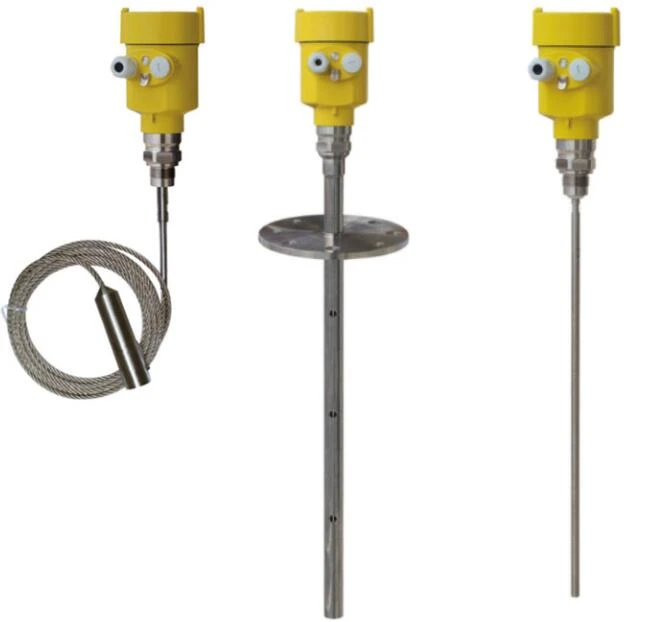
Guided Wave Radar Level Transmitter
A contact radar that guides the microwave pulse down a cable or rod probe, so it reads low-dielectric, agitated, and foaming media that defeat non-contact radar. The 70X series handles high temperature and pressure, with intrinsically-safe and flameproof options.
- Range: up to 30 m (cable or rod)
- Accuracy: ±10 mm
- Process: -200 to +400 °C, to 40 MPa
- Output: 4–20 mA / HART, four-digit LCD
- Area: Ex ia IIC T6 / Ex d IIC T6 option
- Media: liquids, corrosives, and powders
Non-contact radar struggles when the medium barely reflects, the tank is narrow, or the surface is churned into foam. Guided wave radar answers that by sending the microwave pulse down a probe instead of through the air. The probe concentrates the energy on the surface, so even a low-dielectric powder or a foaming liquid returns a usable echo. The 70X series is a contact, time-domain reflectometry instrument that holds up in high temperature and pressure and carries intrinsically-safe and flameproof ratings.
Overview
The 70X guided wave radar level transmitter measures up to 30 m with a cable or rod probe, at an accuracy of 10 mm, and works from -200 to +400 °C and up to 40 MPa depending on model. It operates in the 500 MHz to 1.8 GHz band, outputs 4–20 mA with HART, and shows the reading on a programmable four-digit LCD. Transmit power is very low, so it installs safely in metal or non-metal vessels. An Ex ia IIC T6 Ga intrinsically-safe or Ex d IIC T6 Gb flameproof version is available, with the exact marking set per nameplate. Where the medium reflects well and you prefer no contact, the non-contact radar level transmitter reaches farther at finer accuracy.
Features
What the 70X series brings, and the real specification behind each point:
Reads low-dielectric and difficult mediaGuiding the wave along the probe concentrates the energy on the surface, so low-dielectric liquids and powders that weakly reflect still return a usable echo where free-space radar fails.
Unbothered by agitation, foam, and narrow spacesThe contact probe ignores turbulence and foam and fits narrow bypass chambers and vessels with internals.
High temperature and pressureTo 250 °C and 4 MPa on the 701, with a PTFE-sealed corrosive model (702) and a double-cable powder model (703).
Intrinsically safe or flameproofEx ia IIC T6 Ga or Ex d IIC T6 Gb option; transmit power is very low, so it installs safely in metal or non-metal vessels with no harm to people or the environment.
Cable or rod for any heightA hanging cable probe reaches tall tanks and silos to the full range; a rigid rod suits short spans and narrow chambers.
Local display and HARTA programmable four-digit LCD plus 4–20 mA / HART output, with 2-wire or 4-wire power.
Working principle
Guided wave radar uses time-domain reflectometry. A high-frequency microwave pulse travels down the probe (a steel cable or rod) at the speed of light. Where it meets the medium, the sudden change in dielectric constant reflects part of the pulse back up the probe. The transmitter times the round trip: the distance to the surface equals the speed of light times the travel time, divided by two. Because the empty distance from the probe to the reference is known, the level is the empty distance minus the measured distance. Guiding the wave along the probe is what lets the instrument read low-dielectric media and ignore tank walls and obstructions that would scatter a free-space beam.
Technical specifications
Representative specifications; confirm the exact build per datasheet.
| Parameter | Specification |
|---|---|
| Method | Guided wave (time-domain reflectometry) |
| Frequency | 500 MHz to 1.8 GHz |
| Measuring range | Up to 30 m (model-dependent) |
| Accuracy | ±10 mm |
| Process temperature | -200 to +400 °C (model-dependent) |
| Process pressure | -0.1 to 40 MPa (model-dependent) |
| Output | 4–20 mA / HART |
| Display | Four-digit LCD, programmable |
| Power supply | 2-wire DC 24 V; 4-wire DC 24 V or AC 220 V |
| Connection / housing | Thread or flange; aluminum or plastic |
| Hazardous area | Ex ia IIC T6 Ga / Ex d IIC T6 Gb (marking per nameplate) |
Models and probes
The 70X series splits by medium and probe. Pick the model by what you measure and how aggressive the service is:
| Image | Model | Medium | Range | Temp / Pressure | Probe | Accuracy |
|---|---|---|---|---|---|---|
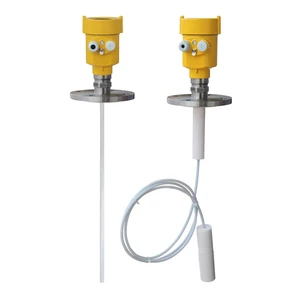 |
701 | Liquid and solid powder | 30 m | -40 to 250 °C / -0.1–4 MPa | Single cable or rod | ±10 mm |
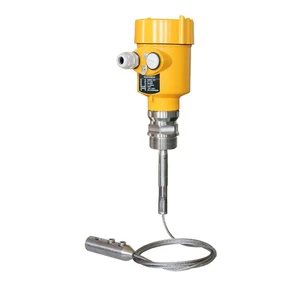 |
702 | Corrosive liquids (acids, bases) | 20 m | -40 to 200 °C / -0.1–0.3 MPa | Full PTFE cable or rod | ±10 mm |
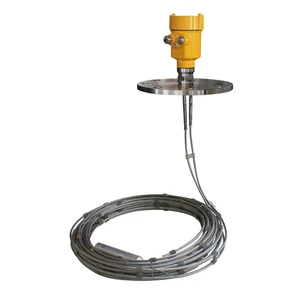 |
703 | Solid powder (cement, ash) | 30 m | -40 to 150 °C / -0.1–4 MPa | Double cable | ±10 mm |
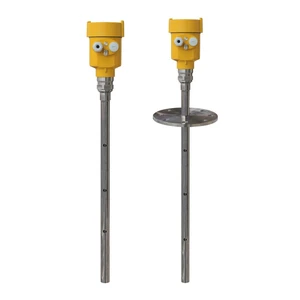 |
704 | Low-dielectric liquids | 6 m | -40 to 250 °C / -0.1–4 MPa | Coaxial tube | ±5 mm |
|
705 | Hot, high-pressure liquids | 15 m | -200 to 400 °C / -0.1–40 MPa | Single cable or rod | ±10 mm |
Cable or rod probe
The probe form follows the span and the vessel. A cable probe hangs from the top and suits tall tanks and silos up to the full range, where a rigid rod would be impractical. A rod probe is self-supporting and stays straight, which suits shorter spans, narrow bypass chambers, and liquids where you want the probe held away from the wall. For sticky or corrosive service, the 702 wraps the probe in PTFE; for powders that bridge, the 703 uses a double cable. Tell us the medium, its dielectric, and the height, and we set the probe and model. For clean liquids that reflect well and need no contact, compare the non-contact radar level transmitter.
Applications
Guided wave radar suits the difficult level jobs:
- Low-dielectric liquids and powders that weakly reflect
- Agitated, foaming, or turbulent vessels
- Corrosive acids and bases (PTFE-sealed 702)
- Cement, ash, and other bridging powders in silos (703)
One of the more demanding assignments for a high-temperature probe is CSP storage; the selection logic is worked through in the molten salt level measurement guide.
The reflection math behind the 1.4 minimum, and how to estimate a value the tables do not list, is in our dielectric constant guide for radar level measurement.
FAQ
How does a guided wave radar level transmitter work?
It uses time-domain reflectometry. A high-frequency microwave pulse travels down a probe (a steel cable or rod) at the speed of light. Where it meets the medium, the sudden change in dielectric constant reflects part of the pulse back up the probe. The transmitter times the round trip: the distance equals the speed of light times the travel time, divided by two, and the level is the known empty distance minus that distance. Guiding the wave along the probe is what lets it read low-dielectric media and ignore the tank walls.
What is the difference between radar and guided wave radar level transmitters?
Non-contact radar sends the microwave through open air from the top of the tank; guided wave radar sends it down a probe that contacts the medium. Free-space radar reaches farther and touches nothing, but it can lose a weak echo on low-dielectric media, foam, or in narrow spaces. Guided wave radar concentrates the energy on the probe, so it stays reliable there. For clean, well-reflecting liquids use the non-contact radar level transmitter; for difficult media use this 70X series.
What is a GWR level transmitter?
GWR stands for guided wave radar. It is a contact level transmitter that sends a microwave pulse along a cable or rod probe and times the reflection from the surface (time-domain reflectometry). The 70X series measures liquids, corrosive media, and powders up to 30 m, at ±10 mm, with a 4–20 mA / HART output, a four-digit display, and intrinsically-safe or flameproof options.
How to calibrate a guided wave radar level transmitter?
Calibration sets two reference points: the empty distance (zero, the probe-to-reference length when the tank is empty) and the full height (span, the level when the tank is full). The transmitter then maps the pulse travel time between them to the 4–20 mA output. Mount the probe vertical and clear of the wall and obstructions, and confirm the medium dielectric is within range. Tell us the tank and medium and we pre-set the parameters.
Related products
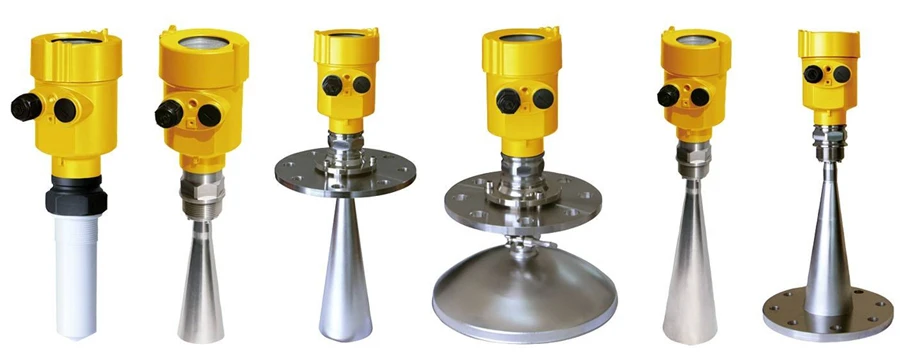 Non-Contact Radar
120 GHz FMCW, 2 mm accuracy to 150 m, for well-reflecting media.
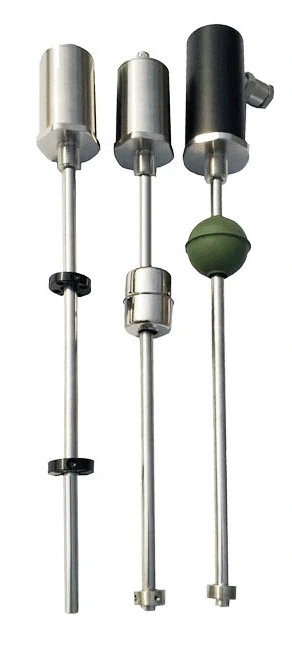 SI-100 Magnetostrictive
Sub-millimetre accuracy on clean liquids in smaller tanks.
All Level InstrumentsCompare radar, ultrasonic, magnetostrictive, and hydrostatic.
Browse all level instruments →
Request a quote
Tell us five things and we set the model and probe for your vessel:
- Medium (liquid, corrosive, or powder) and its dielectric
- Range and tank or silo height
- Process temperature and pressure
- Connection (thread or flange) and cable or rod preference
- Area (standard, intrinsically-safe, or flameproof)
Ordering example: 701, cable probe 12 m, liquid, DN80 flange, -40 to 150 °C, 4–20 mA + HART, Ex ia build.
Tell us the application and we configure one unit, not a shelf part. Have a difficult medium we have not covered? Reach our application engineers.