Products › Pressure instruments › HK-8051 Explosion Proof Pressure Transmitter
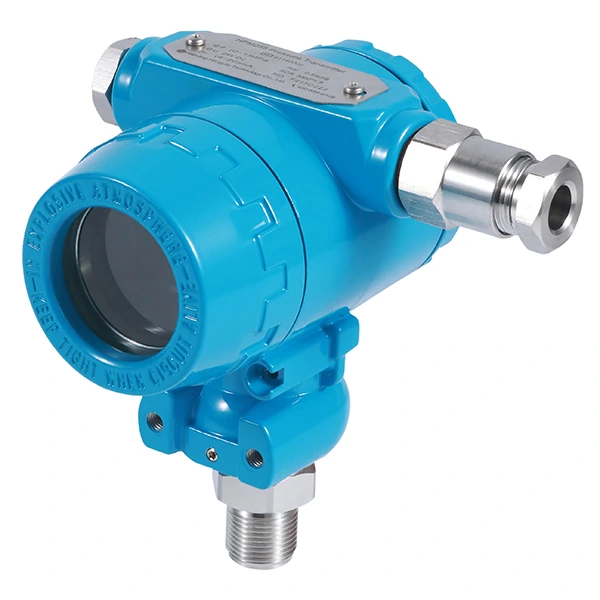
HK-8051 Explosion Proof Pressure Transmitter
An intrinsically safe pressure transmitter for hazardous areas, marked Ex ia IIC T4/T5/T6 Ga. The loop is energy-limited so it cannot ignite a flammable atmosphere, with 4-20 mA and HART output and push-button configuration.
- Protection: Ex ia IIC T4/T5/T6 Ga (intrinsically safe)
- Ranges: 1 bar to 1500 bar
- Accuracy: 0.3% or 0.5% FS
- Output: 4-20 mA, HART; voltage option
- Wetted parts: 17-4PH / 304 / 316L
Overview
The HK-8051 is a pressure transmitter for explosive and flammable atmospheres. It carries an intrinsically safe rating, Ex ia IIC T4/T5/T6 Ga, which means the electrical energy in the device and its wiring is held below the level that could ignite the gas around it. It reads gauge, absolute or sealed-gauge pressure from 1 to 1500 bar, outputs 4-20 mA with HART, and is configured at the unit by push-button or remotely over HART.
Pick it for hazardous areas in oil and gas, chemical and process plants. For high-temperature hazardous service see the high-temperature pressure transmitter; for very high pressures the high pressure transducer covers the top of the range.
Working principle
Pressure acts on a piezoresistive cell, and the conditioning circuit turns the bridge signal into a 4-20 mA loop with HART. What makes it safe for a hazardous area is the intrinsic-safety design: the energy stored and supplied in the loop is limited by design and by a barrier or isolator in the safe area, so even a fault cannot release a spark with enough energy to ignite the atmosphere. The transmitter sits in the hazardous zone; the barrier and the control system sit in the safe area.
Hazardous-area protection
The HK-8051 uses intrinsic safety (Ex ia), not flameproof (Ex d). The two are different methods: a flameproof housing contains an internal explosion, while intrinsic safety stops one from ever starting by limiting energy. Intrinsic safety is the usual choice for low-power loop transmitters and allows live maintenance with the correct loop, but it must be installed with a matching barrier or isolator. The marking is Ex ia IIC T4/T5/T6 Ga; confirm the certification scheme and temperature class for your region and gas group before installation.
Technical specifications
| Parameter | Specification |
|---|---|
| Hazardous-area marking | Ex ia IIC T4/T5/T6 Ga (intrinsically safe) |
| Pressure type | Gauge, absolute or sealed gauge |
| Pressure range | 1 bar to 1500 bar (15 psi to 25,000 psi) |
| Accuracy | 0.3% or 0.5% FS |
| Long-term stability | 0.25% FS per year |
| Output | 4-20 mA with HART; voltage output optional; push-button configuration |
| Response (-3 dB) | 3.2 kHz |
| Temperature | Compensated -20 to 85 C; storage -40 to 125 C |
| Overload / burst | Overload 150% FS (range up to 6 bar) / 300% FS (above 6 bar); burst 200% / 500% FS |
| Vibration / shock | 20 g vibration; 100 g shock (11 ms) |
| Wetted material | 17-4PH (above 6 bar); 304 or 316L (below 6 bar) |
| Protection | IP65 |
| Process connection | M20 x 1.5, G1/4 or 1/4 NPT (custom available) |
Representative specifications, at room temperature and rated supply unless stated. Values typical; confirm the exact build and certification per datasheet.
Models and ordering
Quote checklist: send these five points and we configure one unit, not a shelf part.
- Pressure range and reference (gauge, absolute or sealed)
- Hazardous-area requirement: zone, gas group and temperature class, and the certification scheme your site accepts
- Output: 4-20 mA / HART or voltage; accuracy 0.3% or 0.5% FS
- Process connection: M20 x 1.5, G1/4, 1/4 NPT or your thread
- Wetted material and any temperature above the compensated band
Ordering example: HK-8051, 0 to 100 bar gauge, Ex ia IIC T4, 4-20 mA / HART, 0.3% FS, 316L, G1/4 for a Zone 1 gas area.
Applications
- Oil and gas: wellheads, separators, gas processing
- Chemical and petrochemical hazardous zones
- Storage and loading of flammable liquids and gases
- Paint, solvent and powder handling areas
- Any Zone 0/1/2 area needing a certified pressure transmitter
Application example
Zone 1 gas area. A distributor specifying instruments for a Zone 1 area with a Group IIB gas needed a certified hazardous-area pressure transmitter rather than a standard unit. The protection method, gas group and temperature class were matched to the area before quoting, so the transmitter and its barrier suited the installation.
Related products
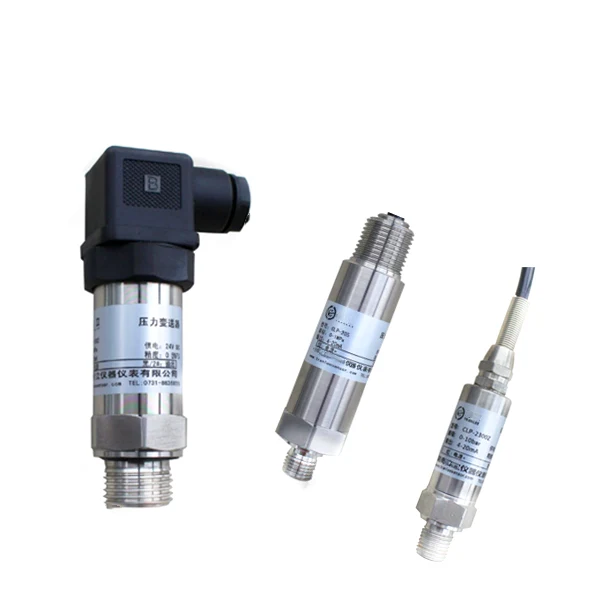 Pressure Transmitters
General-purpose gauge, absolute and differential transmitters.
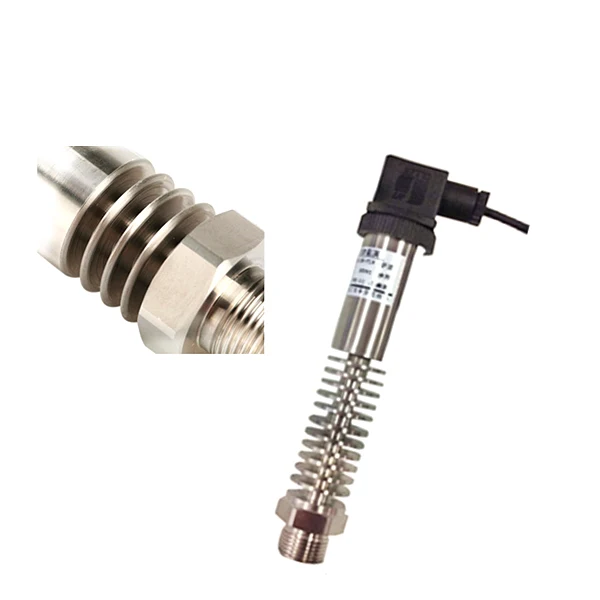 High-Temperature Pressure Transmitters
For hot process and hazardous high-temperature service.
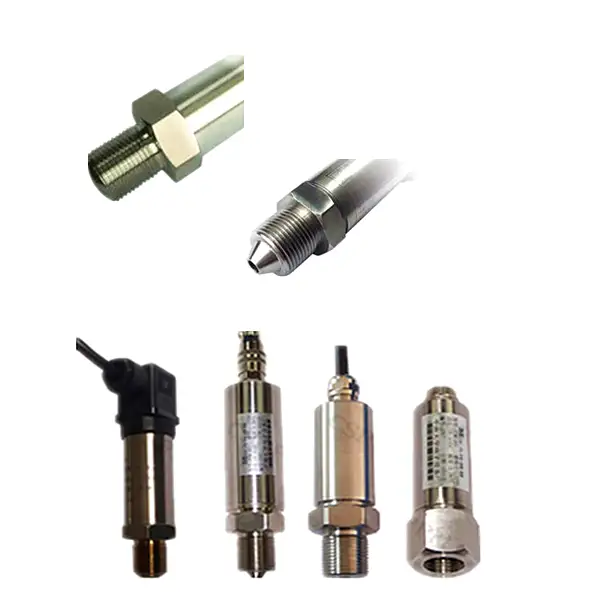 High Pressure Transducers
SI-702 cone-sealed units to 1500 MPa.
Browse all pressure instruments →
If the classification itself is the question, our guide to Class 1 Div 1 vs Div 2 explains how the NEC divisions, gas groups, and temperature codes are assigned before any instrument is chosen.
FAQ
What is the difference between intrinsically safe and explosion-proof?
They stop ignition in two different ways. Explosion-proof (flameproof, Ex d) uses a heavy enclosure strong enough to contain an internal explosion and cool the escaping gases so they cannot ignite the surrounding atmosphere. Intrinsically safe (Ex i) instead limits the electrical energy in the circuit so far that no spark or hot surface can release enough energy to ignite the gas, usually through a barrier or isolator on the safe side. Explosion-proof contains; intrinsically safe prevents. This transmitter can be supplied to either method depending on the zone and the wiring practice on site.
What is the difference between intrinsically safe and ATEX?
They are not the same kind of thing. Intrinsic safety is a protection method (Ex i). ATEX is the European regulatory framework that certifies whether equipment is fit for an explosive atmosphere, and intrinsic safety is one of several methods ATEX recognises, alongside flameproof and others. So a transmitter can be ATEX-certified using the intrinsically safe method, or ATEX-certified as flameproof. In North America the equivalent listings come from FM, UL, or CSA. Confirm the exact marking on the nameplate for your area classification.
When to use intrinsically safe?
Intrinsic safety suits the most hazardous zones (Zone 0 and Zone 1) and is favoured where you want to work on the loop live: because the energy is limited, you can connect and disconnect in the hazardous area without a hot-work permit. It needs a certified barrier or isolator and low-energy wiring. A flameproof (explosion-proof) housing is often chosen where more power is needed or where barriers are inconvenient. Match the method to your zone, your power budget, and your maintenance practice.
Request a quote
Send the five points in the checklist above and our application engineers will configure an HK-8051 for your range, area classification and connection. Reach our application engineers.